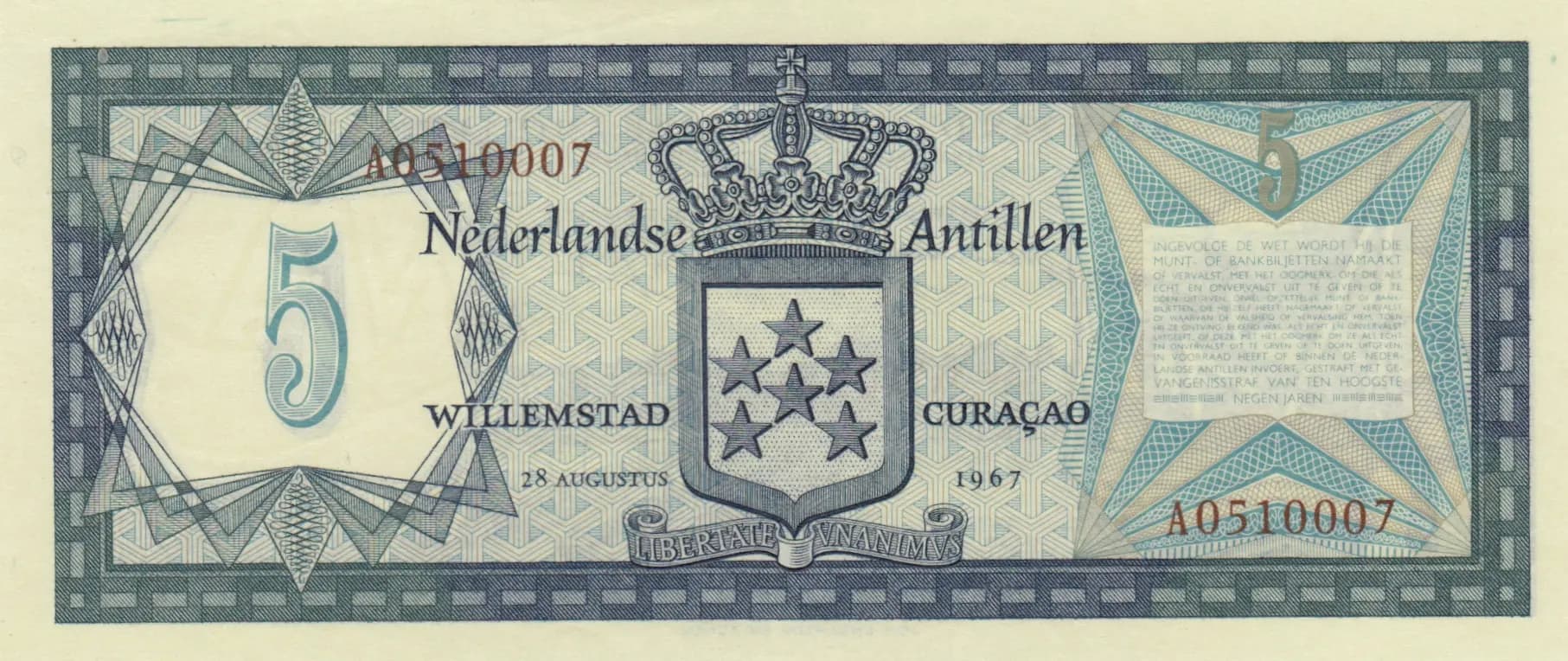
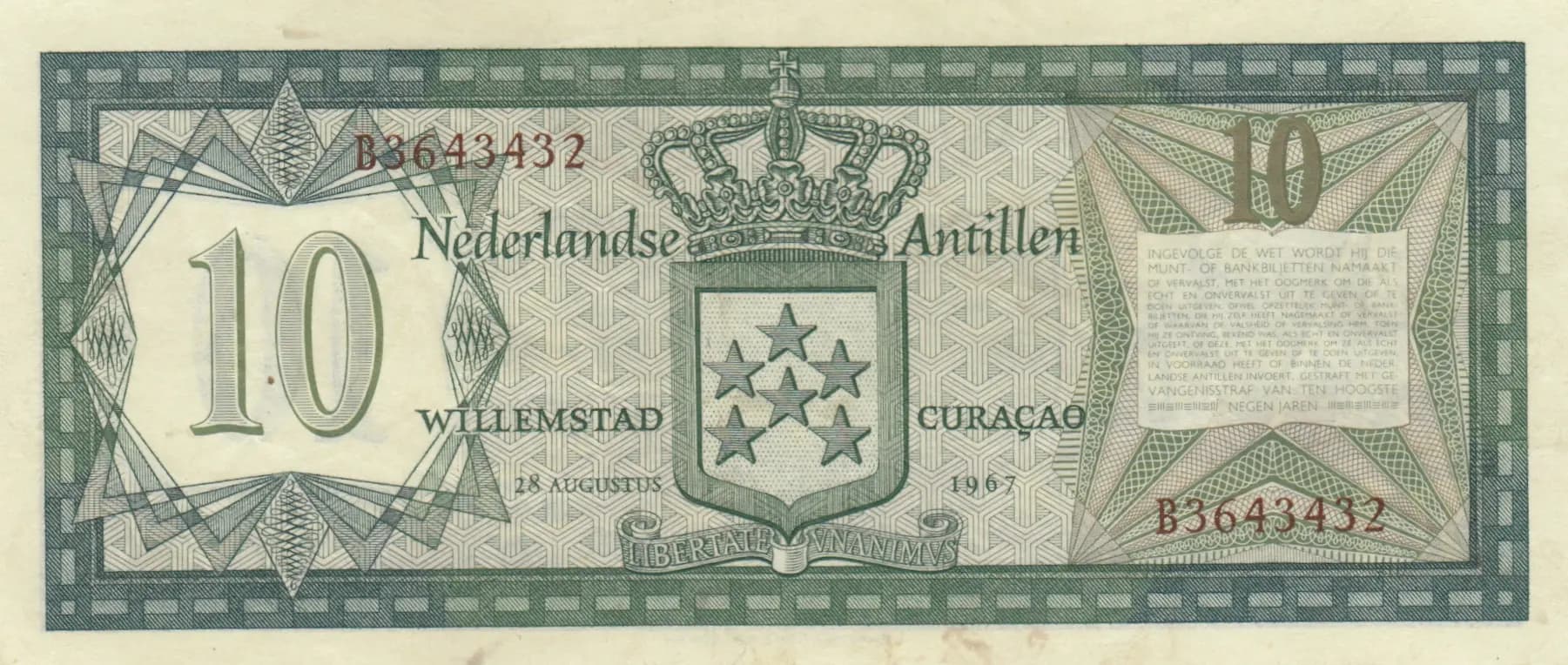
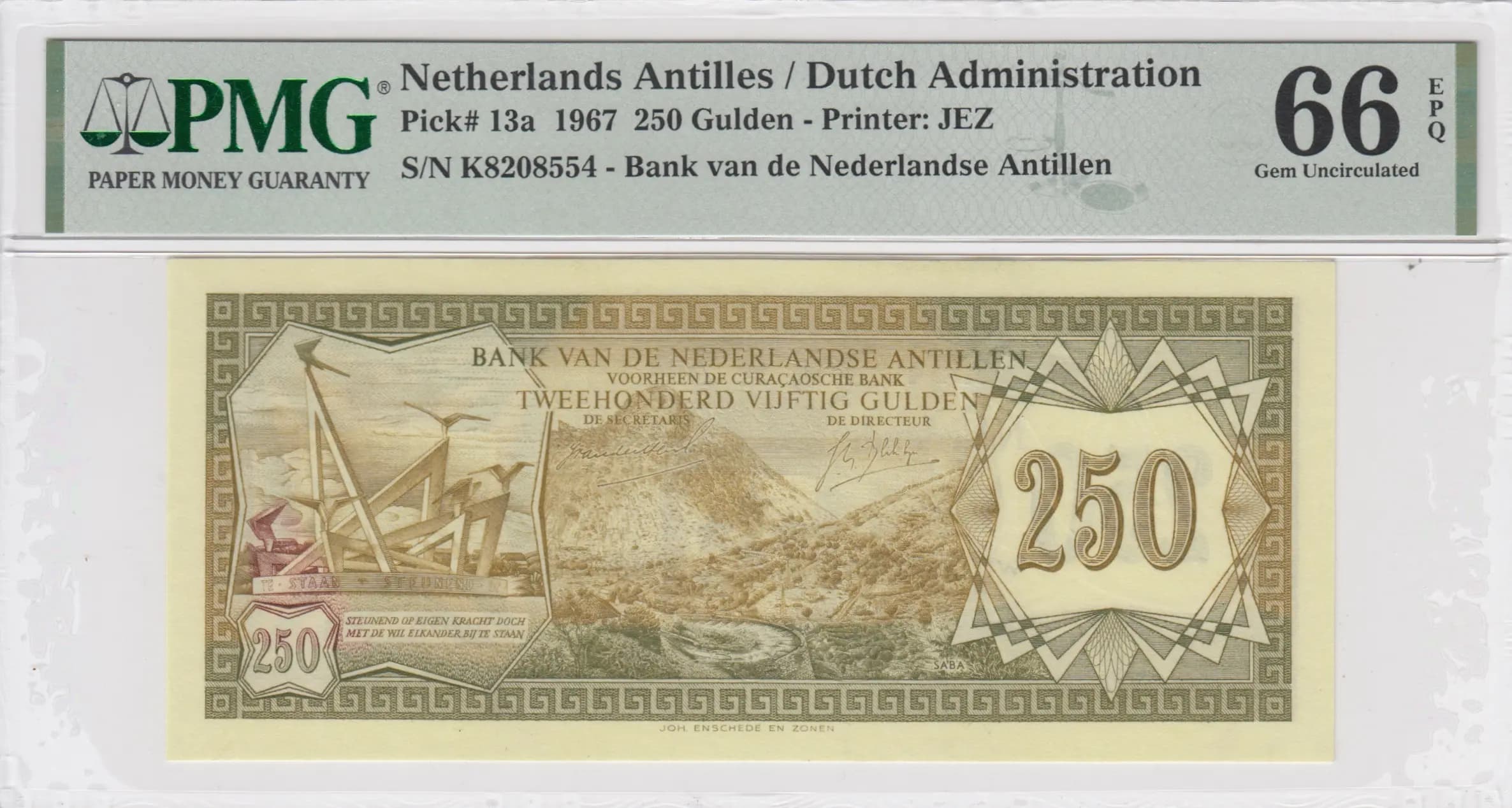
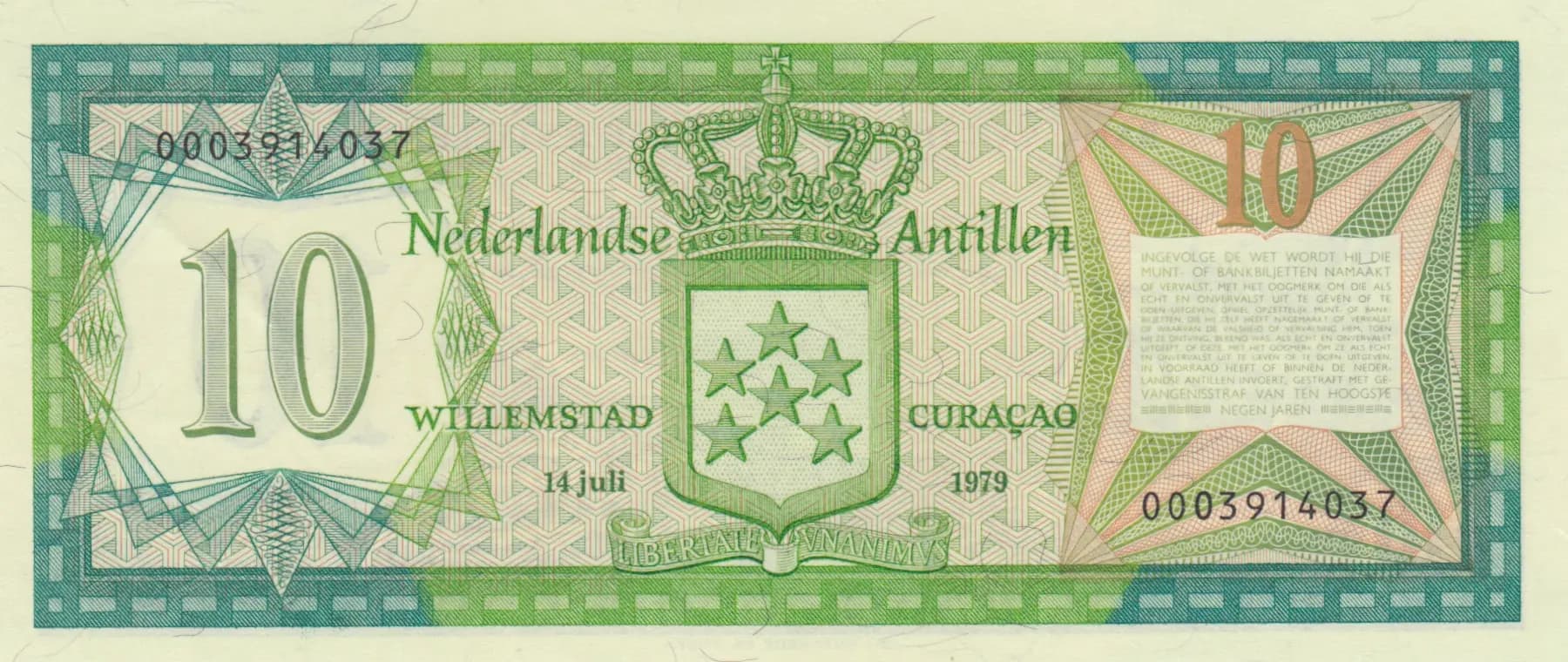
500 gulden 1962
Market Prices
9 salesAbout This Note
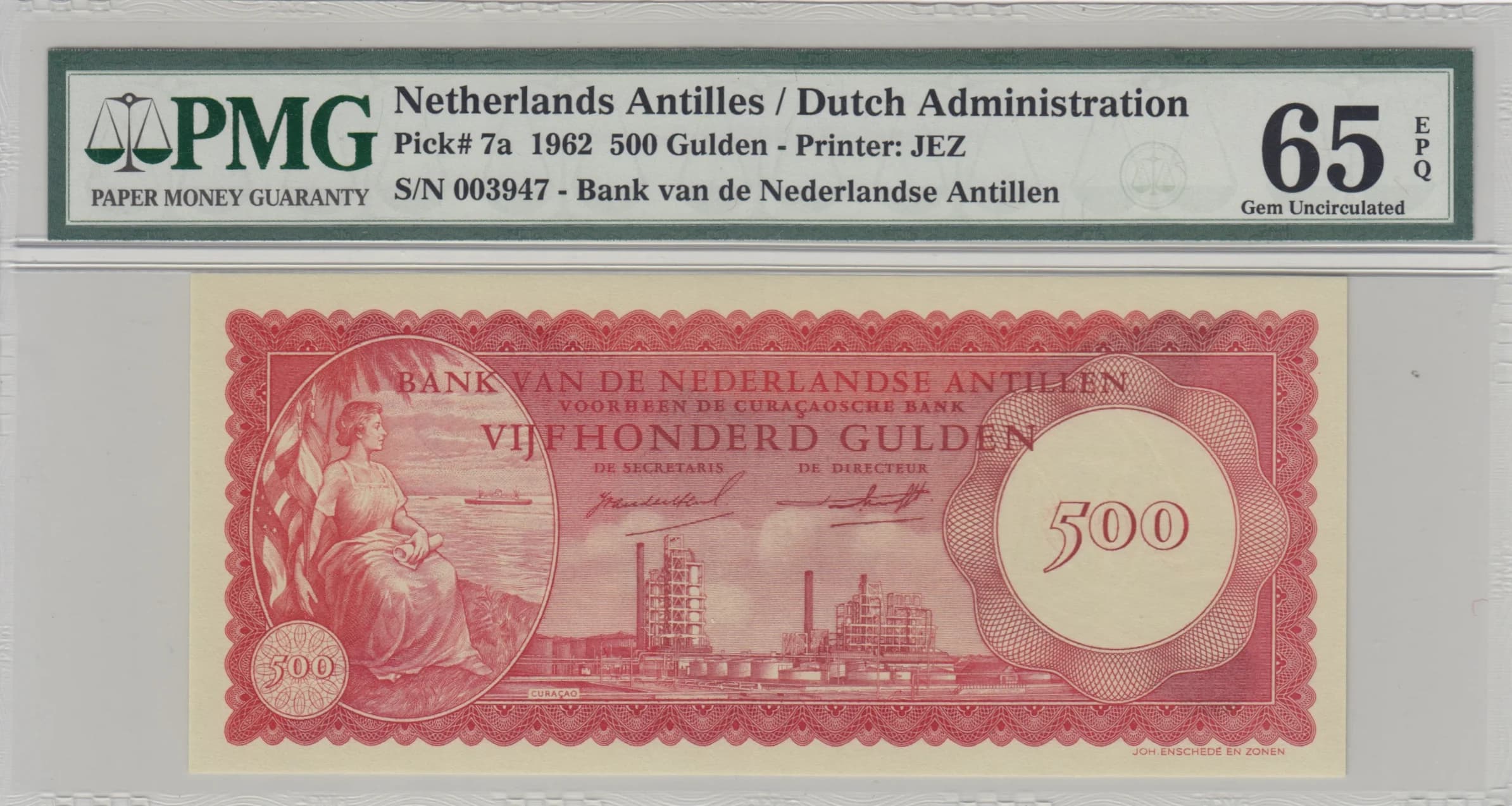
This is an exceptional example of the Netherlands Antilles 500 Gulden from 1962 (Pick P-7a), graded PMG 65 EPQ, representing a classic mid-20th century Caribbean currency issue. The note displays pristine condition with no visible wear, creases, or damage, featuring striking red/pink intaglio printing on a cream background with intricate engraved details throughout. The architectural centerpiece depicting Curaçao's modern oil refinery complex alongside the classical allegorical female figure makes this a historically significant representation of the island's industrial prosperity during the post-war economic boom.
Common. While this Pick P-7a variant is a classic and historically significant issue from 1962, the denomination and issuer's print runs were substantial enough to ensure availability in the collector market. eBay market data shows regular sales activity across multiple grades (PMG 64-67 and UNC), with prices ranging from approximately $305 to $580 historically, suggesting steady but not scarce supply. The 2019 catalog valuation of $450 VF and $1,200 UNC reflects strong collector demand but not genuine rarity. Notes of this vintage from established security printers like Enschede typically had large print runs, and this example shows no special characteristics (early serial number, rare signature combination, or overprint variants) that would elevate it beyond common status.
Issued on January 2, 1962, this note reflects the Netherlands Antilles' period of economic development centered on petroleum refining, with the Curaçao refinery complex prominently featured as a symbol of regional prosperity and modernization. The Bank van de Nederlandse Antillen, successor to the Curaçaosche Bank, issued this denomination to serve the financial needs of the Dutch Caribbean territories during the early 1960s. The classical female allegorical figure and heraldic arms symbolize the blend of European heritage and Caribbean identity that characterized the post-colonial period of the Dutch Antilles.
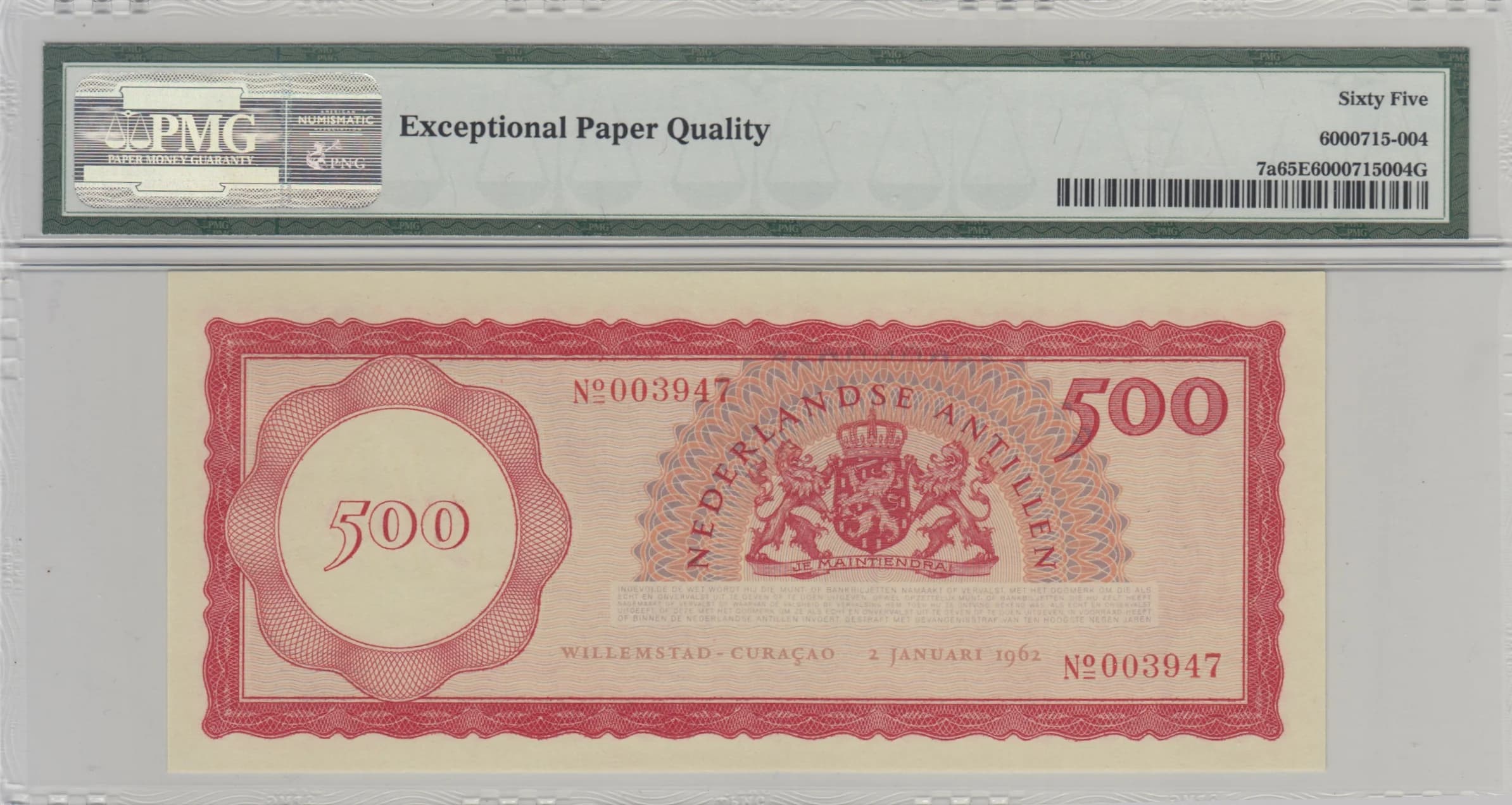
The obverse features a classical allegorical female figure in flowing robes, seated within an ornate circular medallion on the left side, holding a palm frond and adjacent to a flag or banner—representing Liberty, Peace, or Caribbean prosperity. The central design showcases the modern Curaçao oil refinery with multi-story industrial and administrative buildings, symbolizing the economic foundation of the island's mid-20th century development. The reverse displays the heraldic coat of arms of the Netherlands Antilles, featuring a crowned lion rampant within a decorative shield, positioned at center-right. Both sides are framed by an elegant scalloped ornamental border, with the denomination '500' displayed in prominent decorative circular frames on both the obverse and reverse. The intricate guillochéd background patterns and fine cross-hatching throughout provide sophisticated anti-counterfeiting security.
FRONT SIDE: 'BANK VAN DE NEDERLANDSE ANTILLEN' (Bank of the Netherlands Antilles) / 'VOORBEEN DE CURAÇAOSCHE BANK' (Formerly the Curaçao Bank) / 'VIJF HONDERD GULDA' (Five Hundred Gulden) / 'DE SECRETARIS' (The Secretary) / 'DE DIRECTEUR' (The Director) / 'CURAÇAO' / '500' (denomination). BACK SIDE: 'DE NEDERLANDSE ANTILLEN' (The Netherlands Antilles) / 'WILLEMSTAD - CURAÇAO' (Willemstad - Curaçao, capital and location) / '2 JANUARI 1962' (2 January 1962, issue date) / 'MAINTENDRA' (French: 'Will maintain,' likely part of a heraldic motto) / Serial number 'No 003947' (appears twice).
Intaglio engraving (taille-douce) executed by Johan Enschede of the Netherlands, as indicated by the 'JEZ' printer mark visible on the note. This classical security printing method creates the characteristic deep relief, fine line work, and complex cross-hatching patterns observed throughout the note. The precise registration of the red/pink color on the cream underprint demonstrates the high technical quality associated with Enschede's renowned security printing operations during this period.
This note is identified as Pick P-7a with printer mark 'JEZ' (Johan Enschede Zonen). The PMG Population Report indicates two cataloged variants exist: P-7a and P-7s (specimen issue). This example represents the standard circulating variety. Serial number 003947 appears in an early range for the 1962 issue, but early serial numbers do not constitute a recognized variety for this Pick number. No overprints, date variations, or signature varieties are evident that would further classify this specific note beyond the standard P-7a designation.