10 gulden 1979
Market Prices
14 salesAbout This Note
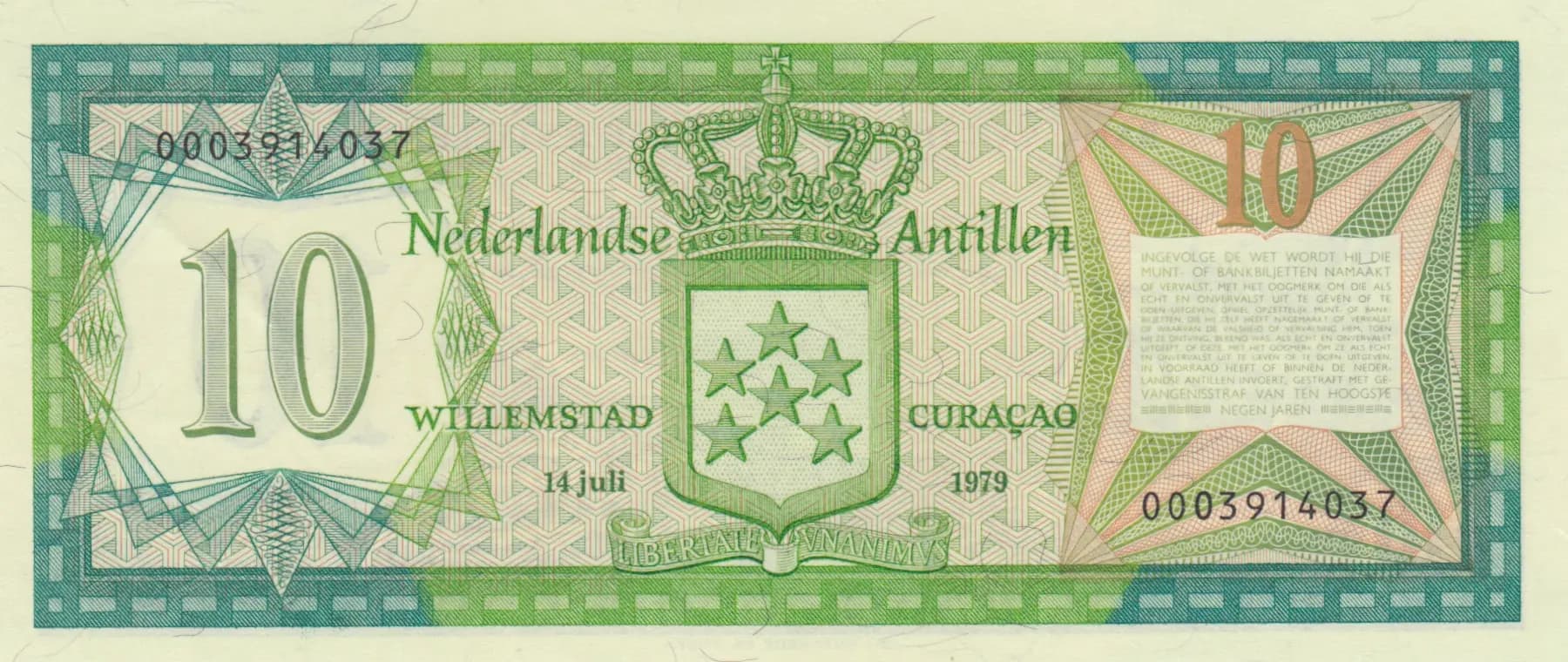
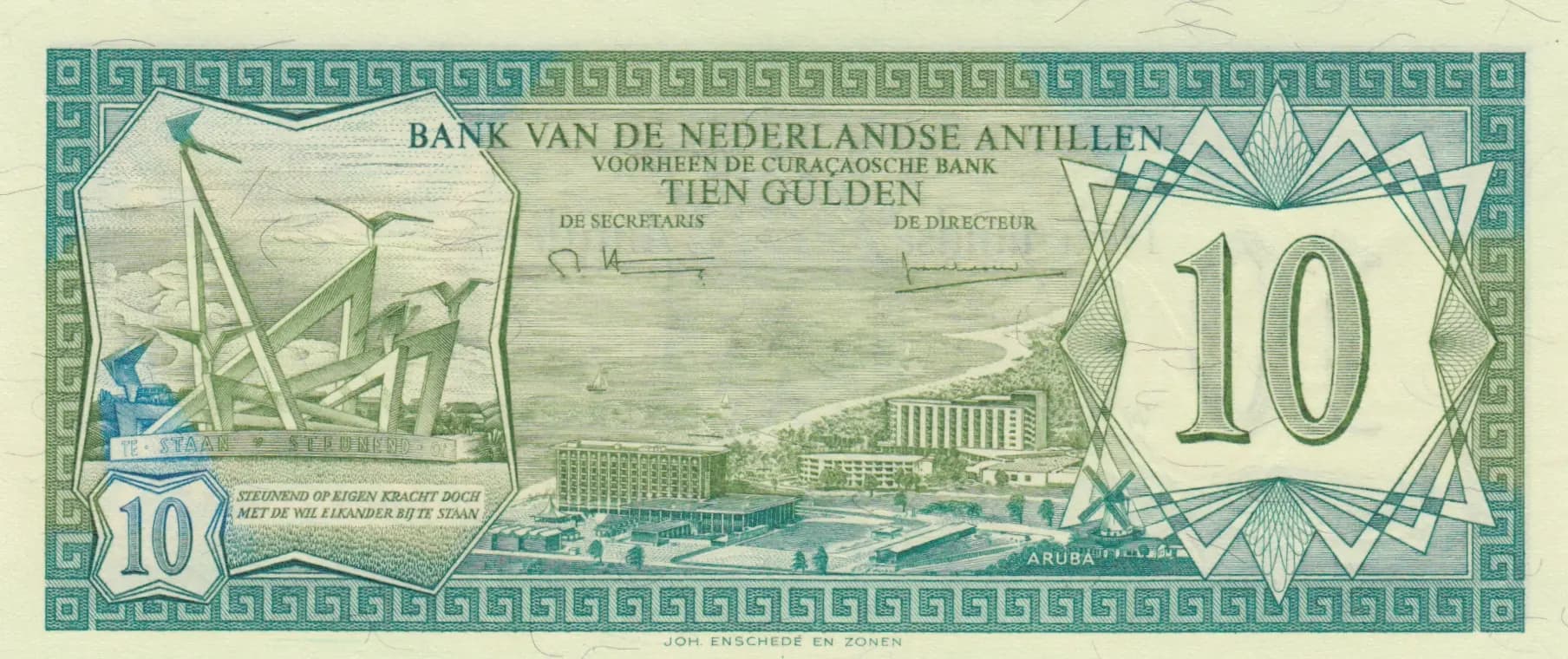
This is an uncirculated 1979 Netherlands Antilles 10 gulden note (Pick 16a) in exceptional condition, showing no signs of circulation wear. The note features a striking dual design: the front displays the crowned coat of arms with five-star shield of the Netherlands Antilles in green and cream tones, while the reverse depicts a vibrant maritime scene of Aruba's harbor and port facilities with a sailboat. The intricate geometric patterns, fine line engraving, and pristine preservation make this an attractive example of late 20th-century Caribbean currency.
Common. This is a regular-issue banknote from a major Caribbean central bank, with substantial circulation numbers typical of a 1979 10-unit denomination note. Market data supports this assessment: eBay sales records show consistent pricing ranging from $5–$15 for circulated examples (F-VF grades) and $38–$140 for graded higher-grade examples, with no evidence of scarcity premiums. The 2019 catalog valuation of $125 for UNC is moderate. Notes in this condition appear with reasonable regularity in the market. The variant breakdown (P-16a and P-16b) indicates two printing varieties exist, but neither is noted as scarce in PMG population reports.
Issued in 1979 by the Bank van de Nederlandse Antillen (successor to the Curaçao Bank), this note commemorates the sovereignty and identity of the Netherlands Antilles during a period of evolving political status. The imagery—featuring both Curaçao (depicted through Willemstad's monument and the crowned arms on the front) and Aruba (shown through the harbor scene on the back)—reflects the multi-island federation's economic dependence on trade, shipping, and port operations. The Latin motto 'Libertate Unanimity' (Liberty and Unanimity) underscores the federation's aspirations during this era.
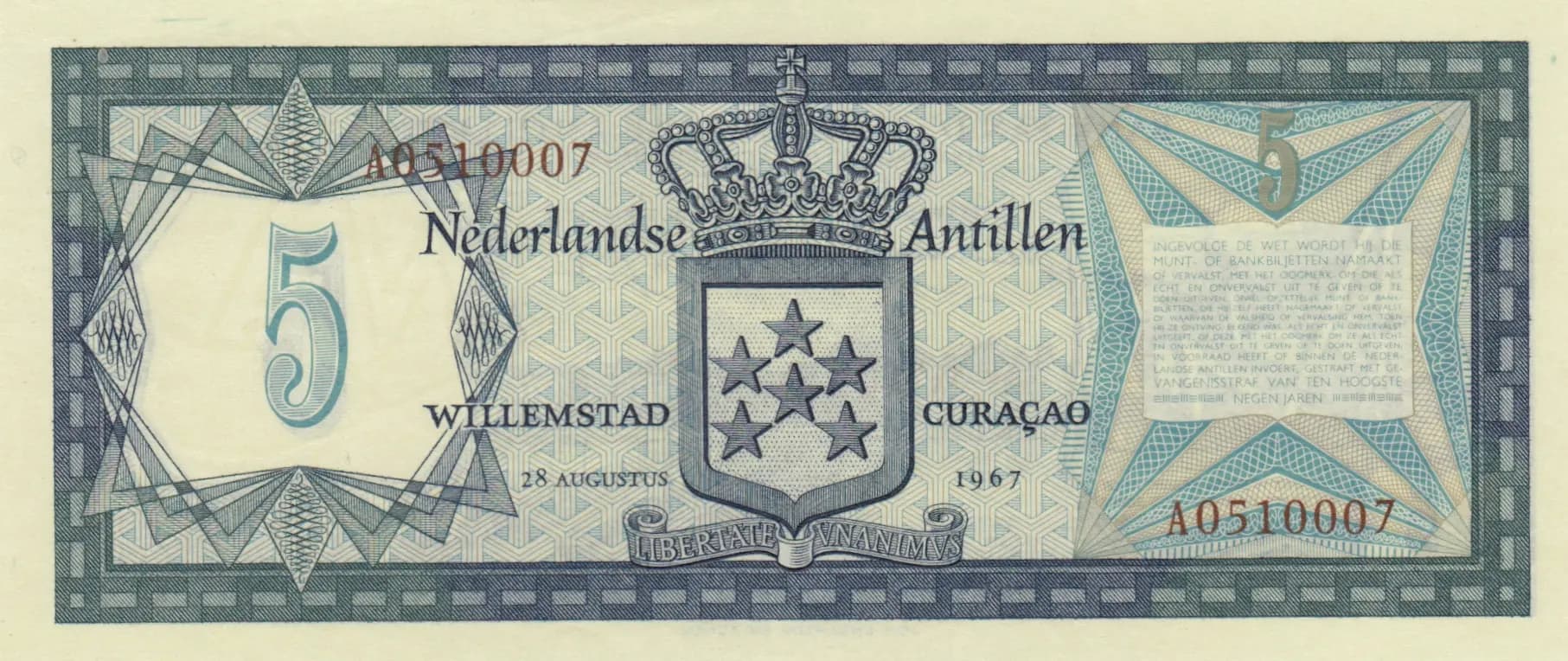
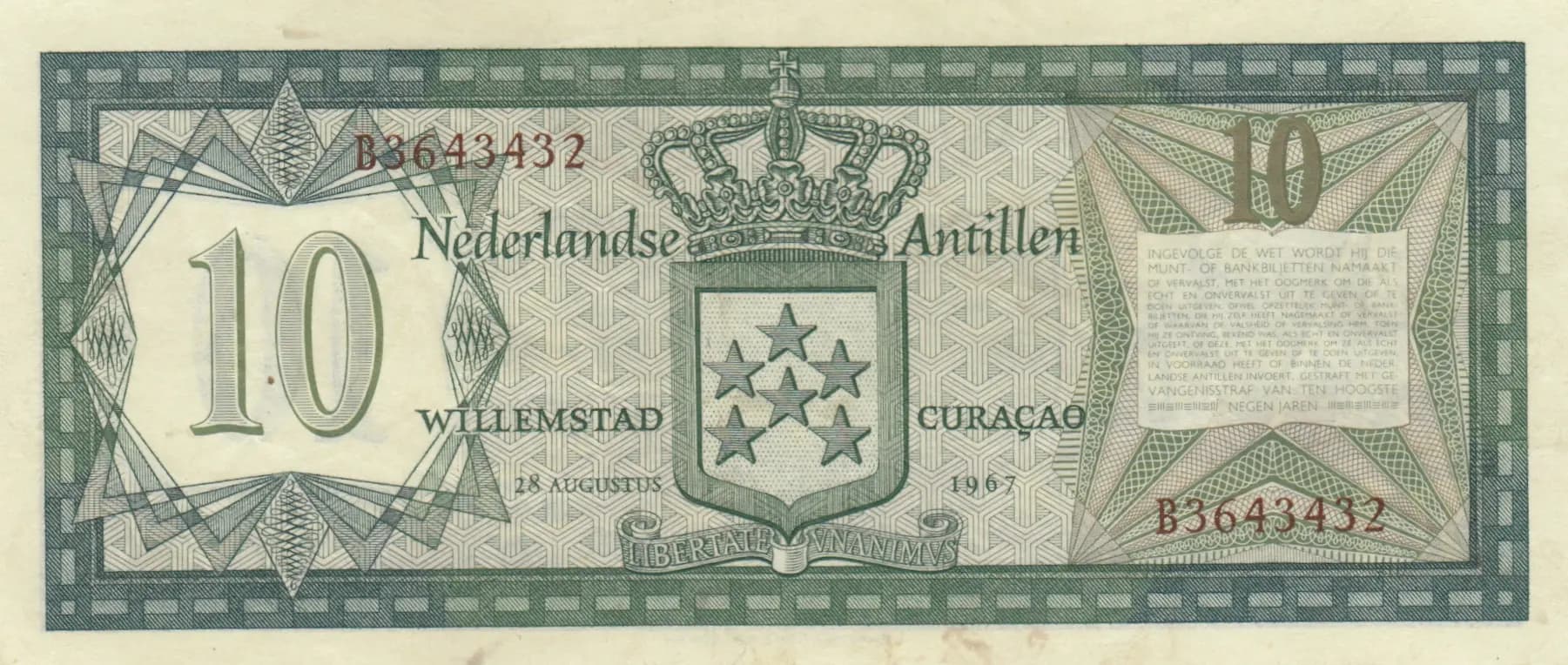
The obverse (front) features the crowned coat of arms of the Netherlands Antilles at center—a shield bearing five stars arranged in heraldic formation, surmounted by a royal crown and cross. The design is rendered in green and cream on multicolored underprint with elaborate geometric border patterns and security microprinting. The denomination '10' appears in large numerals on both left and right margins. The reverse (back) depicts a picturesque harbor scene representing Aruba, with port infrastructure including buildings, cargo containers, and a traditional sailboat on water, framed by the same geometric border treatment and color palette. The printer attribution 'Joh. Enschede en Zonen' (Johan Enschede, renowned Dutch security printer) appears at the base. Signature lines for both the Secretary and Director are present on the reverse.
FRONT SIDE: 'Nederlandse Antillen' (Netherlands Antilles), 'Willemstad' (capital of Curaçao), 'Curaçao' (island name), '14 juli 1979' (July 14, 1979 — date of issue), 'Libertate Unanimity' (Latin: Liberty and Unanimity — national motto), '10' (denomination), serial number '0003914037', plus legal text regarding banknote validity. BACK SIDE: 'Bank van de Nederlandse Antillen' (Bank of the Netherlands Antilles), 'Voorheen de Curaçaosche Bank' (Formerly the Curaçao Bank), 'Tien Gulden' (Ten Gulden in Dutch), 'De Secretaris' (The Secretary — signature line), 'De Directeur' (The Director — signature line), 'Aruba' (island name), 'Joh. Enschede en Zonen' (printer/engraver attribution), '10' (denomination), plus fine print legal and descriptive text.
Intaglio (engraved) printing combined with multicolor lithography, characteristic of Johan Enschede en Zonen's work. The visual analysis reveals sophisticated fine-line engraving with crosshatching, geometric micropatterns, and intricate security printing throughout. The precision of the landscape vignette on the reverse and the complex border decorations are hallmarks of traditional banknote intaglio production, complemented by careful color registration in multiple passes to achieve the green, teal, cream, and blue palette.
This is identified as Pick 16a, the first variant of the 1979 10 gulden issue. A second variant (P-16b) is cataloged by Pick, both printed by Johan Enschede (JEZ abbreviation visible on the note). The visual analysis does not reveal overprints, altered dates, or unusual serial number prefixes that would indicate a special issue or error variety. The specific serial number visible (0003914037) is within the normal range for regular production runs. Collectors should compare P-16a and P-16b specimens to identify distinguishing characteristics; these may relate to printer marks, signature variations, or subtle design changes across production batches.