5 rupees 1985 specimen
About This Note
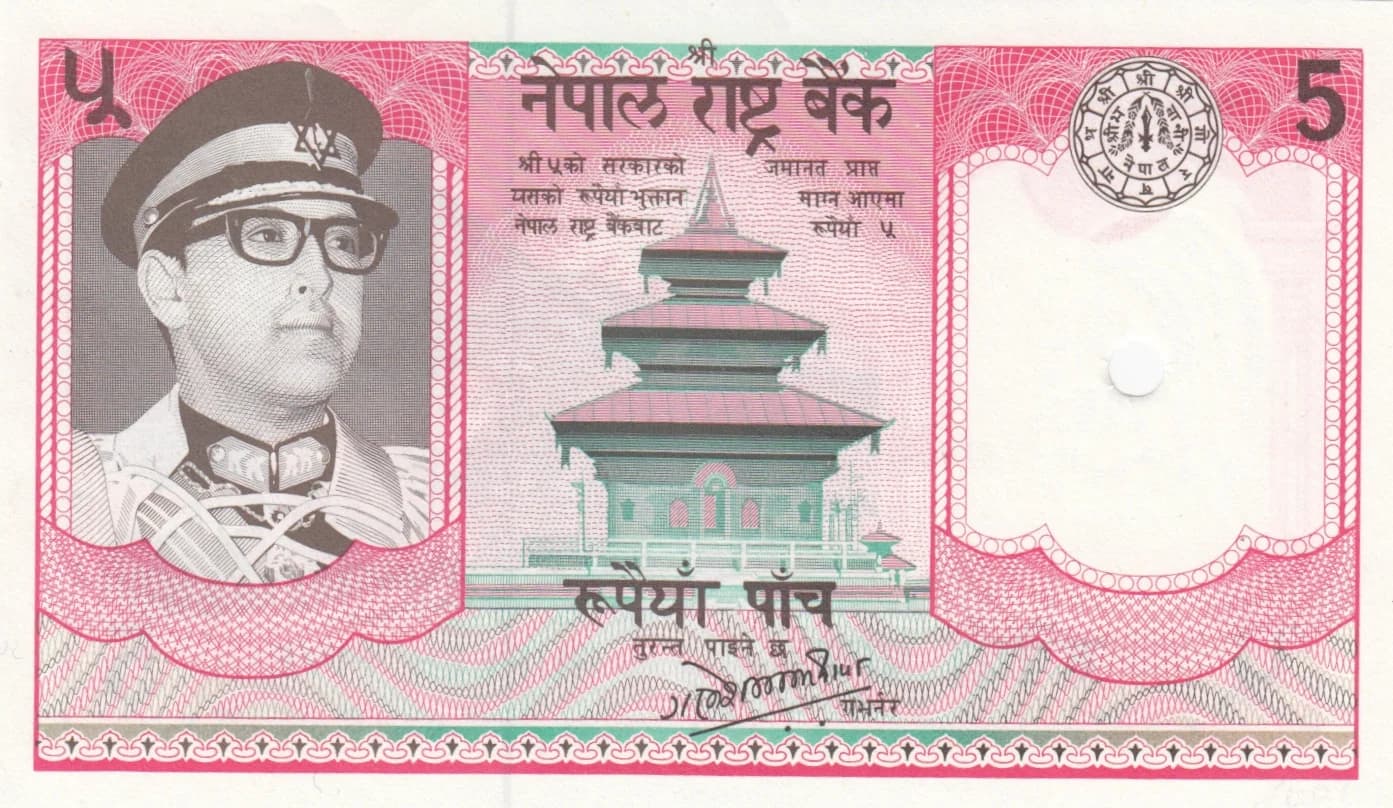
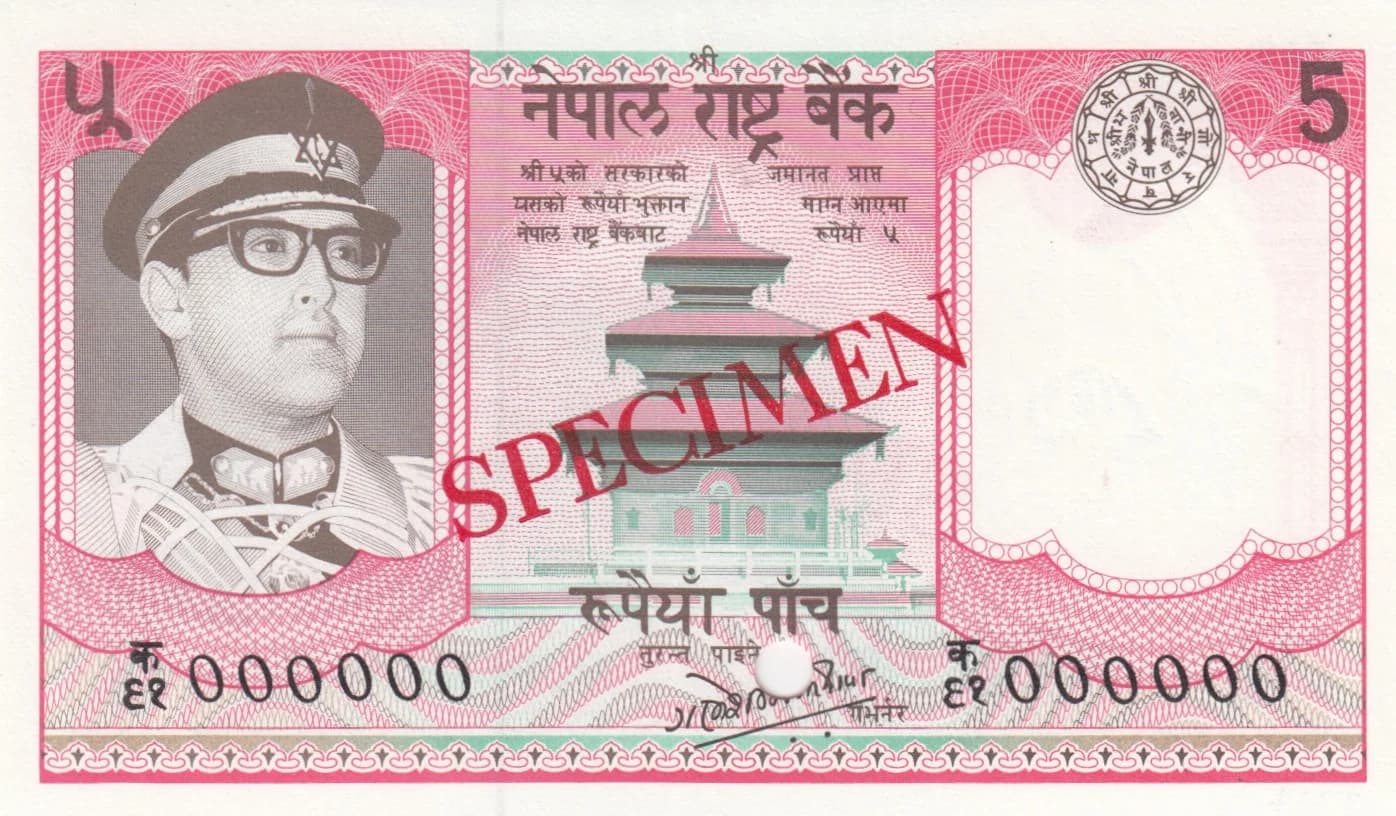
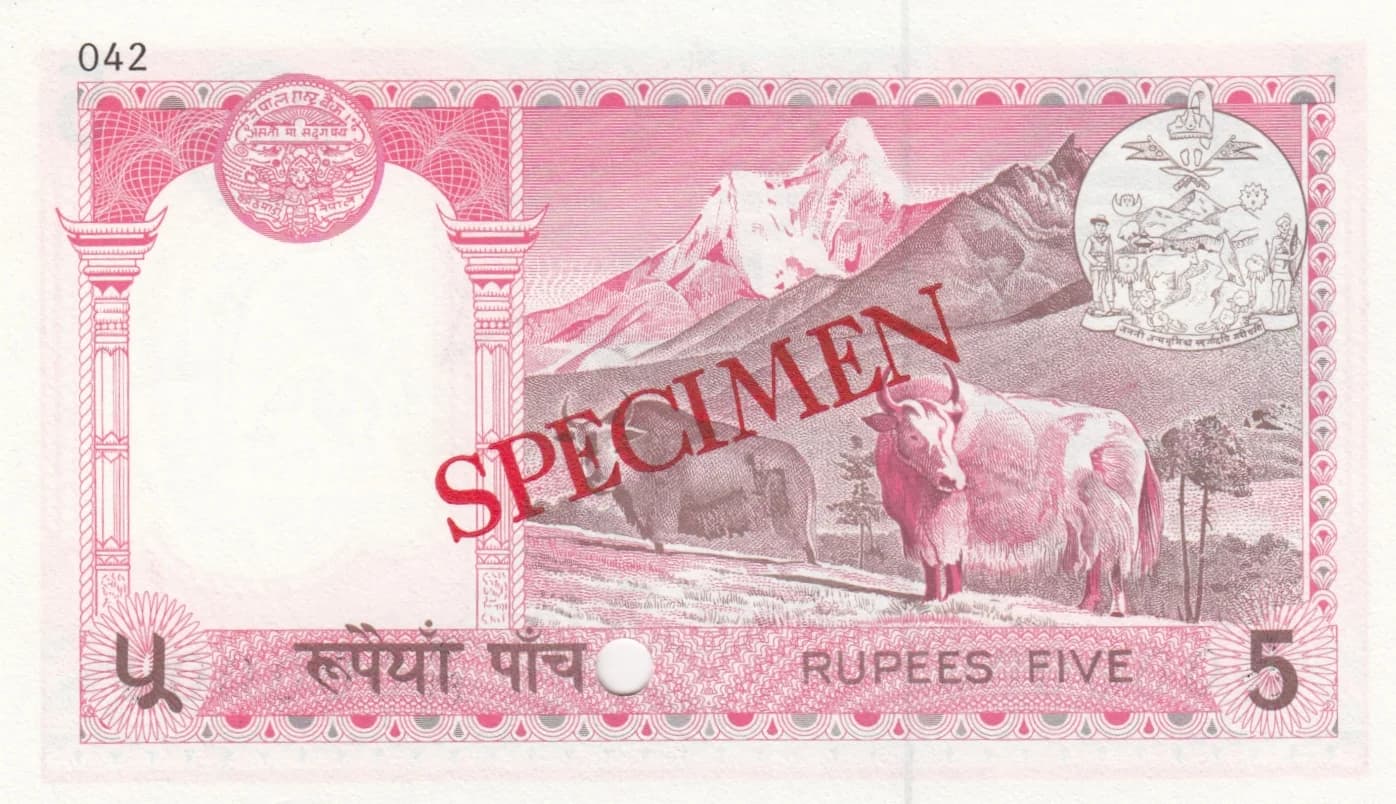
This is a striking specimen note from Nepal Rastra Bank's 1985 issue of the 5 Rupees denomination, presented in pristine uncirculated condition. The note features a portrait of King Birendra Bir Bikram in military dress on the obverse and a dramatic Himalayan landscape with a yak on the reverse, both rendered in pink and magenta tones with exceptional engraving detail. As a specimen overprint with diagonal red text, this note represents a non-circulating bank issue created for presentation and archival purposes, making it an interesting addition to any Nepal currency collection.
Common. The 1985 issue of the 5 Rupees denomination was produced in substantial quantities by Nepal Rastra Bank. Specimen notes, while non-circulating, were routinely prepared for archival, presentation, and distribution to central banks and numismatic institutions. No historical data suggests a restricted print run or early recall of this particular specimen variety. The denomination and issue date place it squarely within standard circulation-era Nepalese currency, and specimen copies of regular circulating designs are generally common in the secondary market.
This 1985 specimen note was issued during the reign of King Birendra Bir Bikram (1972-2001) under Nepal's Panchayat system of government, as referenced in the Nepali inscriptions. The imagery—combining the reigning monarch with Nepal's iconic Himalayan landscape and yaks—reflects the nation's identity during this period of constitutional monarchy. The note's design celebrates both political authority and Nepal's natural heritage, particularly important symbols of Himalayan identity and commerce.
The obverse features a left-facing portrait of King Birendra Bir Bikram wearing a military uniform with decorative medals, spectacles, and a military peaked cap—a formal military dress reflecting his role as Supreme Commander. Centrally positioned is the Taleju Temple (also known as the Taleju Bhawani Temple), identified by its distinctive multi-tiered pagoda architecture with green-teal colored roof sections, representing Nepal's spiritual and cultural heritage. The reverse depicts a panoramic Himalayan landscape with snow-capped peaks, multiple mountain ranges, and prominent yak in the foreground—animals central to high-altitude Nepalese commerce and daily life. An ornate decorative gateway with Corinthian-style columns frames the left side of the reverse. Circular seals/emblems appear in the top right corner of both sides. The entire design incorporates intricate guilloche patterns, fine geometric and floral decorative borders, and detailed engraving work throughout.
Front side: 'नेपाल राष्ट्र बैंक' (Nepal Rastra Bank), 'श्रीपञ्चायत सरकारको' (Panchayat Government), 'जमानत प्राप्' (Guaranteed), 'भागमान दिपमा' (Issued under authority), 'प्रत्येक टोलमुसुलान' (Each locality), 'नेपाल राष्ट्र बैंकबाट' (From Nepal Rastra Bank), 'रुपया पञ्च' (Rupees Five), 'SPECIMEN' (Specimen overprint), serial numbers 'इ २०००००० | इ २०००००'. Back side: 'रुपया पञ्च' (Rupees Five), 'RUPEES FIVE' (English denomination), 'SPECIMEN' (Specimen overprint), 'नेपालको वाणिज्य' (Commerce of Nepal).
Intaglio engraving (line engraving/copperplate), evidenced by the fine line work, complex guilloche background patterns, and multi-layer security printing visible in both the portraits and landscape elements. The precision of the decorative borders, intricate geometric patterns, and the fine detail in the Taleju Temple and mountain scenery are characteristic of classical security printing. This printing technique is standard for Nepal Rastra Bank notes of this era.
This is a specimen overprint variety of Pick P-23(3)s from 1985. The 'SPECIMEN' overprint in large red diagonal text is the defining characteristic, applied across both obverse and reverse. The specimen designation '(3)' in the Pick catalog reference indicates this is the third recorded specimen variety or printing of this denomination from the 1985 series. Serial numbers visible suggest this follows standard specimen numbering conventions (numerals like २०००००ं). No signatures are visible due to the specimen overprint coverage, which is typical for bank-prepared specimen notes.