10 mohru 1953
Market Prices
20 salesAbout This Note
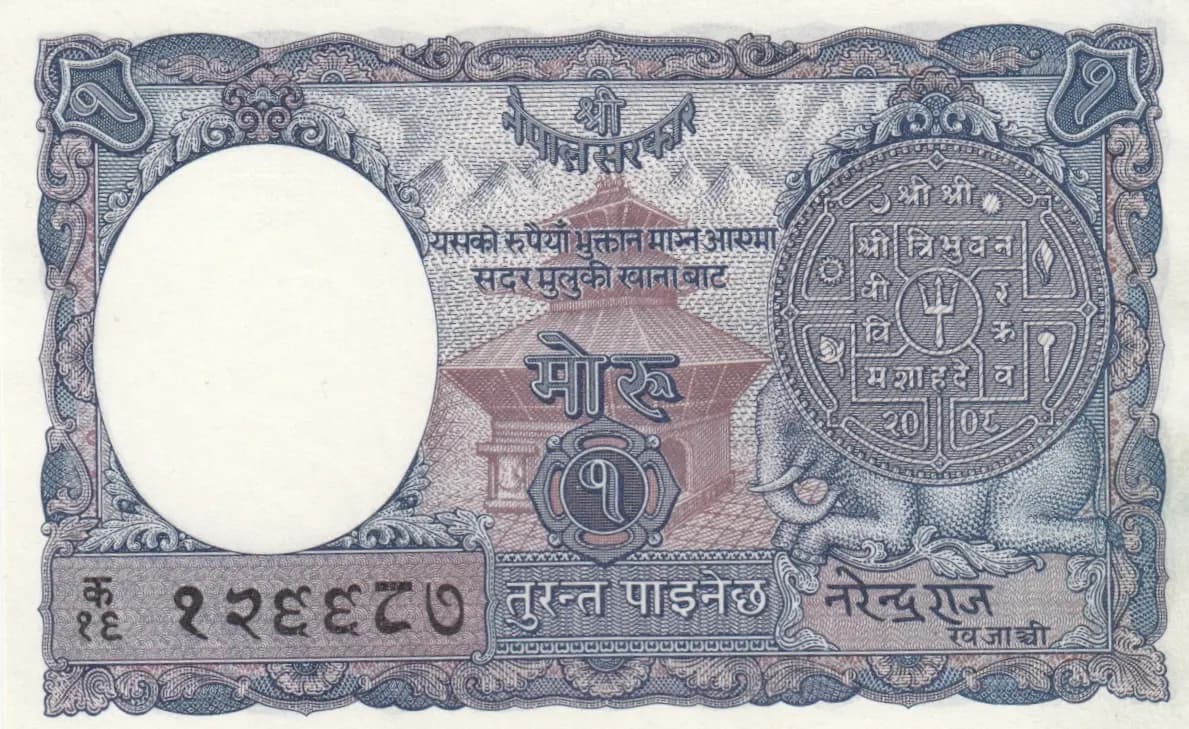
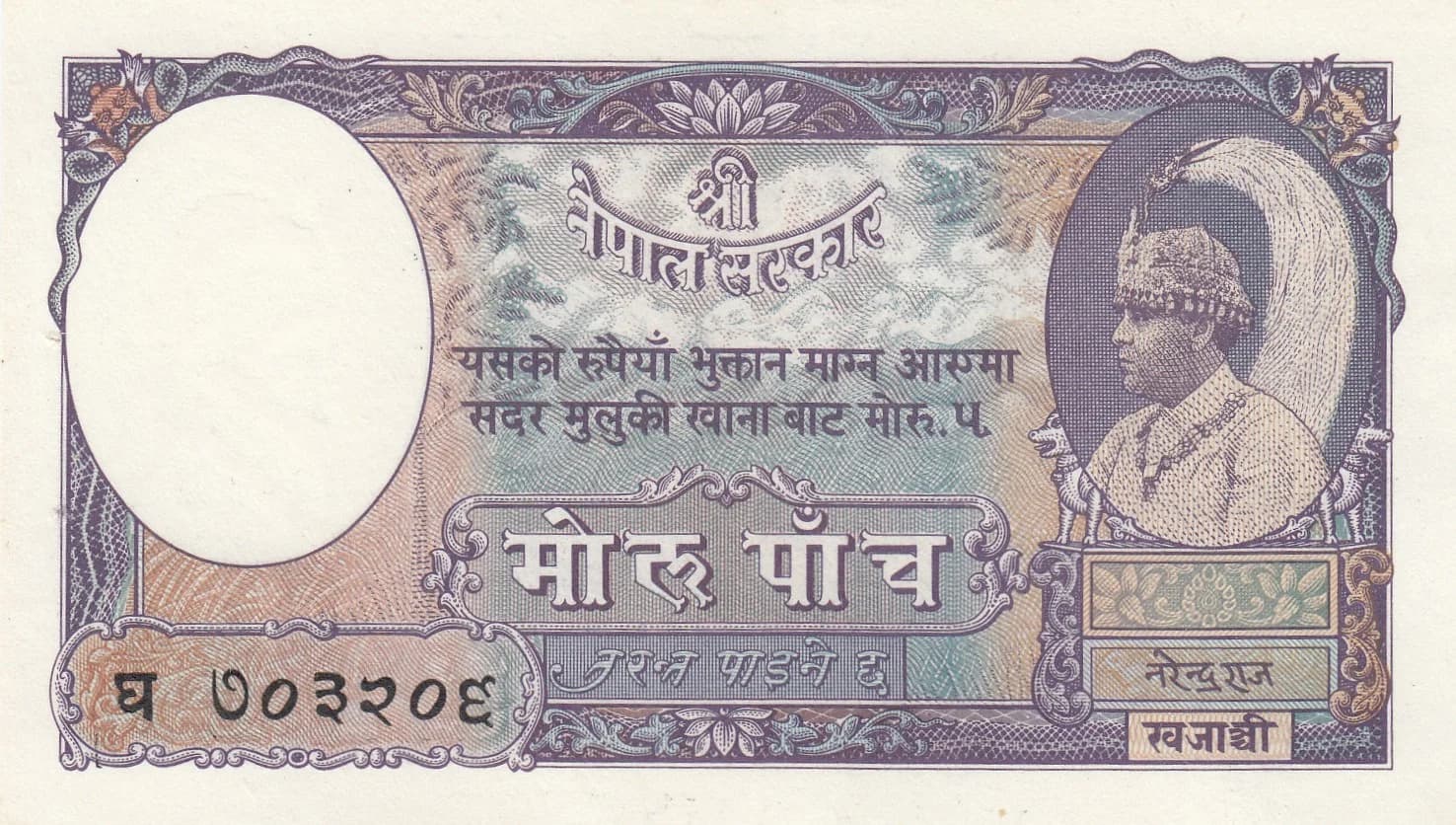
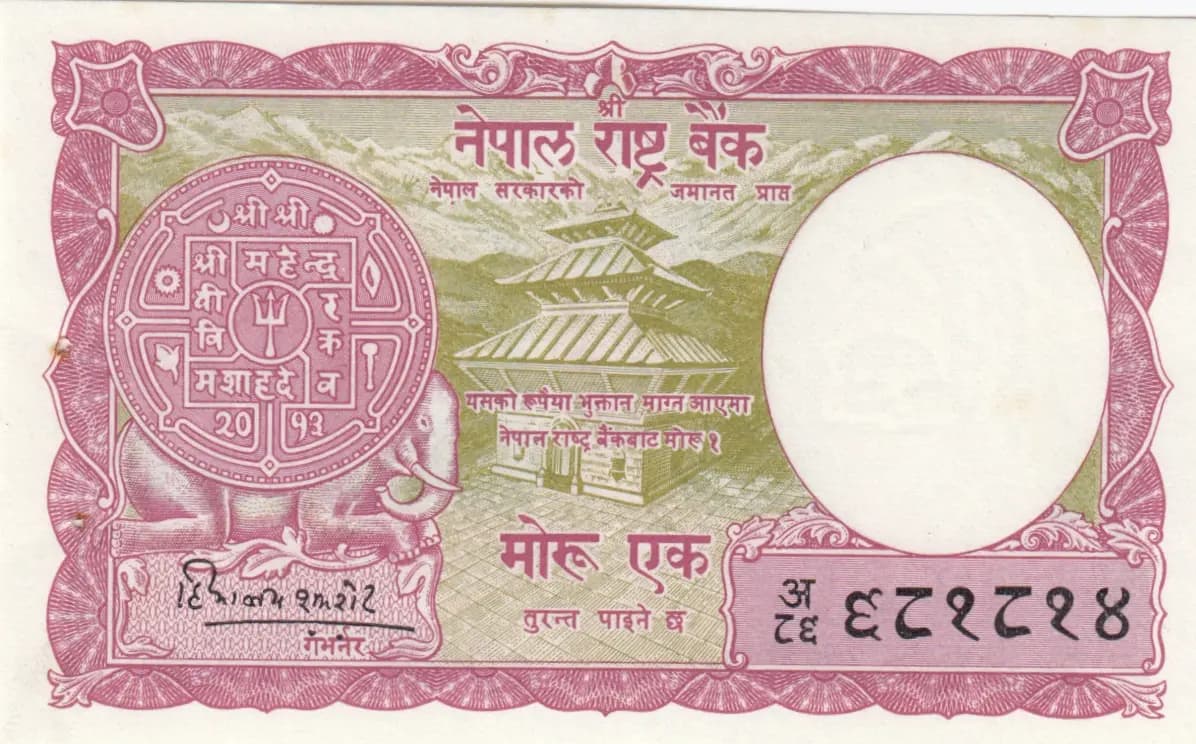
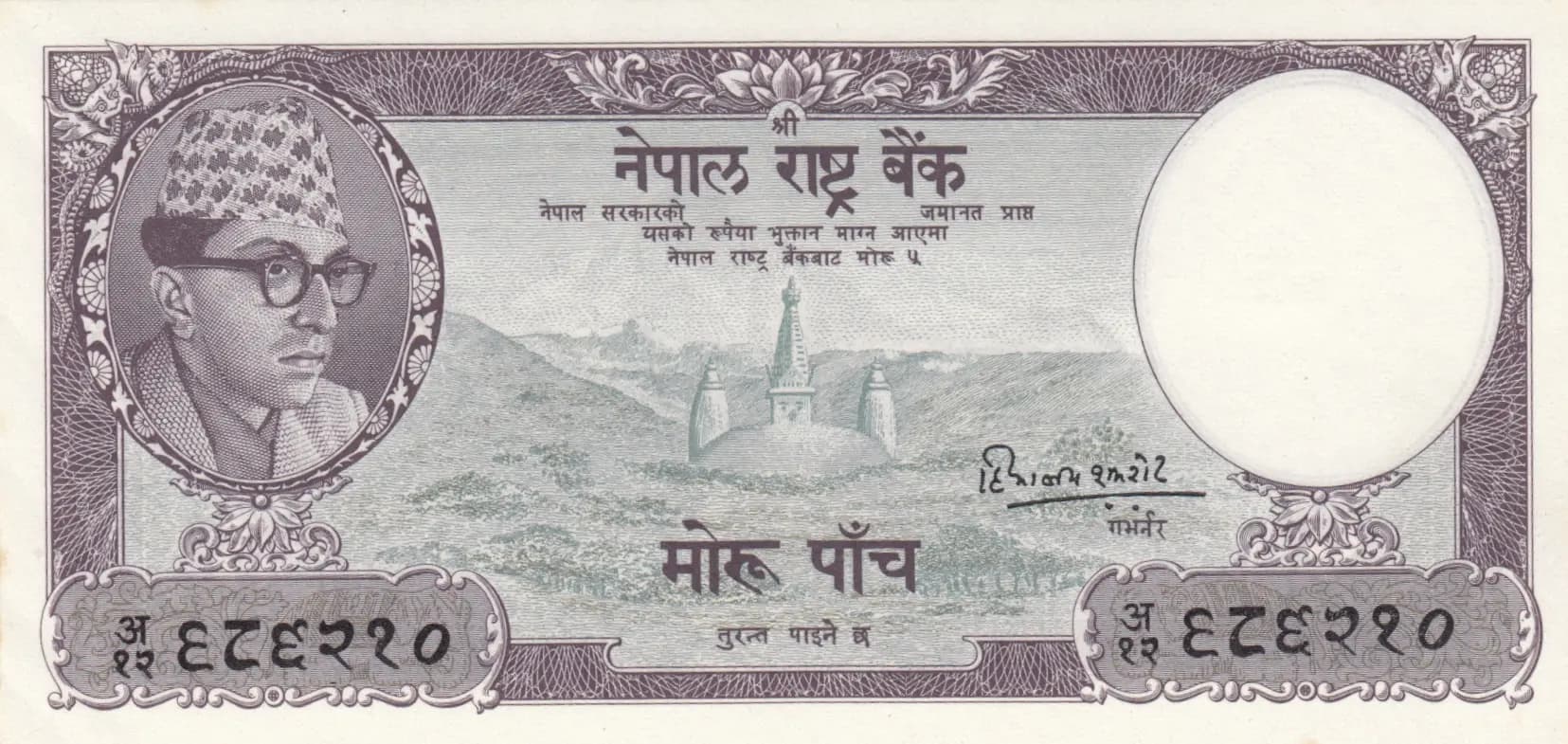
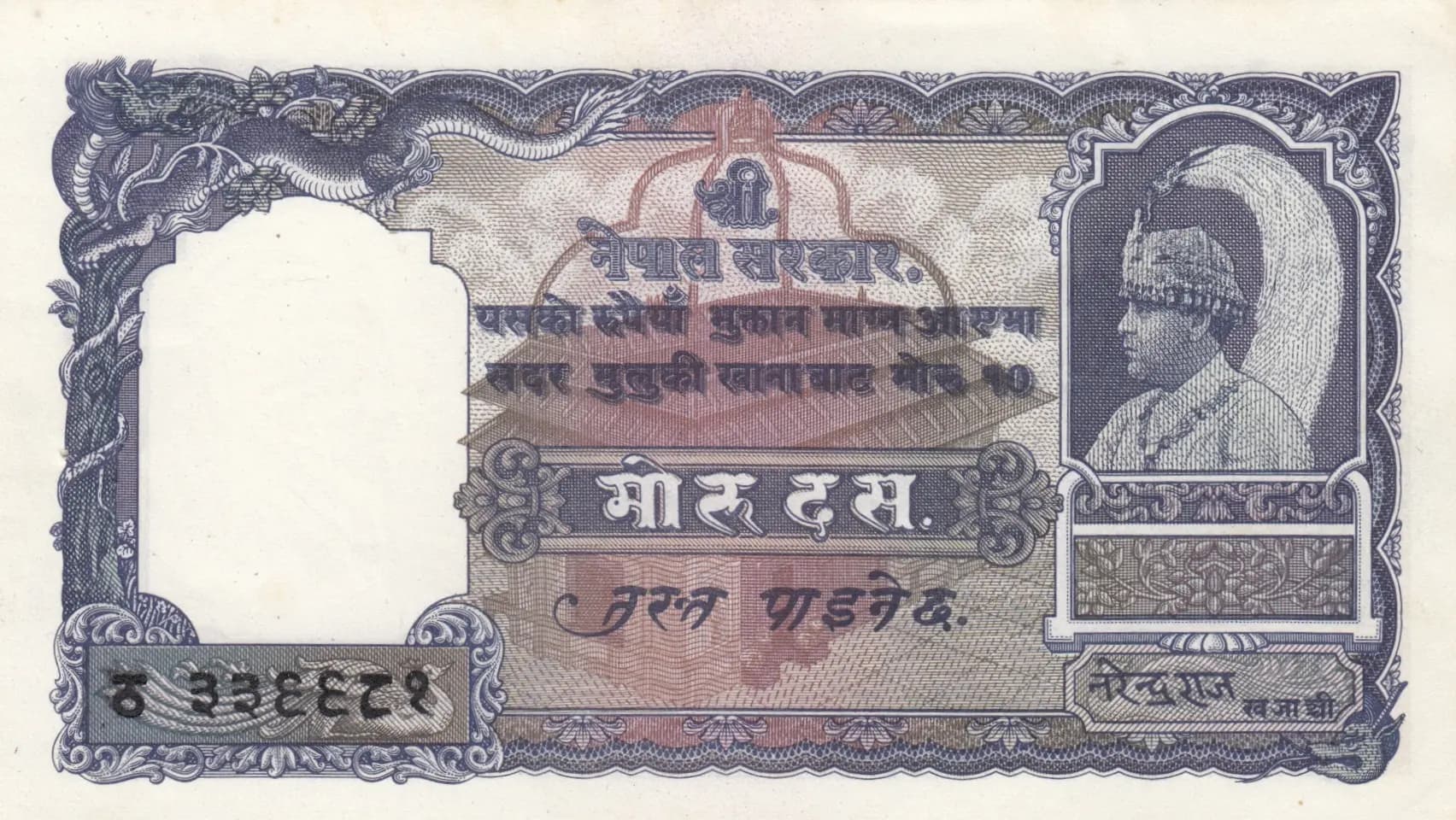
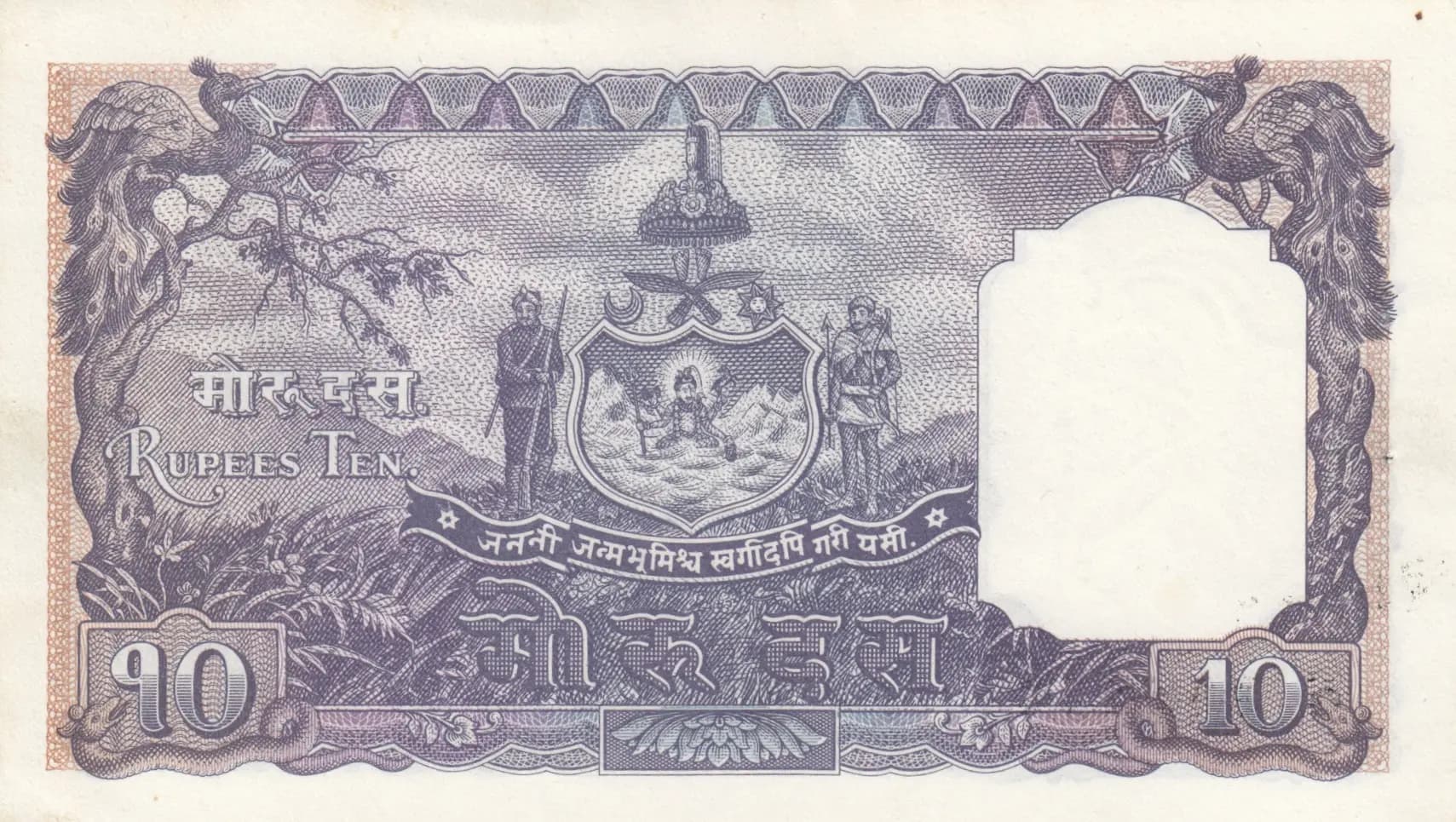
This Nepal 10 Mohru note from 1953 presents a fine example of mid-20th century South Asian currency design, featuring King Tribhuvana Bir Bikram's portrait on the obverse and the Nepalese coat of arms on the reverse. The note exhibits the characteristic blue and pink color scheme with ornate engraving throughout, including a distinctive dragon design in the left border and detailed scrollwork. In AU condition, this circulated example shows age-appropriate foxing and toning consistent with over 70 years of preservation, representing an important transitional period in Nepal's post-independence currency history.
Common. eBay market data shows consistent sales in the $8-$50 range across multiple condition grades over the past decade, with most AU/UNC examples selling for $15-$37. The catalog 2016 valuation of $70 for UNC reflects asking prices rather than realized values. With a likely substantial print run during the 1953-1956 issuance period and no indication of recall or rarity in standard references, this note remains readily available to collectors. The AU condition grade does not command premiums significantly above lower grades, further confirming common status.
Issued between 1953-1956 by the Nepal Rastra Bank (then operating under the Government of Nepal's National Treasury), this note commemorates Nepal's early post-independence era and King Tribhuvana Vira Vikrama's reign. The inclusion of Guheshwari Temple (the domed religious structure visible in the center of the obverse) reflects Nepal's cultural and spiritual heritage, while the heraldic arms on the reverse emphasize national sovereignty. This period marked Nepal's transition from the Rana Oligarchy to constitutional monarchy and modernization of its financial institutions.
The obverse features a three-quarter portrait of King Tribhuvana Vira Vikrama in profile facing left, rendered in fine detail within an ornamental cartouche on the right side of the note. His formal attire and the plumed crown indicate royal status. The central design element is Guheshwari Temple, depicted as a domed structure with a cross-topped dome rendered in pink and red tones, symbolizing Nepal's religious and cultural identity. The elaborate left border incorporates a coiling dragon motif, a traditional Himalayan symbol. The back displays Nepal's coat of arms—a shield with heraldic elements including a seated deity or symbolic figure, flanked by standing guardian figures, with lion heads positioned in the upper corners. The entire design is executed in fine engraved line work with cross-hatching for tonal depth, predominately in blue and purple on cream background.
Front side: 'नेपाल सरकार' (Nepal Sarakar - Government of Nepal), 'मोहर दस' (Mohur Ten - Ten Mohur), 'भारत सरकार' (Bharat Sarkar - Government of India, a historical printing notation). Back side: 'RUPEES TEN' (English denomination), 'भारत सरकार' (Government of India, printer attribution), and a Devanagari inscription on the banner beneath the coat of arms (partially legible in visual analysis). The dual language presentation reflects Nepal's multilingual administration of the period.
Intaglio engraving (line engraving and steel plate printing), as evidenced by the fine detailed line work, precise cross-hatching, and the characteristic sharp definition of borders and portrait details visible throughout the note. The printer is identified in the PMG population report as ISP (likely India Security Press, which produced many early Nepalese notes), consistent with the 'Bharat Sarkar' (Government of India) notation visible in the inscriptions, indicating production by Indian security printing facilities during Nepal's early independence period.
This note is cataloged as Pick P-6 (10 Mohru). The visual analysis indicates this is 'Type II heading' per realbanknotes.com reference, distinguishing it from the earlier P-3 variant which featured a different signature (Narendra Raj Pandit signature noted on similar earlier notes). The heading 'Shri Nepal Sarakar' and issuing authority 'National Treasury (Sadar Muluki Khana)' are consistent with the standard P-6 type. No specific serial number prefix or signature visible in the provided images to determine further sub-variety classification, though the date range ND (1953-1956) applies to this issue. The PMG population report documents 16 total variants across the P-60 series group, with P-6 being the base 10 Mohru denomination.