1 mohru 1956
Market Prices
24 salesAbout This Note
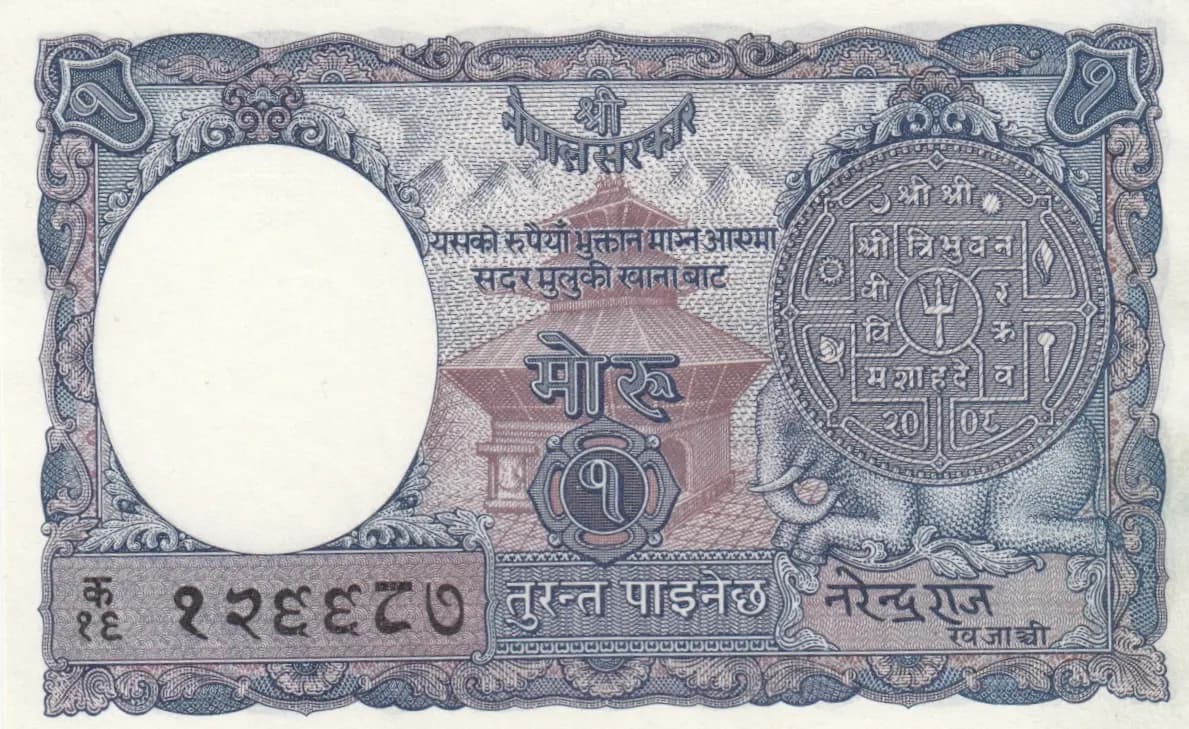
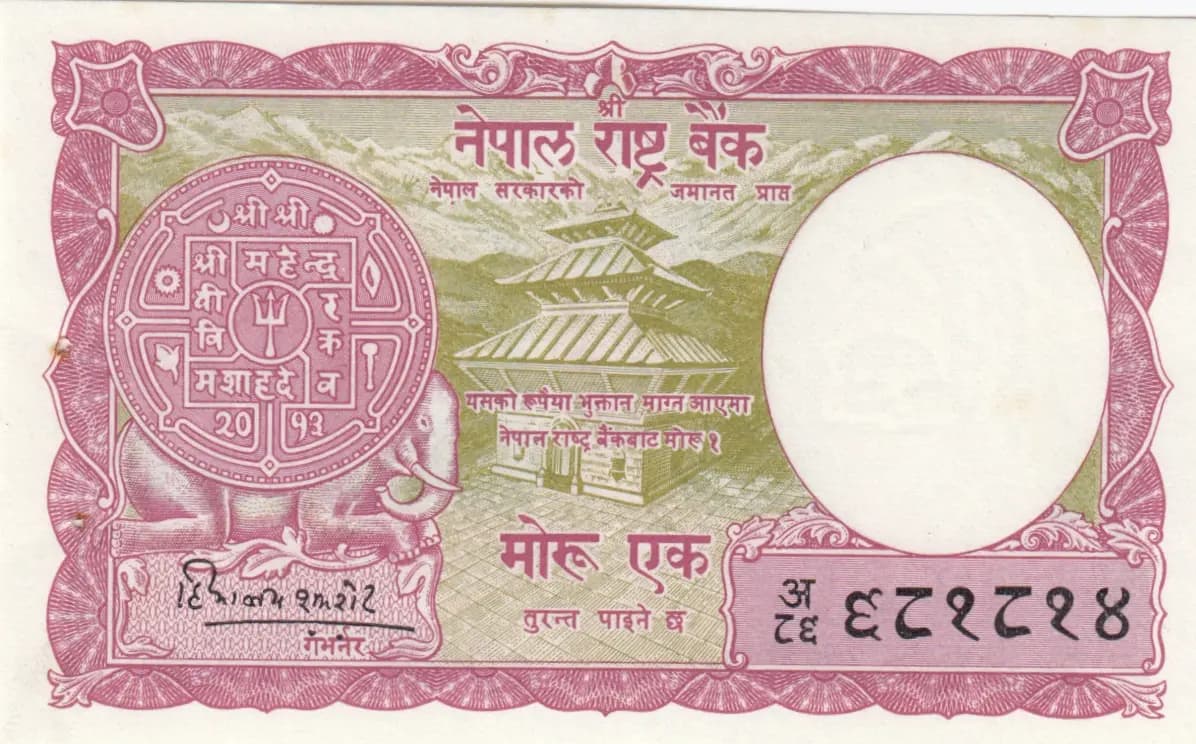
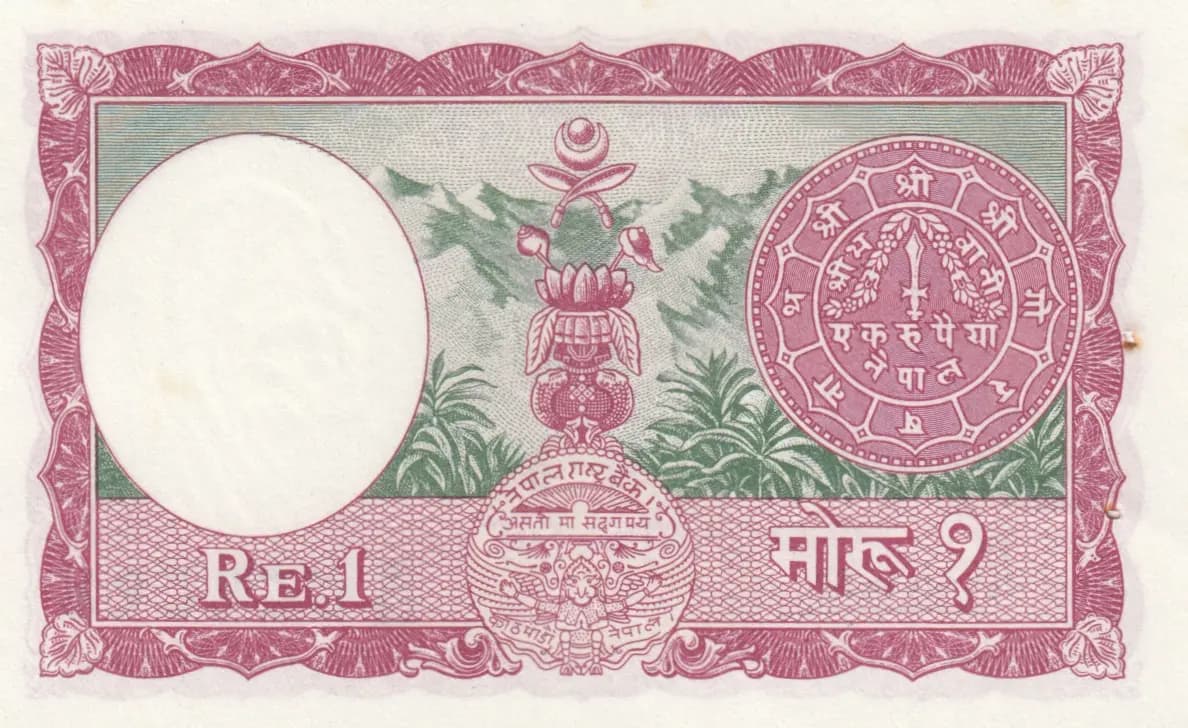
This is a 1 Mohru note from Nepal Rastra Bank issued in 1956 (Vikram Samvat era), presented in UNC condition with crisp printing and minimal wear. The note features distinctive early Nepal currency design with intricate circular seals containing geometric patterns and Devanagari script on both sides, complemented by a landscape vignette depicting terraced agricultural fields and mountain scenery on the front. The pink/magenta and olive-green color scheme with ornate shell-motif borders represents a notable early period of Nepal's monetary design, making this an important example of mid-20th century Nepalese currency before the transition to 'Rupee' denominations.
Common. This note circulated widely and remains readily available in the collector market. eBay pricing data shows consistent sales activity across multiple condition grades from 2013-2023, with UNC examples selling for $3.75-$7.99, indicating strong but not exceptional collector demand. The 2016 catalog value of $10 for UNC condition further supports common status. Print runs for this denomination appear to have been substantial enough to maintain circulation, and the lack of significant condition premiums or rarity reports in PMG population data confirms ordinary market availability.
This note was issued during Nepal's early post-unification period, when the newly established Nepal Rastra Bank (founded in 1956) began issuing national currency. The design elements—terraced Himalayan fields, traditional architecture, and the prominent national seal—reflect Nepal's agrarian economy and mountainous geography during this era of nation-building. The use of the Vikram Samvat calendar notation and early Devanagari script conventions demonstrates Nepal's assertion of cultural and monetary independence following the modernization efforts of the mid-1950s.
The front features a prominent circular seal on the left with intricate geometric maze-like patterns and Devanagari inscriptions, representing the seal of Nepal Rastra Bank. The right side displays a landscape vignette showing snow-capped Himalayan peaks, terraced agricultural fields characteristic of Nepal's hill regions, and traditional Nepalese architectural structures. A large oval white space was reserved for a portrait (unfilled on this unprinted specimen area). The back mirrors the seal design on the right side with an agricultural/botanical motif in the center—a decorative flowering plant finial with multiple blooms and tropical vegetation, symbolizing Nepal's agrarian heritage. Both sides are framed with ornate borders featuring shell-scroll decorative patterns typical of mid-century currency design. The color palette of pink/magenta with olive-green accents creates visual separation between design elements.
Front: नेपाल राष्ट्र बक (Nepal Rastra Bank / Nepal National Bank); नेपालको राष्ट्र बैंकको मोहर (Seal of Nepal National Bank); Serial number reference अ ८८१८१२८४. Back: मात्र १ (Only one / Mohru 1); RE 1 (English inscription); माहु ३ (Month 3 / Mahru 3). Additional Devanagari text on front includes references to Nepal Bank's authority and denomination identification.
Intaglio (engraved) printing, evidenced by the fine line work, crisp detail in the geometric seal patterns, and the precise registration visible in the ornamental borders. The intricate circular seals with their detailed maze-like geometric patterns and fine Devanagari script work are characteristic of high-security intaglio engraving used by central banks. No printer attribution is definitively documented in standard catalogs for this early P-8 issue, though Nepal's early notes were typically produced by established Swiss or British security printers. The fine line engraving quality and background pattern detail throughout confirm professional intaglio production methods.
Pick catalog lists two variants: P-8 (standard) and P-8s (specimen). This example appears to be the standard circulating version (P-8). Specific variety identification would require examination of signature combinations, serial number prefixes, and any overprint variations. The visual analysis indicates what may be a handwritten marking on the seal area, potentially a bank signature or control mark common to early Nepal issues. Serial number prefix 'अ' (Nepali 'A') may indicate a specific printing batch, though comprehensive variety documentation for early Nepal currency remains limited in English-language catalogs.