5 mohru 1956
Market Prices
9 salesAbout This Note
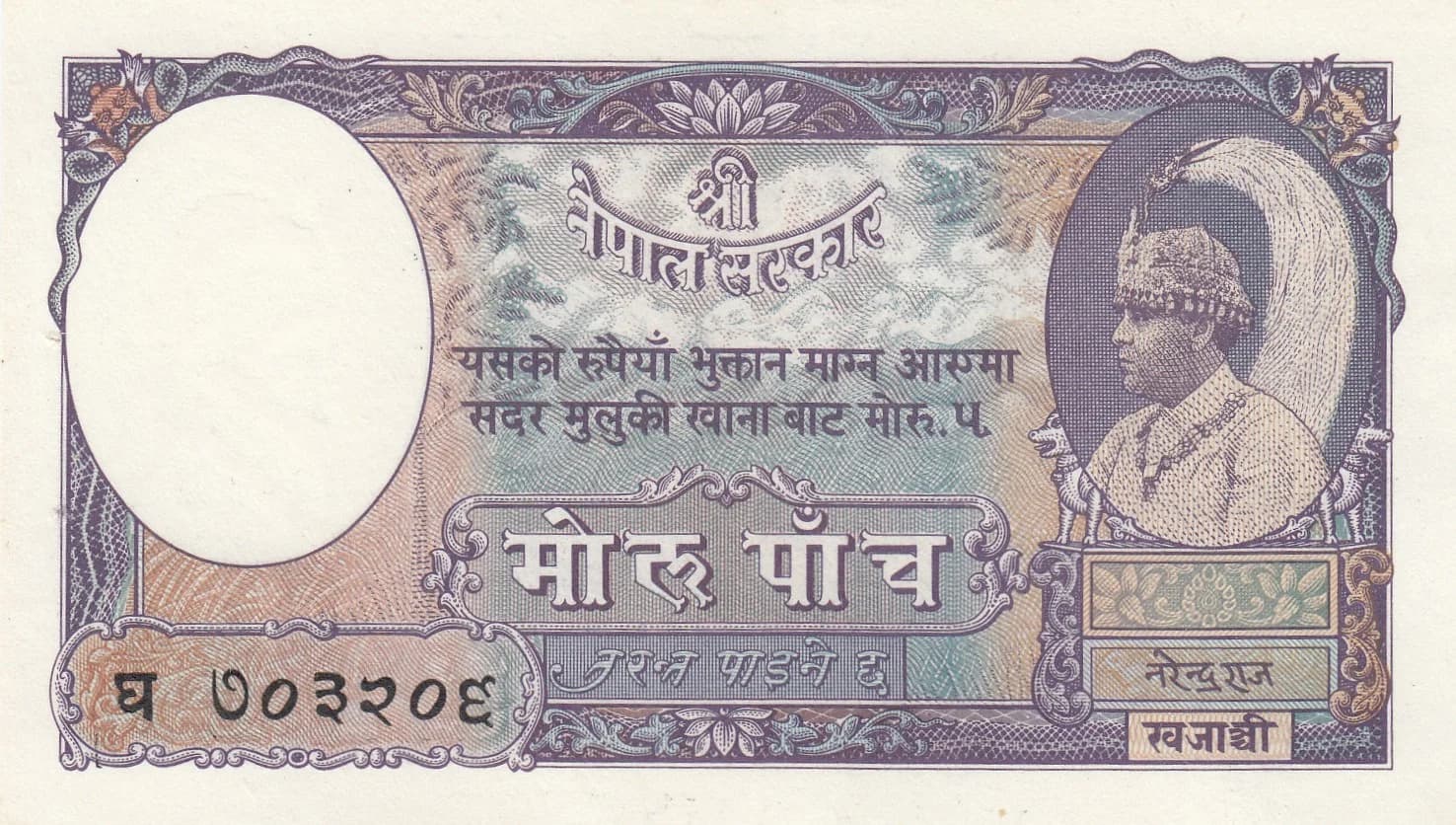
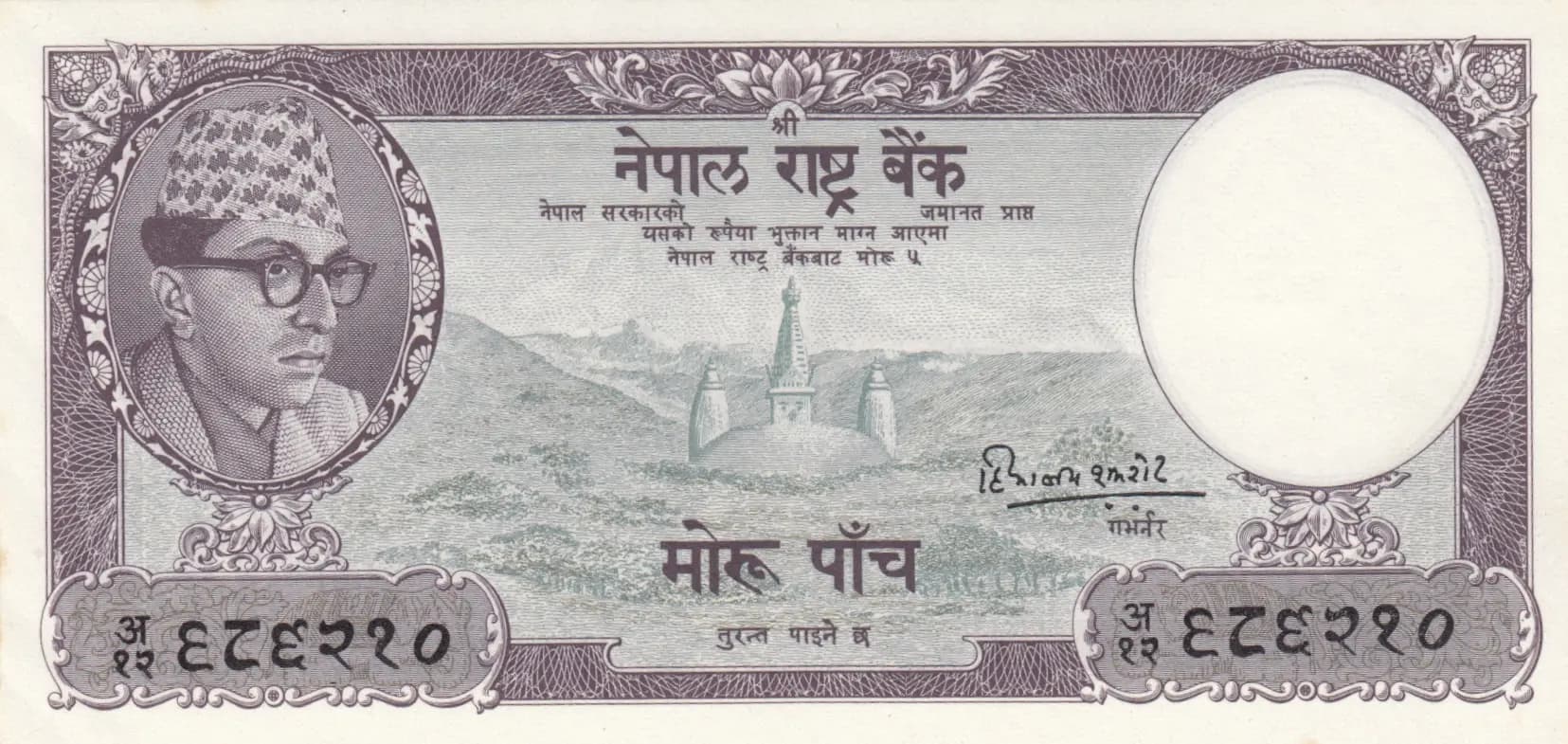
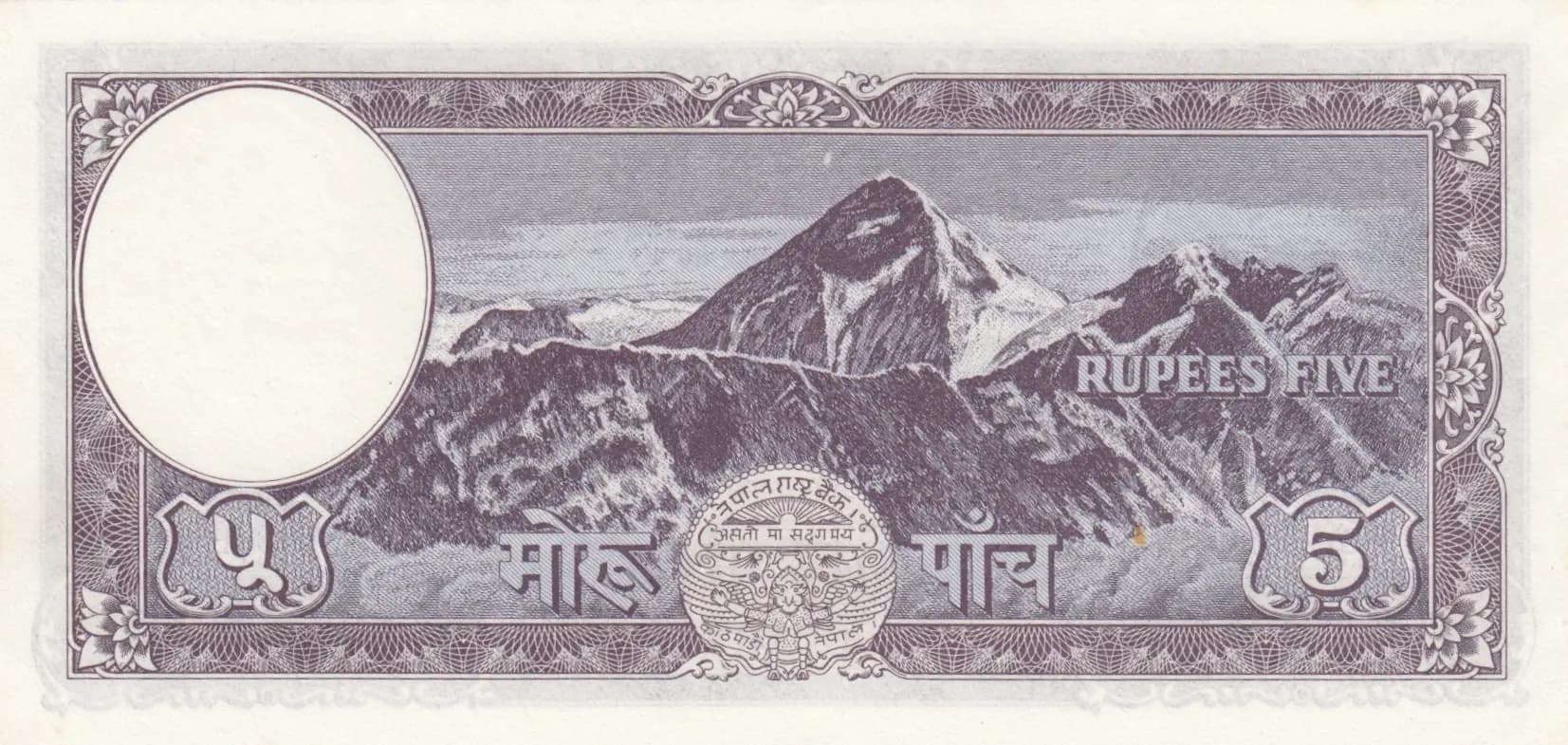
This is a Nepal Rastra Bank 5 Mohru note from 1956-1961 in uncirculated condition, featuring King Mahendra Bir Bikram in traditional Nepali dress on the obverse and a dramatic Himalayan mountain landscape on the reverse. The note exhibits the characteristic violet and gray color scheme with ornate decorative borders and fine line engraving, representing an early example of Nepal's post-independence currency design. The crisp, clean appearance with no visible wear confirms the UNC grade, making this an attractive example of Nepal's classic mid-20th century banknote series.
Common. eBay market data shows regular sales in the $9–$26 range across multiple condition grades (VG through AUNC) over the 2009–2018 period, with catalog values listing UNC examples at $30. The consistent volume of sales and modest pricing indicate this is a regularly traded note with adequate supply in the collector market. The 1956–1961 date range suggests a moderate print run for this early Nepal Rastra Bank issue.
Issued during King Mahendra's reign (1955-1972), this note commemorates Nepal's modernization period following the establishment of the Nepal Rastra Bank in 1956. The inclusion of Swayambhunath Stupa—one of Nepal's most sacred Buddhist landmarks visible in the mountain temple scene on the obverse—symbolizes the nation's cultural identity, while the Mount Everest depiction on the reverse celebrates Nepal's geographical significance as home to the world's highest peak. The parallel use of Nepali 'Mohru' and English 'Rupees' denominations reflects Nepal's transition from traditional currency nomenclature to the rupee standard.
The obverse features a formal left-facing portrait of King Mahendra Vira Vikrama wearing eyeglasses and a traditional Nepali Daura Suruwal style cap with decorative patterns, positioned at the left of the note. The center depicts Swayambhunath Stupa set within a mountainous landscape with forested slopes and vegetation, representing Nepal's most significant Buddhist temple complex. The reverse displays a prominent snow-capped Himalayan peak (Mount Everest) with surrounding lower mountain ranges and alpine terrain, symbolizing Nepal's identity as a Himalayan nation. Both sides feature ornate decorative borders with floral motifs and geometric corner patterns in fine line engraving, with blank oval/circular spaces on each side (likely watermark areas) and decorative serial number boxes. The dominant color scheme is violet and gray on a cream/beige background.
FRONT: 'नेपाल राष्ट्र बेंक' (Nepal Rastra Bank) — the issuing authority; 'नेपाल सरकारको' (Government of Nepal); 'यसको रुपया भुक्तान मागत आएमा नेपाल राष्ट्र बेंकबाट माग र. बुरल पाइने छ' (This currency can be demanded from Nepal Rastra Bank and will be paid); 'मोरु पाँच' (Mohar Five) — the denomination in traditional nomenclature; Serial number 'अ २८८२१०' (A 288210); Date reference '२०१२असार' (2012 Ashadh — Nepali calendar); 'गभर्नर' (Governor — signature line). BACK: 'RUPEES FIVE' (English denomination); 'माले गान' (Nepal); 'पञ्च' (Five); 'जन्मको मा सद्भावना' (With good intentions from birth); Nepali numeral '५' (Five).
Intaglio engraving (line engraving), characteristic of mid-20th century banknote production. The fine line patterns visible in the ornate borders, decorative elements, and the crisp detail in both the portrait and landscape elements confirm professional security printing techniques. According to PMG records, this note was printed by TDLR (Thomas de la Rue), a leading international security printer known for producing banknotes for Commonwealth and developing nations during this period.
Pick catalog P-9 represents the standard 5 Mohru issue (1956–1961). The observed specimen exhibits serial number prefix 'अ' (A) with number 288210, consistent with standard formatting for this issue. PMG records indicate one variant catalogued for this base Pick number. The Nepali date notation '२०१२असार' (2012 Ashadh, corresponding to June 1956 in the Nepali calendar) confirms the early issuance within the 1956–1961 range. No overprints or significant varieties are evident in this uncirculated example.