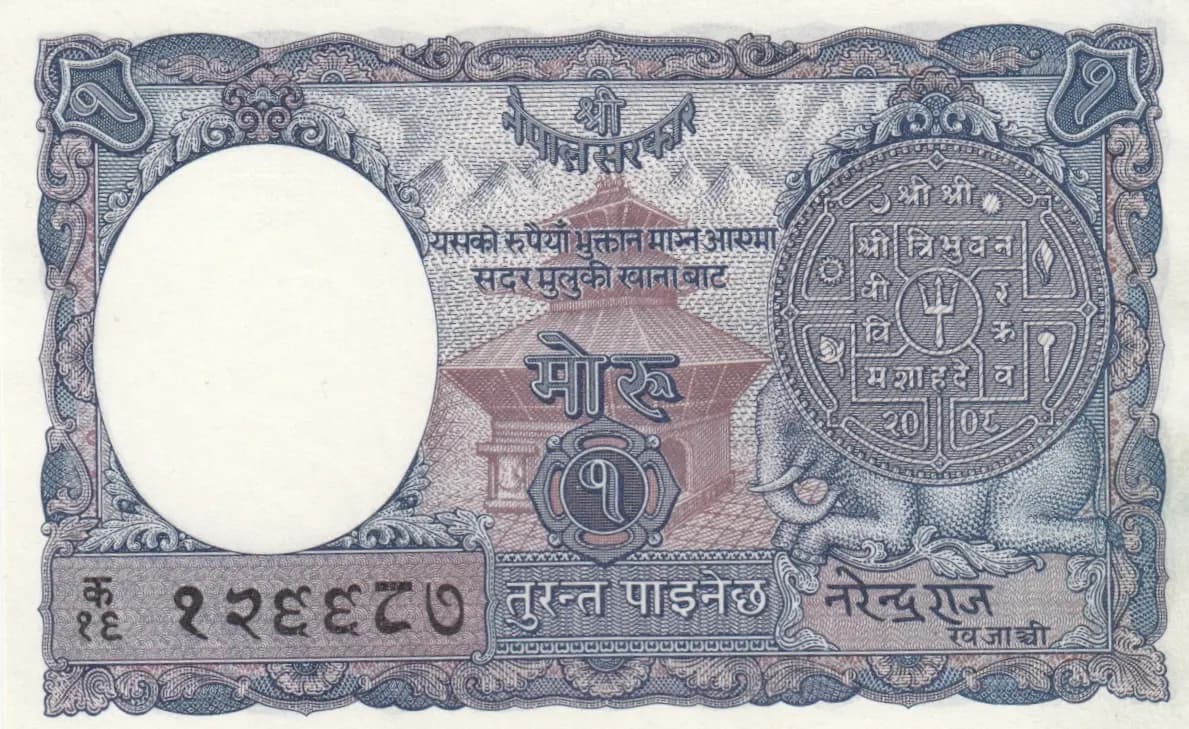
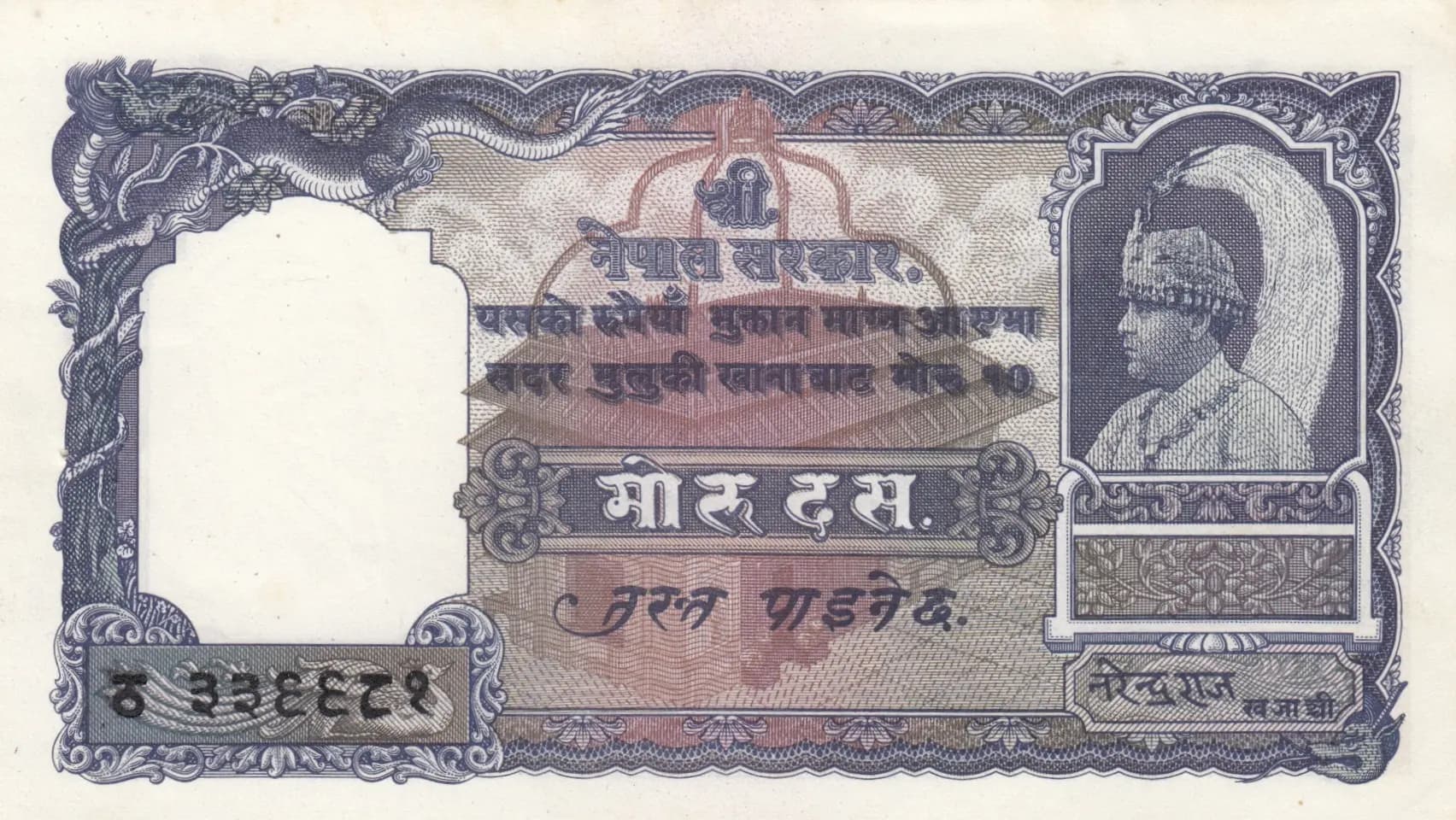
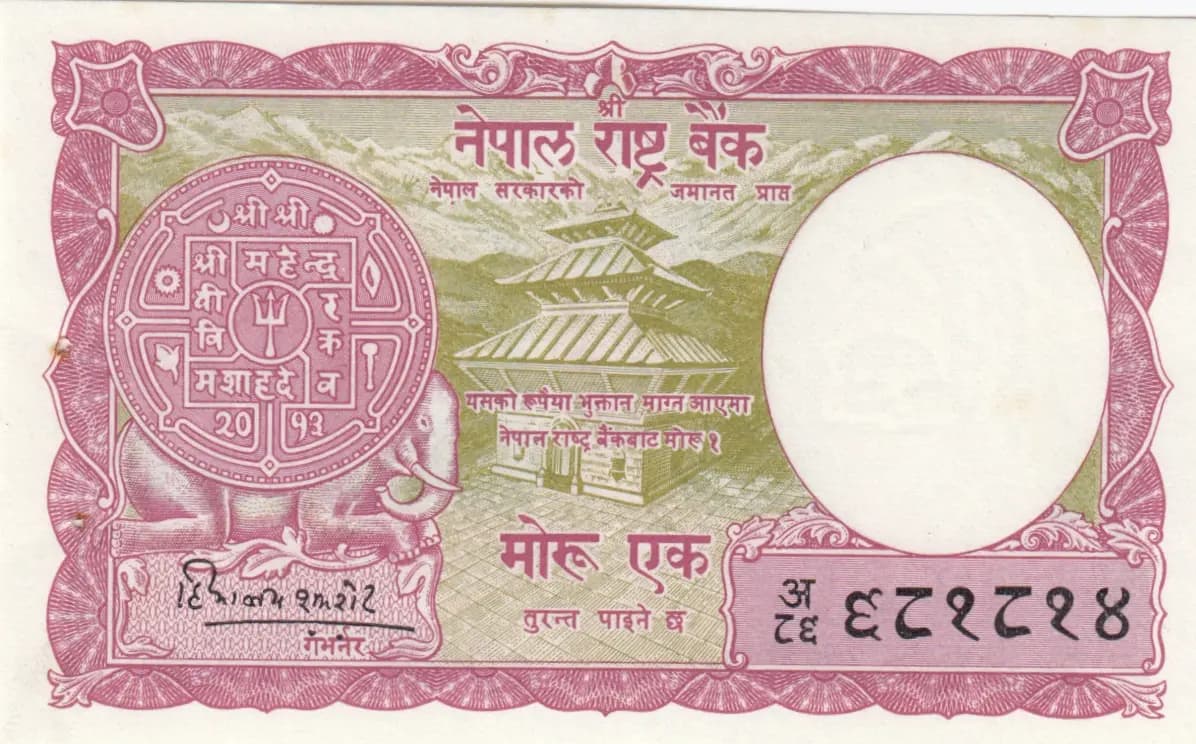
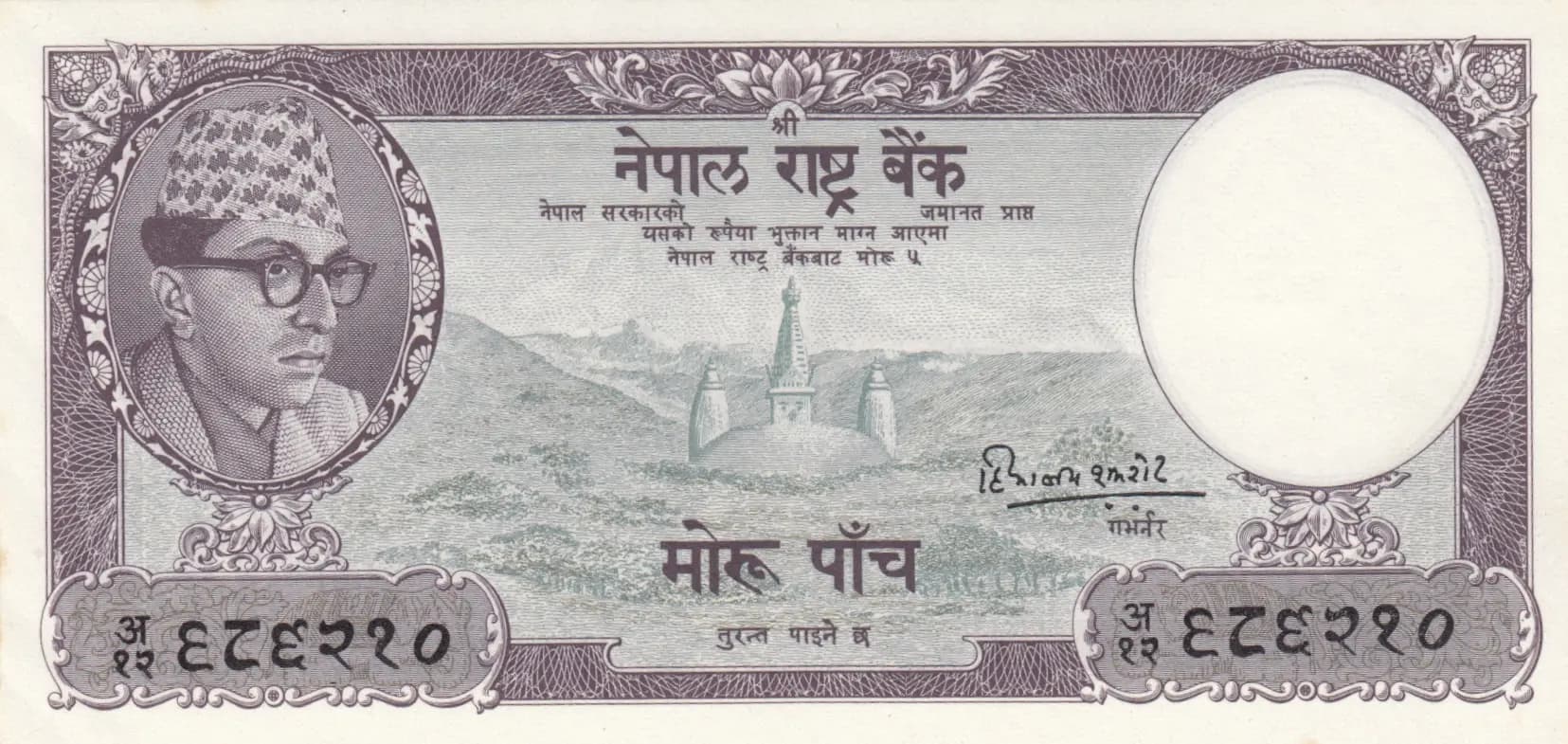
5 mohru 1953
Market Prices
15 salesAbout This Note
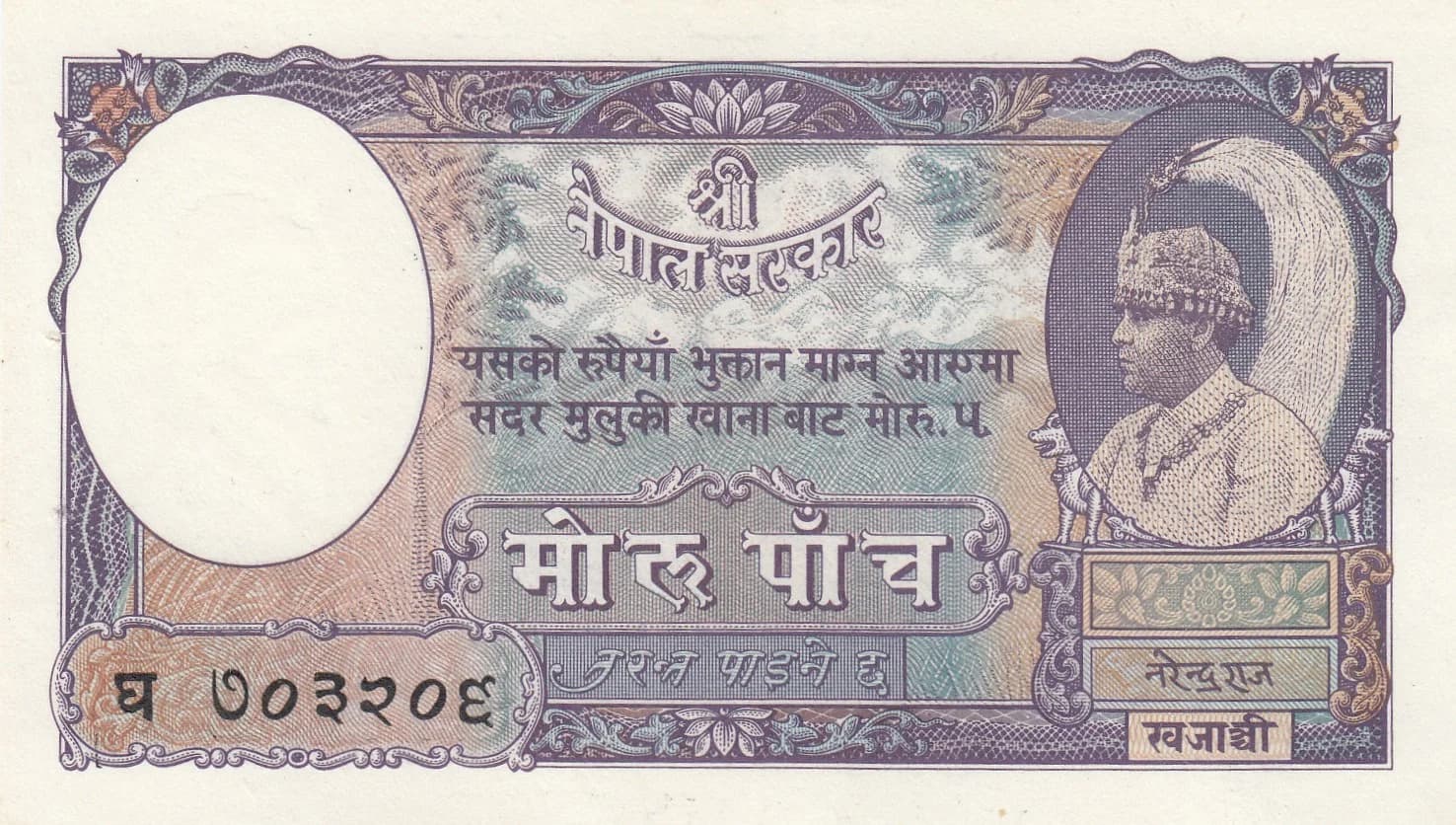
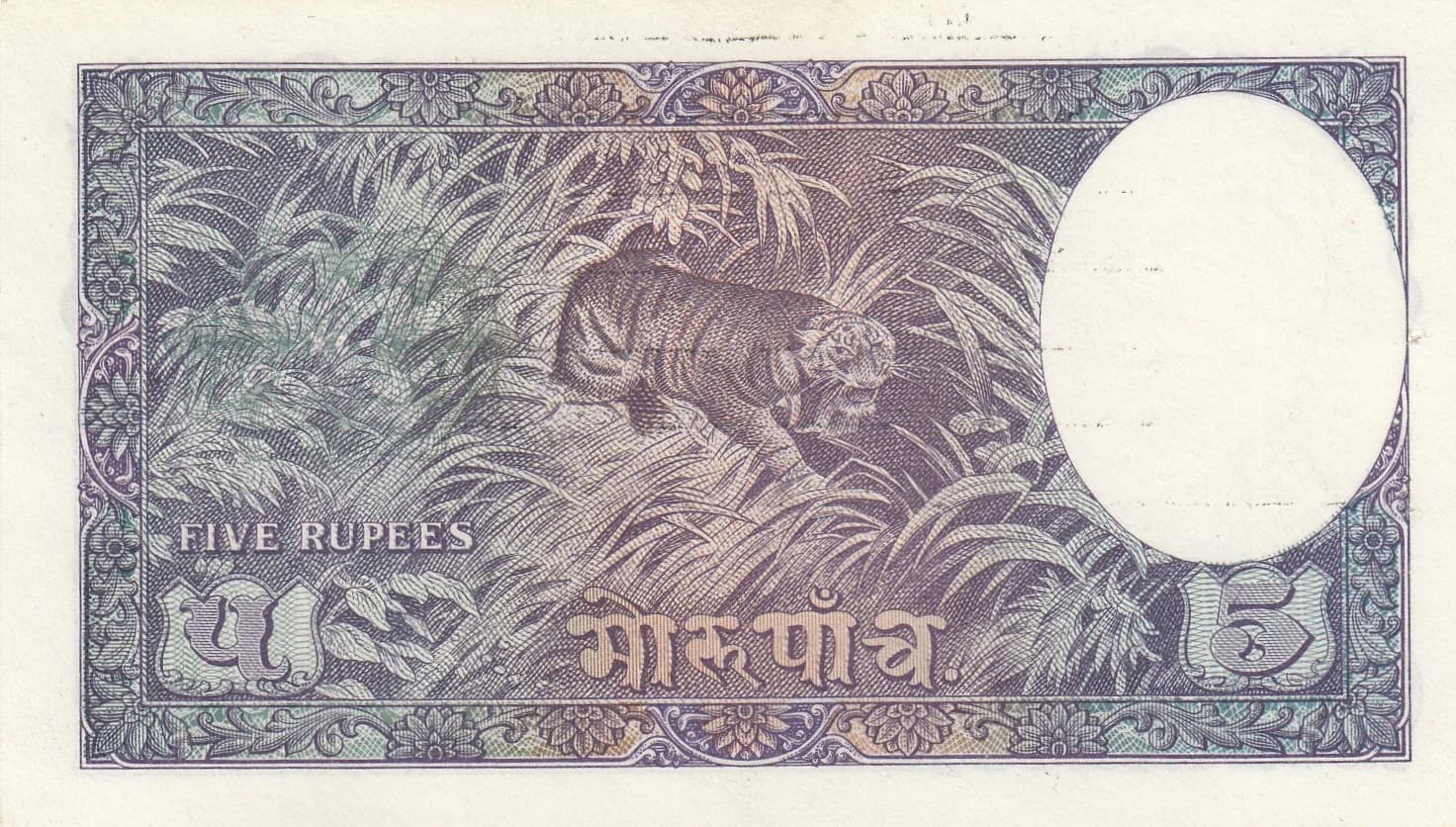
This is a Nepal 5 Mohru banknote from 1953, presented in AU (About Uncirculated) condition with exceptionally crisp, clean printing throughout. The note features King Tribhuvana Bir Bikram in profile on the obverse and a detailed agricultural/pastoral scene on the reverse, both rendered in fine-line engraving with purple, brown, and tan color schemes. The specimen exhibits no visible wear, creases, or circulation damage, making it a desirable example of early Nepalese currency for collectors of South Asian numismatics.
Common. The eBay market data shows consistent sales across multiple condition grades ranging from $11 to $50, with most VF and EF examples selling in the $15-$35 range. The 2016 catalogue values list VF at $30 and UNC at $60, indicating this is a well-established, readily available note in collector markets. No evidence of extremely limited print runs or recall issues; this note circulated in moderate quantities during its issue period.
Issued during the reign of King Tribhuvana (1951-1955), this note represents Nepal's early post-unification currency period under the Nepal Treasury (Sadar Muluki Khana). The prominence of the reigning monarch's portrait reflects the state's authority and sovereignty, while the reverse's agricultural imagery symbolizes Nepal's rural economy and agrarian heritage during this formative period of the modern Nepalese state. The bilingual presentation in English and Devanagari script reflects Nepal's position between traditional and modern governance structures in the mid-20th century.
The obverse features a left-facing profile portrait of King Tribhuvana Bir Bikram wearing traditional Nepali royal headwear with ornate decorative patterns, positioned on the right side of the note. The reverse depicts an intricate agricultural scene with vegetation, crops, and pastoral elements rendered in fine-line engraving, occupying the central-left design space. Both sides are framed by elaborate ornamental borders incorporating floral motifs and geometric patterns typical of early Nepalese banknote design. Large oval watermark areas are positioned prominently on both sides (left obverse, right reverse). The denomination appears in both English and Devanagari script, reflecting the bilingual currency standards of the period.
FRONT: 'नपालको' (Of Nepal) / 'मोहुर पाँच' (Five Mohru) / 'नेपाल' (Nepal) / 'खसरनी' (Treasury/Government house) / Serial number 'ब ०५२०८' (B 052008). BACK: 'FIVE RUPEES' (English denomination) / 'पाँच रुपेया' (Five Rupees in Devanagari). Additional Devanagari text on front relating to official Treasury authorization is partially visible but not fully legible in the image.
Intaglio (fine-line engraving) printing, characteristic of mid-20th century banknote production. The fine detail visible in the portrait, agricultural imagery, and ornamental borders, combined with the crisp impressions throughout the note, indicates professional security-printing standards. The specific printer for this Pick-5 issue is not definitively documented in readily available sources, though Nepal's early banknotes were produced by international security printers common to the era.
This specimen appears to be from the Type II heading variant (as referenced in the banknote.ws catalog) with signature by Narendra Raj Pandit for the Nepal Treasury. The series designation and serial number format ('ब ०५२०८') follows the standard pattern for this issue period. The catalog date range of ND (1953-1956) indicates potential minor printing variations within this series, though the visual analysis does not reveal enough detail to distinguish between specific sub-varieties. The AU condition grade and clear printing suggest this is likely a mid-series printing from the 1953-1954 period.