5 rupees 1985 proof
About This Note
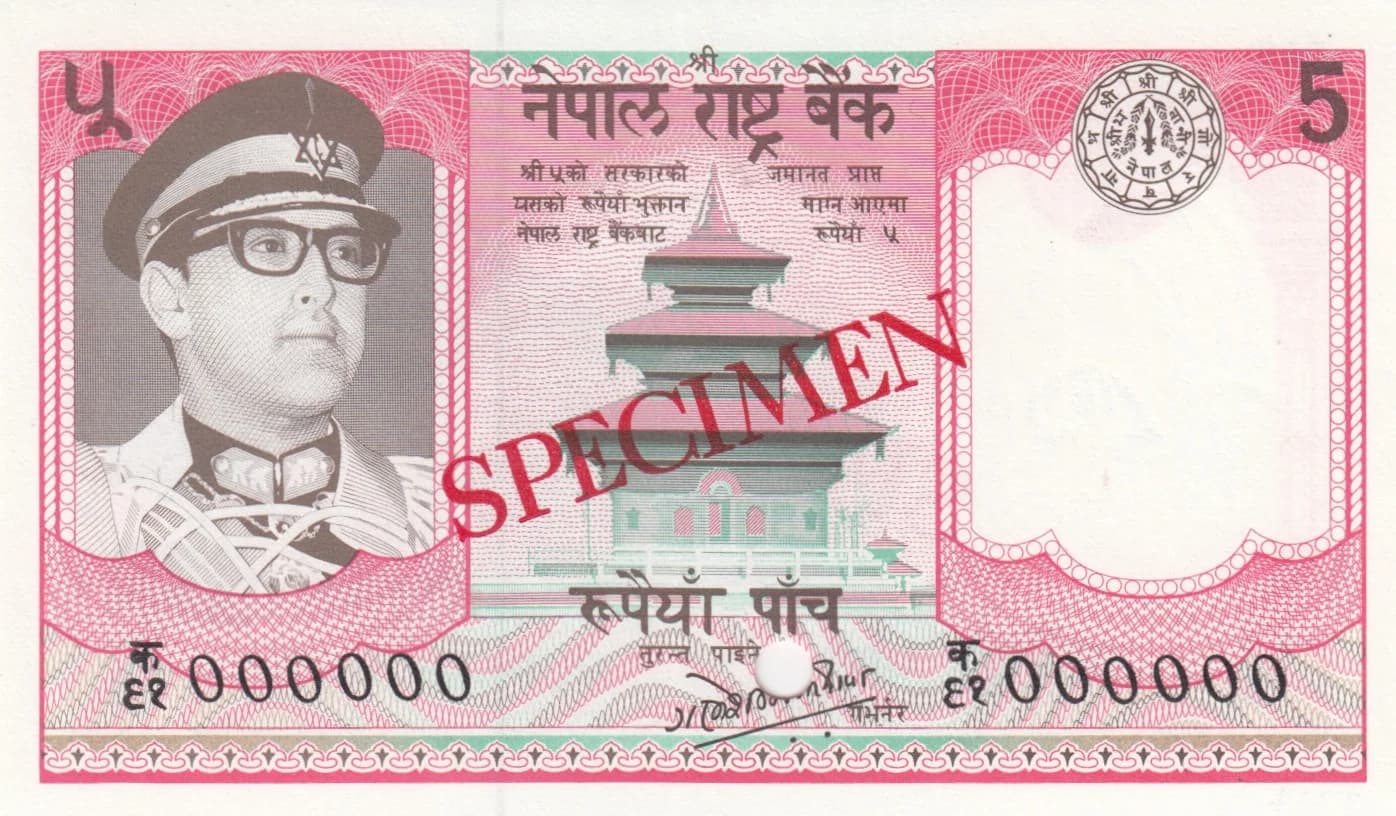
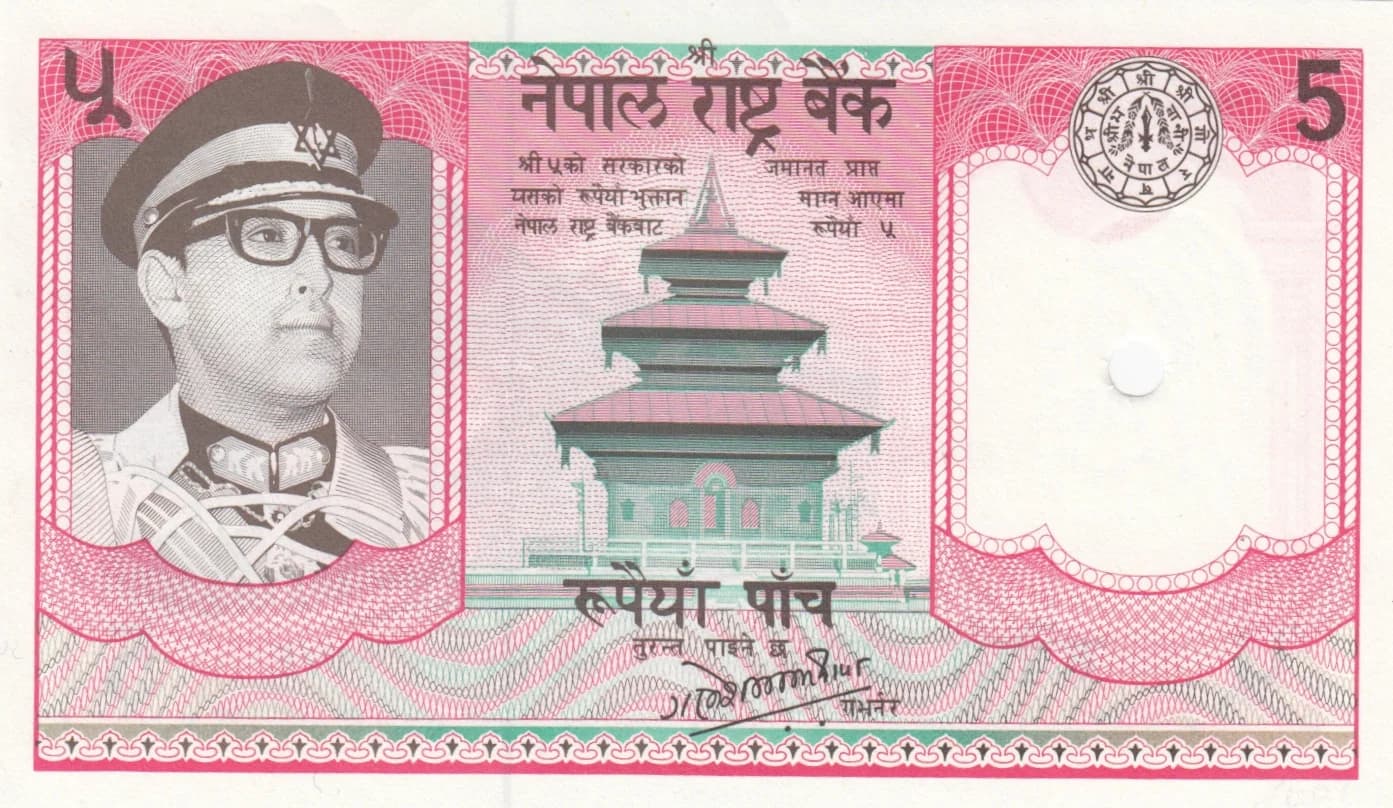
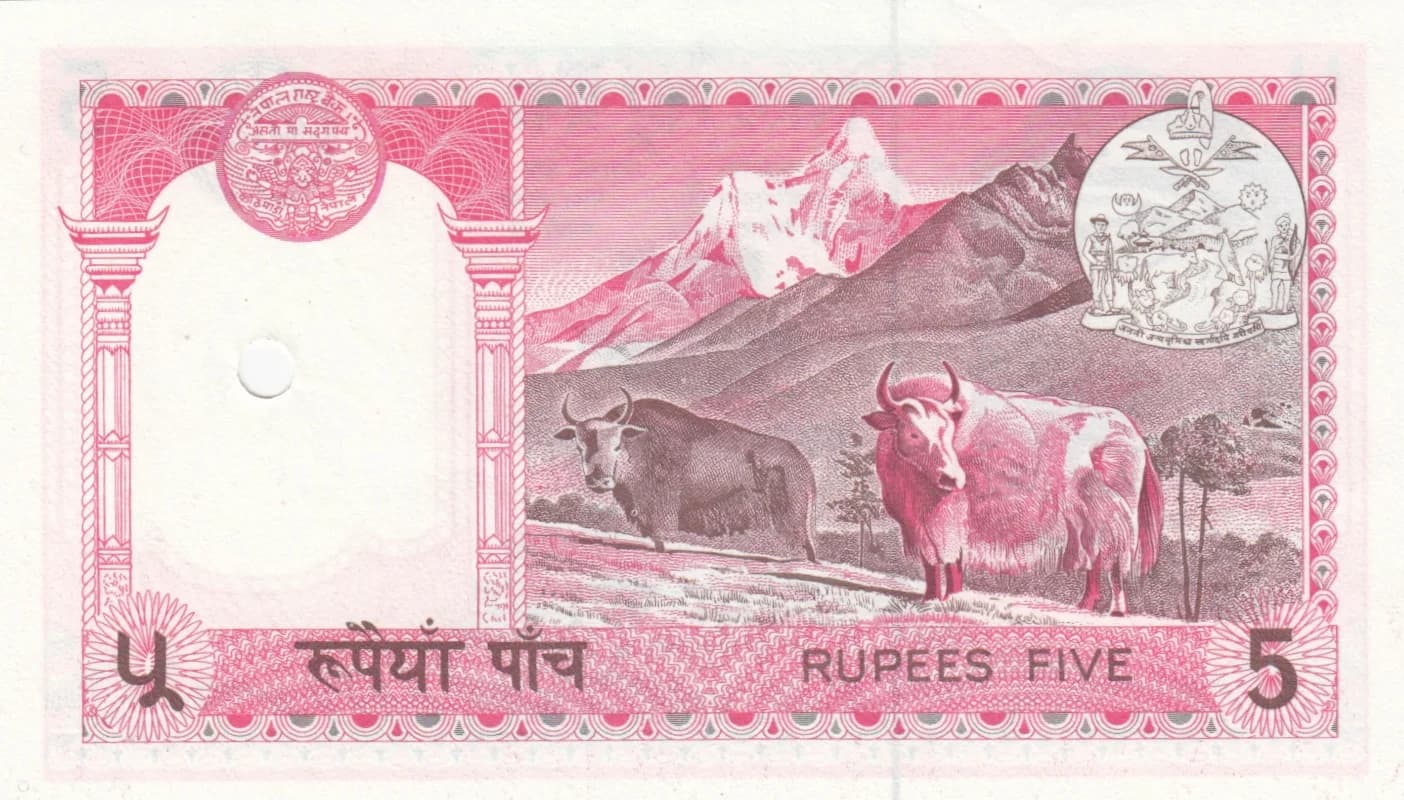
This is a exceptional example of Nepal's 1985 proof 5 rupees banknote (Pick P-23(3)p), presented in pristine uncirculated condition with sharp printing throughout. The note features a striking pink/magenta color scheme with King Birendra Bir Bikram prominently displayed on the obverse alongside the iconic Taleju Temple, while the reverse depicts Himalayan yaks against snow-capped peaks. As a proof specimen, this note represents the pinnacle of the note's design and printing quality, making it a prized addition to any collection of modern Nepalese currency.
Common. The 1985 5 rupees denomination represents a standard circulation note issued by the Nepal Rastra Bank during a period of substantial monetary circulation, and proof specimens, while more limited than circulation strikes, were produced in sufficient quantities to remain readily available to collectors. No documented short print run, recall, or other rarity indicators are associated with this Pick number. Proof specimens of this note routinely appear in the collector market and do not command premium pricing that would indicate scarcity.
This 5 rupees note was issued during the reign of King Birendra Bir Bikram (1972-2001), whose portrait adorns the obverse, reflecting Nepal's stable monetary authority during the mid-1980s under the Nepal Rastra Bank. The Taleju Temple depicted on the front holds deep religious and cultural significance in Nepalese tradition as one of the country's most important Hindu temples, while the yaks on the reverse symbolize Nepal's Himalayan heritage and pastoral economy. This design sequence represents Nepal's commitment to showcasing its cultural identity and natural landscape during a period of gradual economic modernization.
The obverse features a left-facing portrait of King Birendra Bir Bikram wearing military-style formal attire with a distinctive cap and chest decorations reflecting his role as the reigning monarch. The central design element is the Taleju Temple, a multi-tiered pagoda structure rendered in green and pink with characteristic sloped roofs exemplifying traditional Nepalese architectural style. A circular national emblem containing Devanagari text and traditional Nepali iconographic elements is positioned in the upper right. The reverse showcases a mountainous landscape with two yaks in the foreground against snow-capped Himalayan peaks, flanked by ornamental Corinthian columns on the left side. The national coat of arms appears in the upper right corner, with intricate decorative borders and semi-circular corner ornaments framing both sides. The color palette of pink/magenta with green, brown, and black accents creates a distinctive and visually striking presentation.
Front side: 'नेपाल राष्ट्र बैंक' (Nepal Rastra Bank), 'श्रीपञ्च सर्वोच्चको' (Supreme Authority of Five), 'नेपाल राष्ट्र बैंकबाट' (From Nepal Rastra Bank), 'रुपया प.' (Rupees P.), and the numeral '5'. Back side: 'रुपया पाँच' (Rupees Five) in Devanagari script and 'RUPEES FIVE' in English, with the numeral '5' displayed prominently. All text is rendered in both Devanagari (Nepali) and English, reflecting the bilingual nature of official Nepalese currency documentation.
This proof specimen was produced using intaglio (engraved) printing techniques, evidenced by the sharp, crisp line work visible throughout the note, particularly in the fine-line guilloche patterns that serve as background security features. The multi-colored design incorporating distinct color separations on the Taleju Temple and landscape elements suggests the use of traditional currency printing methods with multiple plate passes. The microscopic detail visible in the decorative borders, ornamental columns, and emblem designs confirms the use of precision engraving. This note was likely printed by a specialized security printer contracted by the Nepal Rastra Bank; during this period, such proofs were typically produced by internationally recognized currency printers such as De La Rue or similar establishments capable of high-security banknote production.
This note is identified as Pick P-23(3)p, indicating it is the third variety of the 5 rupees proof issue from the 1974-1985 period. The 'p' designation confirms this as a proof specimen rather than a circulation issue. Specific varieties within this series may be distinguished by subtle differences in signatures, serial number prefixes, or minor design modifications, though without access to comprehensive variety catalogs or serial number information visible in these images, a more granular variety classification cannot be definitively established. Further research into the Nepal Rastra Bank's archival records or specialized Nepalese numismatic references would be required to distinguish between different proof variants of this denomination.