5 rupees 1974
About This Note
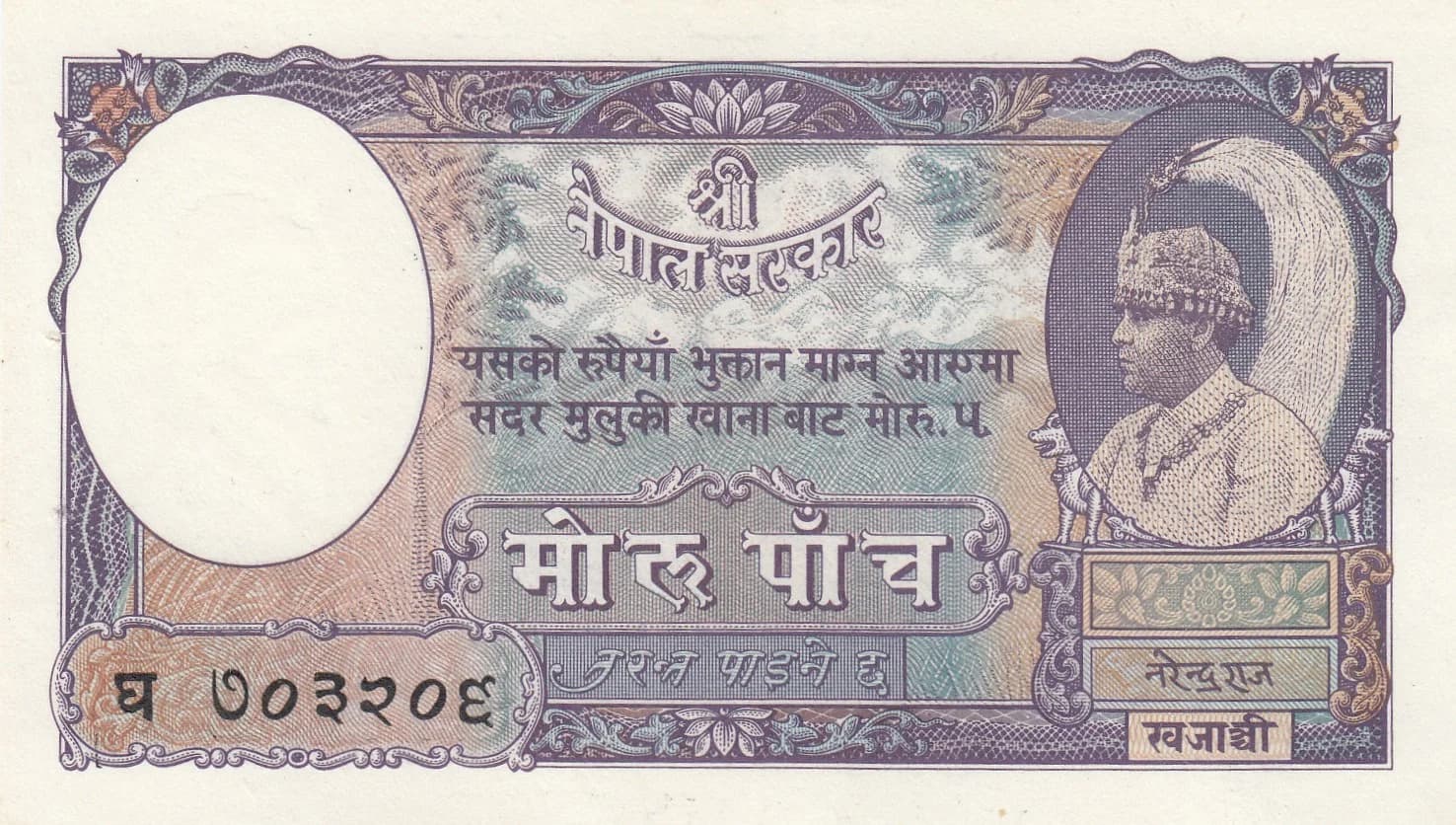
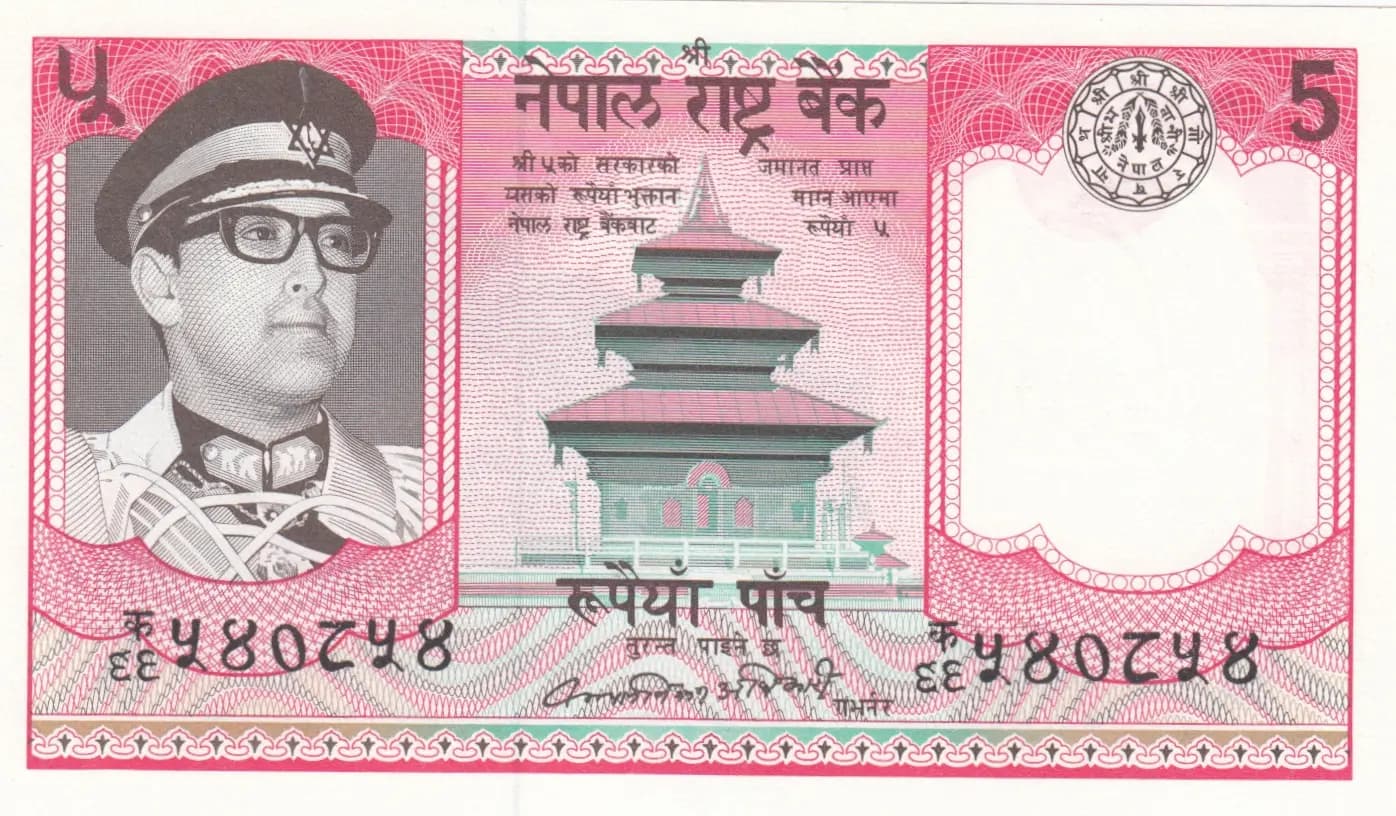
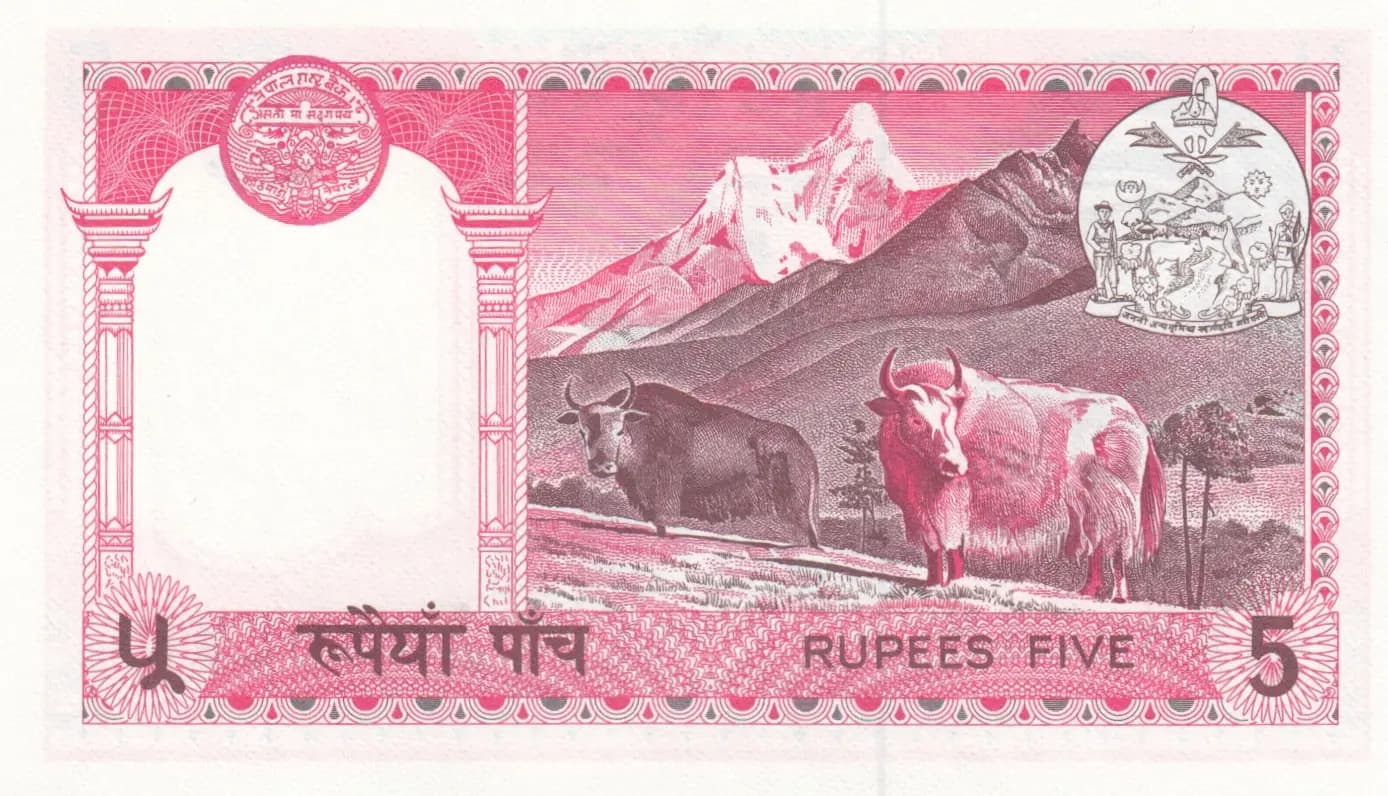
This is an uncirculated example of the Nepal Rastra Bank's 1974 5 rupees note (Pick 23(2)), presenting in pristine condition with no signs of handling or wear. The note features King Birendra Bir Bikram in military regalia on the obverse alongside the iconic Taleju temple rendered in distinctive pink and green hues, while the reverse showcases a beautifully engraved alpine landscape with yaks set against snow-capped Himalayan peaks. The intricate geometric patterns, fine line work, and detailed architectural elements throughout the design demonstrate the high-quality intaglio printing characteristic of this series.
Common. The 5 rupees denomination from the 1974-1985 series (Pick 23) was produced in large quantities as part of Nepal's standard circulating currency during this period. While this particular example in uncirculated condition is more desirable than circulated specimens, the note itself is not rare or scarce. Large print runs, regular circulation patterns, and the extended issuance period all contribute to its common status in the contemporary market. UNC examples command modest premiums over circulated copies but remain affordable for collectors.
This note was issued during King Birendra's reign (1972-2001), a period of significant modernization in Nepal following the establishment of the Nepal Rastra Bank as the central monetary authority. The inclusion of King Birendra's portrait in military dress reflects the formal state imagery of the 1970s, while the Taleju temple—one of Nepal's most sacred Hindu pilgrimage sites—and the yaks represent the nation's cultural and economic heritage. The prominence of Himalayan wildlife and mountain scenery underscores Nepal's geographical identity and the importance of pastoral economies to the kingdom during this period.
The obverse (front) features a left-side portrait of King Birendra Bir Bikram wearing military dress uniform with cap and insignia, rendered in fine detail characteristic of intaglio work. The central design showcases the Taleju Bhawani temple (Kathmandu's sacred pagoda), depicted with its distinctive multi-tiered architecture rendered in pink walls and green-tiled roof sections. The entire note is framed by an intricate geometric pattern in pink and white forming a decorative security border. The reverse depicts a naturalistic alpine landscape with two yaks (one darker, one lighter) positioned in the foreground on sloped terrain with snow-capped Himalayan peaks in the background. The left side features ornate classical columns framing an open area, while the upper right contains Nepal's national coat of arms featuring figures and agricultural/national symbols. Both sides employ elaborate decorative borders and fine-line security elements throughout.
Front side: The primary inscription reads 'नेपाल राष्ट्र बैंक' (Nepal Rastra Bank) in Devanagari script, appearing at the top of the note. Additional formal text in Devanagari script includes statutory and legal language typical of currency issuance declarations. The denomination '5' appears in a circular seal in the upper right corner. Back side: The denomination is clearly marked as 'RUPEES FIVE' in English text at the bottom, with the numeral '5' also displayed. Devanagari inscriptions continue on the reverse with additional formal text and denomination indicators.
This note was produced using traditional intaglio (engraved) printing on currency-grade paper, the standard method employed by the Nepal Rastra Bank during the 1970s. The fine line work, intricate geometric patterns, detailed portrait rendering, and dimensional landscape engraving are all characteristic signatures of intaglio production. The printer for Nepal's currency during this period was typically India Security Press (ISP) in Nashik, India, which handled much of Nepal's currency production under contract, though some sources indicate domestic printing capability was developing. The security features—including the elaborate geometric background patterns, decorative architectural elements, and the zodiac wheel design in the circular seal—were integrated into the engraved plates themselves, providing inherent protection against counterfeiting.
The Pick 23(2) designation indicates this is the second variety within the Pick 23 classification for the 5 rupees 1974 note. Varieties within this series may be distinguished by signature changes, serial number prefixes, or minor design modifications across the extended issuance period (1974-1985). Without clear visibility of serial numbers or signatures in the provided images, the specific identifying characteristics of this variety cannot be precisely determined from the visual analysis alone. Collectors should consult specialized Nepal currency catalogs for detailed variety information regarding signature combinations and serial number ranges for Pick 23(2).