1 rupee 1974
Market Prices
18 salesAbout This Note
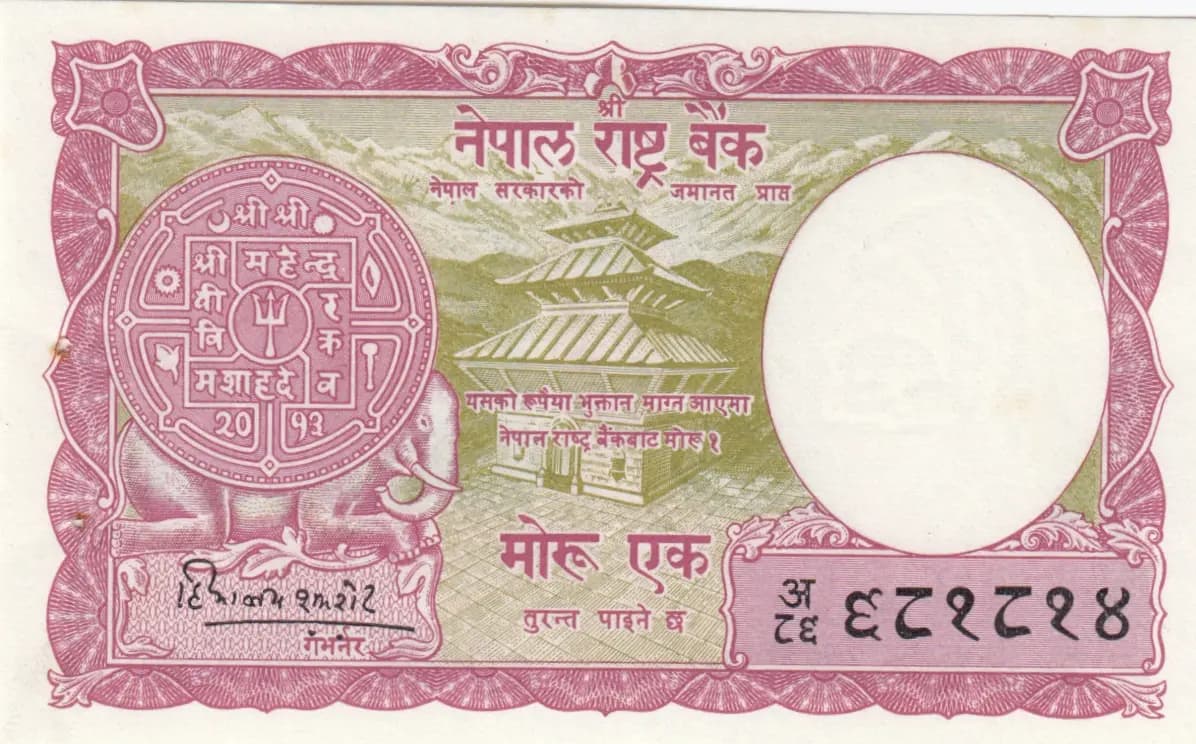
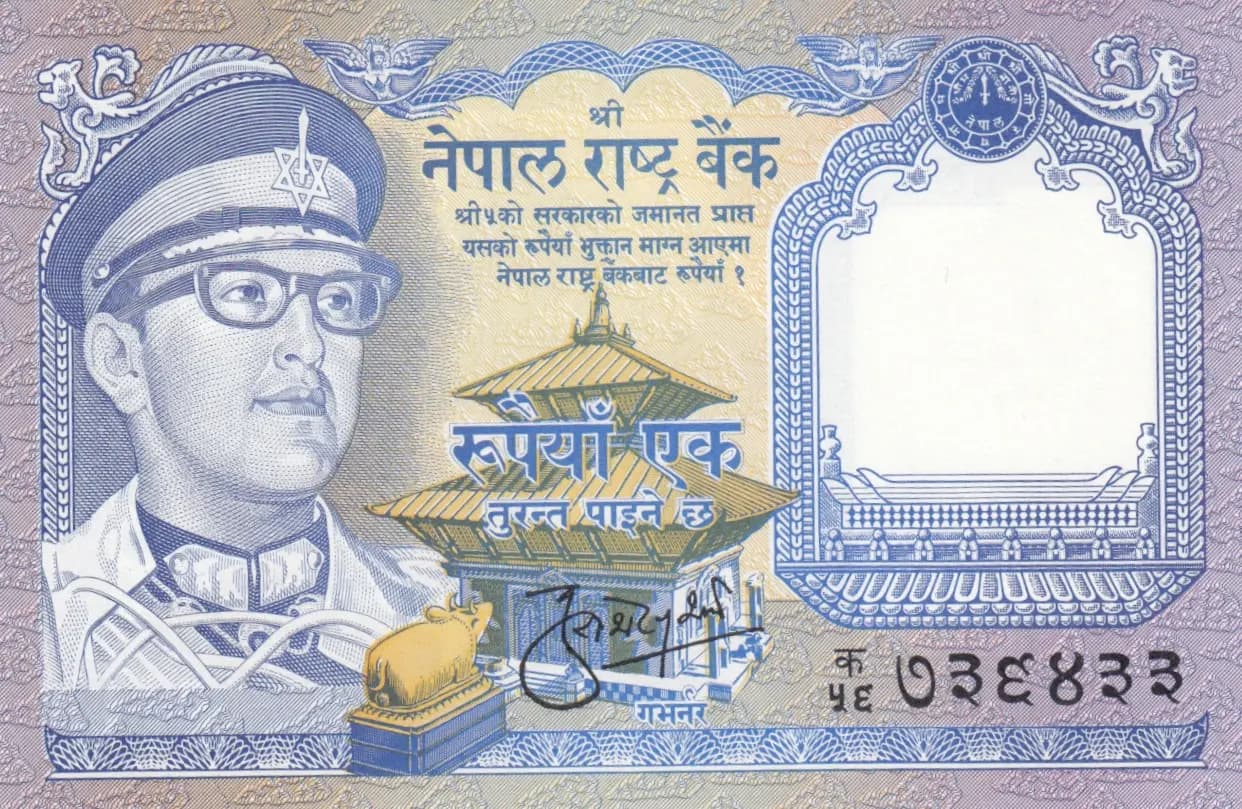
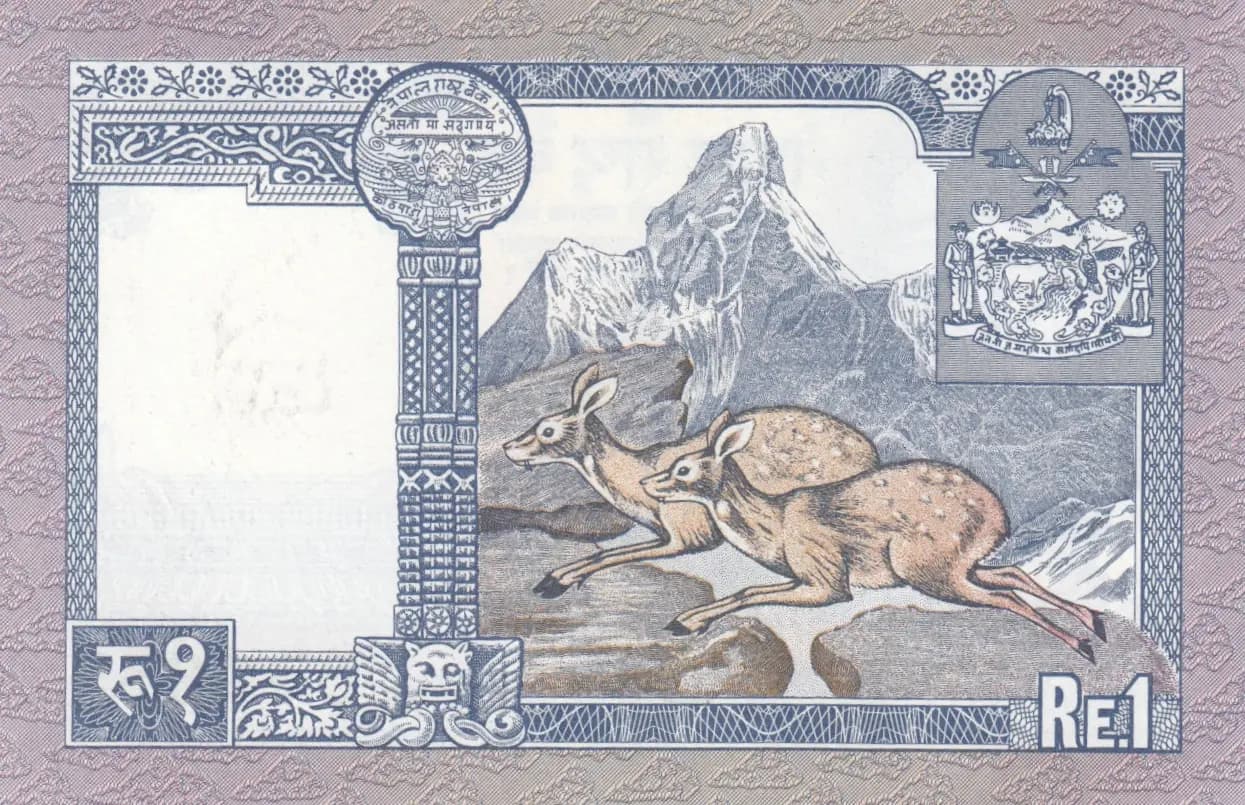
This 1974 Nepal Rastra Bank 1 Rupee note (Pick-22) is presented in Uncirculated condition, showcasing the crisp printing and original color brilliance typical of this classic Himalayan currency. The obverse features King Birendra Bir Bikram in military dress with the ornate Pashupatinath temple rendered in gold and blue tones against a purple underprint, while the reverse depicts musk deer and the snow-capped Ama Dablam mountain. A well-preserved example of Nepal's early post-1972 currency redesign.
Common. This is a regular issue of the Nepal Rastra Bank with a long circulation period (1974-1991 per external references), and population data suggests widespread printing. eBay market price data consistently shows UNC examples selling for under $2, with most transactions in the $0.89–$1.80 range, which is typical pricing for common 20th-century banknotes. Even professionally graded PMG examples (65–68) rarely exceed $20, indicating no scarcity premium. This note's accessibility and modest market valuation confirm its status as a common issue rather than a collectible rarity.
Issued in 1974, three years after King Birendra ascended the throne following his father's death, this note reflects Nepal's modernization period under constitutional monarchy. The prominence of King Birendra in military uniform on the obverse symbolized his role as both constitutional and military leader, while the reverse's depiction of Ama Dablam and native musk deer celebrated Nepal's natural heritage and mountain identity. The Pashupatinath temple imagery reinforced the nation's Hindu cultural continuity during a period of political restructuring.
The obverse features a left-facing portrait of King Birendra Bir Bikram in formal military uniform with glasses and a military cap, positioned at the left margin. The central design element is the Pashupatinath temple, depicted as a multi-tiered golden pagoda with intricate blue decorative patterns and architectural detailing characteristic of Newari temple design. The composition includes a plumed crown watermark, the Nepal Rastra Bank emblem, and astrological symbols in a circular design at the upper right, all framed by ornate scrollwork and traditional mythical creature motifs. The reverse depicts two musk deer in dynamic leaping poses against a mountainous landscape dominated by a snow-capped Himalayan peak identified as Ama Dablam, with the national coat of arms positioned in the upper right corner and decorative pillar designs on the left margin. The color palette—blue, purple, cream, and gold on the obverse; brown, tan, blue, and gray on the reverse—reflects the fine engraving quality characteristic of professional currency production.
Front Side: नेपाल राष्ट्र बैंक (Nepal Rastra Bank); श्रीको सरकारको जमानात प्रात (Government of Nepal guarantee); यसको सर्वभ प्रुकाम मान आपमा नेपाल राष्ट्र बङ्कमात् रुप्या १ (This note is guaranteed by Nepal Rastra Bank as one rupee); क ४० ०३८२३३ (Serial number). Back Side: Re.1 (One Rupee); नेपाल (Nepal); संख्या का सुरक्षाथ (For security purposes).
Intaglio engraving (line engraving), evidenced by the fine detail work, intricate border patterns, and sharp definition of both portraiture and landscape elements. The note was produced by TDLR (Thomas De La Rue), one of the world's premier security printers, as documented in the PMG population report. The multi-color printing and fine line work indicate combination intaglio with possible lithographic elements for the colored underprints.
This example appears to be the standard variant of Pick-22 with no overprints or date variations observed. The PMG population report confirms a single catalogued variant for this Pick number. Serial number fragment visible (к ४० ०३८२३३) suggests standard production numbering. No notable signature varieties or printing errors are apparent in the visual analysis. The note conforms to the standard design specifications for the 1974–1991 issuance period.