1 rupee 1972
“radar #”
Market Prices
24 salesAbout This Note
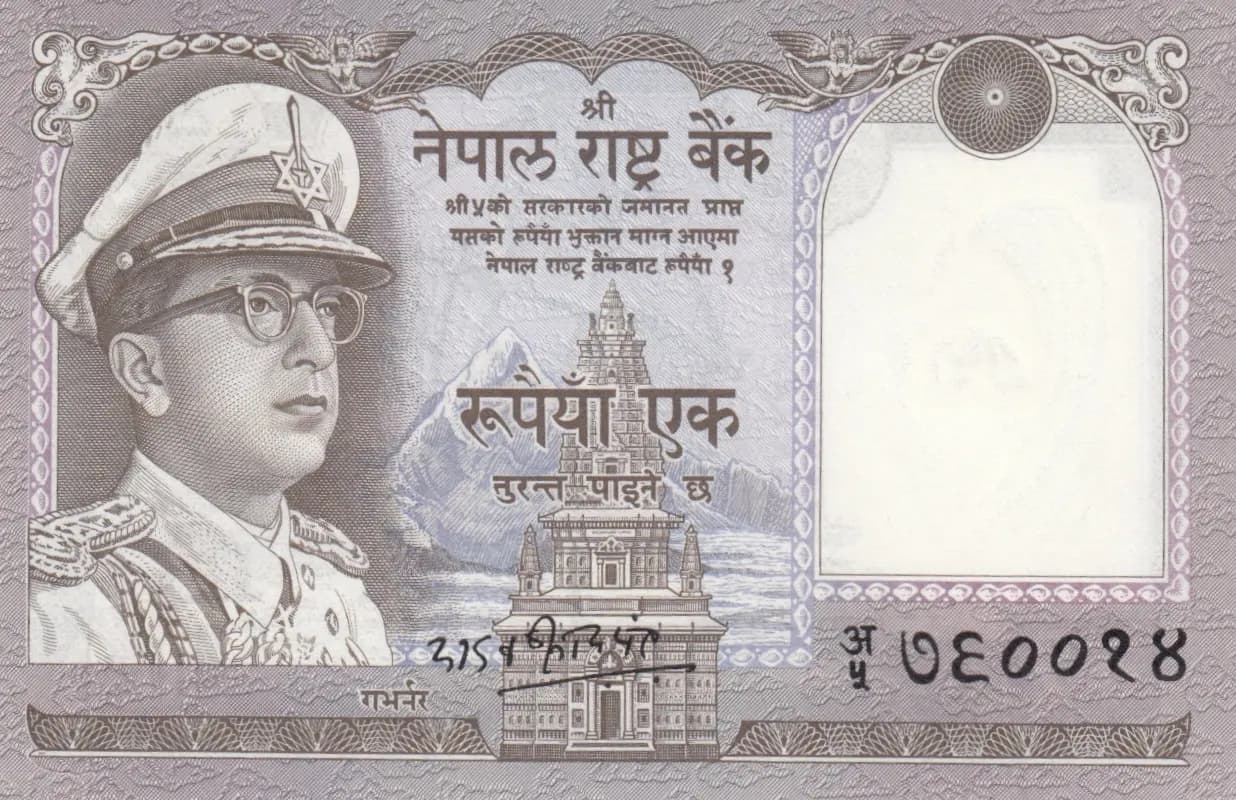
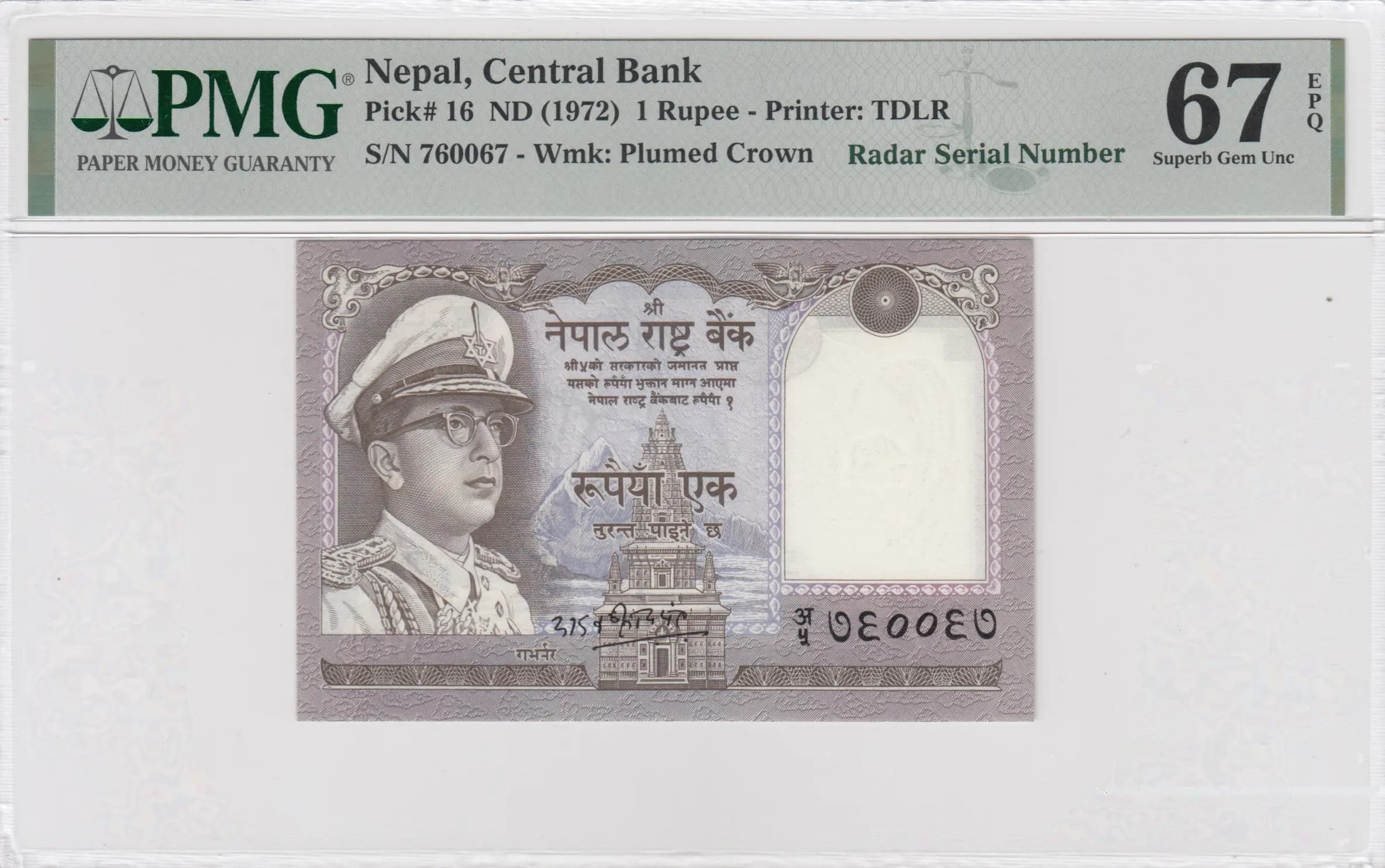
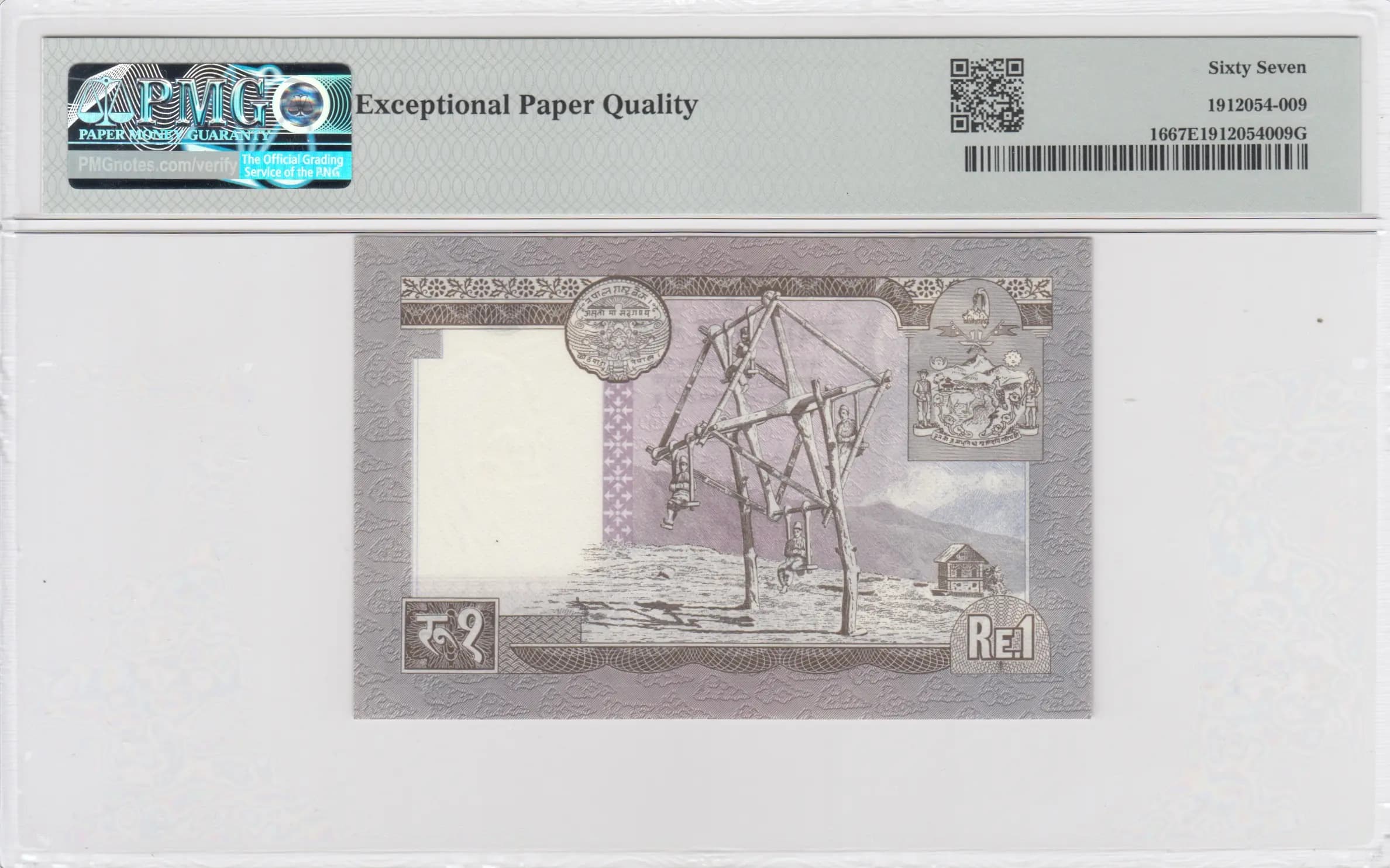
This is an exceptional example of the 1972 Nepal 1 Rupee note (Pick P-16) graded PMG 67 EPQ, representing one of the finest preserved specimens of this issue. The note displays the distinctive portrait of King Mahendra Bir Bikram in military dress with peaked cap on the obverse, paired with the iconic Mahaboudha temple, while the reverse features the traditional rotary swing (manjha) used in the Dasain festival celebration. The exceptional condition and EPQ (Exceptional Paper Quality) designation reflect pristine preservation with no wear or handling marks.
Common. Despite the exceptional PMG 67 EPQ grade of this specific specimen, the 1972 1 Rupee note (Pick P-16) is fundamentally common in the overall population. The eBay sales history provided demonstrates consistent availability across multiple grades, with prices ranging from under $1 in lower grades to $32.89 for the PMG 67 in June 2021 (the only PMG 67 in the provided sales data). While higher grades command premium prices, the note was issued in substantial quantities and remains readily available to collectors. The relatively low price point even for graded specimens (under $35 for the highest grade shown) and the steady supply in the secondary market confirm common status.
Issued in 1972 by the Nepal Rastra Bank (Nepal's central bank), this note commemorates the reign of King Mahendra Bir Bikram, who modernized Nepal during the mid-20th century. The Mahaboudha temple depicted on the obverse is one of Nepal's most sacred Buddhist temples, located in Patan's Durbar Square, while the reverse features the manjha swing, a central element of Dasain—the major Hindu festival honoring Goddess Durga—reflecting Nepal's cultural and religious heritage during this period.
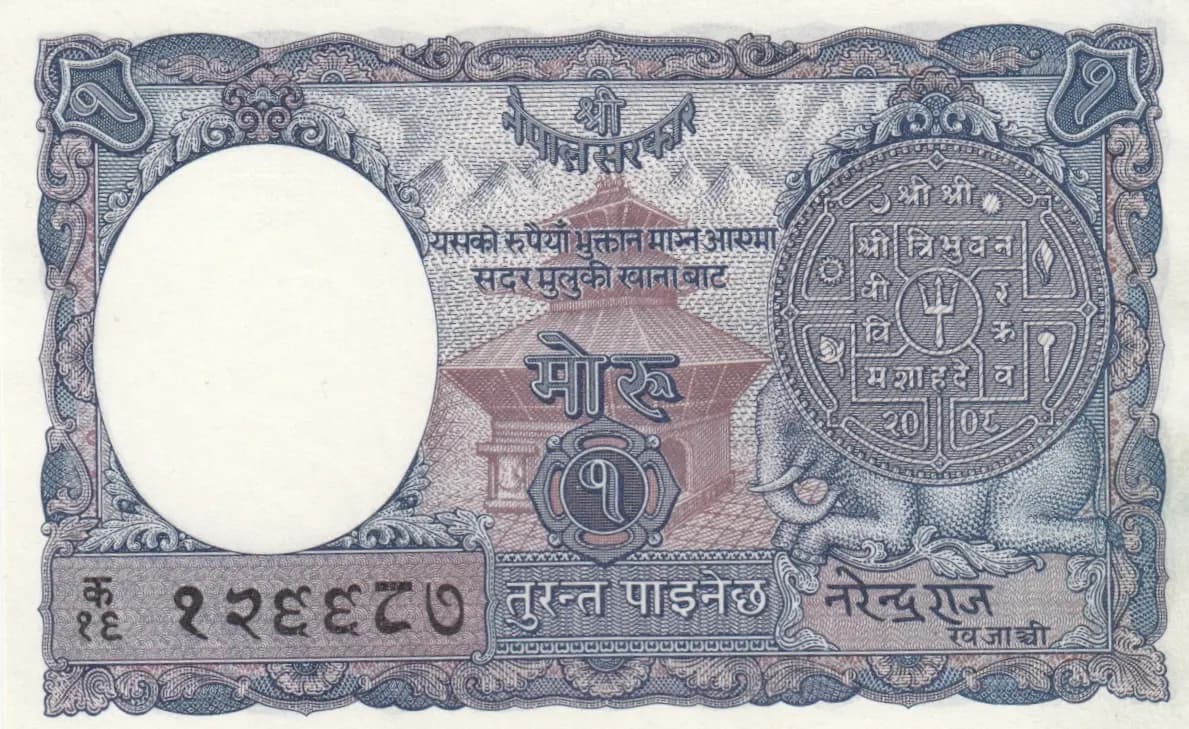
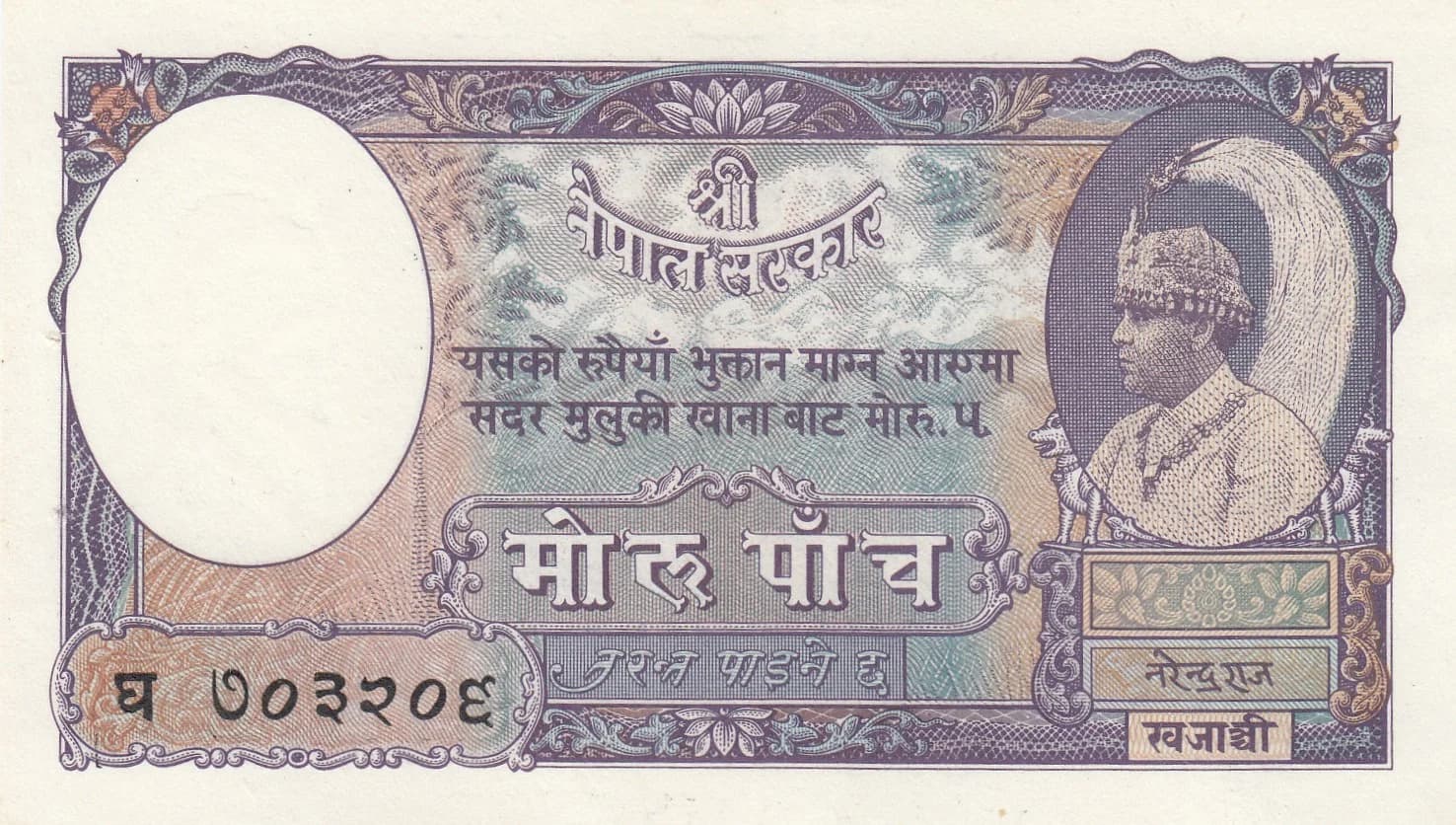
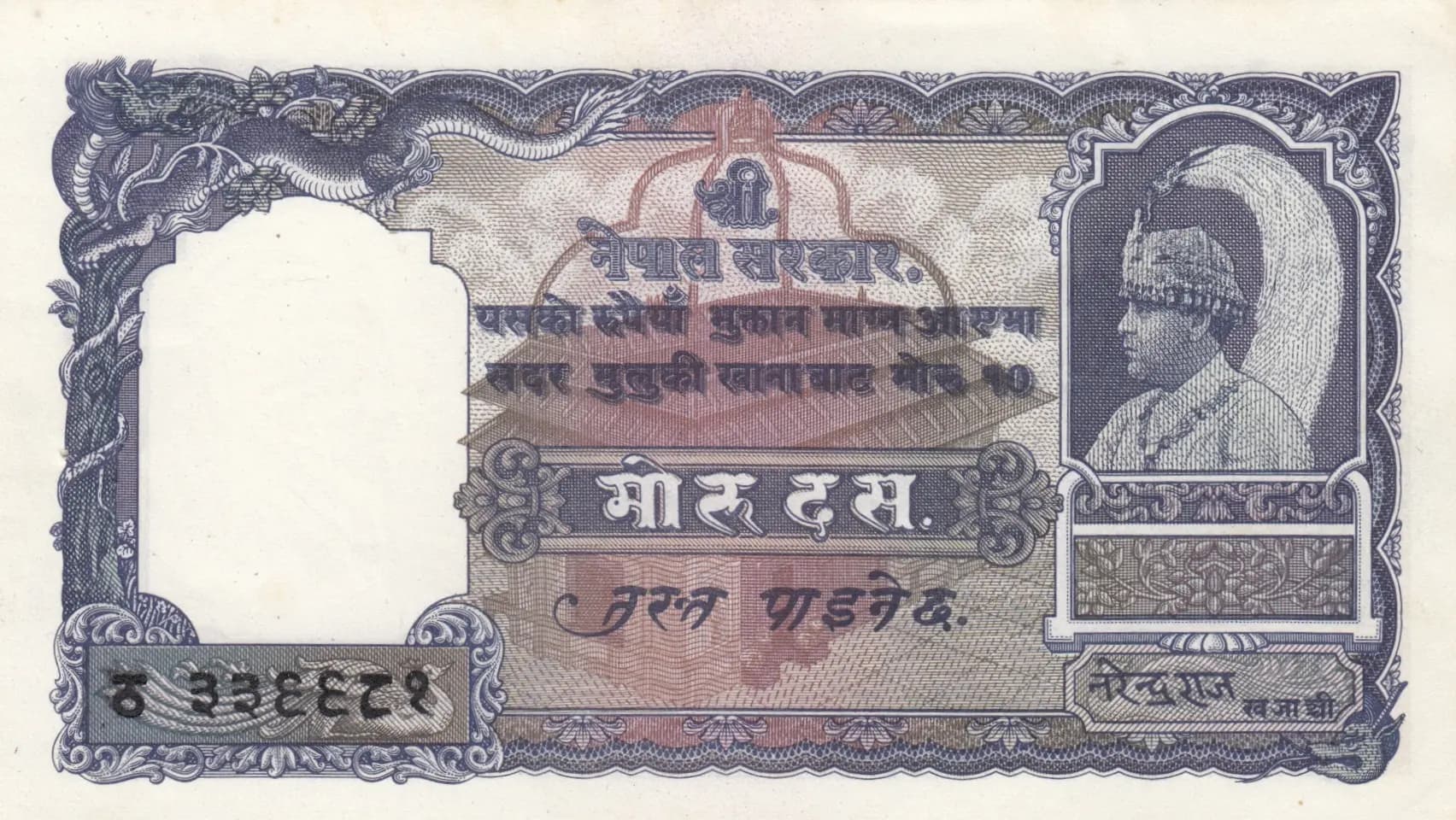
The obverse features a formal portrait of King Mahendra Bir Bikram positioned on the left, depicted wearing his military uniform, peaked cap, and eyeglasses in profile facing right—a dignified representation befitting his status as the reigning monarch. To the right stands the Mahaboudha Temple (also known as the Temple of the Body of Buddha), a multi-tiered pagoda structure with characteristic Nepali architectural elements including stacked, diminishing tiers typical of Buddhist temple design. The reverse depicts the manjha, a traditional wooden swing structure with angular poles used during Dasain festival celebrations, set in a mountainous rural landscape—symbolizing Nepal's cultural traditions and connection to Hindu festivities honoring Goddess Durga. Both sides feature ornate decorative borders with geometric patterns, circular emblems, and heraldic symbols representing the Nepal Rastra Bank's authority.
OBVERSE: नेपाल राष्ट्र बैंक (Nepal Rastra Bank / Nepal National Bank); रुपया एक / एक (One Rupee / One); Serial numbers visible: अ980009 and 760067. REVERSE: नेपालको राष्ट्रिय बैंक (Nepal's National Bank); रु / REI (Rupee / currency designation). Additional signatures and administrative markings present in Devanagari script.
The note was printed using intaglio (engraved) printing by TDLR (the printer identified in the PMG population report for this Pick number). The fine detail visible in the portrait, temple architecture, and decorative borders, combined with the crisp registration and color application observed in the visual analysis, is consistent with intaglio printing—the security printing standard for banknotes of this era. The multi-color printing (brown, purple, gray, and tan tones) suggests separate passes for different color layers, typical of traditional banknote production methods.
The observed serial numbers (अ980009 and 760067) indicate this note carries the Devanagari prefix letter 'अ' (A in transliteration). The visual analysis notes this as a 'radar #' in the collector notes, which would indicate a serial number with palindromic or repeating digit properties—though the visible numerals do not appear to form an obvious radar pattern. The TDLR printer attribution and the 1972 date represent the primary identifying characteristics for this Pick number, as only one variant is catalogued by PMG for P-16. No overprints, color variations, or signature varieties are apparent from the visual analysis provided.