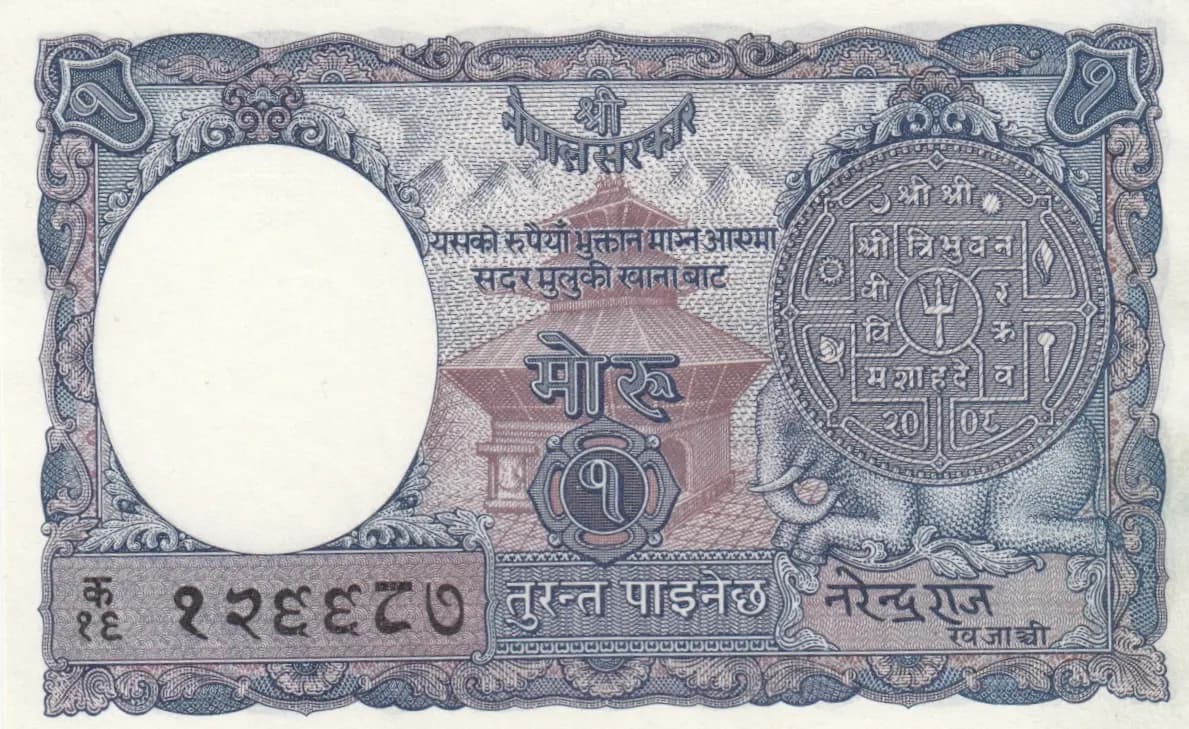
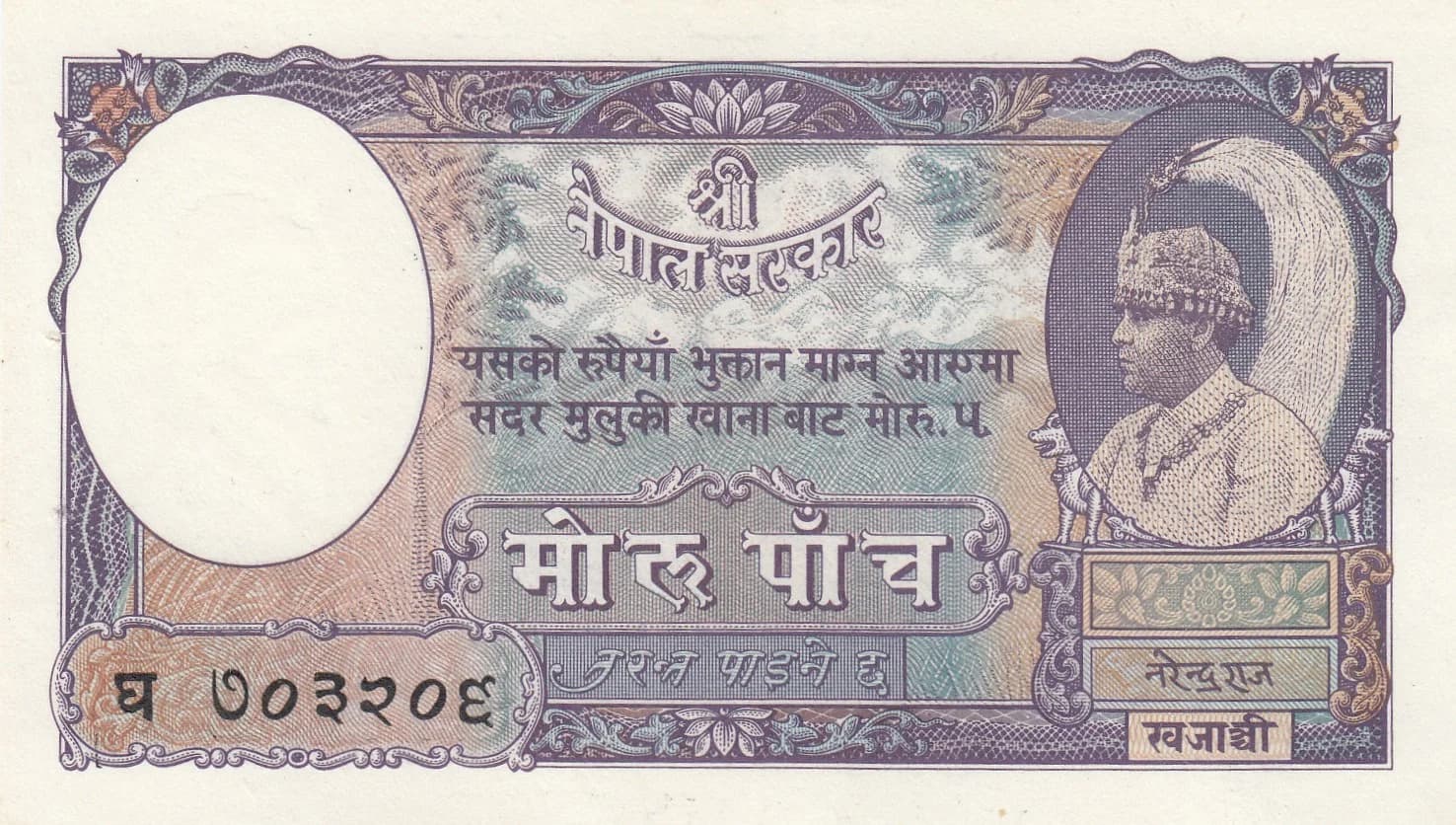
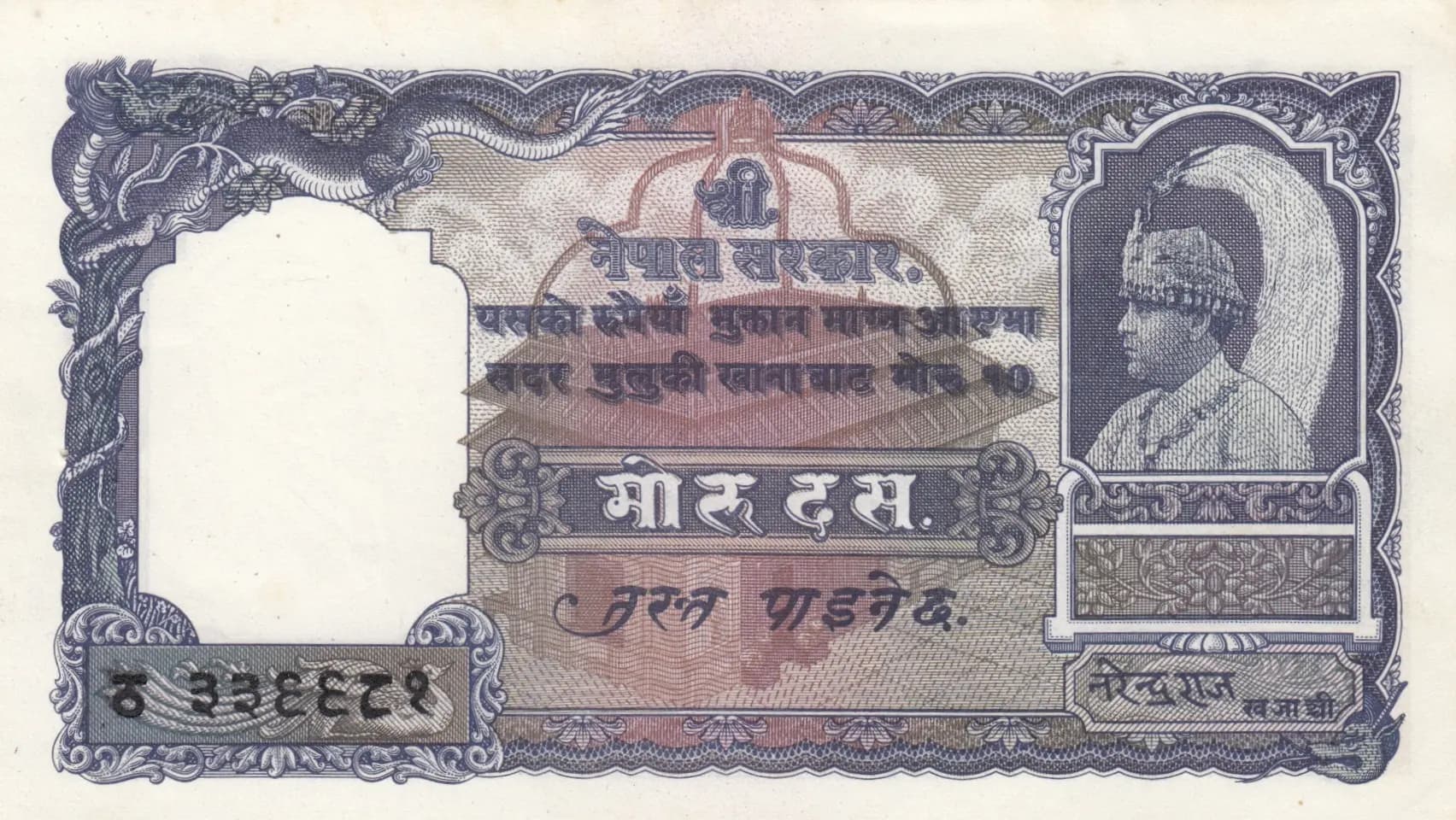
1 rupee 1972
Market Prices
24 salesAbout This Note
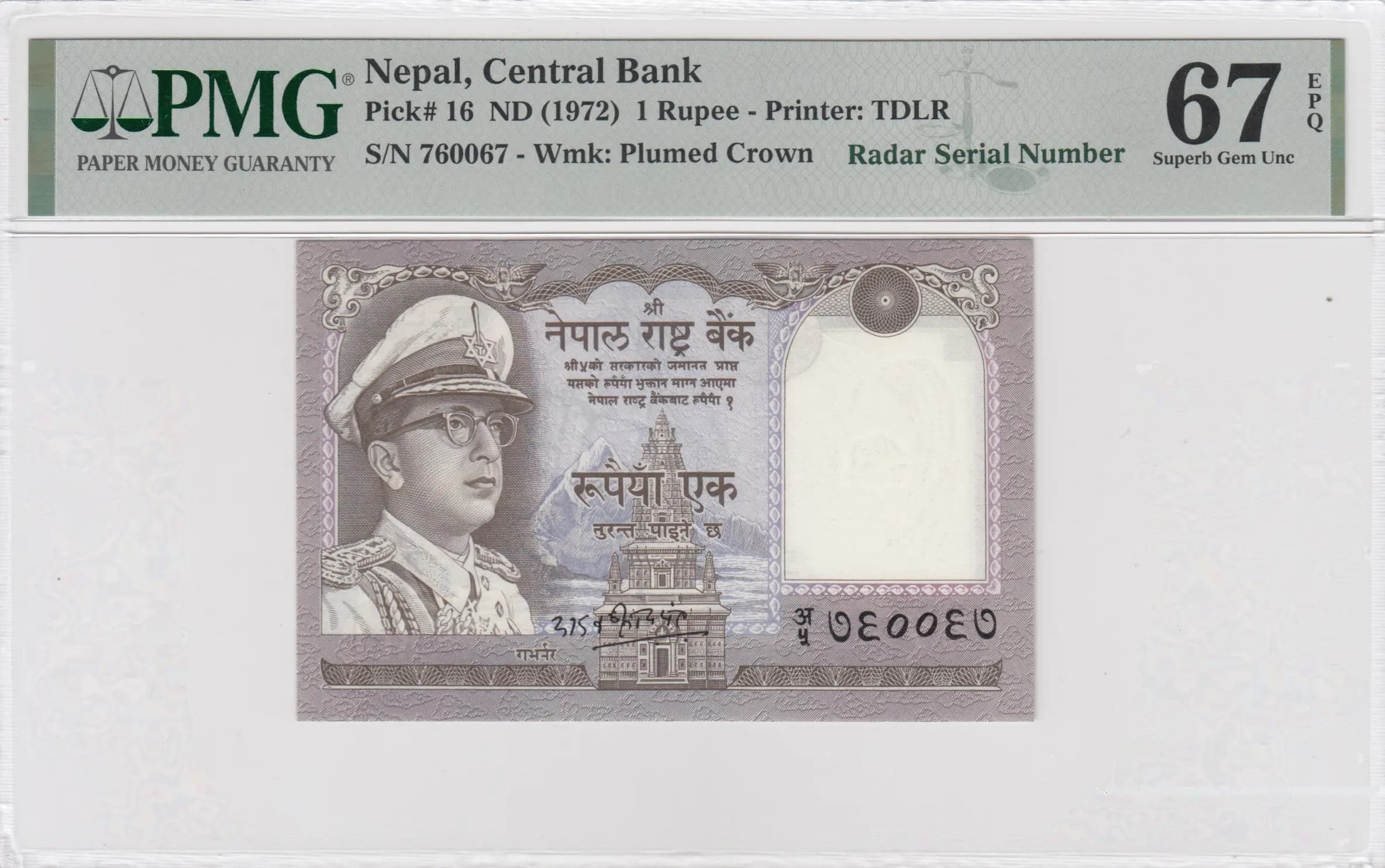
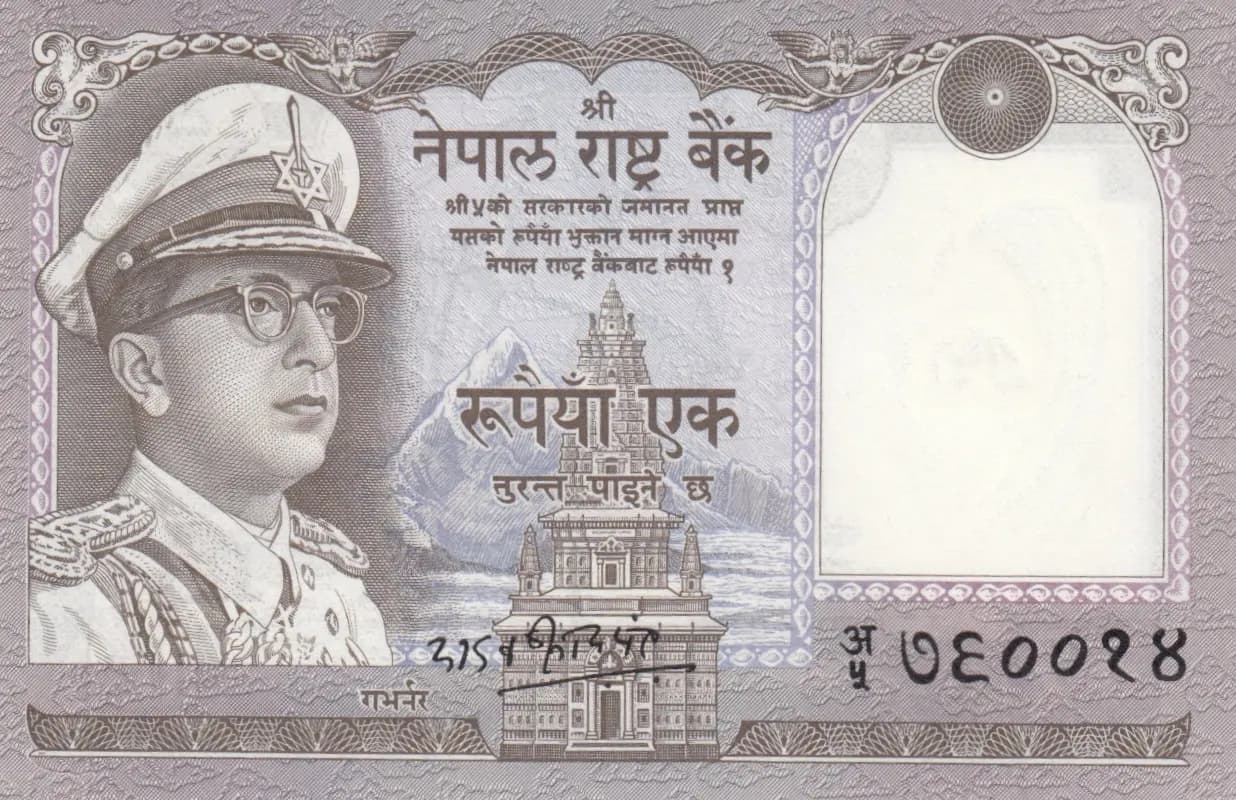
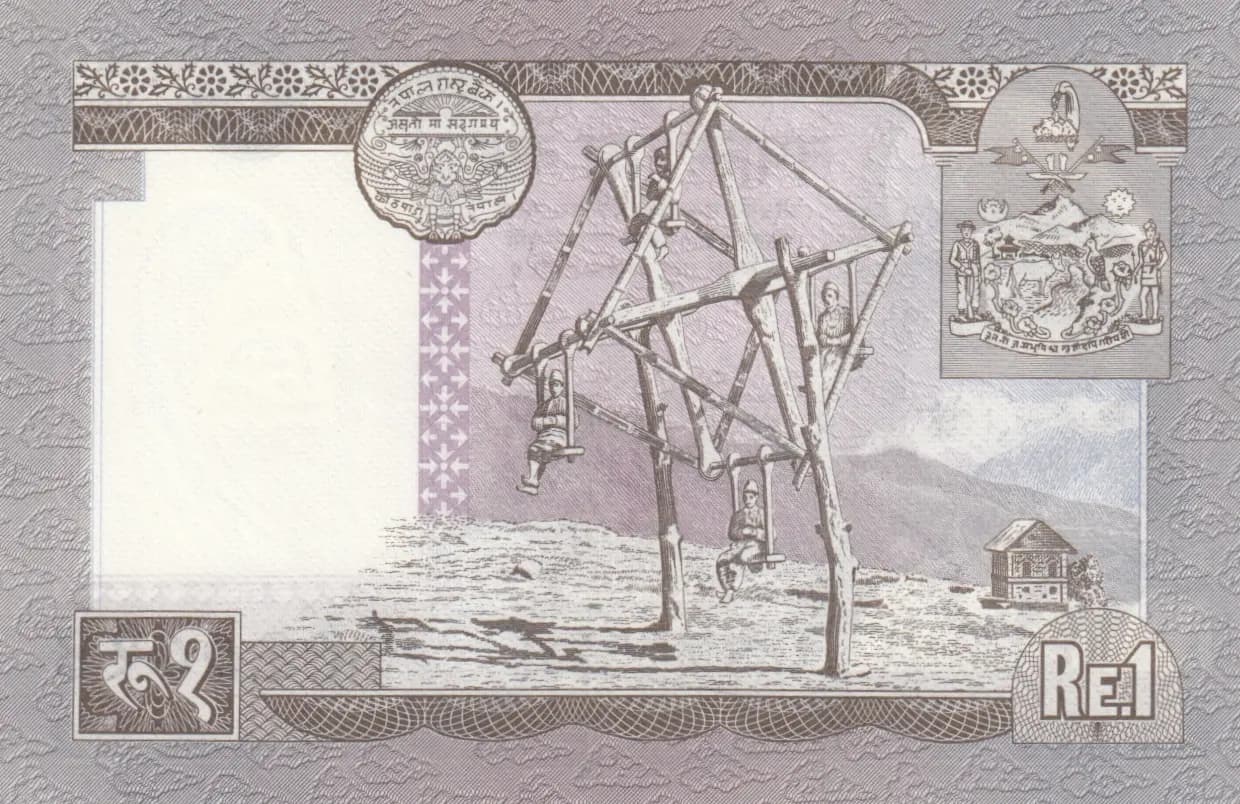
This is an uncirculated example of the 1972 Nepal 1 Rupee (Pick P-16), featuring a crisp, well-preserved intaglio engraving with no visible wear, creases, or stains. The obverse displays King Mahendra Bir Bikram in military dress uniform with characteristic captain's hat and eyeglasses, alongside an ornate illustration of the Mahaboudha temple with mountainous backdrop. The reverse depicts a traditional Nepali water wheel (dhara) in detailed mechanical perspective, accompanied by figures engaged in daily labor, reflecting the note's thematic emphasis on Nepal's cultural heritage and rural economy during the early post-1950 republican period.
Common. The eBay price tracking data provided shows consistent, robust market activity for this note across multiple condition grades spanning from 2014 to 2026, with UNC examples regularly selling in the $2-$15 range (most commonly $2-$4 range in recent years, with occasional outliers reaching $15.50 when bidding competition was high). The catalog values from 2019 list UNC at $6, and PMG has documented a single standard variant for Pick P-16, suggesting straightforward production and wide availability. The consistent supply of examples across various grades and the modest price points indicate this was a regular issue with normal print quantities that has remained readily available in the numismatic market. No evidence of scarcity, recall, or restricted mintage exists.
Issued during the reign of King Mahendra Bir Bikram, this 1 Rupee note represents Nepal's monetary sovereignty under the Nepal Rastra Bank following the country's modernization and the adoption of a new currency framework in the 1950s-1970s. The iconography deliberately celebrates Nepal's dual heritage: the portrait of the reigning monarch emphasizes state authority, while the Mahaboudha temple—one of Nepal's most sacred Buddhist sites located in Patan—and the traditional water wheel imagery honor the nation's spiritual and agricultural foundations. This thematic pairing reflects the government's effort to ground modern state institutions in traditional Nepali culture during a period of nation-building.
The obverse features King Mahendra Bir Bikram (reigning 1955-1972) positioned at left in a three-quarter profile facing right, wearing a formal military dress uniform with peaked captain's hat (topi) and eyeglasses, rendered in fine intaglio detail. The center of the obverse is dominated by an architectural illustration of the Mahaboudha temple (also called Mahabodhi temple), the five-tiered golden pagoda shrine located in Patan, Kathmandu Valley, depicted with intricate architectural ornamentation, set against a mountainous landscape with water features suggesting the surrounding topography of the Kathmandu Valley. Elaborate ornamental borders featuring scrollwork, rosettes, and geometric patterns frame the design, with a circular emblem at top center (Nepal Rastra Bank seal) and decorative circular rosette in the upper right. The reverse features a traditional Nepali water wheel (dhara/mote chulo) illustrated in detailed mechanical perspective at center, showing the wooden structural components and operational mechanism, positioned within a mountainous rural landscape with a small dwelling visible. A scene with multiple human figures appears on the right side, depicted engaging in labor or daily activities associated with traditional water management and agriculture. Both sides employ monochromatic gray, beige, and light purple tones characteristic of security printing of the era.
FRONT: (1) 'श्री नेपाल राष्ट्र बैक' = 'Sri Nepal Rastra Bank' (top center in circular seal); (2) 'श्रीमानको सरकारको जनामत भाष यमको हपेपा भुक्तार मागं आउपमा नेपाल राष्ट्र बैकबाट हपेपा १' = 'Government of Nepal - A promissory note payable by the Nepal Rastra Bank, One [Rupee]' (main obligation text in Devanagari); (3) 'नेपालकु एक बुरन्तगाढी' = 'Nepal's One Rupee' (denomination indicator); (4) 'प्रभिनेर' = 'Governor' (signature line designation). BACK: (1) Circular seal text in Nepali script (top center, partially legible from image) - appears to contain institutional or coat of arms inscription; (2) 'RE 1' = 'Rupee 1' (English denomination marking, bottom right); (3) Devanagari numeral '१' = '1' (bottom left corner). Serial number visible on obverse: 'अ ४०२००२४' (approximately A4020024 in Latin transliteration).
Intaglio engraving (recess printing), as evidenced by the fine line work, intricate detail preservation, ornamental security borders with complex geometric patterns, and the sharp, raised impression characteristic of currency-grade intaglio production. The printer is identified in PMG records as TDLR (Thomas de la Rue & Company, the primary security printer for Nepal during this period), a leading international currency manufacturer known for high-security intaglio work. The crisp, unbroken line patterns and fine detail throughout both obverse and reverse confirm professional security-grade engraving and printing standards.
PMG records indicate one catalogued variant for Pick P-16 (printer: TDLR). Based on the serial number observed in the visual analysis ('अ ४०२००२४'), this example carries a Nepali-script prefix serial number, which may represent the standard variety for this issue. No overprints, commemorative variations, or error variants are noted in catalog literature for this Pick number. The note represents a regular issue from the 1972 currency series of Nepal Rastra Bank under King Mahendra's reign.