50 escudos 1958
Market Prices
18 salesAbout This Note
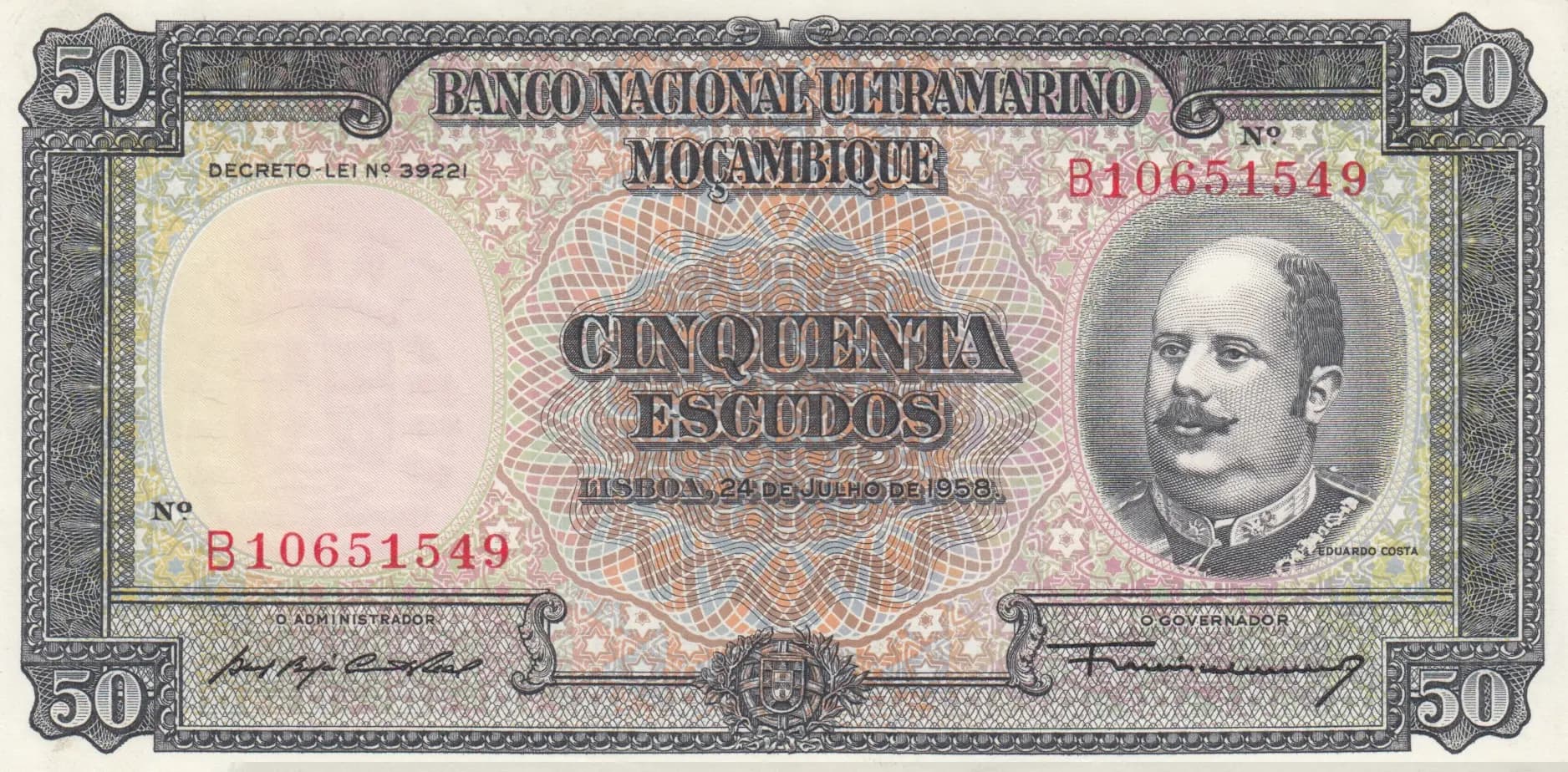
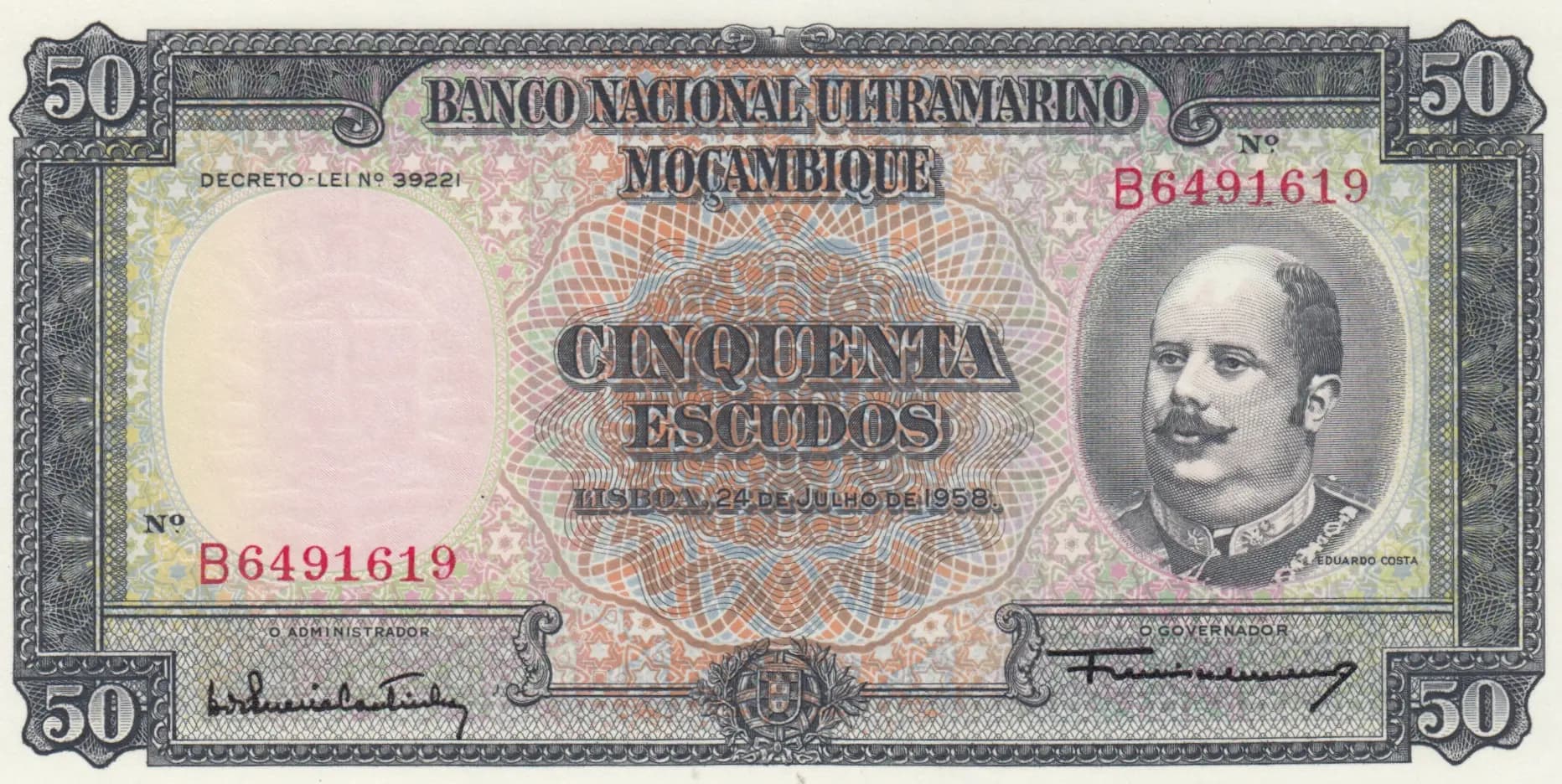
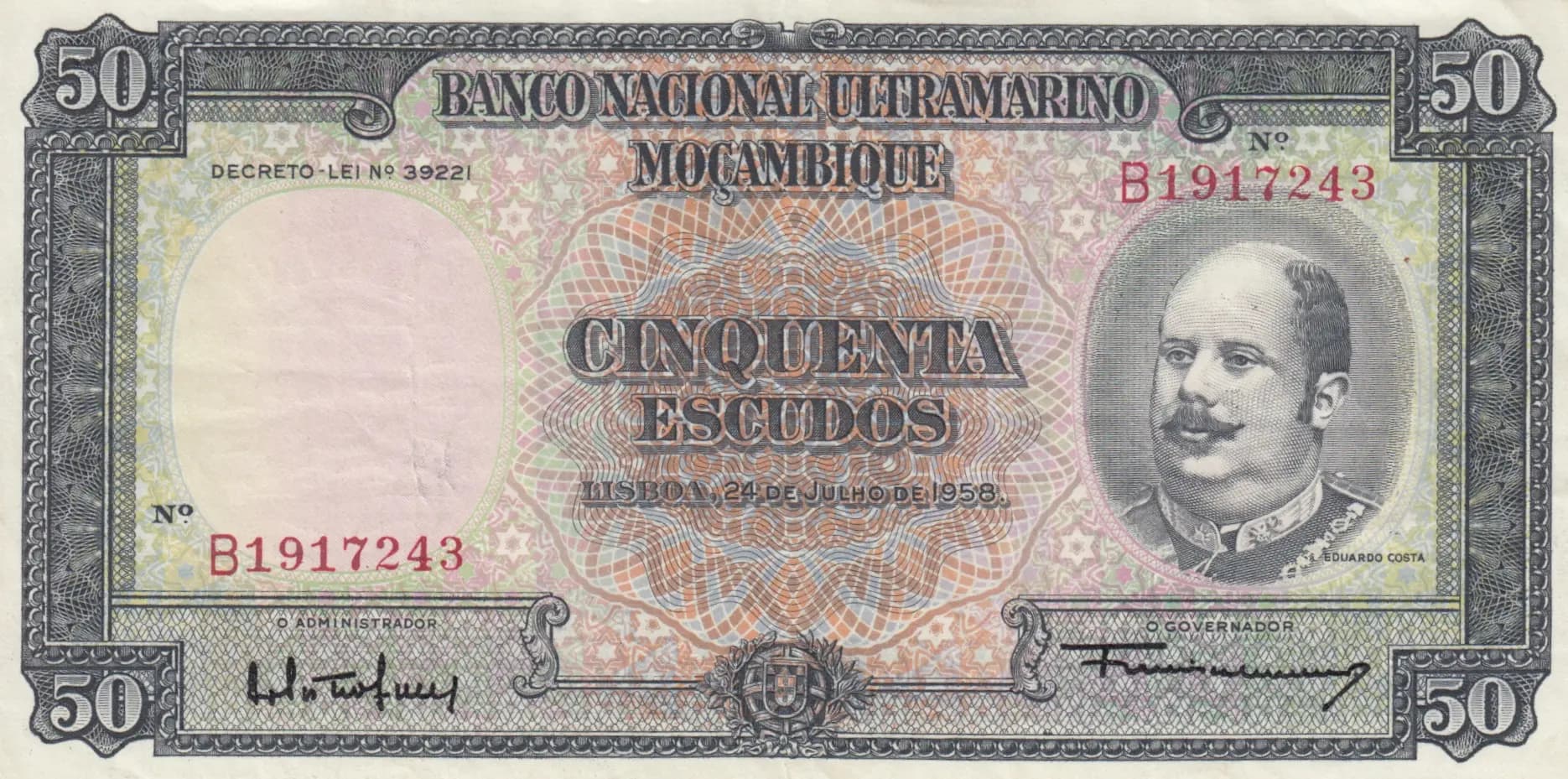
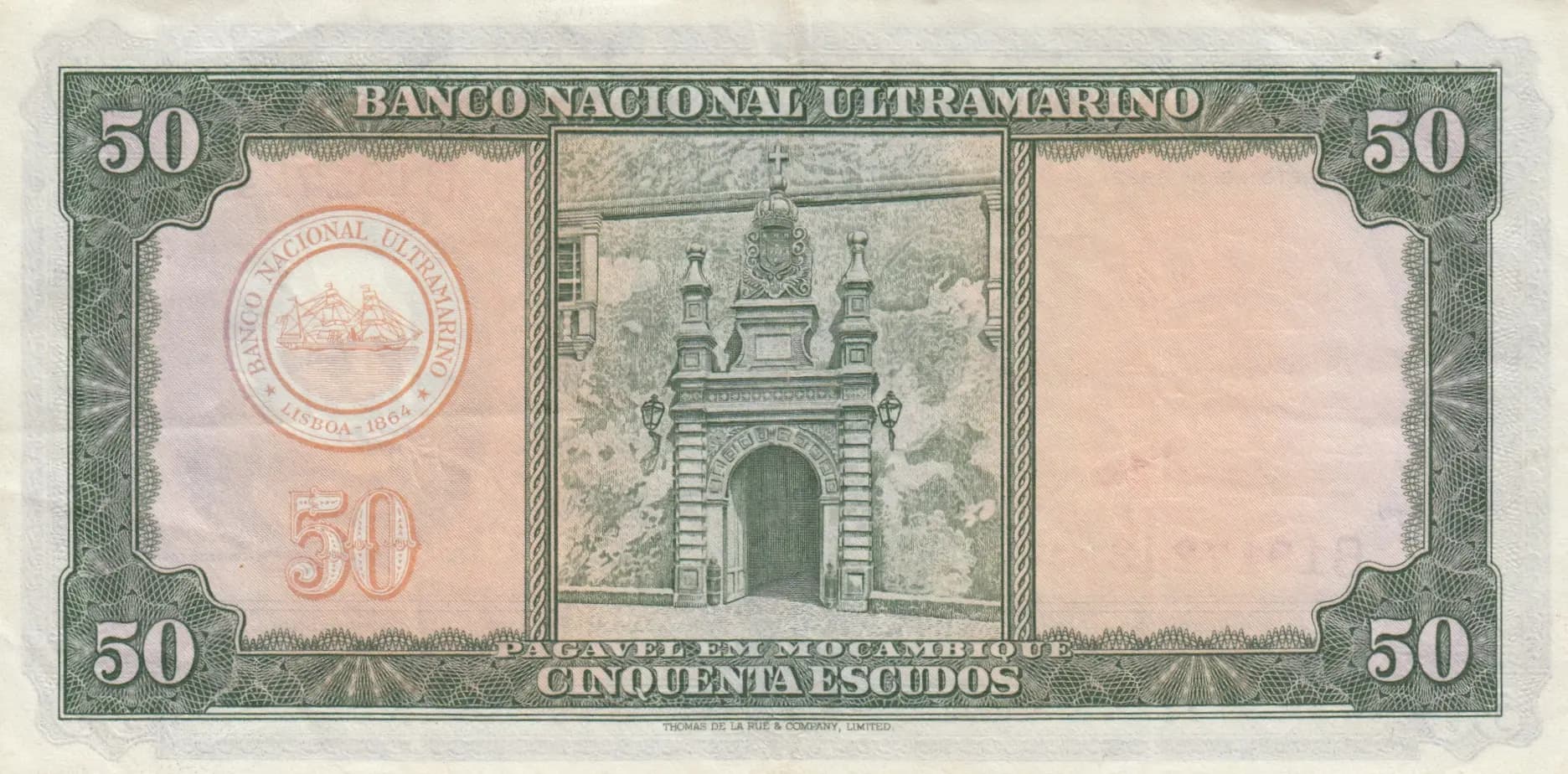
This is a crisp, uncirculated example of the 1958 Mozambique 50 Escudos (Pick P-106) issued by Banco Nacional Ultramarino. The note features excellent preservation with no visible wear, creases, or stains, displaying the intricate multicolor printing characteristic of Thomas de la Rue's work. The obverse showcases a portrait of Eduardo Costa alongside ornate geometric and floral designs in pink, orange, and green, while the reverse depicts the fortified gateway entrance to Fort São Sebastião on Ilha de Moçambique—a historically significant landmark from the Portuguese colonial period.
Common. While cataloged as Pick P-106 with a VF condition grade designation, the eBay market data strongly indicates this is a common note in circulation among collectors. Recent sales show VF examples selling for $8.91 to $20.51, and even uncirculated examples achieving only $23–$50, with catalog valuations at only $5 for VF condition (as of 2016). The print run for this 1958 issue appears to have been substantial, and the note remains readily available in the numismatic market. The absence of any notation regarding scarcity in professional grading reports or catalogs further supports a common classification.
Issued during the height of the Portuguese Estado Novo regime under Decree-Law No. 39221 on July 24, 1958, this banknote reflects Portugal's assertion of control over its African territories during the colonial era. The reverse image of Fort São Sebastião's ornamental entrance gateway is not merely decorative—it symbolizes Portuguese military and administrative presence in Mozambique, while the Banco Nacional Ultramarino's seal prominently displayed on the reverse (dating to the bank's establishment in 1864) emphasizes metropolitan Portuguese financial authority over the overseas colony. The denomination and bilingual Portuguese text underscore the Lusophone nature of the colonial administration.
The obverse presents a formal portrait of Eduardo Costa in profile facing left, rendered with fine detail and a characteristic mustache. The portrait is framed by elaborate ornamental borders featuring intricate guilloche patterns, scrollwork, and geometric flourishes in pink, orange, and green hues against a black foundation. The Portuguese coat of arms appears at center-bottom, flanked by denomination numerals '50' in decorative corner ornaments. The reverse features a meticulously engraved architectural vignette of Fort São Sebastião's entrance gateway on Ilha de Moçambique—a fortified structure with crenellated walls, ornamental turrets, a prominent arched entrance, and decorative lanterns set within a mountainous landscape rendered in beige and green tones. The Banco Nacional Ultramarino's institutional seal (featuring a ship motif and establishing date of 1864) appears prominently on the left side of the reverse, reinforcing the metropolitan Portuguese banking authority.
FRONT: 'BANCO NACIONAL ULTRAMARINO' (Overseas National Bank), 'MOÇAMBIQUE' (Mozambique), 'CINQUENTA ESCUDOS' (Fifty Escudos), 'DECRETO-LEI Nº 39221' (Decree-Law No. 39221), 'LISBOA 24 DE JULHO DE 1958' (Lisbon July 24, 1958), 'O ADMINISTRADOR' (The Administrator), 'O GOVERNADOR' (The Governor), 'EDUARDO COSTA' (Eduardo Costa—named portrait subject), Serial number 'B1917243'. BACK: 'BANCO NACIONAL ULTRAMARINO' (Overseas National Bank), 'CINQUENTA ESCUDOS' (Fifty Escudos), 'PORTA EM MOÇAMBIQUE' (Gateway in Mozambique), 'BANCO NACIONAL ULTRAMARINO LISBOA - 1864' (Overseas National Bank Lisbon - 1864), 'THOMAS DE LA RUE & COMPANY, LIMITED' (printer attribution).
This note employs intaglio engraving and multicolor letterpress printing, characteristic of Thomas de la Rue & Company's premium banknote production methods. The fine line work visible throughout—particularly in the guilloche security patterns, architectural details of the fortress gateway, and portrait rendering—indicates steel plate engraving. The crisp, multi-colored registration across distinct color layers (black, pink, orange, green, beige, and gray) demonstrates sophisticated multi-pass printing technology. The Thomas de la Rue imprint on the reverse confirms production by this London-based security printer, one of the world's premier banknote manufacturers during the colonial era.
This specimen represents the standard P-106 variety as distinguished from P-102 by the absence of 'COLONIA PORTUGUESA' text below the bank name and the absence of printing over the watermark at left—features present on the earlier 1958 P-102 issue. The visual analysis confirms spelling of the denomination as 'CINQUENTA' (correct spelling), and the presence of the Banco Nacional Ultramarino seal on the reverse is consistent with P-106 cataloging. Serial number format 'B1917243' appears consistent with the standard issue. The PMG population report indicates variant P-106a exists, though distinguishing characteristics between P-106 and P-106a are not detailed in available reference materials; this specimen's specific variant status cannot be determined from visual inspection alone without access to PMG's variant definitions.