100 meticais 1980 specimen
Market Prices
11 salesAbout This Note
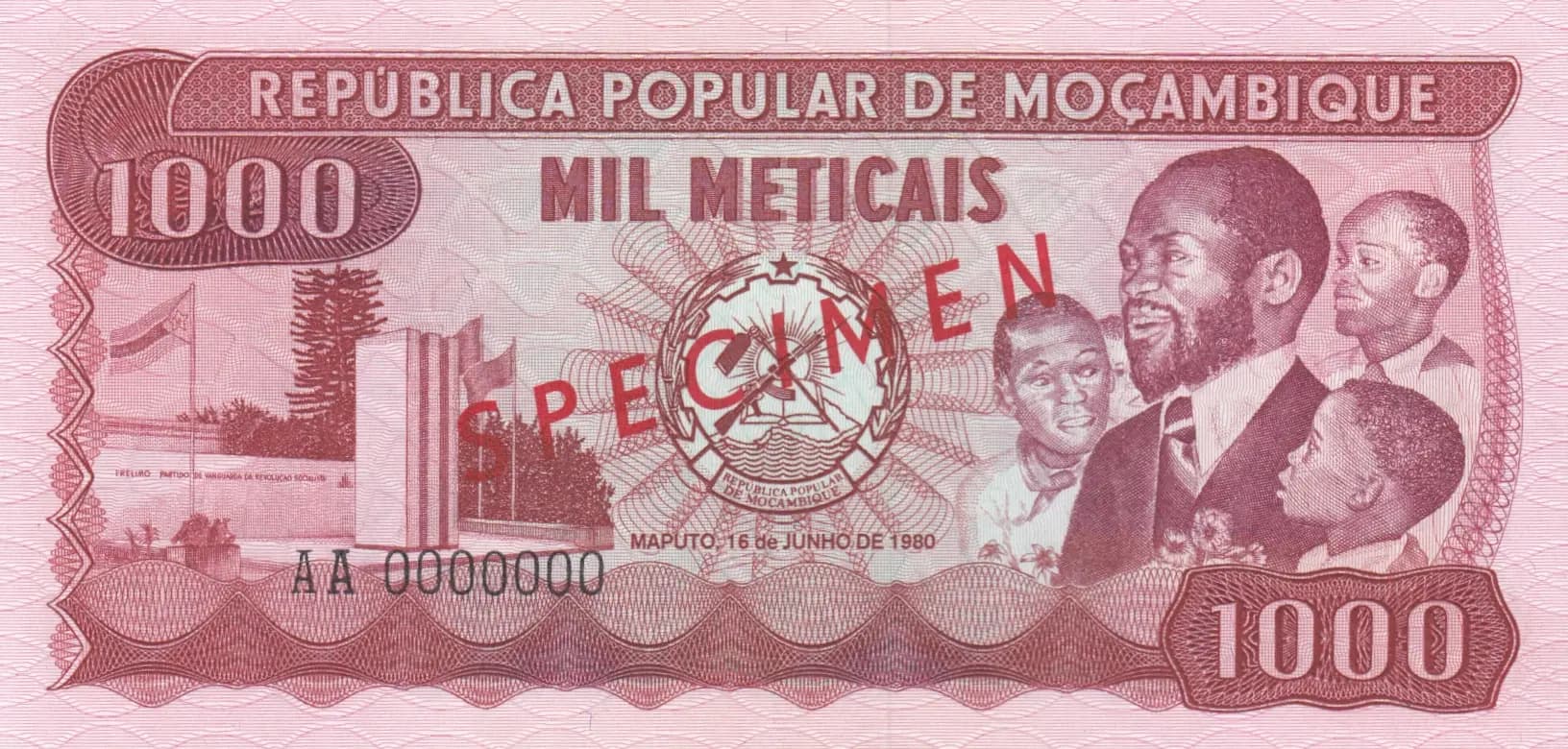
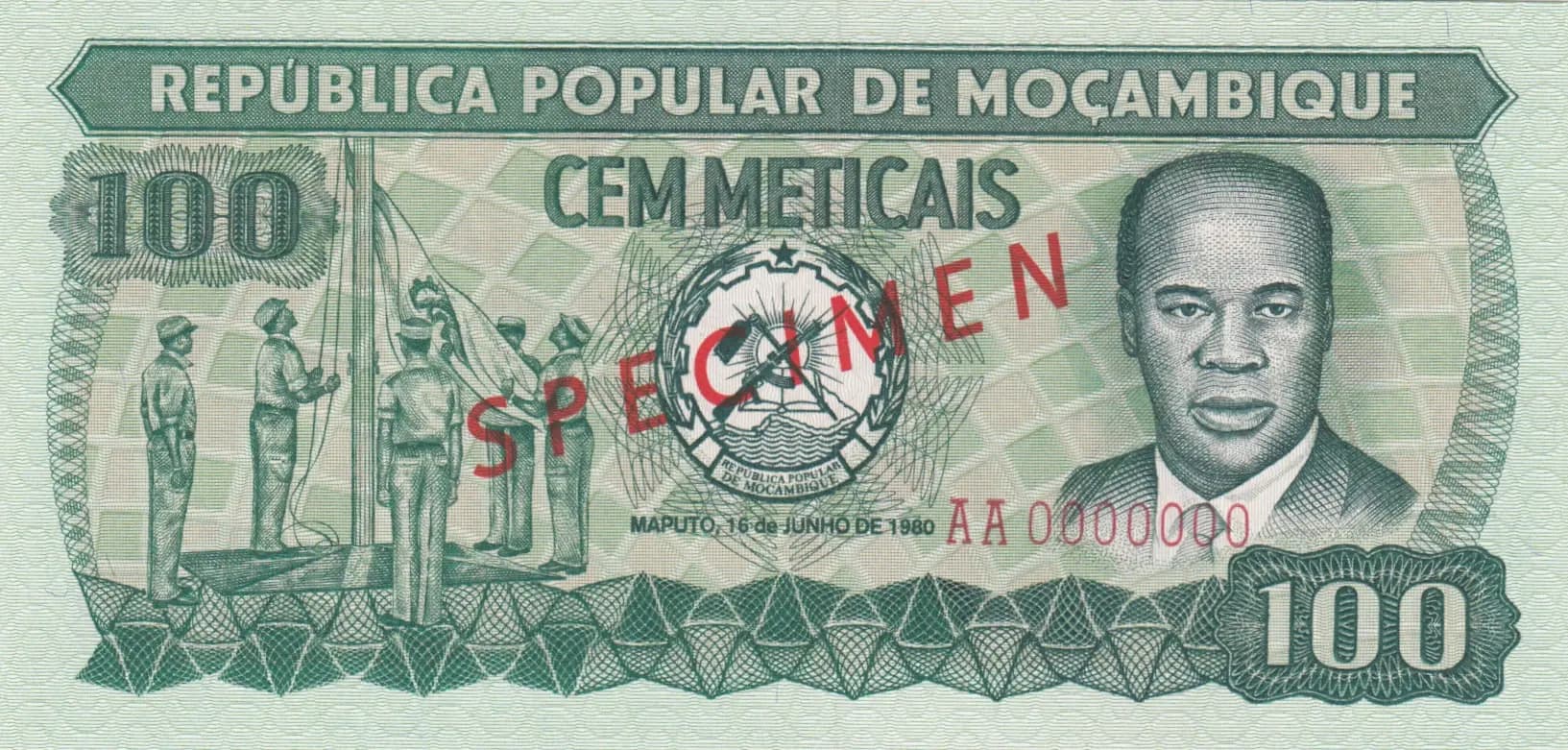
This is a 1980 Mozambique 100 Meticais specimen note (Pick P-126s) in uncirculated condition, distinguished by the bold red 'SPECIMEN' overprint across the obverse. The note features a striking design with fishing/maritime imagery on the left, a portrait of Eduardo Mondlane on the right, and the national coat of arms centered, all rendered in crisp green with fine line engraving. As a specimen note from the early post-independence period of the Popular Republic of Mozambique, this represents an important piece of modern African numismatic history.
Common. The eBay price history provided shows consistent sales in the $0.99–$5.50 range across multiple transactions from 2014–2021, with an average price around $2.00–$2.50 for UNC examples. Catalog value for UNC is listed at $3.00 (2019). These modest prices and high transaction frequency indicate this is a common note in the collector market. Specimen notes are sometimes collected as a subset, but this particular denomination and date do not command premium pricing, suggesting adequate supply in the market.
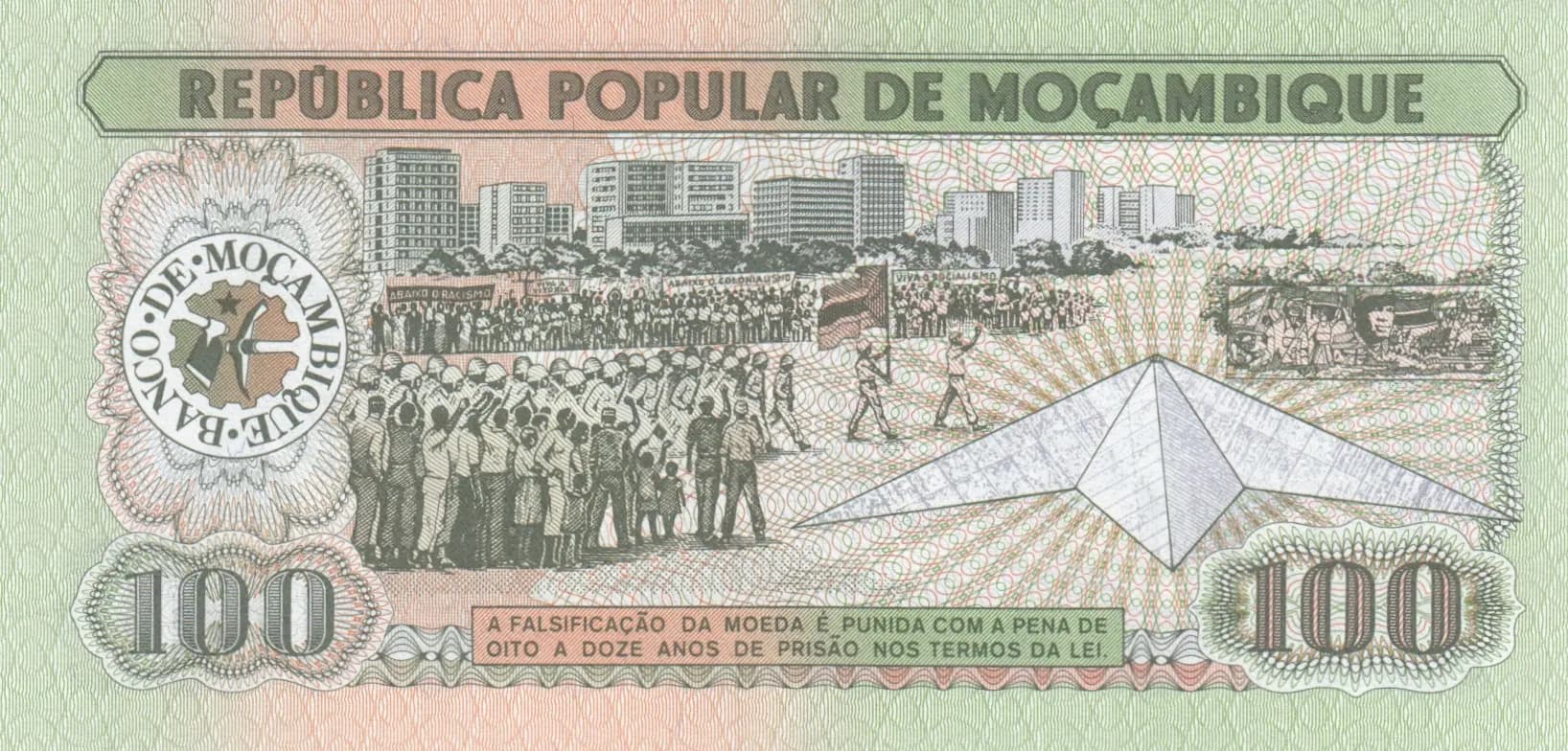
This note was issued on June 16, 1980, during the early years of Mozambique's independence from Portugal (achieved in 1975). The obverse depicts the flag-hoisting ceremony at Machava Sports Stadium on July 25, 1975, commemorating independence, while Eduardo Mondlane (founding leader of the independence movement) is honored with his portrait. The reverse depicts a public ceremony with crowds and the Independence Monument in Maputo, representing the nation's celebration of freedom and national sovereignty during the first years of the Popular Republic.
The obverse features a formal portrait of Eduardo Mondlane in profile facing left, positioned on the right side of the note in formal suit and tie. The left side depicts scenes of fishing or maritime labor with multiple human figures engaged in net-fishing activities, symbolizing productive labor and national industry. The national coat of arms of Mozambique, featuring a shield with crossed hammer and hoe (representing workers and agriculture), a star at the top, and a circular wreath, is prominently centered. The reverse depicts a monumental public gathering scene in what appears to be Maputo's central plaza, with crowds of citizens, modern high-rise architecture in the background, and a distinctive pyramidal monument (the Independence Monument) visible in the composition. Ornate rosette designs and guilloche patterns provide decorative security elements in the corners and throughout the background.
FRONT: 'REPÚBLICA POPULAR DE MOÇAMBIQUE' (Popular Republic of Mozambique); 'CEM METICAIS' (One Hundred Meticais); 'MAPUTO, 16 de JUNHO DE 1980' (Maputo, June 16, 1980); 'SPECIMEN' (Specimen—English language security marking); Serial number 'AA 0000000'; Denomination '100'. BACK: 'REPÚBLICA POPULAR DE MOÇAMBIQUE' (Popular Republic of Mozambique); Denomination '100'; 'A FALSIFICAÇÃO DA MOEDA É PUNIDA COM A PENA DE OITO A DOZE ANOS DE PRISÃO NOS TERMOS DA LEI' (The counterfeiting of currency is punished with a sentence of eight to twelve years imprisonment under the terms of the law).
This note was produced using intaglio (line engraving) printing techniques, evidenced by the fine, intricate line work throughout both sides, the crisp detail in the portraiture and architectural elements, and the precise guilloche and rosette patterns. The consistent quality of impression and the decorative border patterns are characteristic of security printing by a specialized central bank note printer. For Mozambique notes of this era, De La Rue or similar established European security printers are likely candidates, though the specific printer is not confirmed on the note itself.
This is a specimen note variant (Pick P-126s, where 's' denotes specimen status) as confirmed by the red diagonal 'SPECIMEN' overprint and the serial number format 'AA 0000000' typical of specimen printing. The visual analysis indicates this specimen retains the standard design elements of the regular issue P-126. According to catalog references, later versions of this note (P-130) feature modified arms; this 1980 date confirms this is the earlier variant. No signature varieties are distinctly noted in the visual analysis provided.