2 perpera 1914
Market Prices
25 salesAbout This Note
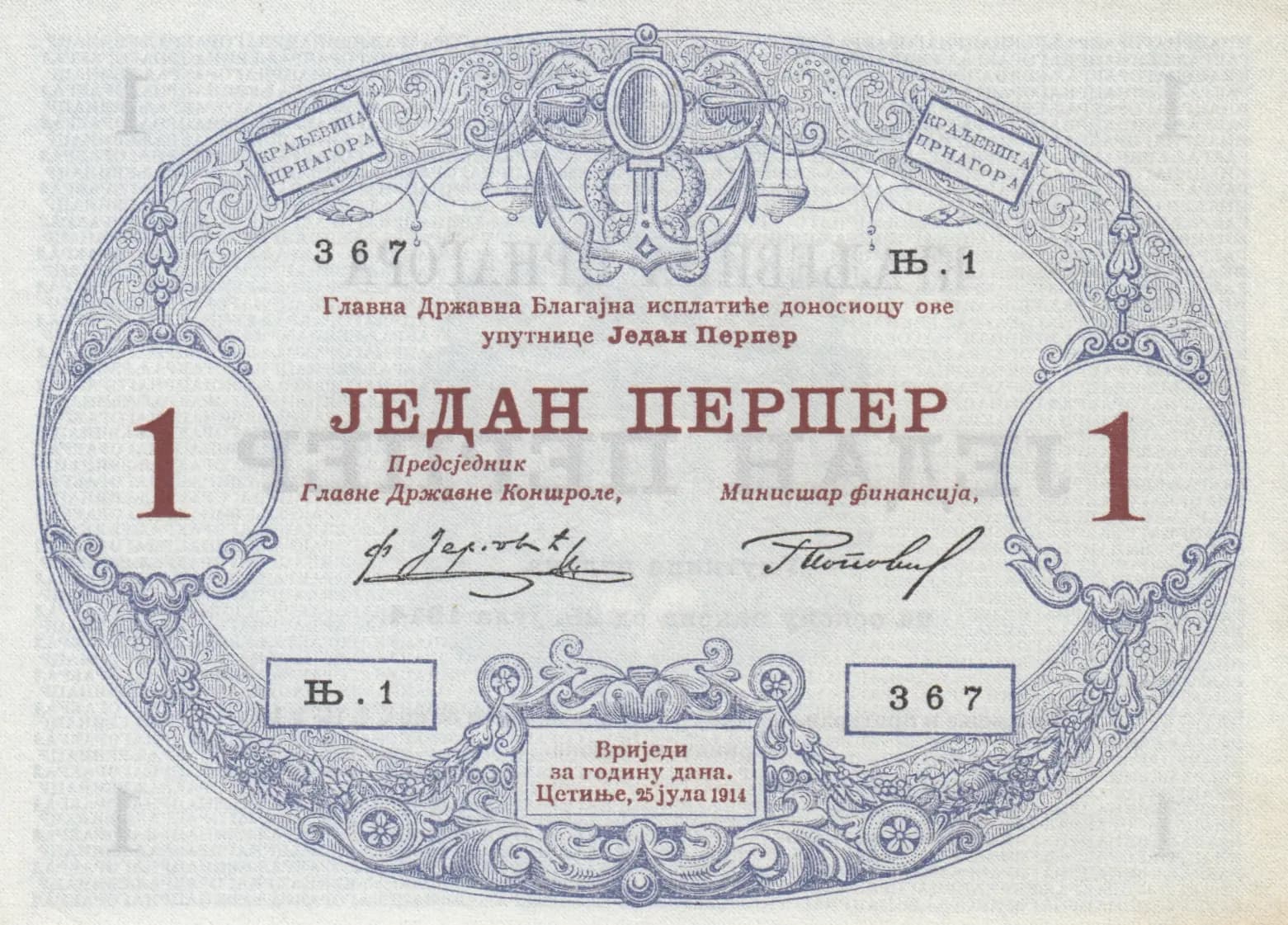
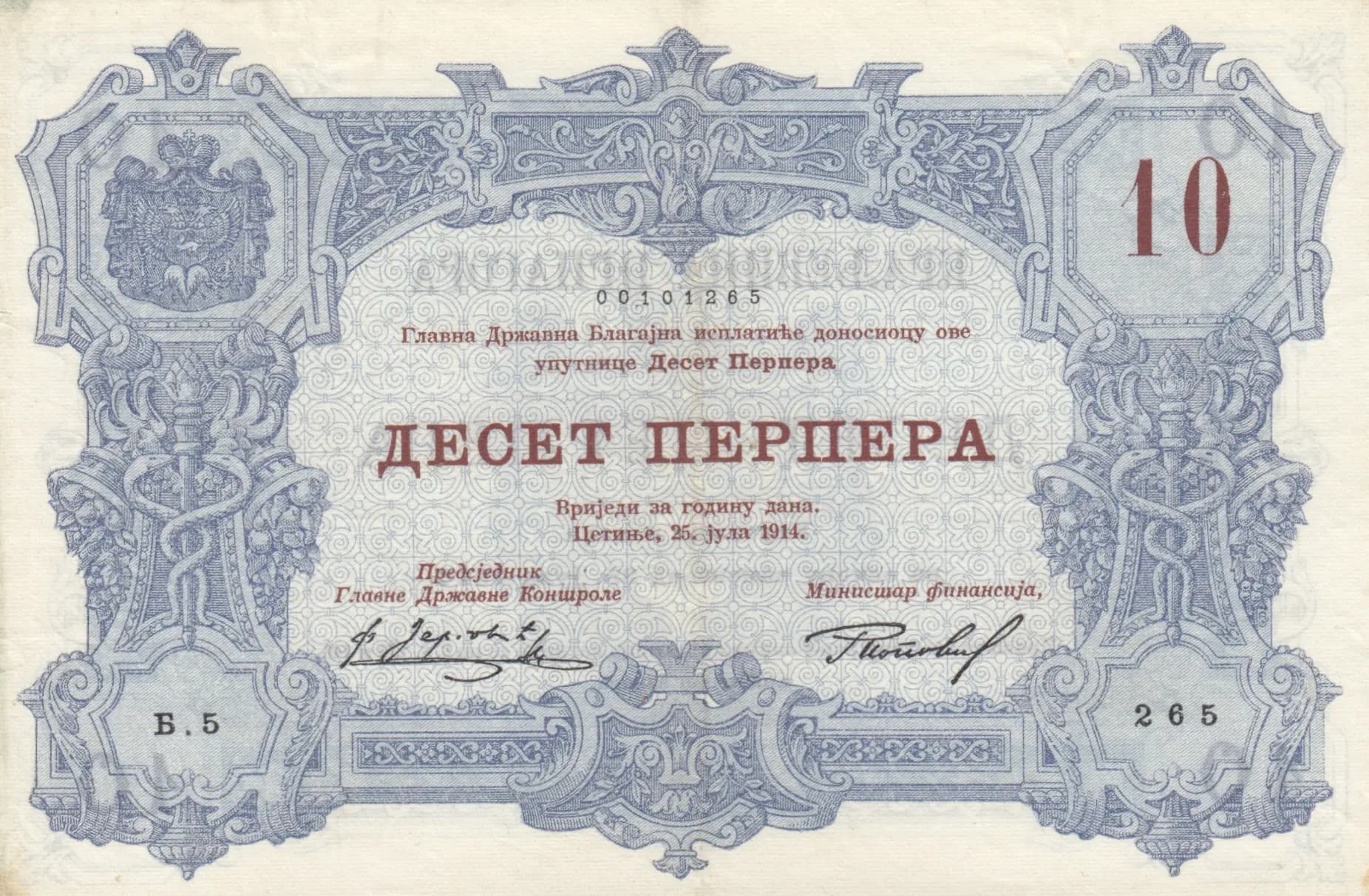
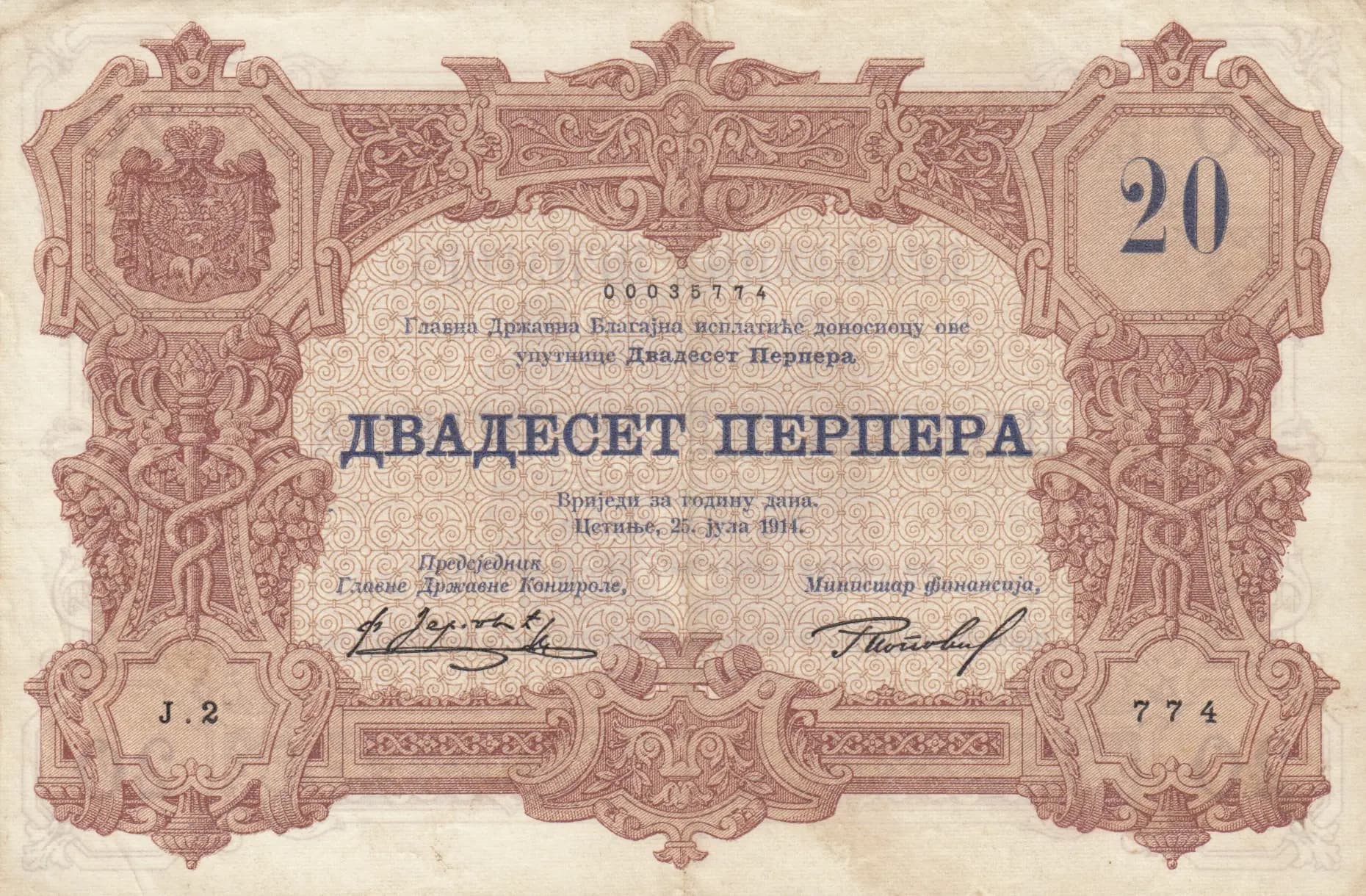
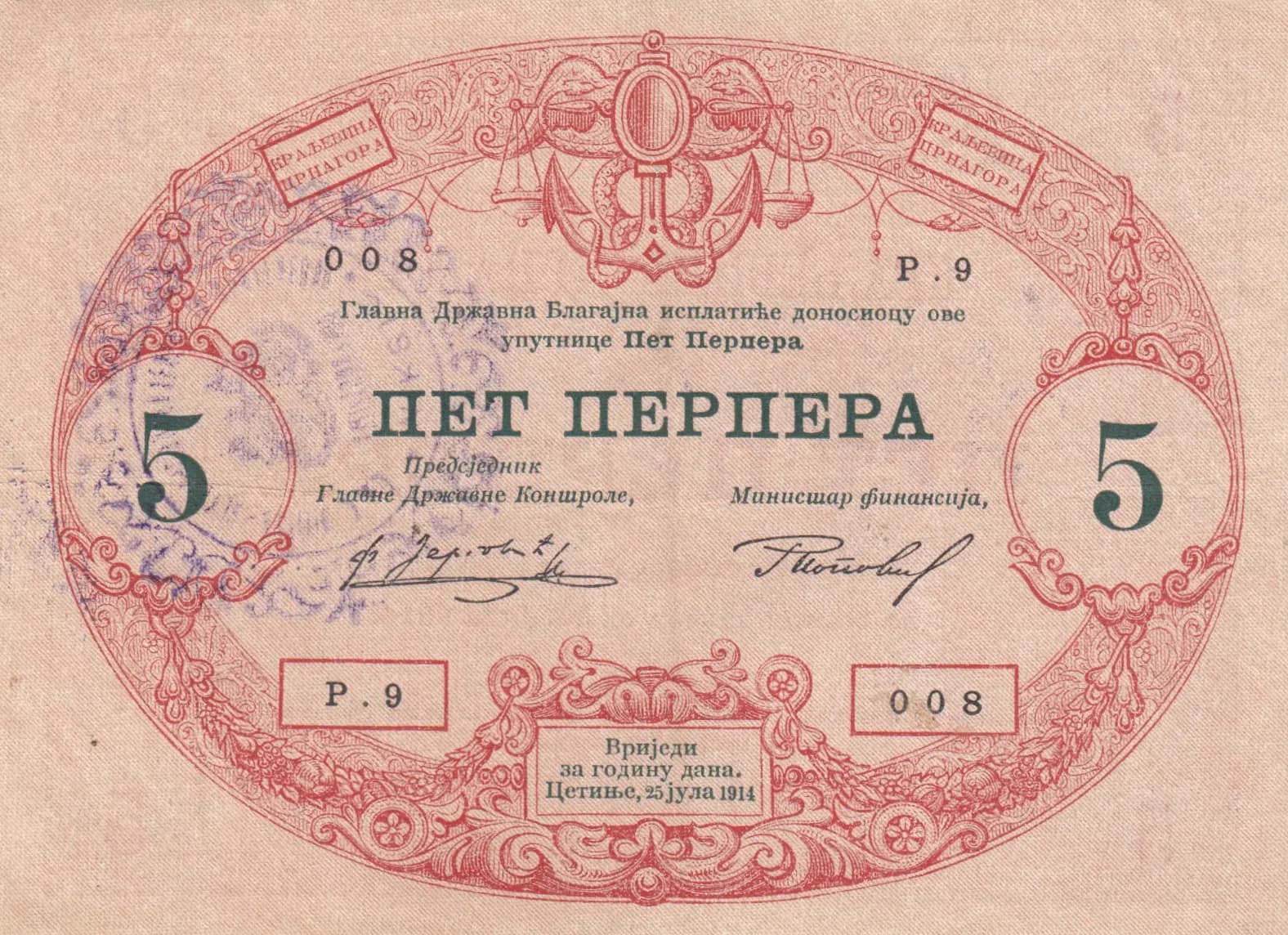
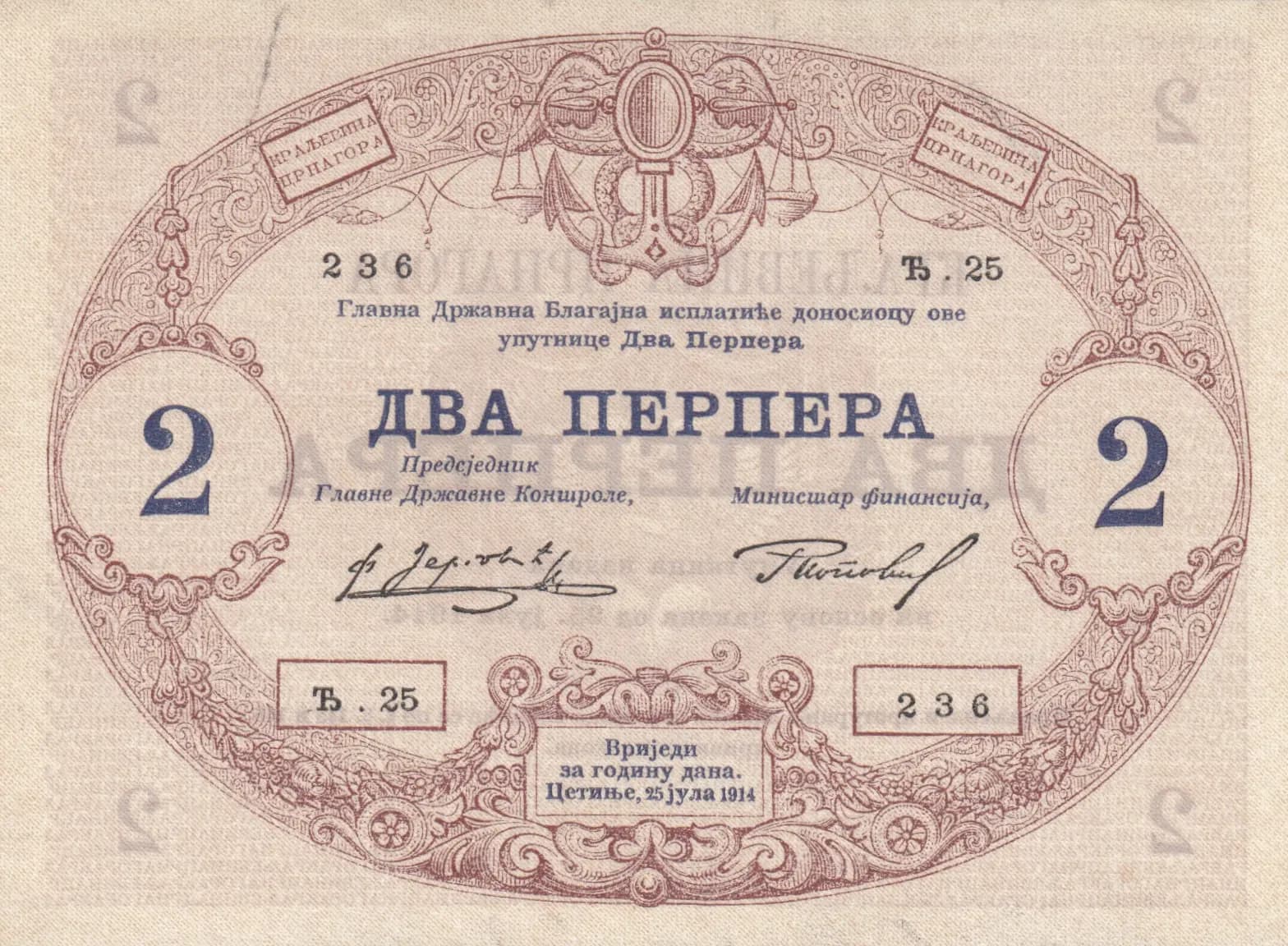
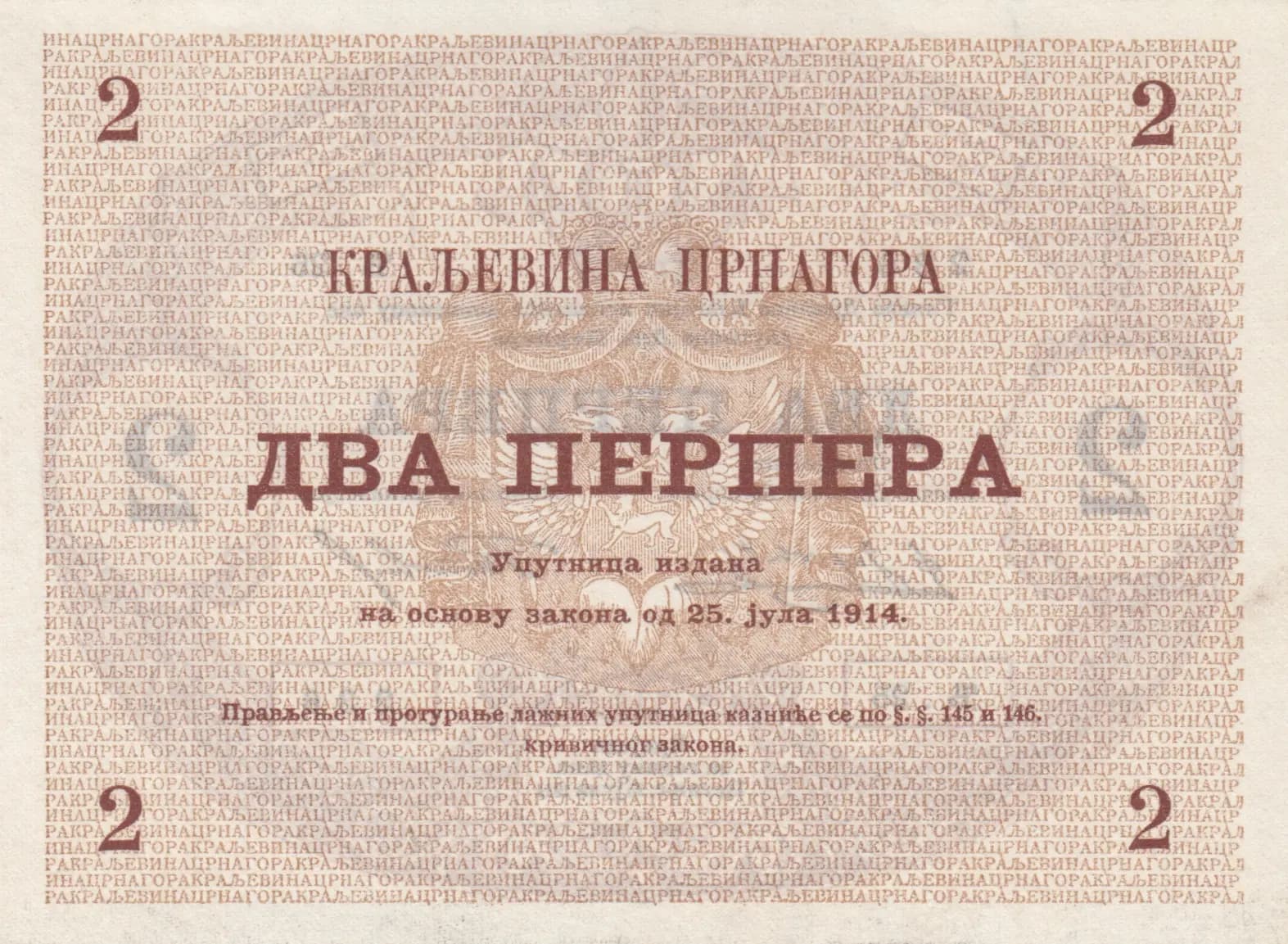
This is an AU-graded 2 Perpera note from the Kingdom of Montenegro, issued on 25 July 1914 by the Main State Treasury. The note displays exceptional preservation with crisp printing, clear inscriptions in Serbian Cyrillic, and well-defined ornamental borders throughout both sides. The design features elaborate heraldic symbolism and security patterns characteristic of early 20th-century Balkan currency, making it a significant example of Montenegro's brief period of monetary independence before World War I.
Common. eBay market data shows consistent sales in the $10-$22 range for VF/EF specimens over the past decade, with only professionally graded premium examples (PMG 65+) commanding higher prices ($180+). The baseline market price for raw VF examples averages around $15, indicating healthy supply at collector level. This was a regular issue with presumably adequate print runs for the brief period of circulation before World War I disrupted normal monetary operations in Montenegro. While historically significant, the note is not scarce in typical collector grades.
The Kingdom of Montenegro issued this 2 Perpera note under specific legislation dated 25 July 1914, just weeks before the outbreak of World War I. The ornamental coat of arms and heraldic imagery reflect Montenegro's status as an independent kingdom during the pre-war Balkan period. The note's inscription 'Valid for one year' (Vrijedni za godinu dana) reflects the temporary, emergency nature of this currency issue, which was superseded by subsequent monetary systems following Montenegro's involvement in the Great War and subsequent political union with Serbia.
This banknote features a sophisticated design centered on heraldic and governmental authority symbols. The front displays an elaborate ornamental border with scrollwork and floral motifs in brown/sepia on cream background, with the denomination '2' presented in circular frames at left and right. The central vignette features the coat of arms of the Kingdom of Montenegro, likely incorporating crossed heraldic elements (possibly representing traditional Montenegrin symbols such as crossed weapons or ceremonial objects) beneath a crowned or ornamented apex. Two signature lines occupy the lower center, representing the President of Main State Control and Minister of Finance. The reverse side features large denomination numerals '2' in the opposite corners, with the bold inscription 'Kraljevina Crna Gora' (Kingdom of Montenegro) dominating the center. Below this appears 'Dva Perpera' with issuing authority text. A security pattern consisting of repeating Cyrillic text fills the background, a common anti-counterfeiting measure of the era. The color scheme remains consistent throughout—brown and sepia tones on cream—creating a formal, authoritative appearance appropriate for government currency.
FRONT SIDE: 'Glavna Državna Blagajna isplaćuće donositeljу ove uputnice Dva Perpera' (The Main State Treasury will pay to the bearer of this note Two Perpera) | 'Dva Perpera' (Two Perpera) | 'Predsednik Glavne Državne Kontrole, Ministar finansija' (President of Main State Control, Minister of Finance) | 'Vrijedni za godinu dana. Cetinje, 25 jula 1914' (Valid for one year. Cetinje, 25 July 1914) | Serial marking 'Ђ. 25'. BACK SIDE: 'Kraljevina Crna Gora' (Kingdom of Montenegro) | 'Dva Perpera' (Two Perpera) | 'Uputnica izdana na osnovu zakona od 25. jula 1914' (Bond/Note issued on the basis of the law from 25 July 1914) | 'Pravljenje i pruguranje lažnih uputnica kaznivačće po §. 145 i 146. Krivičnog zakona' (Making and circulating counterfeit notes will be punished according to §. 145 and 146 of the Criminal Code) | Repeating security text pattern (Kraljevina Crna Gora/Kraljevina).
This note was produced using intaglio/line engraving printing techniques, evidenced by the crisp, fine detail in the ornamental borders, the precise denomination numerals, and the clearly defined repeating text security pattern. The sharp registration of the Cyrillic inscriptions and the consistent depth of impression across both sides indicate professional security printing equipment. The printer for this specific Pick number was the Central Treasury's printing facility in Cetinje, Montenegro's capital, as indicated by the issuing city notation on the front.
Pick catalog lists two variants: P-16 (standard) and P-16s (specimen). The observed note appears to be the standard circulation variety (P-16) based on visual analysis showing no overprint or specimen markings. Serial number 236 with the reference mark 'Ђ. 25' is visible on the front. The PMG population report confirms these two base varieties exist in professionally graded populations, though specific population numbers are not provided in the available data.