5 rupees 1960
Market Prices
25 salesAbout This Note
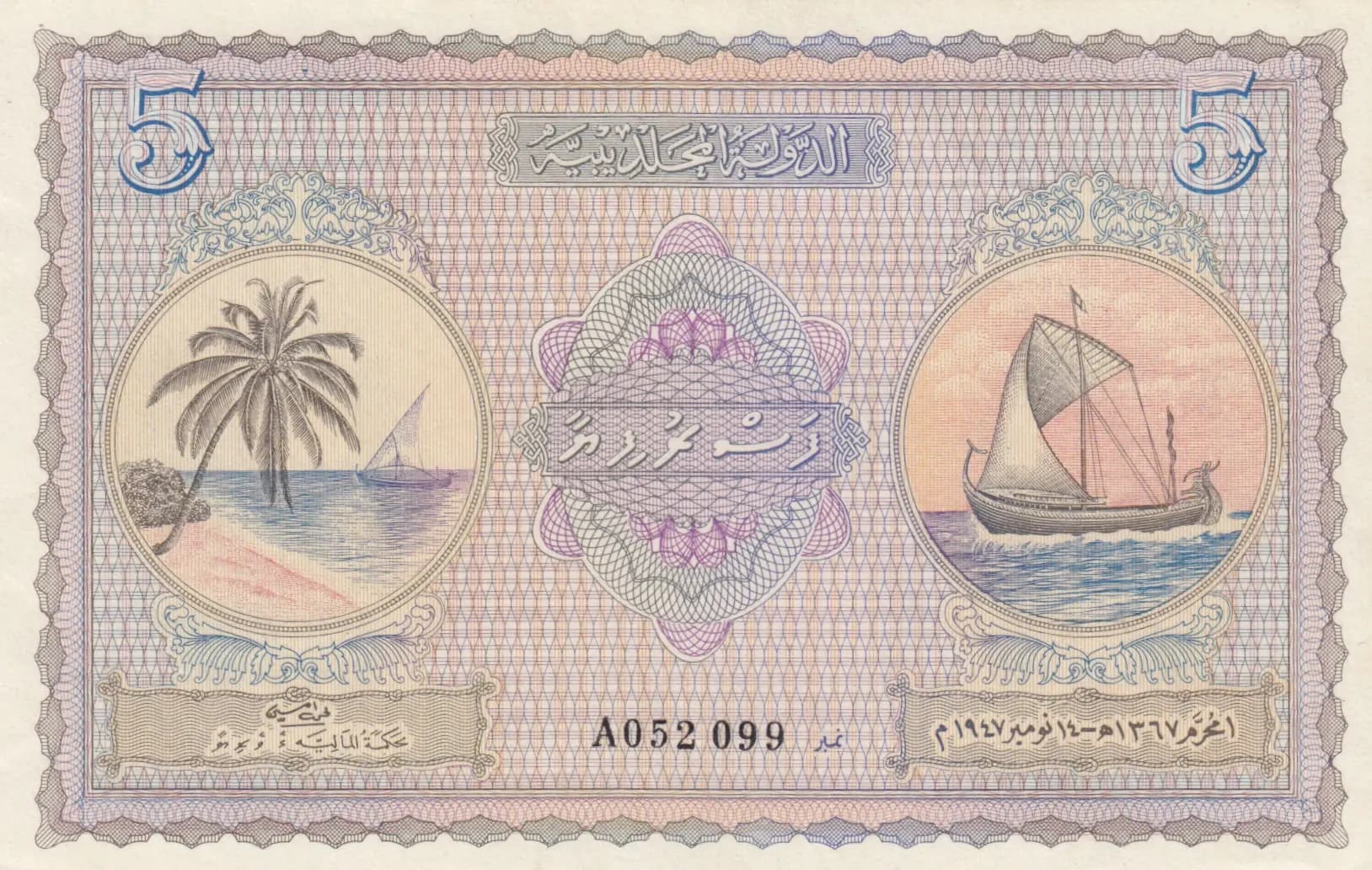
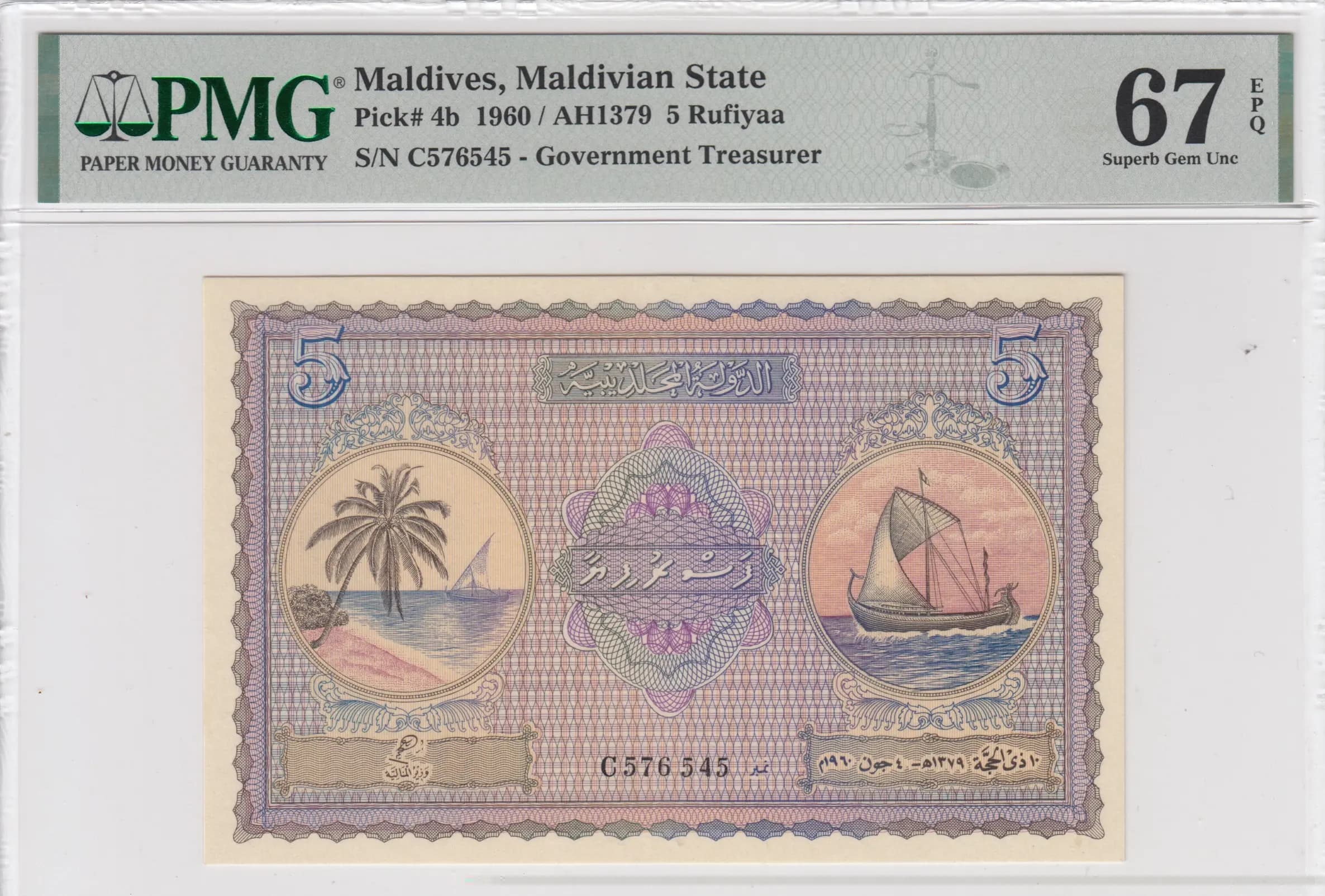
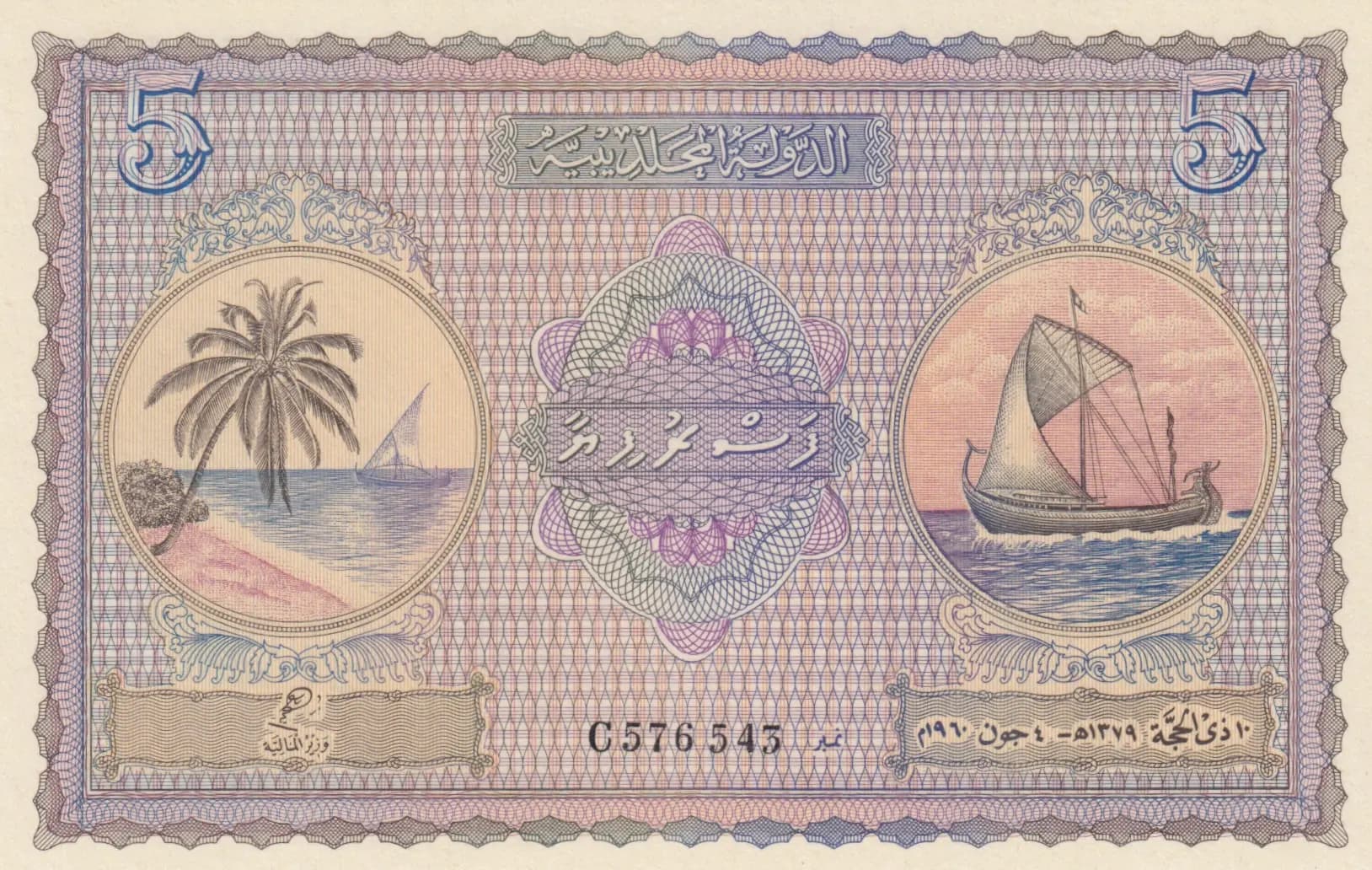
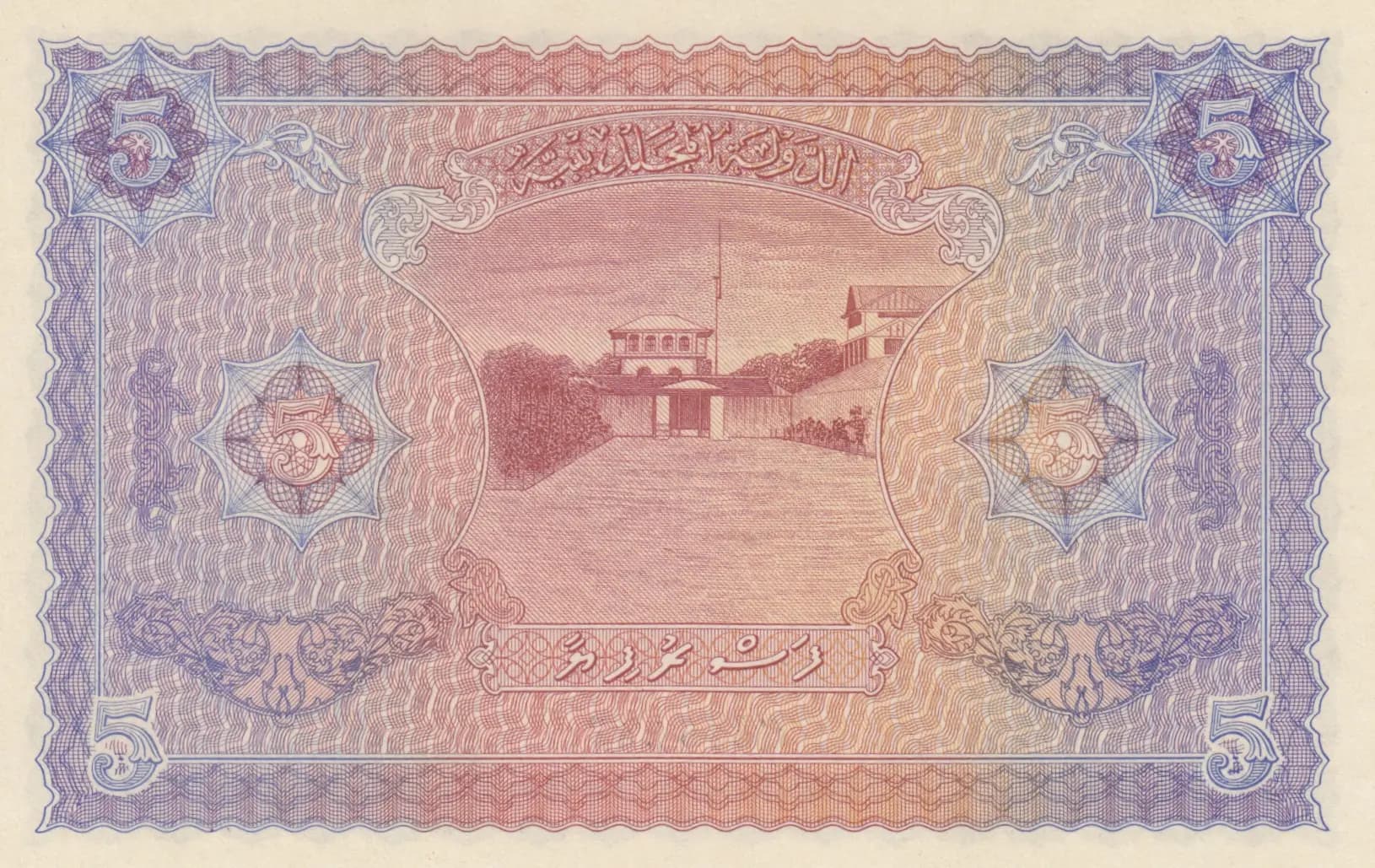
This is an exceptional example of the 1960 Maldivian State Treasury 5 rupees note (Pick P-4b), presented in pristine uncirculated condition. The note features vibrant purple, pink, and beige tones with detailed vignettes of a palm tree and traditional dhow sailing vessels on the obverse, and an architectural landmark on the reverse. The exceptional clarity of printing, complete absence of wear, and sharp definition of the intricate guilloche patterns make this an attractive specimen for collectors of early Maldivian currency.
Common. Secondary market data from eBay shows consistent selling activity over more than a decade, with UNC examples regularly trading between $37–$86 USD, establishing a well-established collector base and steady supply. The 2016 catalog valuation of $15 for UNC notes, coupled with frequent auction sales at modest premiums, confirms this is a readily available note in the collector market. Print runs from the early Maldivian State Treasury were substantial enough to ensure circulation, and survival rates in high grades are not exceptionally limited.
Issued during the early period of the Maldivian State Treasury in 1960, this note reflects the Islamic State of Maldives during a transitional phase in the nation's history. The imagery—featuring traditional maritime elements (dhows and palm trees) and Islamic architecture—emphasizes the nation's cultural identity and economic reliance on seafaring and trade. The Sakkaranya gate depicted on the reverse represents the historical significance of the Sultan's palace and administrative authority during this formative period of monetary independence.
The obverse features two circular vignettes separated by a central ornate medallion with intricate purple and pink geometric patterns. The left vignette depicts a tropical palm tree on a beach shoreline with a dhow in the adjacent waters, symbolizing Maldivian maritime heritage and tropical geography. The right vignette shows a traditional sailing vessel (dhow) on water, reinforcing the nation's seafaring identity. The reverse displays the Sakkaranya gate, a principal entrance to the Eterekoilu (Sultan's palace court), rendered as an Islamic architectural structure with a minaret tower and building complex set within a landscaped setting. All design elements are framed by ornate borders featuring decorative scrollwork, corner medallions with geometric star patterns, and elaborate guilloche work in the security printing tradition.
Front side: Arabic text 'الدولة اسلامية المالديف' translates to 'Islamic State of Maldives'; serial number 'C576543' in Latin characters; denomination '5' in corners. Back side: Arabic text 'الدولة اسلامية المالديف' (Islamic State of Maldives); denomination '5' in corners; additional text in Thaana script (Dhivehi), the official script of the Maldives, completing the trilingual inscription scheme.
This note employs traditional intaglio (recess) printing combined with multicolor lithography, evidenced by the fine-line cross-hatching, intricate guilloche patterns, and complex wavy-line designs throughout the borders. The security features include anti-counterfeiting guilloche designs and detailed line work that creates optical complexity. The precise registration of multiple colors (purple, pink, beige, blue, red, tan, brown) and the sharpness of fine details indicate professional security printing standards characteristic of De La Rue or similar established currency printers of the period, though the specific security printer is not definitively documented in available catalog sources.
This note is identified as Pick P-4b, representing one of five cataloged variants of the 5 rupees denomination from the 1960 series (variants P-4a, P-4as, P-4b, P-4bs, and P-4s documented by PMG). The 'b' designation likely indicates a specific signature variety or minor design characteristic distinguishing it from P-4a. The observed serial number prefix 'C' may represent a printing batch designation. Without access to detailed archival documentation of signature variants or specific printing sequences for this issue, further variety specification cannot be definitively established from visual inspection alone.