5 rupees 1947
Market Prices
6 salesAbout This Note
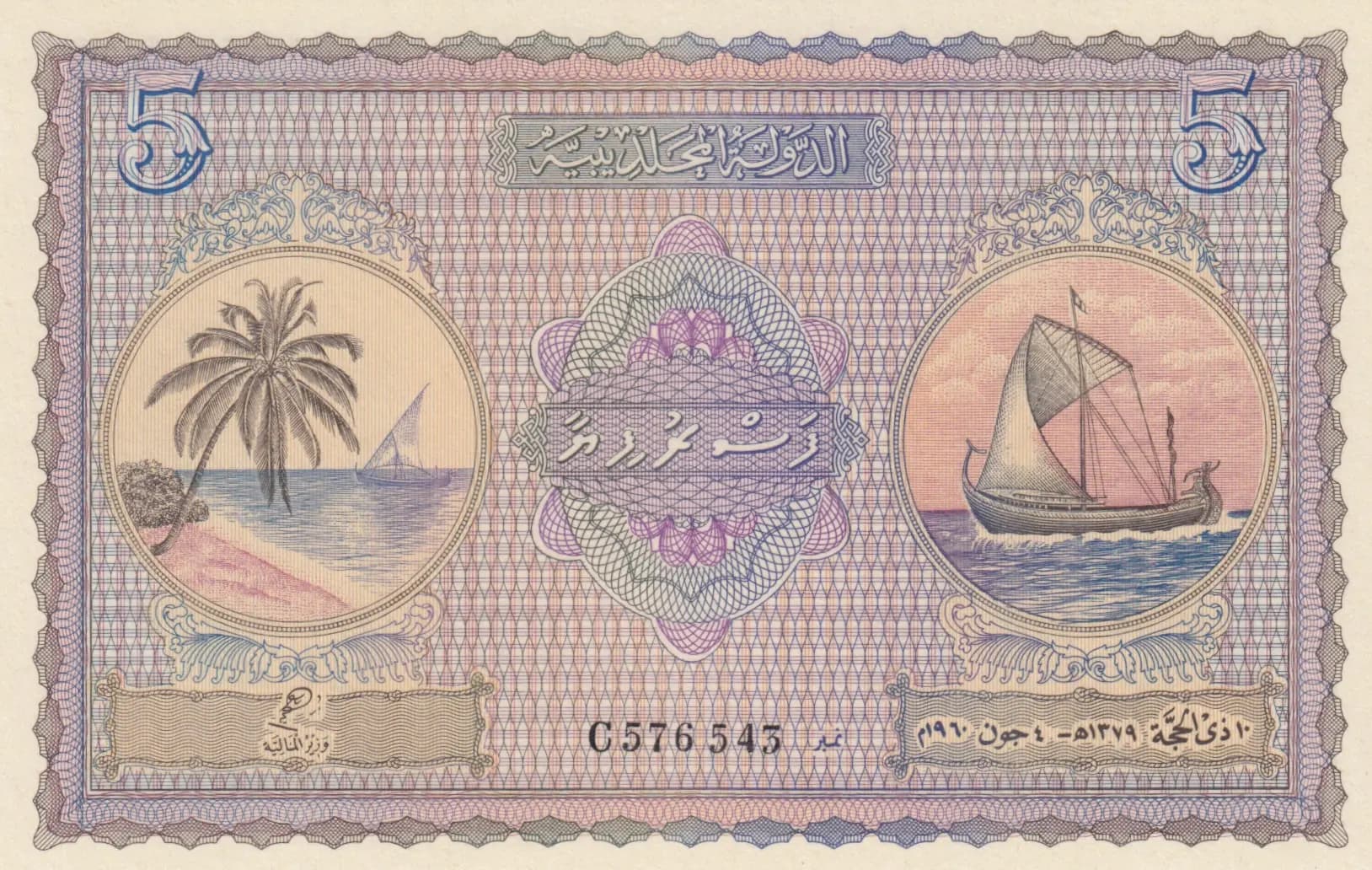
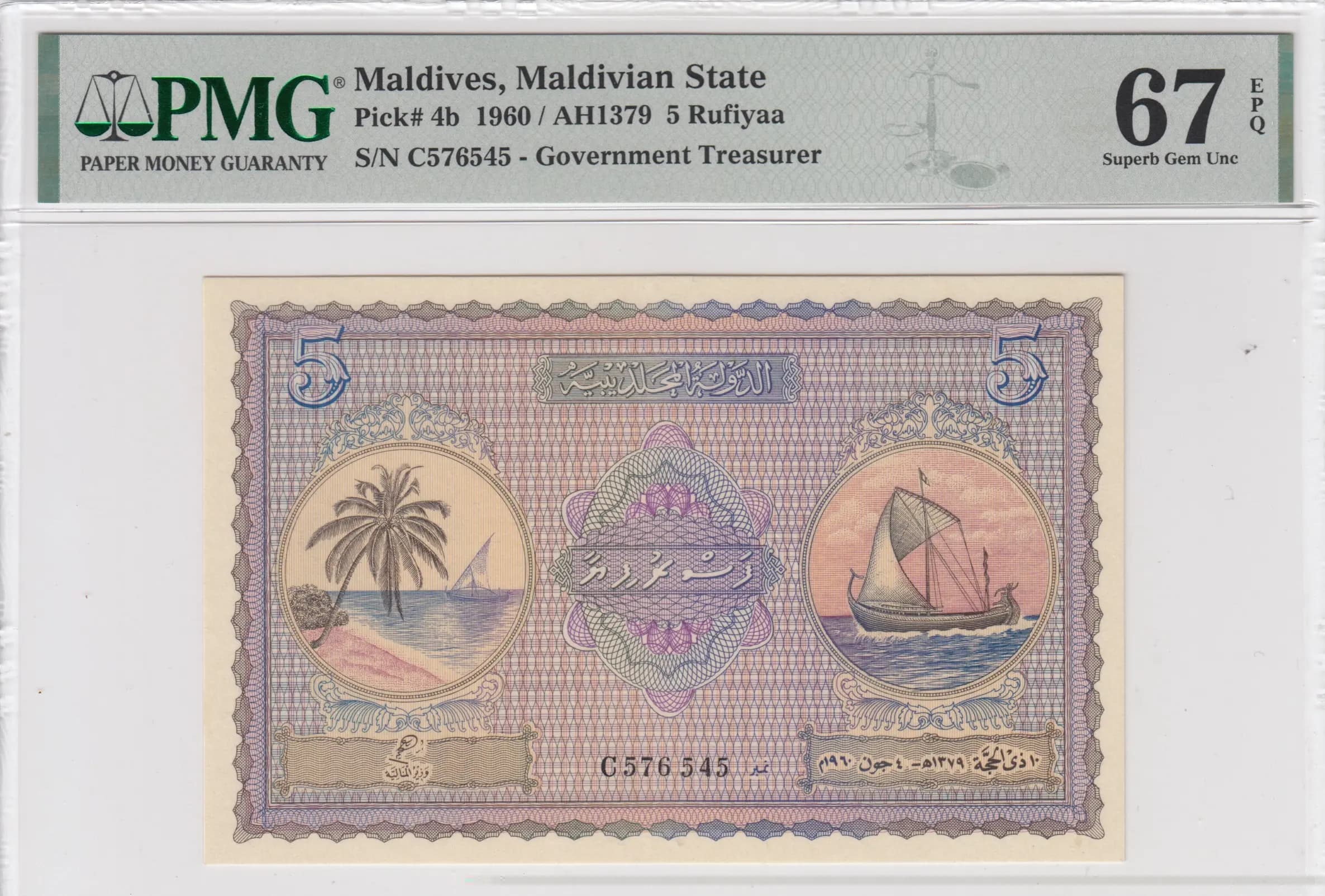
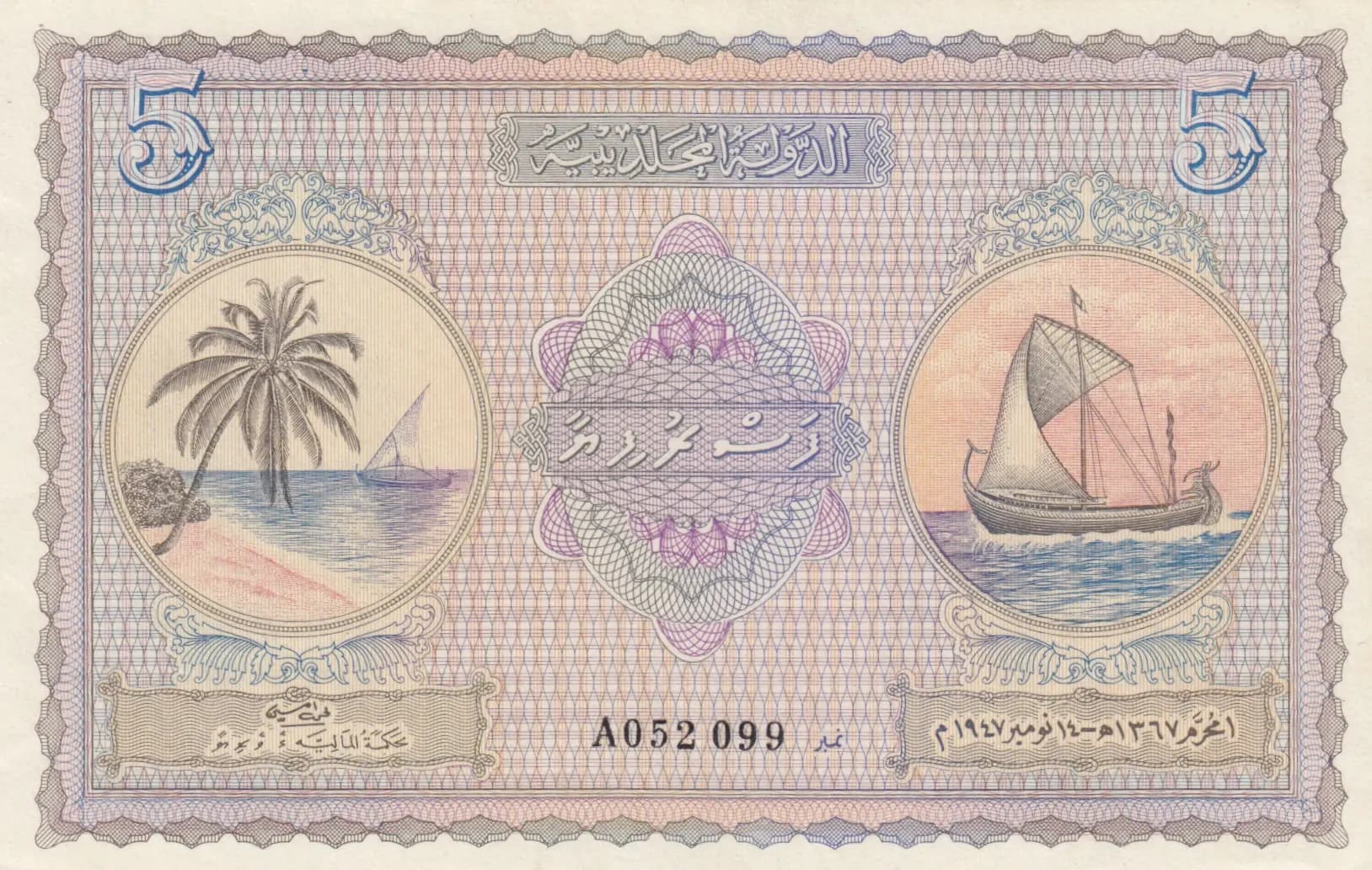
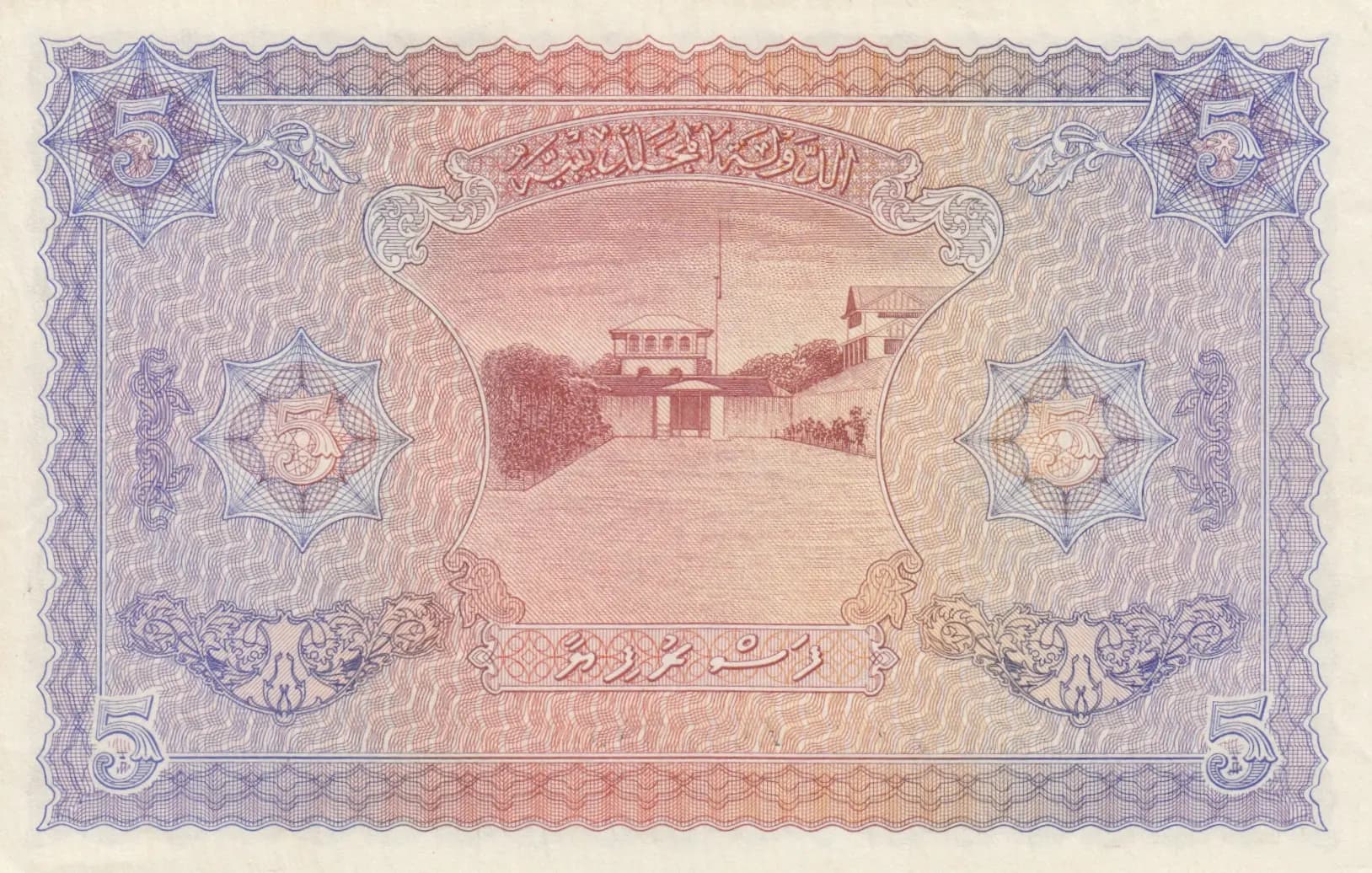
This is an exceptional example of the 1947 Maldivian State Treasury 5 Rupees (Pick P-4a), presented in AU condition with pristine surfaces showing no circulation wear, folds, or creases. The note showcases beautifully executed multicolored engraving with violet, orange, pink, and blue tones, featuring distinctive vignettes of a palm tree with dhow on the obverse and the Sakkaranya gate architectural landmark on the reverse. The intricate geometric security patterns, fine line work, and ornate decorative borders exemplify the high-quality intaglio printing standards of this early Maldivian issue.
Common. Although this is an early issue from 1947 and the first Maldivian currency, eBay market data shows consistent circulation of examples at modest prices ($13.50–$53.66 for circulated to uncirculated examples in recent years), indicating adequate surviving population. The 2016 catalog valuation of $30 for UNC specimens and recent sales averaging $40–$53 for similar uncirculated examples confirm this is not a scarce issue. Print runs for this period were sufficient to preclude rarity designation, and no evidence of significant recalls or extreme scarcity exists for Pick P-4a.
Issued in 1947 during the transition period of Maldivian sovereignty, this note represents the early monetary independence of the Maldivian State under the Government Treasurer. The obverse vignettes depicting the palm tree and traditional dhow sailing vessel symbolize the maritime economy and tropical island identity of the Maldives, while the reverse features the Sakkaranya gate—a principal entrance to the Sultan's palace courtyard—underscoring the note's connection to the Islamic state administration and sultanate governance of the period.
The obverse features a horizontal rectangular composition with a light pink/beige background covered in fine geometric cross-hatching patterns for security. Three circular medallions dominate the design: the left medallion contains an engraved tropical scene of a palm tree on a beach with a traditional sailing dhow on water; the center features an ornate purple/lavender decorative medallion with elaborate floral and geometric patterns; the right medallion depicts a traditional dhow under reddish sky. The denomination '5' in blue appears in both top corners. Arabic text identifying 'The Islamic State' appears in a decorative cartouche at top center, with Thaana script and additional inscriptions below each medallion. The reverse presents a fortified architectural structure—the Sakkaranya gate of the Sultan's palace—rendered in reddish-brown tones within a large central rectangular medallion, flanked by elaborate blue and cream ornamental borders with star-shaped corner medallions. The denomination '5' appears in blue in all four corners. Both sides employ intricate fine line engraving with wavy-line background security patterns and multi-colored printing.
Front Side: 'الدولة الإسلامية' (Al-Dawla Al-Islamiyya) = 'The Islamic State'; 'ڻޅާވެ' (Thaana script) = 'Maldives'; '5' = Denomination (5 Rupees); Serial number: 'A052099'. Back Side: 'الدولة الإسلامية' (Al-Dawla Al-Islamiyya) = 'The Islamic State'; 'ރިފަޢުވެ' (Thaana script, alternate form) = 'Maldives/Rufiyaa'; '5' = Denomination (5 Rupees). The note identifies itself as issued by the Islamic State of Maldives, reflecting the official nomenclature of the period.
Intaglio engraving (line engraving and possibly steel plate engraving) with multicolor offset or letterpress overprinting. The note demonstrates sophisticated security printing techniques including fine line cross-hatching, complex geometric patterns, and intricate decorative borders characteristic of high-security currency production of the 1940s. The specific printer for this issue is not definitively documented in available sources, but the quality suggests engagement of an established security printer experienced in Commonwealth or Middle Eastern currency production.
This example is identified as Pick P-4a, the standard 1947 issue. The PMG population report indicates five cataloged variants exist (P-4a, P-4as, P-4b, P-4bs, P-4s), likely distinguished by signature varieties or minor design differences. The serial number 'A052099' is consistent with first-series production. No overprints or significant design variations are evident in this specimen. The inclusion of both Arabic and Thaana script inscriptions is standard for this issue, reflecting the bilingual official status of the period.