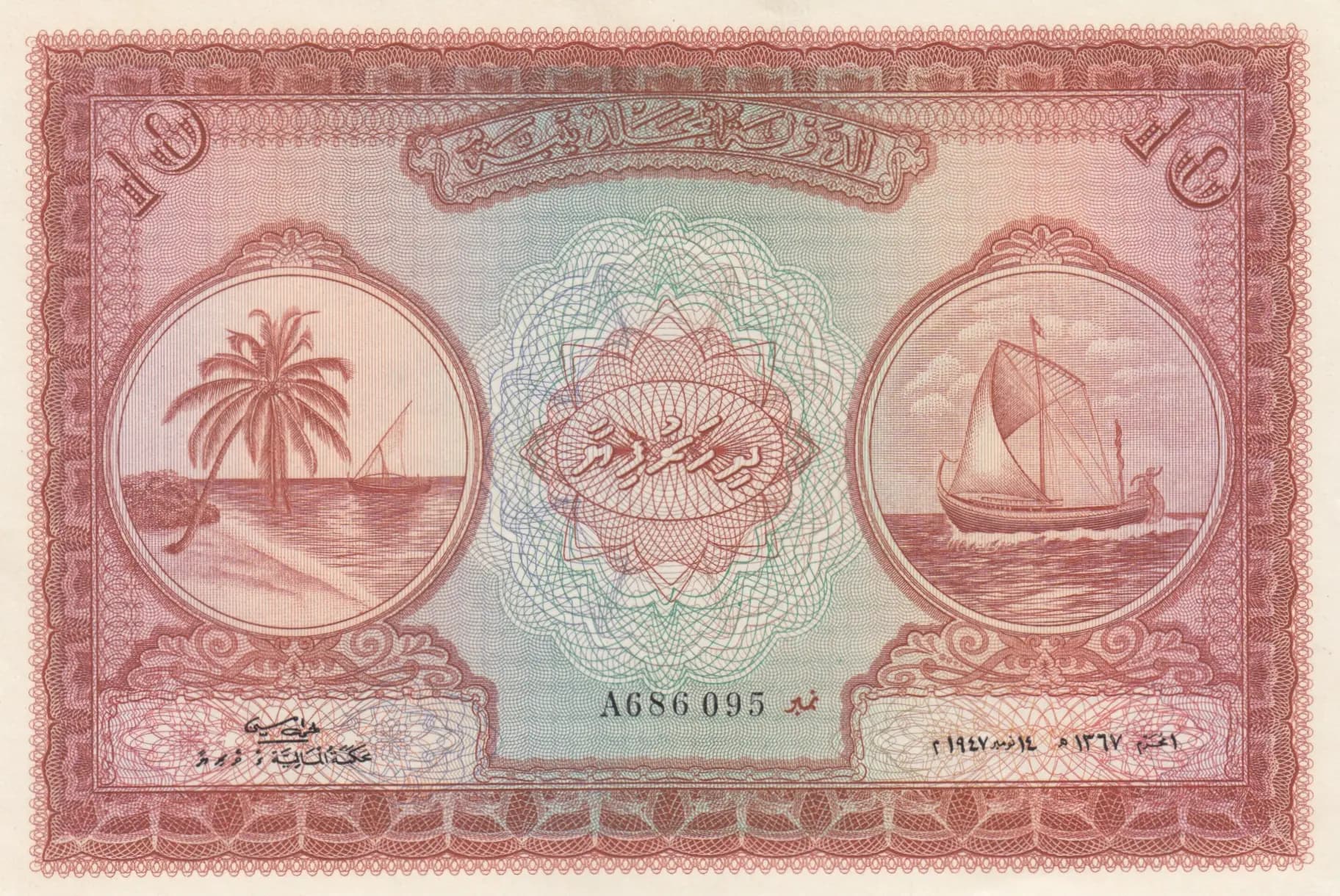
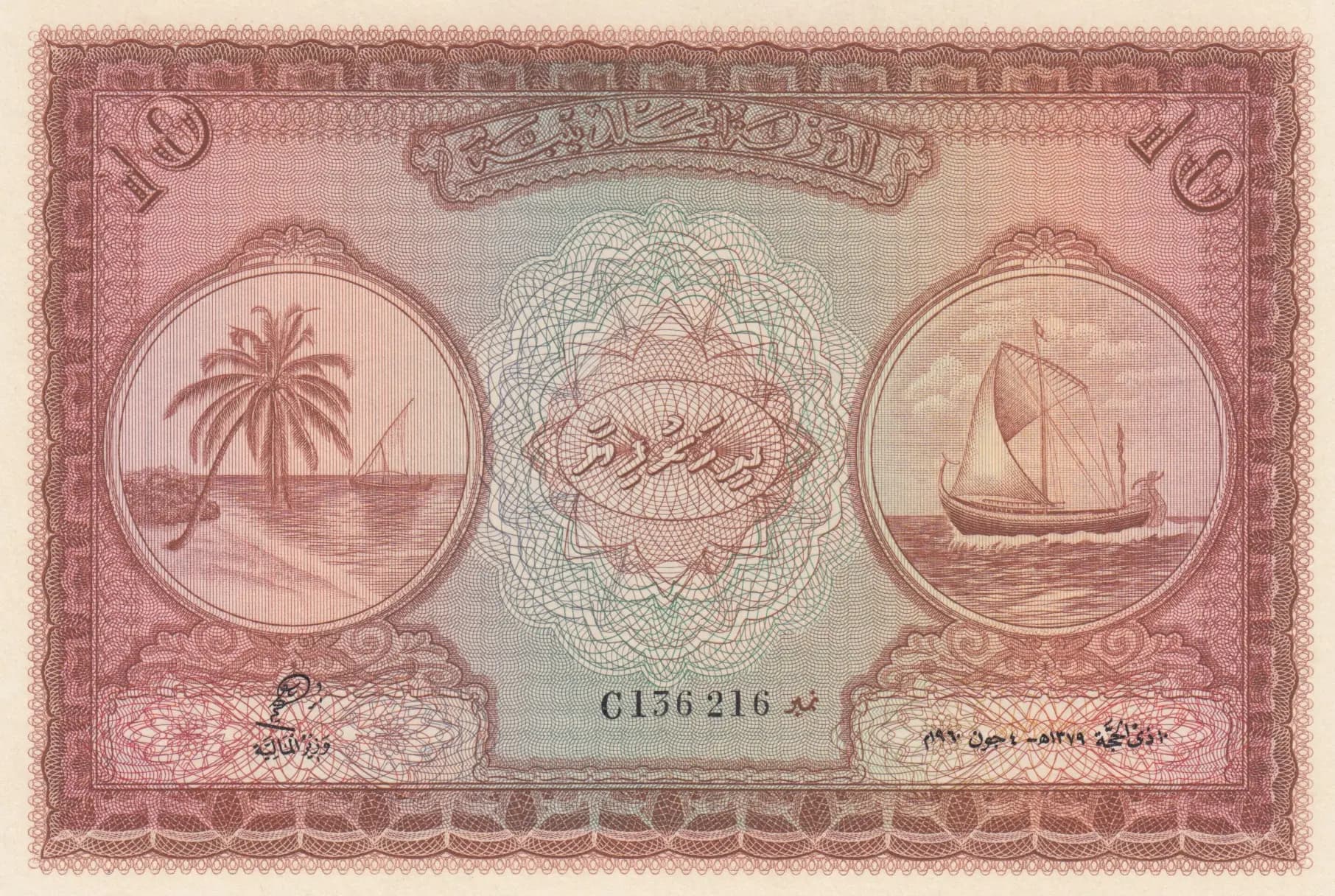
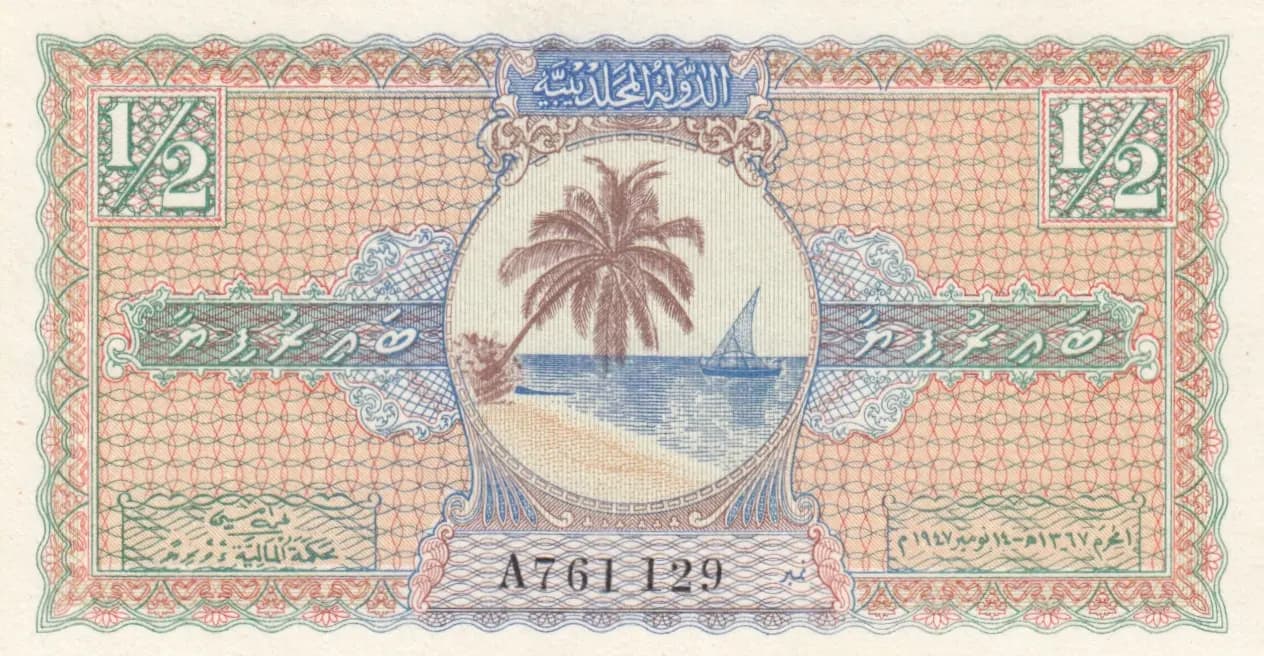
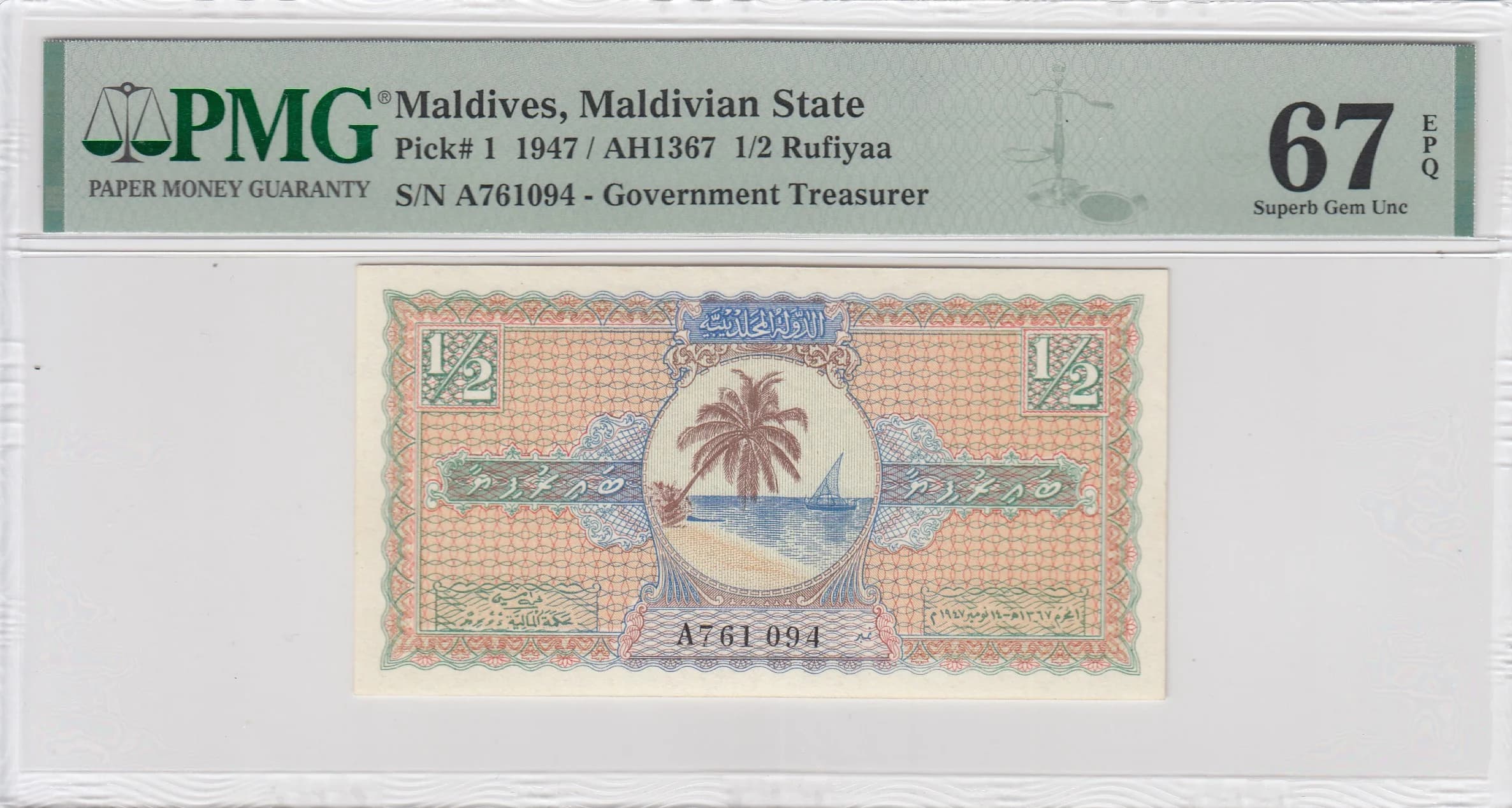
10 rupees 1960
Market Prices
13 salesAbout This Note
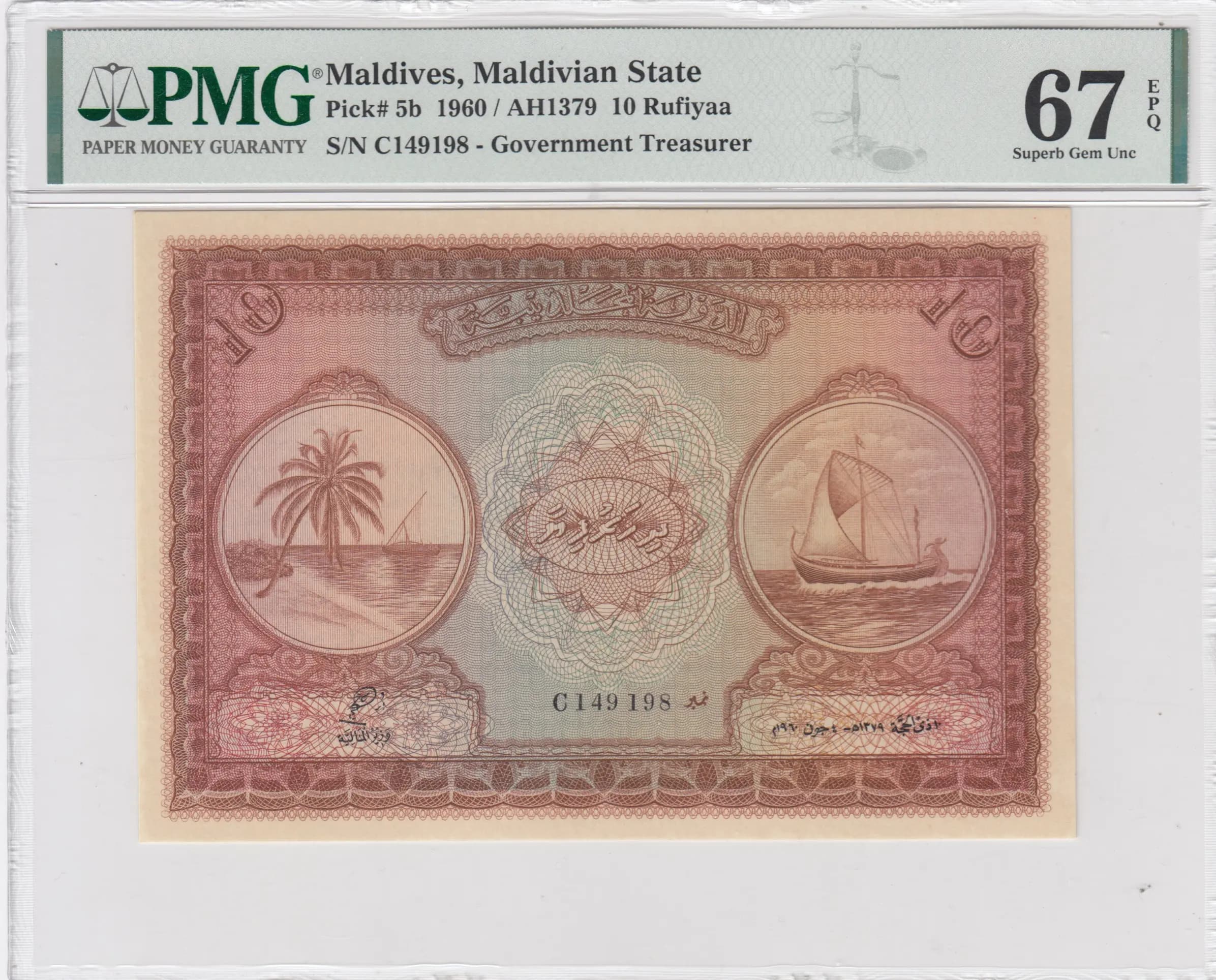
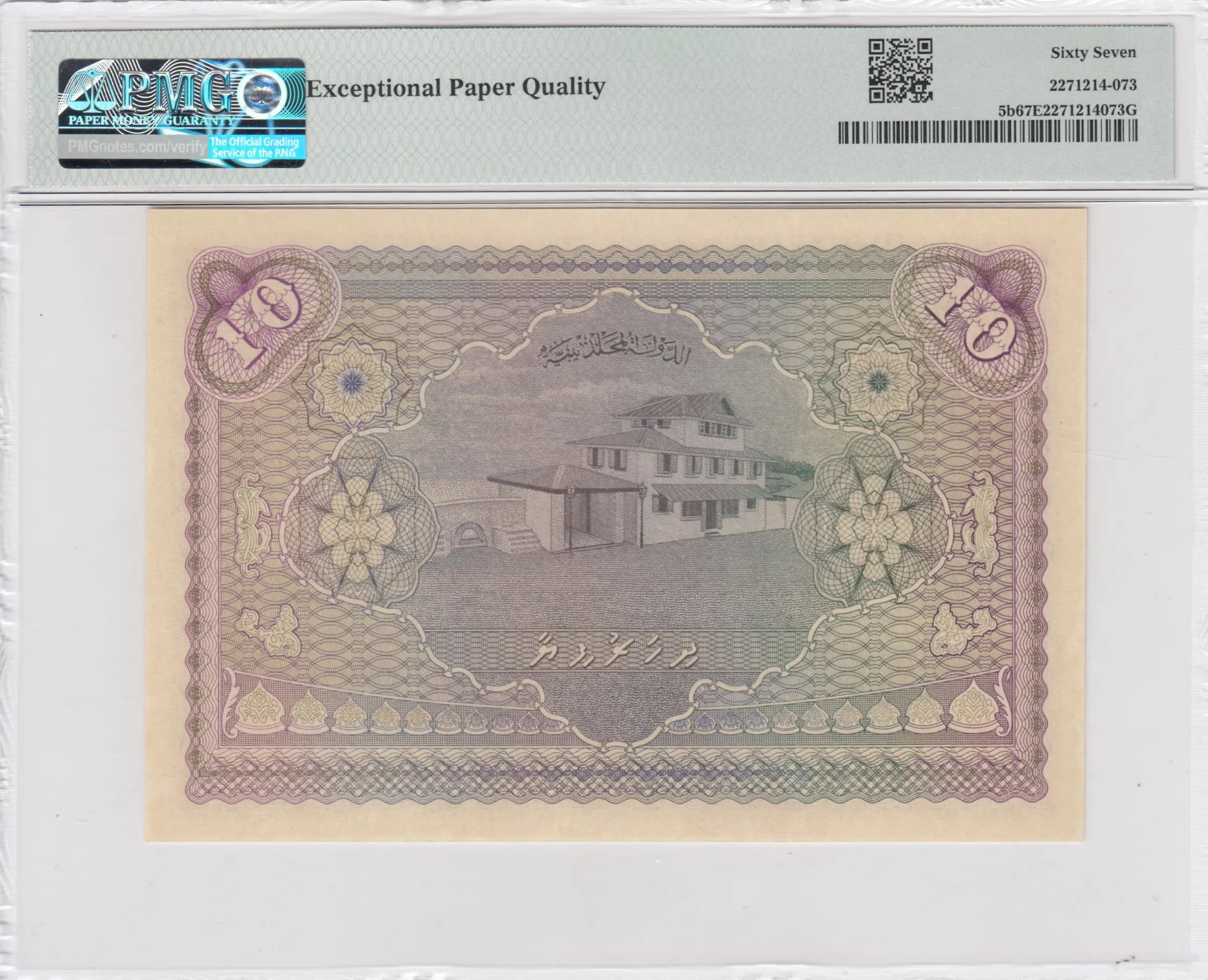
This is an exceptional PMG 67 EPQ example of the 1960 Maldivian 10 Rufiyaa (Pick P-5b), representing one of the Maldives' earliest independent currency issues. The obverse features a striking reddish-brown color scheme with a palm tree vignette at left, ornamental rosette in center, and traditional dhow sailing vessel at right, all executed with fine engraved detail. The reverse displays a purple and green color palette showcasing the Veyodorhu Ganduvaru Mathige building (Defense Headquarters), reflecting the nation's post-independence institutional identity, and the note's Superb Gem Uncirculated grade with pristine condition signals its exceptional collector appeal.
common. eBay sales data shows consistent market activity across multiple grades (PMG 64-68, UNC) with prices ranging from $52 to $305 historically, indicating steady but modest collector demand. The 2016 catalog valuation of $35 UNC and current market transactions in the $100-$150 range for PMG 67 examples confirm this is a regularly available note. While early post-independence currency is historically significant, the 1960 10 Rufiyaa was issued in sufficient quantity to remain accessible to collectors; no evidence of limited print runs, recalls, or extreme scarcity exists in available market data.
This note was issued in 1960 by the Maldivian State Treasury during a pivotal period of transition toward full independence from British protectorate status (achieved in 1965). The depicted imagery—palm trees and dhows representing maritime commerce, paired with the militia defense headquarters building—reflects the Maldives' economic reliance on seafaring and the nation's efforts to establish institutional sovereignty during the early post-colonial era. The dual-language script (Arabic and Dhivehi/Thaana) on the reverse illustrates the cultural and administrative priorities of the newly autonomous state.
The 1960 10 Rufiyaa note exhibits a two-color design approach characteristic of early independent Maldivian currency. The obverse (reddish-brown/pink palette) features three circular vignettes: a palm tree with water landscape symbolizing the tropical island nation and its agricultural heritage (left); a centrally-placed ornamental rosette representing geometric Islamic design principles; and a traditional dhow sailing vessel (right), iconic to Maldivian maritime identity and Indian Ocean trade. The reverse (purple/green palette) depicts the Veyodorhu Ganduvaru Mathige, the Defense Headquarters building of the Maldivian militia, positioned adjacent to the Sultan's palace—a key institutional landmark representing the state's military authority. Corner medallions and ornamental floral/geometric patterns reinforce the formal, sovereign character of the issue. Both sides employ intricate engraved borders and fine-line work throughout.
OBVERSE: Denomination '10' appears in Arabic numerals in top left and right corners. Arabic script text appears at top center (full transliteration not available from image quality). Serial number visible: C149198 (partial). REVERSE: Denomination '10' appears in circular medallions in top corners in Arabic numerals. Arabic script at top center. Dhivehi/Thaana script appears at bottom center and in repeating motifs. (Complete text translations limited by image resolution and script complexity; primary identifier is the denomination 10 Rufiyaa.)
Intaglio engraving (line engraving/recess printing), evidenced by the sharp, precise rendering of fine detail in borders, vignettes, and decorative patterns visible in the PMG-certified example. The multi-color printing technique combining reddish-brown and pink tones on the obverse with purple and green tones on the reverse suggests sequential intaglio passes or advanced security printing methods typical of 1960s currency production by established European security printers (likely De La Rue or similar firm based on the design sophistication, though specific attribution for this Pick number is not definitively documented in standard references).
This note is cataloged as Pick P-5b, indicating it is the second identified variety of the 1960 10 Rufiyaa issue. PMG records document at least three variants for this base Pick number (P-5a, P-5b, P-5s), likely representing signature varieties, watermark differences, or minor design changes during the printing run. The P-5s designation suggests a specimen note exists. This specific example (P-5b grade) is differentiated from P-5a and specimen variants, though detailed distinguishing characteristics between P-5a and P-5b are not fully documented in readily available references. Serial number C149198 observed on this example.