10 rupees 1947
Market Prices
13 salesAbout This Note
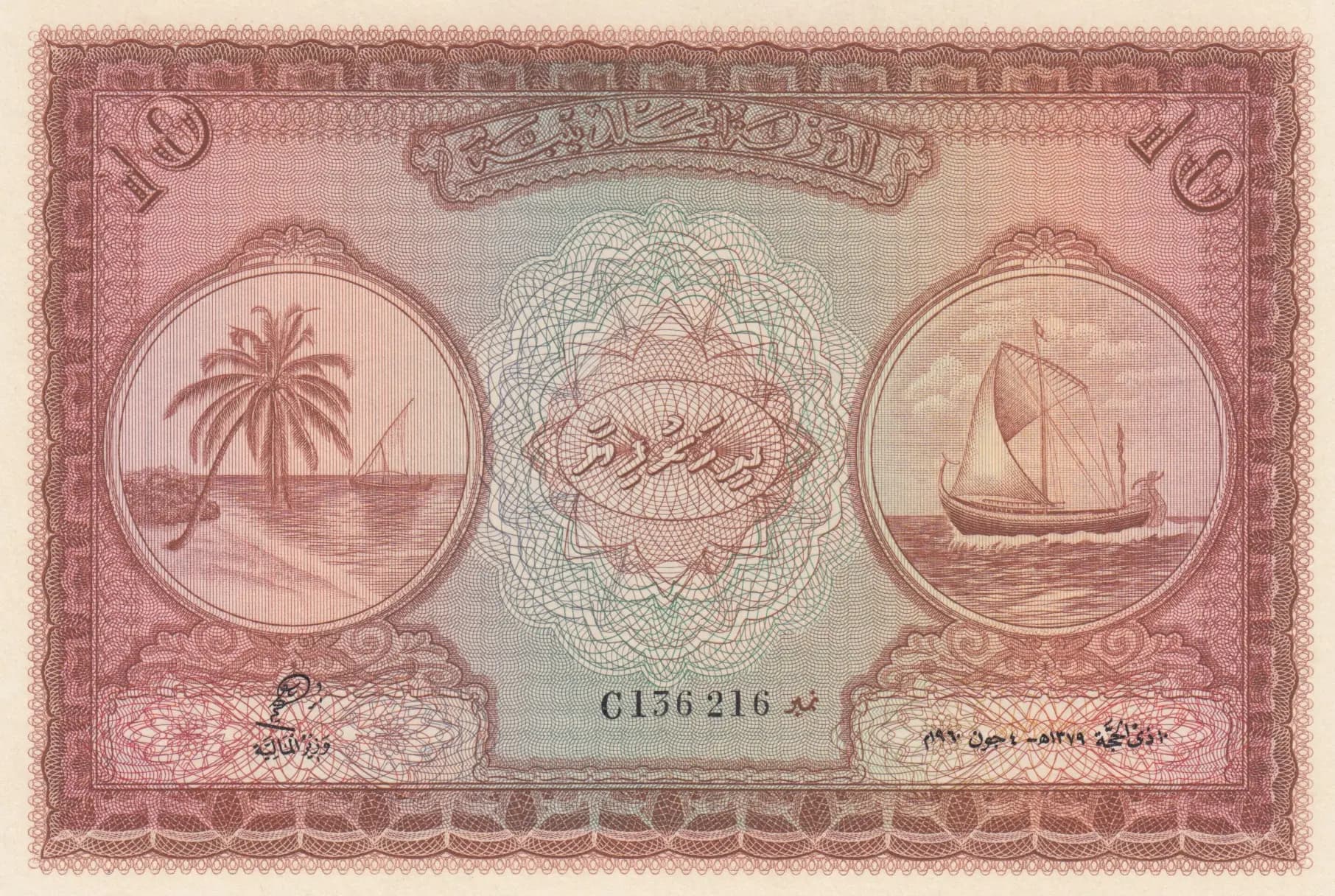
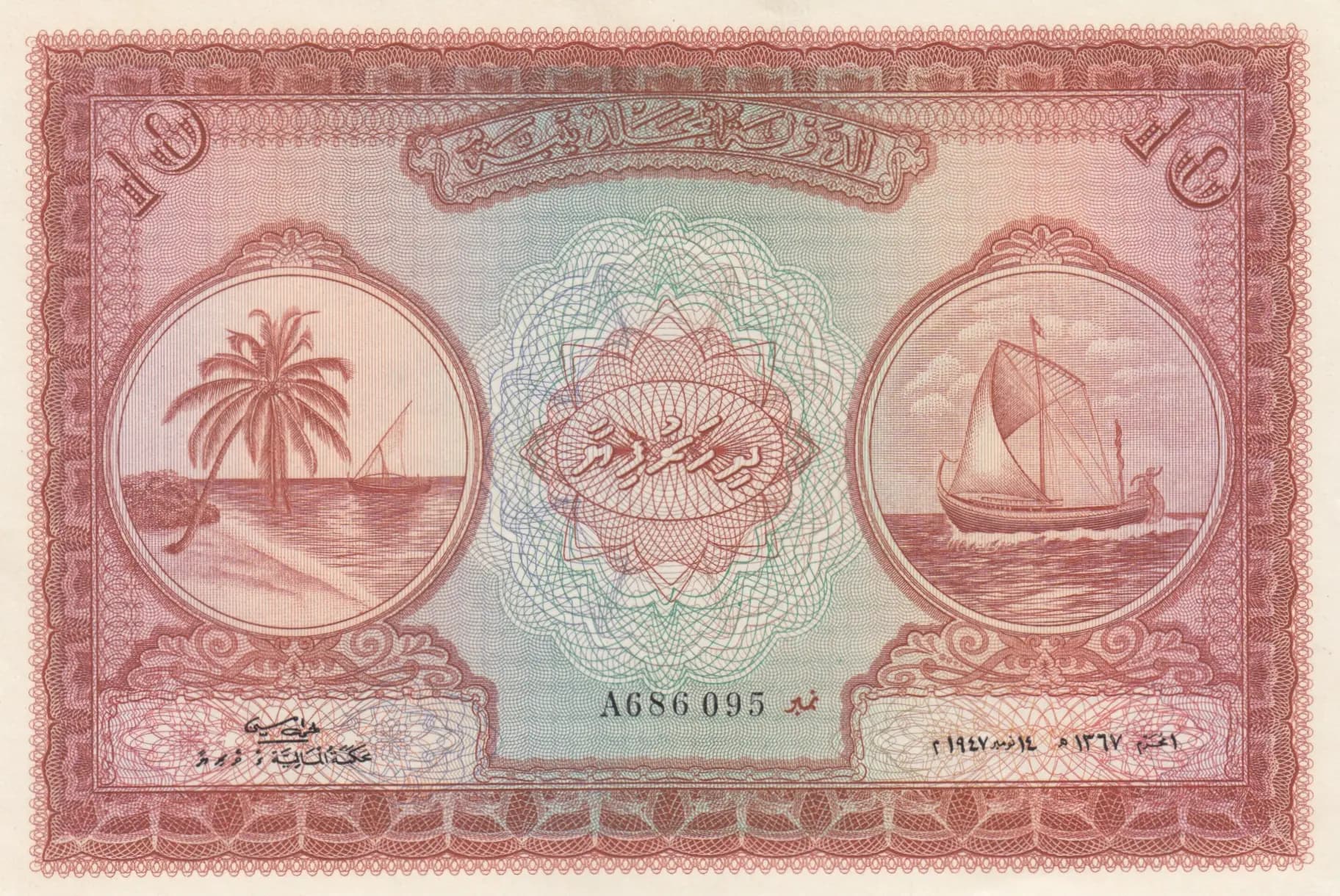
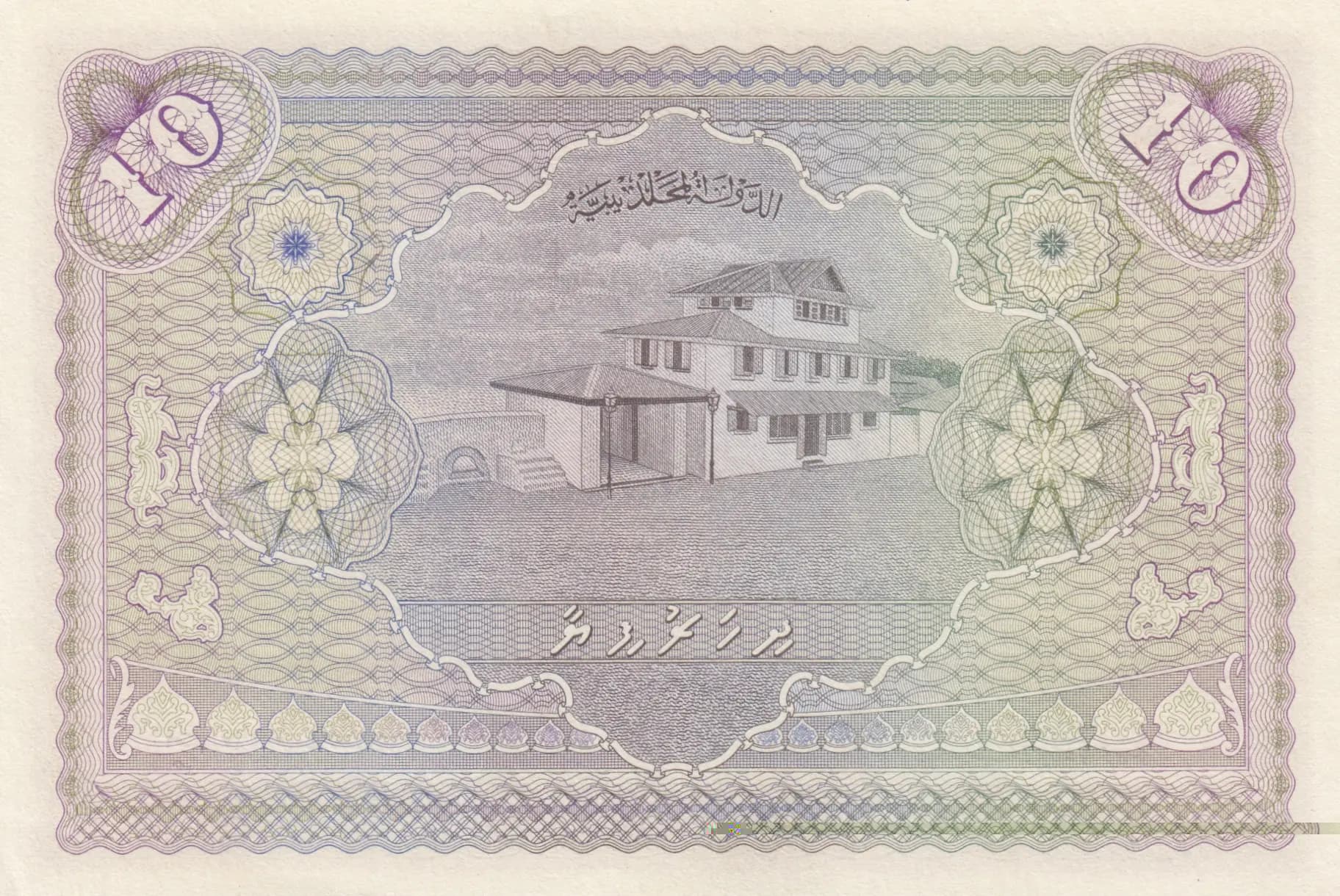
This is an exceptionally well-preserved 1947 Maldivian 10 Rufiyaa note in uncirculated condition, representing an early issue from the newly independent Maldivian State. The note features beautifully rendered Islamic geometric patterns and dual maritime vignettes on the obverse—a palm tree with dhow and an additional traditional sailing vessel—while the reverse depicts a significant Maldivian architectural landmark. The crisp printing, vibrant color palette of reds, greens, and purples, and complete absence of wear make this an excellent example of mid-20th century Maldivian currency design.
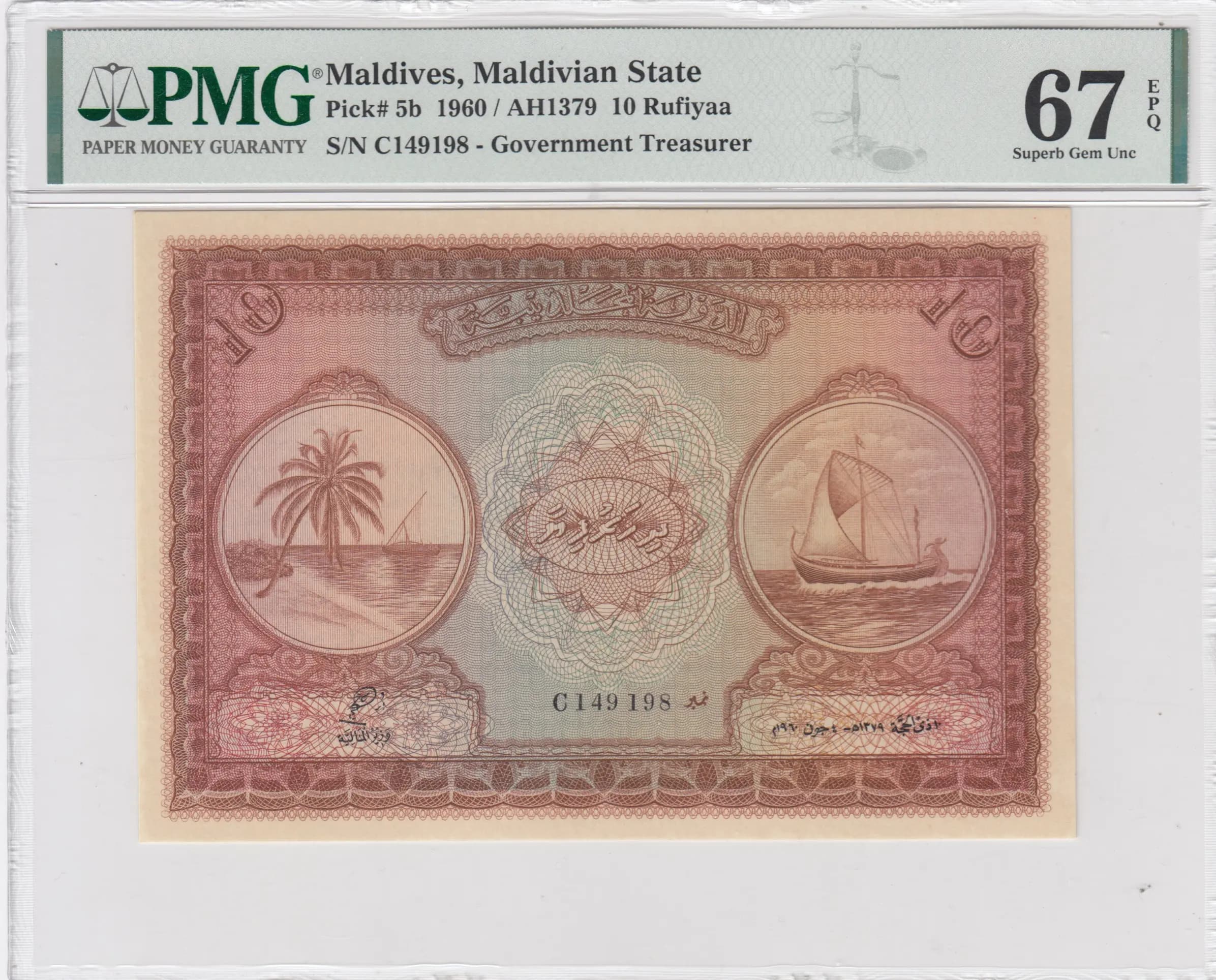
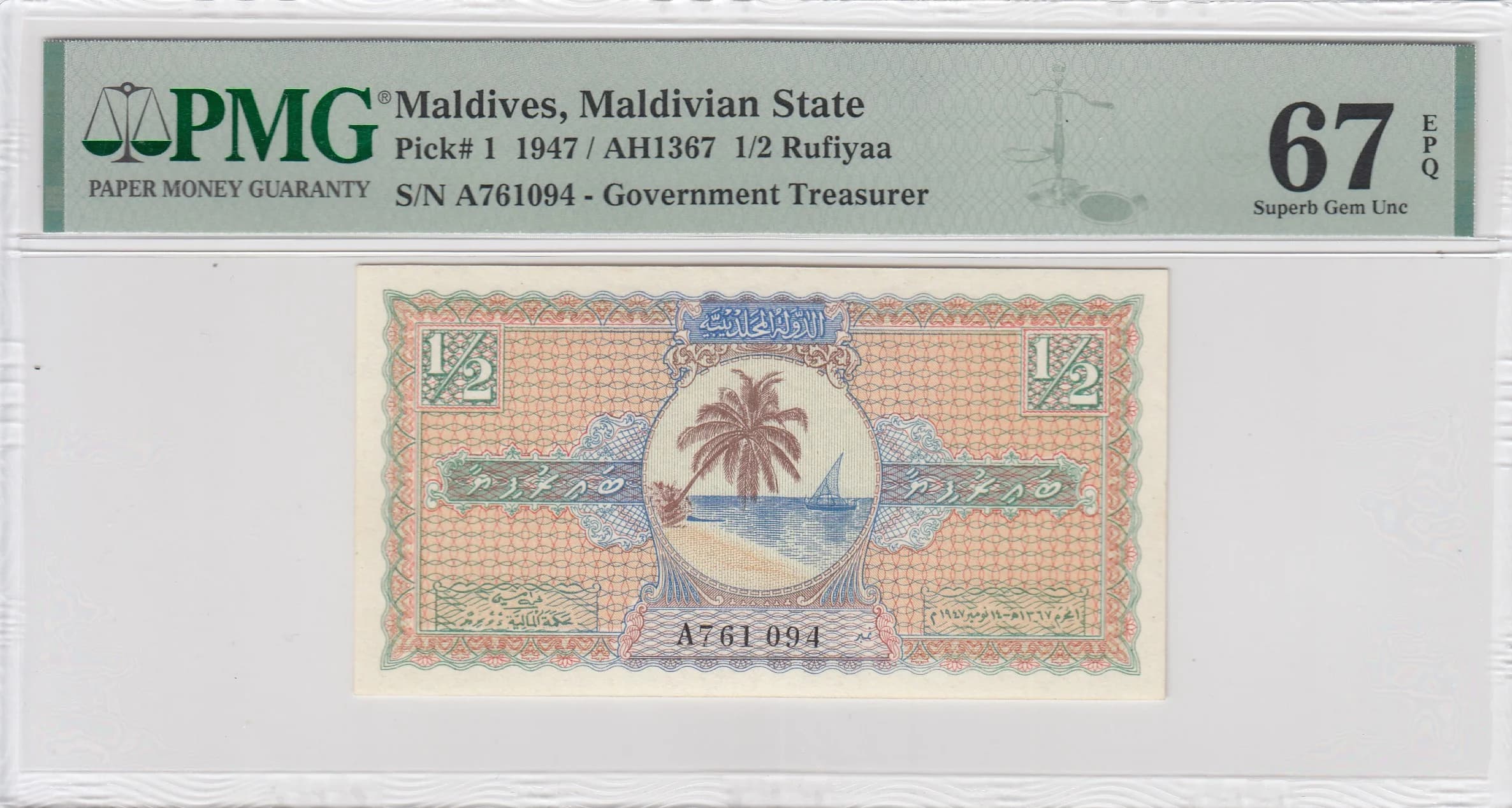
Common. While early issues of Maldivian currency are historically significant, this note survives in sufficient quantity to be considered common in the numismatic market. eBay transaction data shows regular trading activity with UNC specimens selling between $37–$95 over the past decade, and 2016 catalogue values listing UNC at $45. The consistent availability of this Pick number in graded examples (PMG population includes multiple variants: P-5a, P-5b, P-5s) further supports a common classification. Early date and historical significance may appeal to collectors of Islamic currency or Commonwealth issues, but scarcity is not a primary value driver.
Issued in 1947 (AH 1367), this note commemorates a pivotal moment in Maldivian history when the sultanate was establishing its modern monetary system. The maritime imagery—palm trees and dhows—reflects the Maldives' traditional seafaring economy and geographic identity as an island nation. The architectural landmark depicted on the reverse, identified as an important governmental or defensive structure near the Sultan's palace, underscores the note's role in legitimizing the newly organized state's authority and sovereignty.
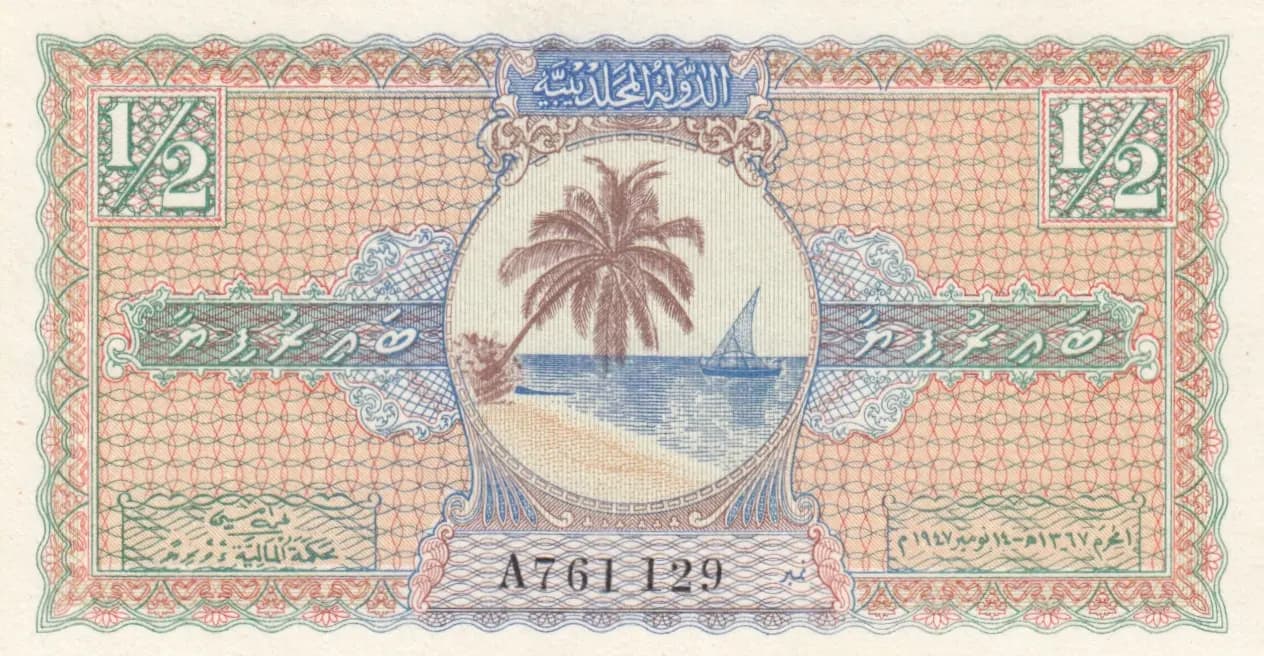
The obverse features an ornate composition dominated by Islamic geometric and floral patterns in red/pink and green tones. Two circular vignettes flank a central elaborate geometric rosette: the left depicts a tropical coastal landscape with a prominent coconut palm and a sailing dhow on water, while the right shows a traditional Maldivian sailing vessel (dhow) on calm waters. Both scenes emphasize the maritime heritage central to Maldivian identity. The reverse displays a formal architectural vignette at center—a two-story traditional Maldivian building (identified as the Veyodorhu Ganduvaru Mathige defense headquarters) rendered in black and gray engraving with horizontal landscaping lines, framed by ornate corner medallions featuring stylized floral motifs and Islamic geometric borders in purple and green. The entire note is bound by intricate decorative borders with repeating Islamic patterns characteristic of currency design for Muslim-majority nations of the period.
Front side: 'ريال مالديڤ' (Maldives Rupee/Rial); '١٣٦٧' (1367, Islamic calendar); '١٩٤٧' (1947, Gregorian calendar); Serial number 'A686095'. Back side: 'الدولة المالديڤية' (The Maldivian State); 'ڌهيڤل' (Dhivehi text in Thaana script); Denomination '10' (Rufiyaa).
Intaglio/engraved printing, evident from the fine line work, crisp detail reproduction in borders, geometric microprint patterns, and the precise architectural rendering of the central building vignette. The multi-color design suggests separate color plates or advanced multi-color intaglio technology. Security features including fine-line engraving and intricate geometric microprint patterns are consistent with British or Commonwealth-style security printing standards typical of notes issued for former British colonial territories in the mid-20th century.
This specimen is catalogued as Pick P-5a (1947 issue). The PMG population report identifies three distinct varieties for this base Pick number: P-5a, P-5b, and P-5s (specimen note). The serial number visible on this example ('A686095') should be cross-referenced against known serial number ranges to confirm the specific variety assignment. The date inscriptions '١٣٦٧' / '١٩٤٧' (AH 1367 / 1947) confirm this as the original 1947 issue rather than the later 1960 reprint variant. No visible overprints or signature variations are apparent that would indicate an additional sub-variety.