5 francs 1937
About This Note
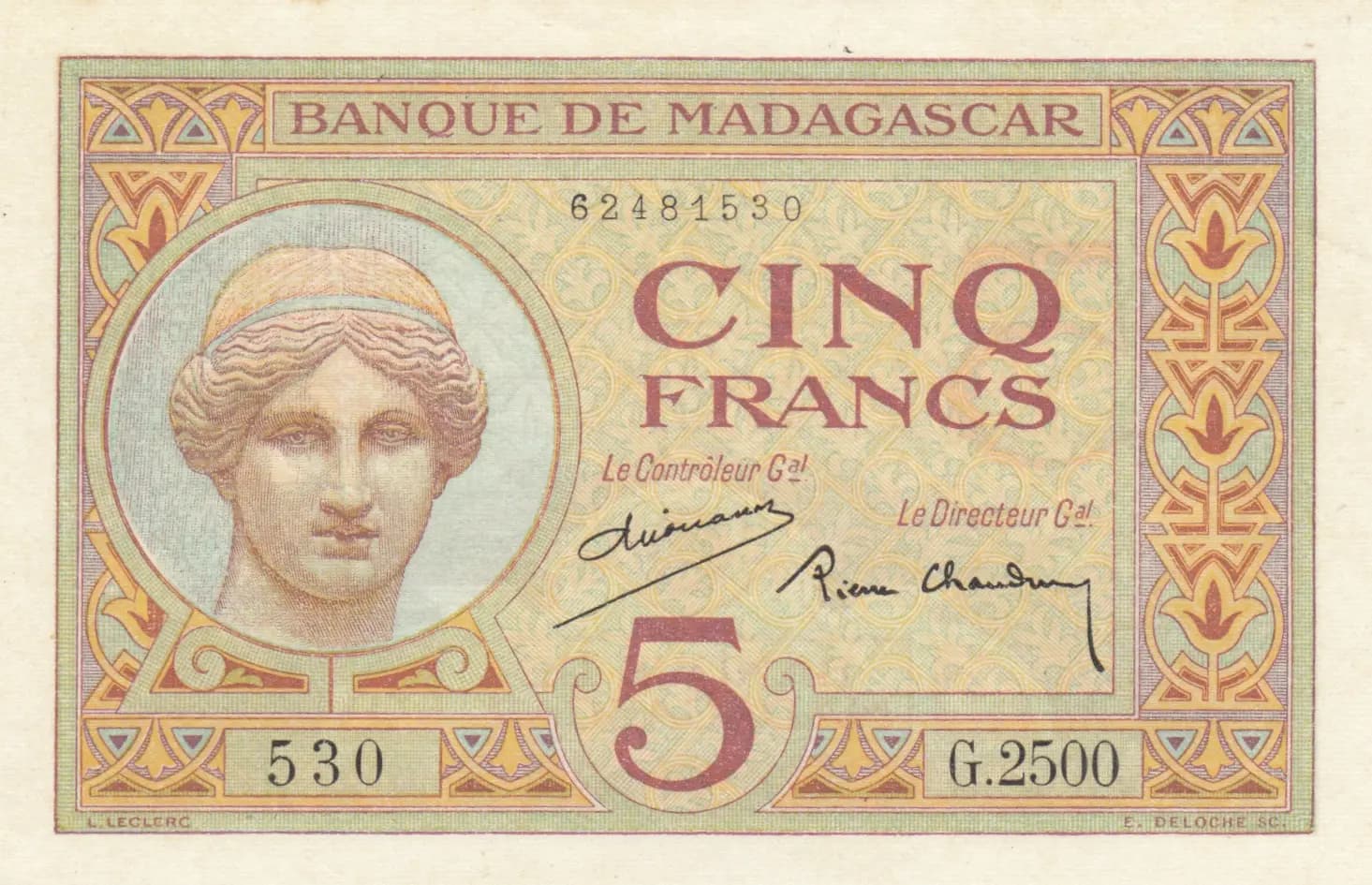
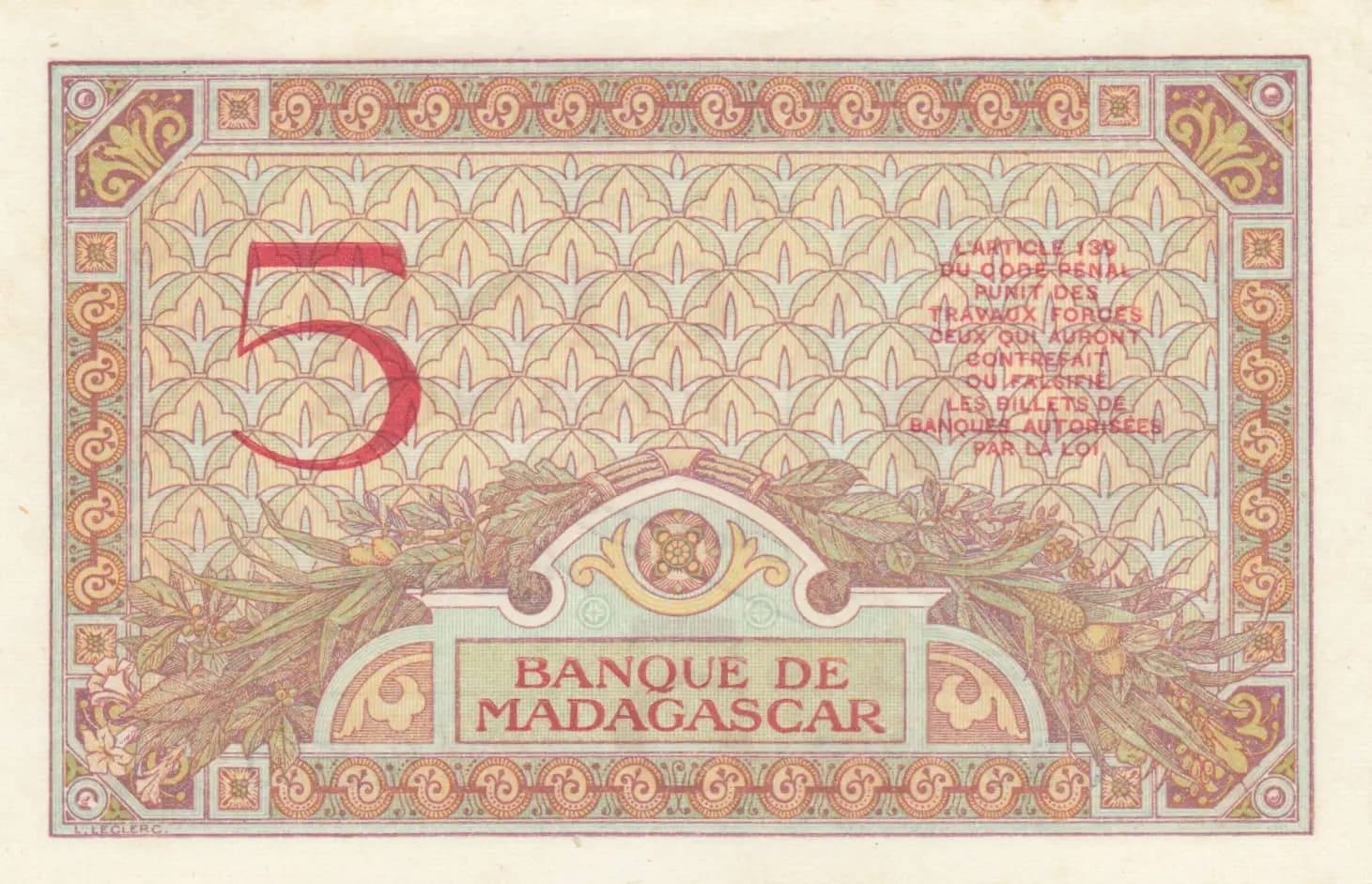
An exceptional uncirculated example of the 1937 Madagascar 5 francs issued by the Banque de Madagascar et des Comores. The note displays crisp, vibrant multi-color engraving with elegant Art Deco styling, featuring a classical female portrait in a circular medallion on the obverse and detailed botanical imagery on the reverse. The pristine condition, sharp printing details, and complete color saturation make this a desirable specimen for collectors of French colonial currency.
Common. While the 1937 Madagascar 5 francs is a legitimate colonial-period banknote, there is no evidence of an unusually small print run or significant scarcity. Notes from this series circulate regularly in the numismatic market. The Pick P-35(2) designation indicates it is a known standard type. Uncirculated examples command modest premiums typical of early colonial currency, but the note is not considered scarce or rare. Standard market availability suggests regular issuance quantities.
This banknote represents Madagascar's currency during the French colonial period, when the island was administered as a French possession. The classical female portrait on the obverse reflects the Belle Époque and Art Deco aesthetic preferences of 1930s French colonial design, while the reverse's botanical vignette—likely depicting rice plants—symbolizes the agricultural foundation of Madagascar's economy. The Banque de Madagascar et des Comores served as the official currency issuer for these French colonial territories during this interwar period.
The obverse features a classical portrait of a woman with blonde, short wavy hair facing forward, positioned within a circular medallion on the left side. The portrait represents either an allegorical figure or historical personage associated with French colonial Madagascar. The reverse displays an elaborate botanical vignette in the center, depicting agricultural products (likely rice plants) characteristic of Madagascar's economy, surrounded by ornate scrollwork and decorative geometric borders. Both sides feature elaborate engraved decorative frames with geometric and floral patterns in gold, orange, and purple tones on a cream base. The color palette reflects the Art Deco aesthetic popular in French colonial currency design of the 1930s.
OBVERSE: 'BANQUE DE MADAGASCAR' (Bank of Madagascar), 'CINQ FRANCS' (Five Francs), Serial number '62481530', 'Le Contrôleur G.al' (The General Controller), 'Le Directeur G.al' (The General Director), Plate reference 'G.2500', Signature 'L. LECLERC', Engraver credit 'E. DELOCHE SC.' (Engraver: E. Deloche). REVERSE: Denomination numeral '5', 'BANQUE DE MADAGASCAR' (Bank of Madagascar), Signature 'L. LECLERC', and partial legal text 'ARTICLE L.130 DE L'ORDONNANCE...' (Article L.130 of the Ordinance...).
Intaglio (engraved) printing, the standard security printing method for banknotes of this era. The note demonstrates fine line engraving with detailed crosshatching, intricate border work, and precision multi-color registration. The engraver E. Deloche is credited on the note. The printing exhibits characteristics typical of French security printers of the 1930s period, with sophisticated vignette work and careful color layering to prevent counterfeiting.
The examined specimen carries serial number 62481530 with plate reference G.2500, bearing the signature of L. Leclerc and engraver credit to E. Deloche. The Pick P-35(2) designation indicates this is a known variety within the broader 1937 5 francs issue. Signature varieties and minor printing variations are expected across the print run, though no major varieties have been identified for this particular denomination and issuer combination from this period.