20 francs 1937
Market Prices
32 salesAbout This Note
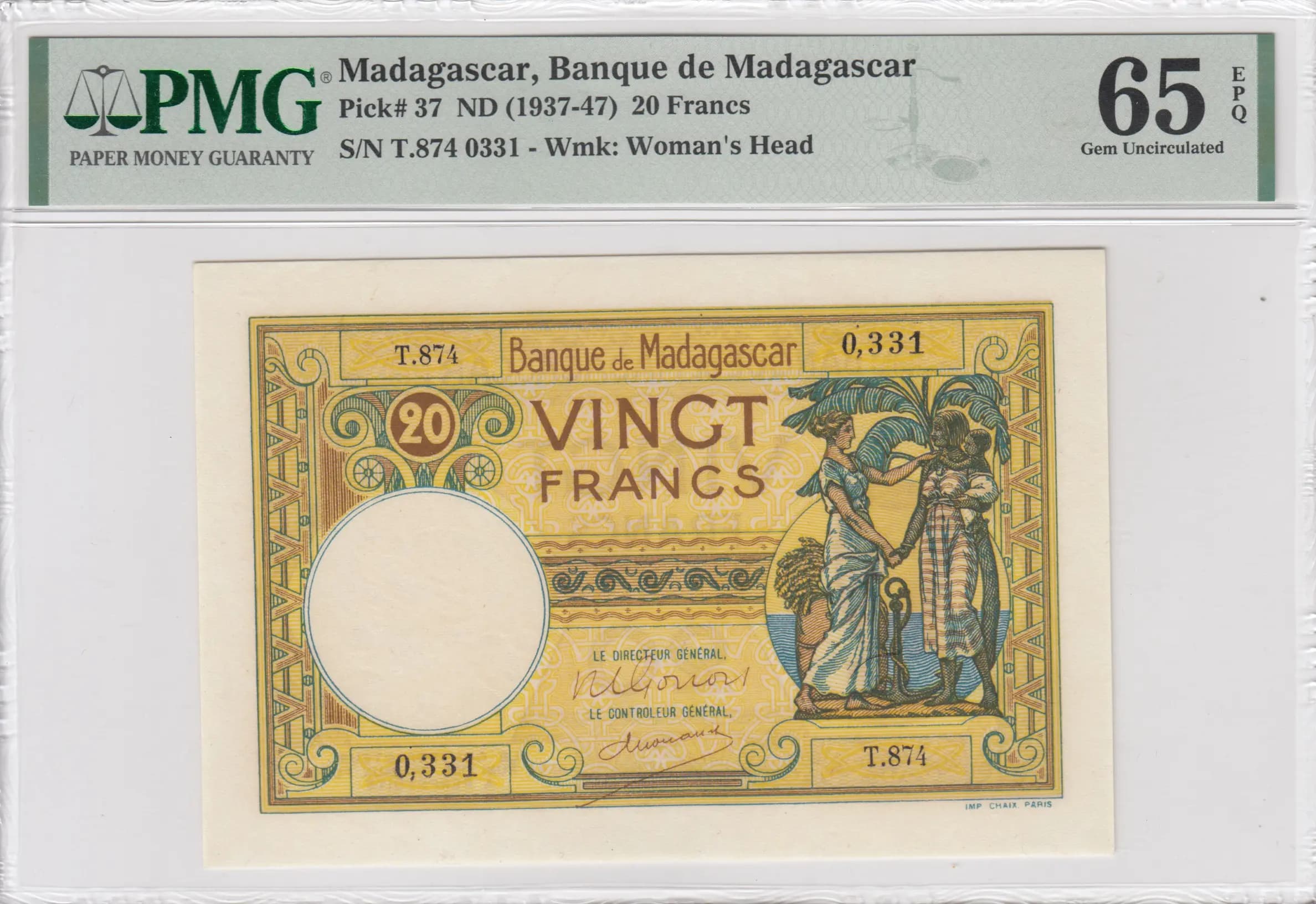
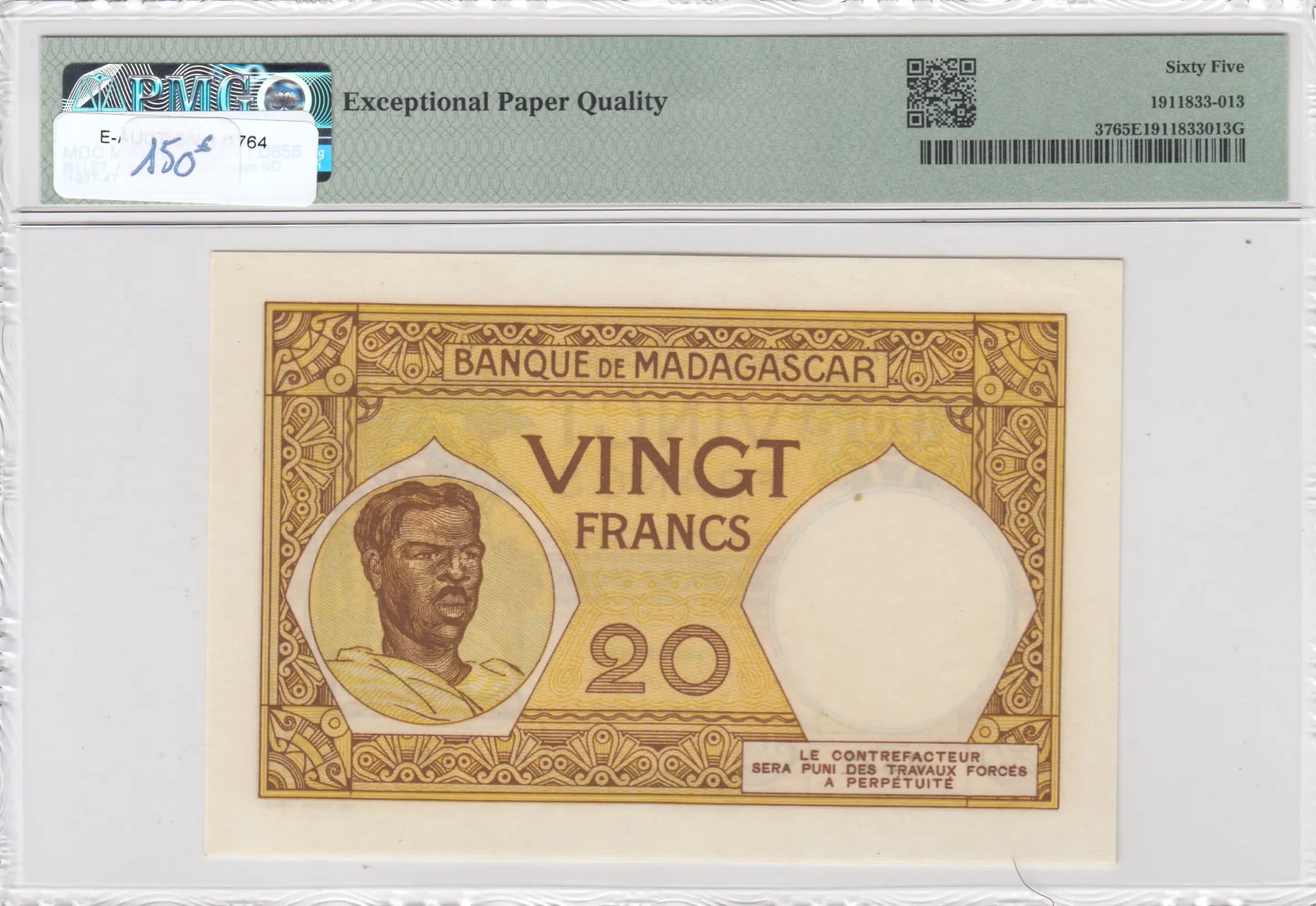
A stunning example of the 1937 Banque de Madagascar 20 Francs (Pick P-37) graded PMG 65 EPQ, showcasing excellent uncirculated condition with no visible wear, creases, or stains. The note features classical imagery of two figures in period dress on the obverse and a distinguished male portrait in profile on the reverse, both rendered in fine engraved detail against a warm golden-yellow background. This example represents a well-preserved mid-grade specimen of a historically significant early-20th-century French colonial banknote, with market data indicating PMG 65 grades typically command $100-$150 at auction.
Common. While eBay sales data shows this note has solid collector interest across multiple grade levels, the frequency of sales and pricing structure ($15-$232 depending on condition) indicates a relatively available note for this series. PMG 65 EPQ examples have sold in the $100-$170 range historically, but the consistent appearance of this note in the secondary market across multiple condition grades over the past 15 years, combined with no evidence of limited print runs or recalls, classifies it as a standard issue within the Madagascar banknote series.
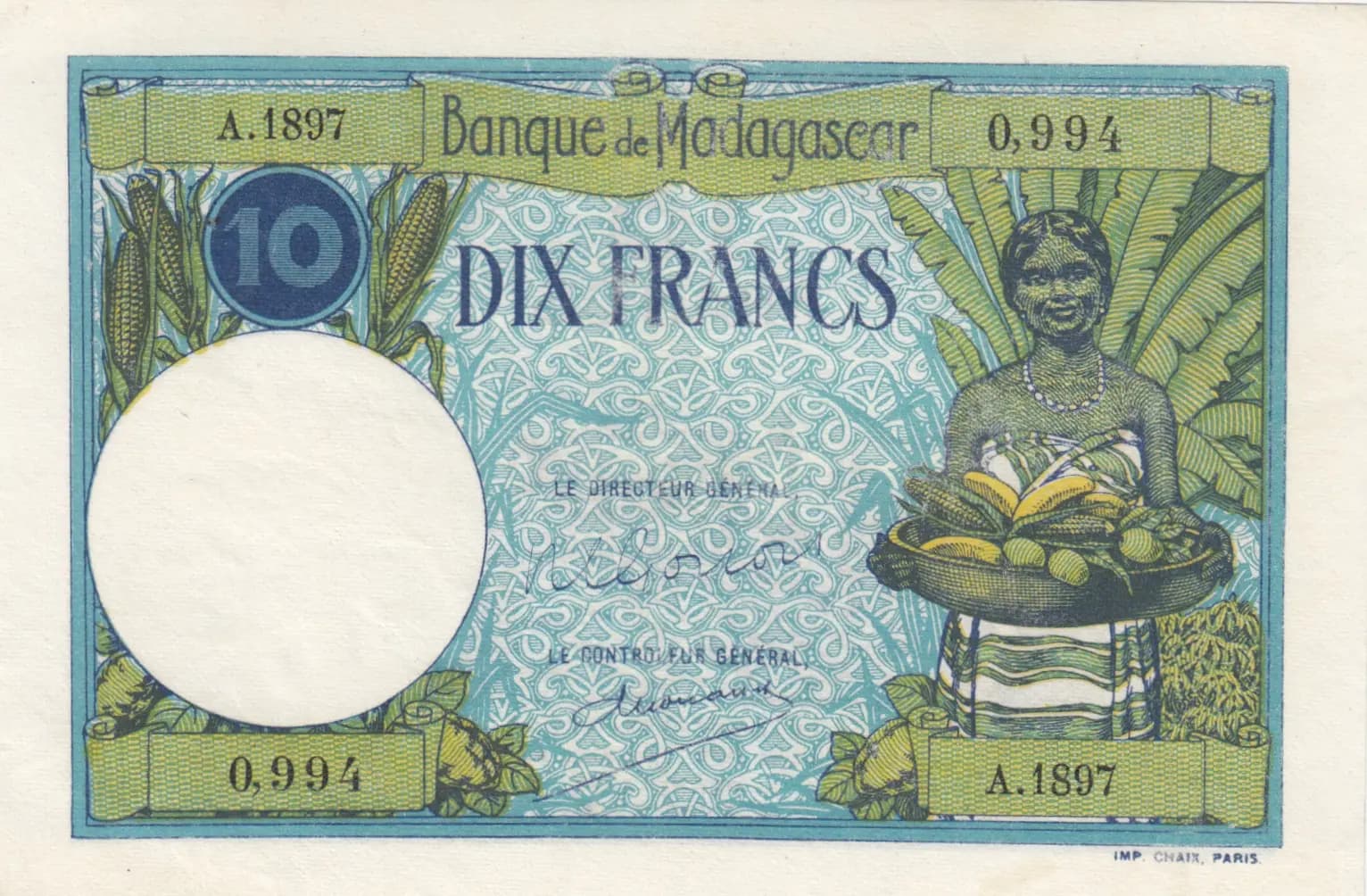
Issued during the height of French colonial rule in Madagascar, this 1937 banknote reflects the island's status as a French colony under the Banque de Madagascar, the designated colonial monetary authority. The classical allegorical figures adorning the obverse—representing feminine and masculine virtues in the French artistic tradition—and the formal portrait on the reverse exemplify the colonial-era aesthetic that French authorities imposed on colonial currency designs. The printer's mark 'IMP CHAIX PARIS' confirms the note's manufacture by the prestigious Parisian security printer Imprimerie Chaix, standard practice for French colonial currency production during this period.
The obverse presents an allegorical composition featuring two classical figures—a woman and man in period dress—positioned on the right portion of the note, rendered in fine engraved detail typical of early-20th-century European banknote artistry. The reverse showcases a formal portrait of a man in profile enclosed within a circular frame on the left side, executed in the same meticulous engraved style. Both sides feature ornate decorative borders incorporating geometric patterns, scrollwork, and floral-inspired motifs in the Art Nouveau tradition popular during this era. Large circular watermark areas positioned symmetrically on obverse and reverse provide security features. The color palette of golden-yellow, tan, brown, and cream tones creates a warm, official appearance characteristic of French colonial monetary design.
Front: 'Banque de Madagascar' (Bank of Madagascar), '20' and 'VINGT FRANCS' (Twenty Francs), 'LE DIRECTEUR GENERAL' (The General Director), 'LE CONTROLEUR GENERAL' (The General Controller), 'IMP CHAIX PARIS' (Printed by Chaix Paris). Reference numbers: T.874, 0,331. Back: 'BANQUE DE MADAGASCAR' (Bank of Madagascar), '20' and 'VINGT FRANCS' (Twenty Francs), 'LE CONTREFACTEUR SERA PUNI DES TRAVAUX FORCÉS À PERPÉTUITÉ' (The counterfeiter will be punished with forced labor for life).
Steel plate intaglio engraving, the standard security printing method for banknotes of this era. The fine detail visible in both portrait work and decorative borders is characteristic of high-quality engraved plates. Printed by Imprimerie Chaix of Paris, one of Europe's premier security printers, known for their meticulous execution of banknote commissions for French colonial authorities.
This example represents the standard 1937 issue of Pick P-37. The catalog notation 'ND (1937-1947)' indicates the banknote remained in circulation for an extended period. Potential varieties for this type may include signature varieties corresponding to different general directors and controllers, though these cannot be definitively identified from the visual evidence provided. Serial number prefixes and specific signature combinations would indicate particular sub-varieties if documented in specialized Madagascar banknote catalogs.