5 litai 1922 specimen
Market Prices
1 saleAbout This Note
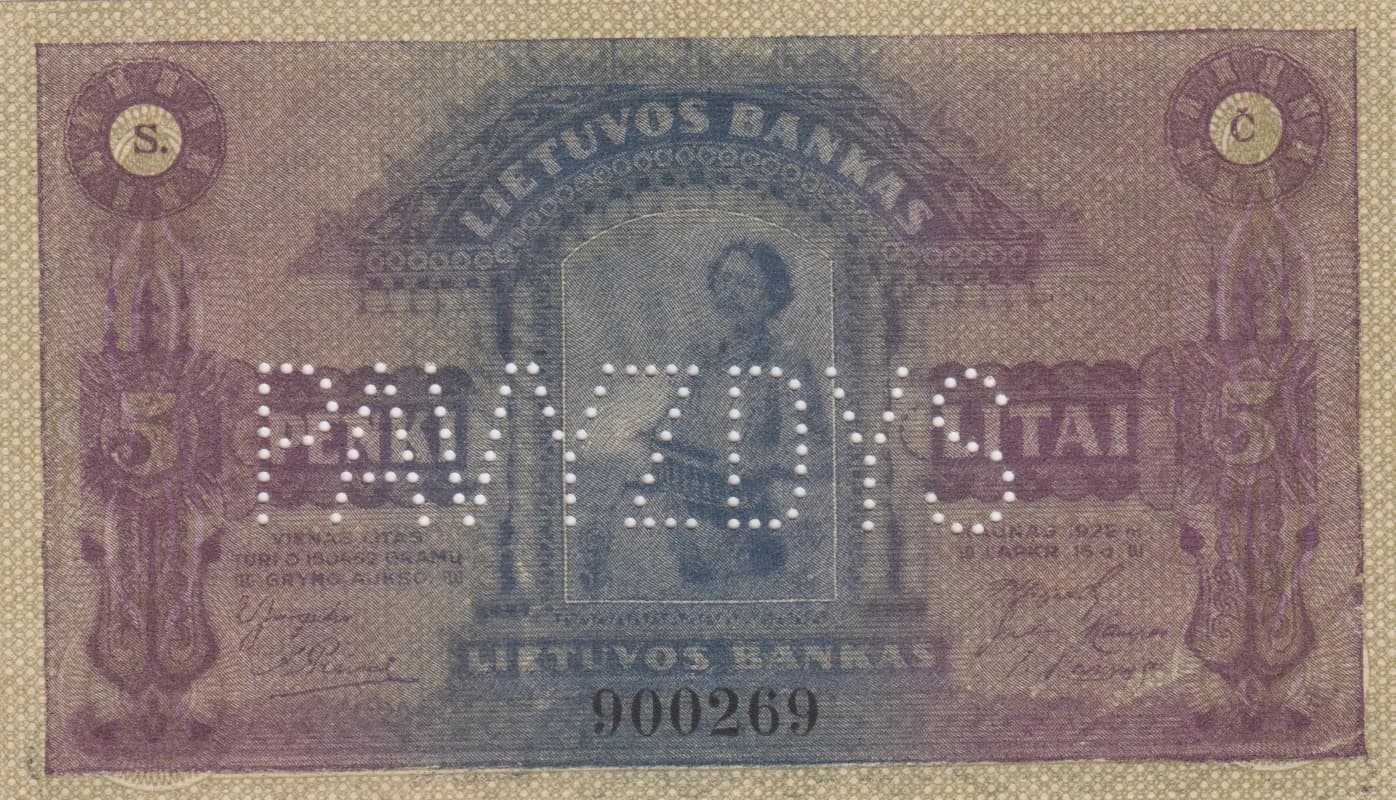
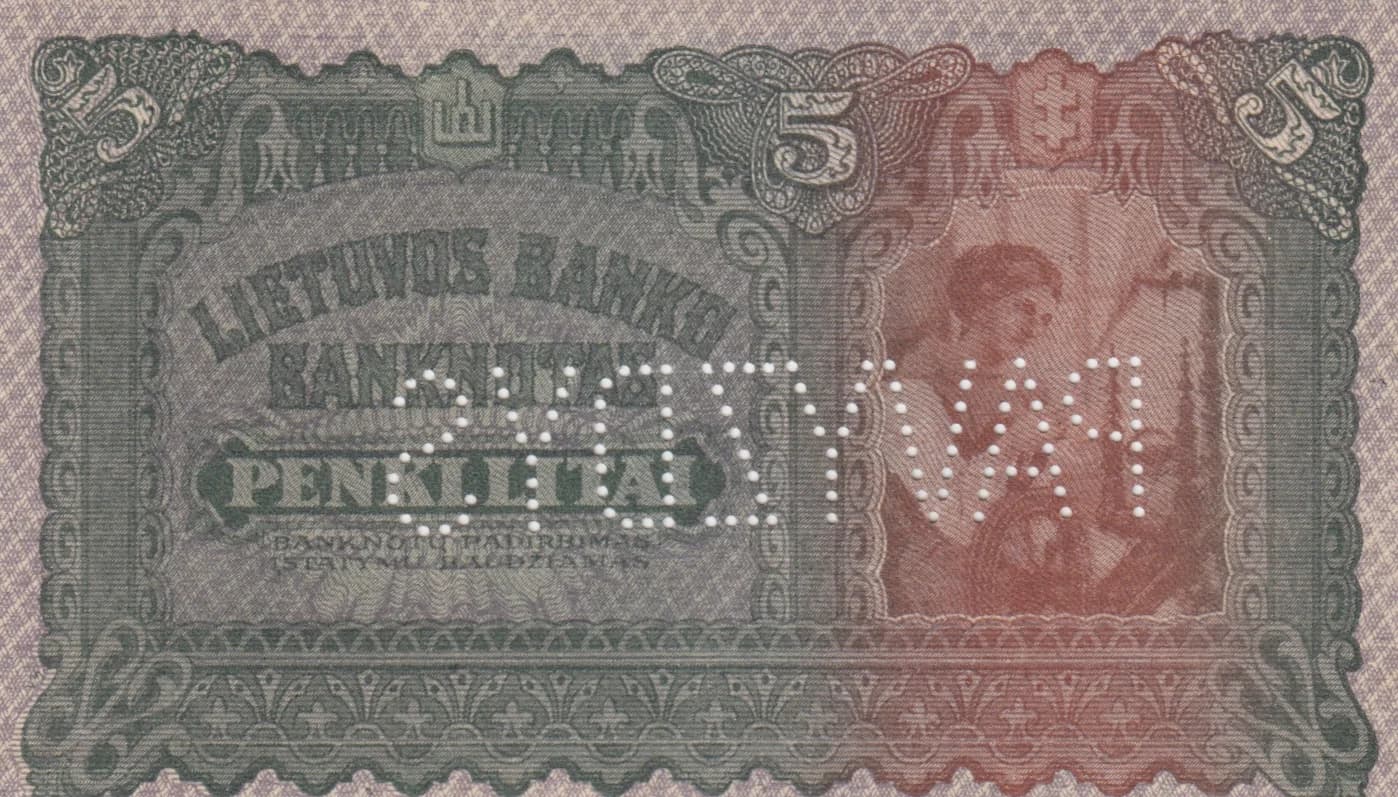
This is a spectacular specimen example of the 1922 Lithuanian 5 Litai (Pick P-15s), issued by Lietuvos Bankas shortly after Lithuania's independence. The note displays a striking split-composition design on the obverse featuring architectural imagery in green tones alongside a portrait rendered in reddish-brown, while the reverse showcases a man's portrait in blue-gray tones framed by ornamental purple patterns. Both sides are marked with the characteristic perforated 'SPECIMEN' overprint, and the note exhibits pristine, uncirculated condition with no visible wear, creases, or damage.
Uncommon. While the catalog value of $1,000 for UNC examples indicates this is not a common circulating note, specimen examples of early Lithuanian notes from 1922 survive in modest quantities. The 'specimen' designation itself reduces the population significantly compared to regular-issue notes, as most specimens were retained by the bank or used for reference purposes and were not widely distributed. The absence of extensive PMG population data suggests limited professional grading submissions, but the denomination and early national issue date place this in the 'uncommon' rather than 'rare' category.
This banknote represents an early issue from the newly independent Lithuanian state, issued on November 16, 1922, following Lithuania's declaration of independence in 1918. The agricultural imagery on the obverse—including the architectural representations and formal portraiture—reflects the nation's values and identity during its formative period. The quality of design and printing demonstrates Lithuania's commitment to establishing itself as a modern, sovereign nation through professional currency design.
The obverse features a bipartite composition symbolizing Lithuanian identity: the left half displays green-toned civic or governmental architecture representing the nation's institutional strength, while the right half presents a formal portrait of a man in reddish-brown tones, likely representing a national figure or allegory of the state. The reverse displays a centrally positioned male portrait in blue-gray tones, possibly representing a historical Lithuanian figure or national symbol, surrounded by decorative purple and mauve ornamental patterns with guilloche work. Circular denomination seals bearing the numeral '5' anchor the left and right sides of the reverse. The cream and tan background provides contrast to the multicolored design elements, and ornamental scrollwork frames both sides of the composition.
Front side: 'LIETUVOS BANKAS' (Bank of Lithuania); 'SPECIMEN' (perforated overprint marking this as a specimen note). Back side: 'LIETUVOS BANKAS' (Bank of Lithuania); '900269' (serial number); 'SPECIMEN' (perforated overprint marking this as a specimen note).
The note employs multicolor letterpress and intaglio printing techniques, evidenced by the detailed portraiture, fine ornamental patterns, guilloche work, and sharp color separation visible in the architectural and portrait elements. The precision of the perforated 'SPECIMEN' overprint and the crisp detail throughout suggest work by a European security printer, consistent with early 1920s Lithuanian currency production standards.
This is cataloged as P-15s (specimen variety) per Pick nomenclature. The visual analysis shows serial number '900269' on the reverse. PMG records indicate P-15s1 as a cataloged variant. Specimen notes are distinguished by the perforated 'SPECIMEN' overprint visible across both obverse and reverse. The catalog reference notes that related issues (P-16 and P-17) feature swastikas in the upper corners of the obverse, indicating this P-15s does not contain such symbols, making it a distinct variety from those related issues.