1 centas 1922
Market Prices
5 salesAbout This Note
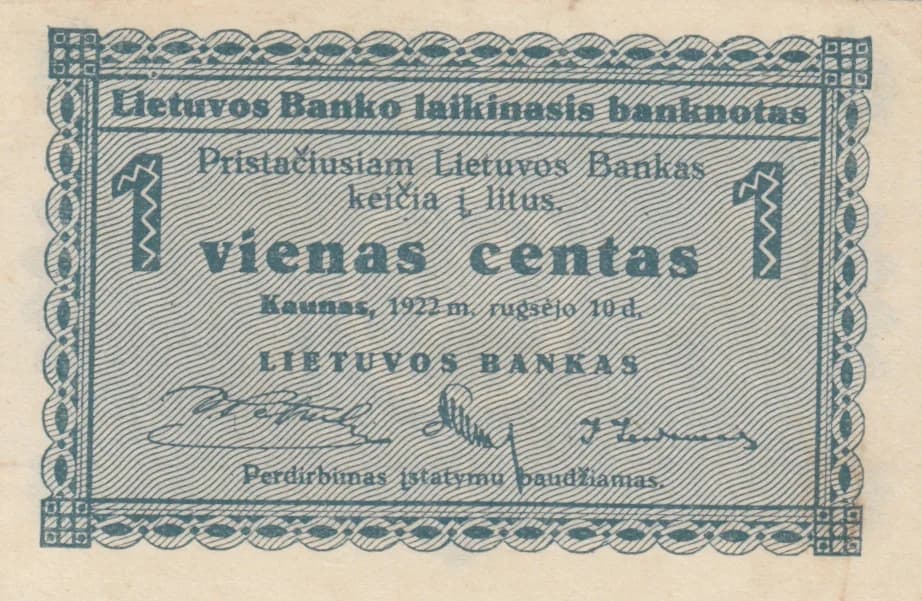
This Lithuania 1 Centas from 1922 (Pick P-1) represents an early example of independent Lithuanian currency issued by Lietuvos Bankas shortly after the nation's independence. The note displays the characteristic text-heavy design typical of early 20th-century Eastern European emergency currency, with fine security line patterns and ornamental borders in blue and cream tones. In AU condition, this note shows only light aging consistent with a century-old document, with crisp printing detail and no major damage, making it a well-preserved example of Lithuania's monetary transition period.
Common. The eBay market data shows consistent sales activity with VF examples selling in the $80-$130 range and lower grades (VG-F) typically $13-$50, indicating steady collector demand but without scarcity premiums. The 2016 catalog values (UNC: $140, VF: $60, VG: $30) further support a common classification. As a regular issue temporary currency from the early independent Lithuanian state with presumably reasonable print runs, this Pick number appears in typical collections of early 20th-century Eastern European notes.
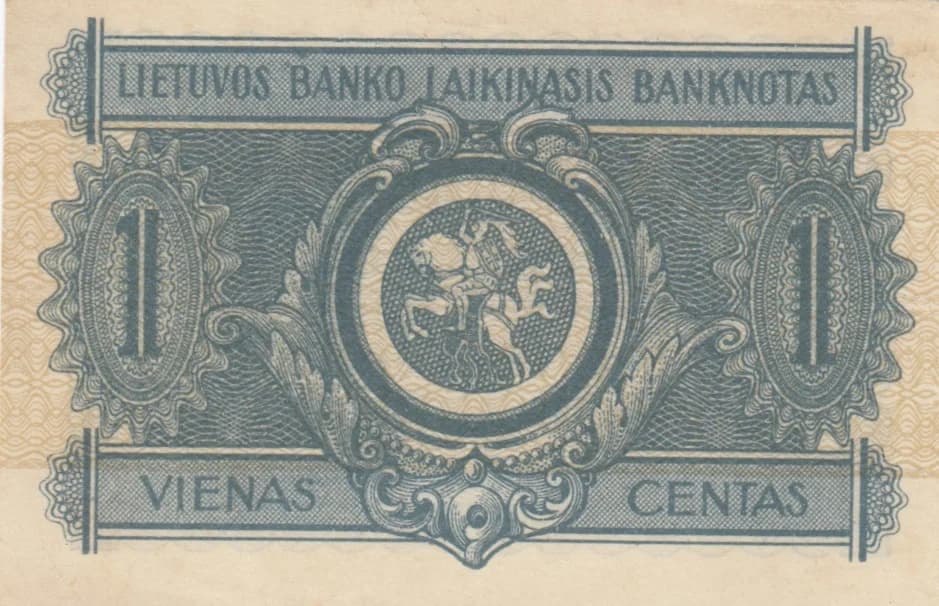
Issued on September 10, 1922, this temporary banknote ('laikinasis banknotas') reflects Lithuania's establishment of financial independence following World War I and the Russian Revolution. The classical allegorical imagery on the reverse—featuring what appear to be figures representing prosperity and commerce—symbolizes the nation's aspirations for economic stability and national development. The prominent designation as a temporary note indicates this was emergency currency issued during the early period of the Bank of Lithuania's operations, before the introduction of the more substantial litas-denominated notes.
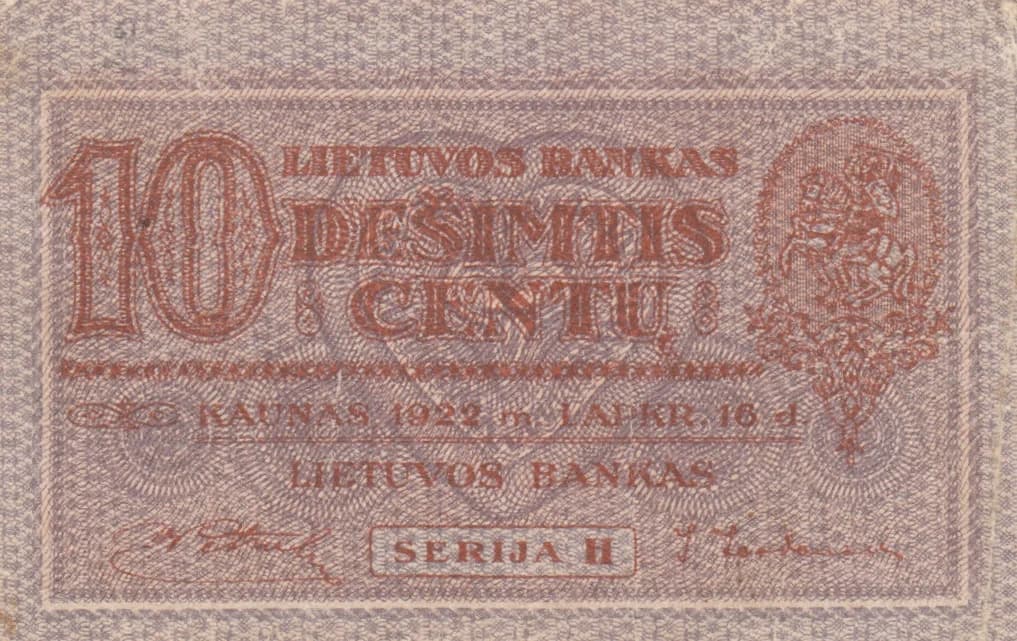
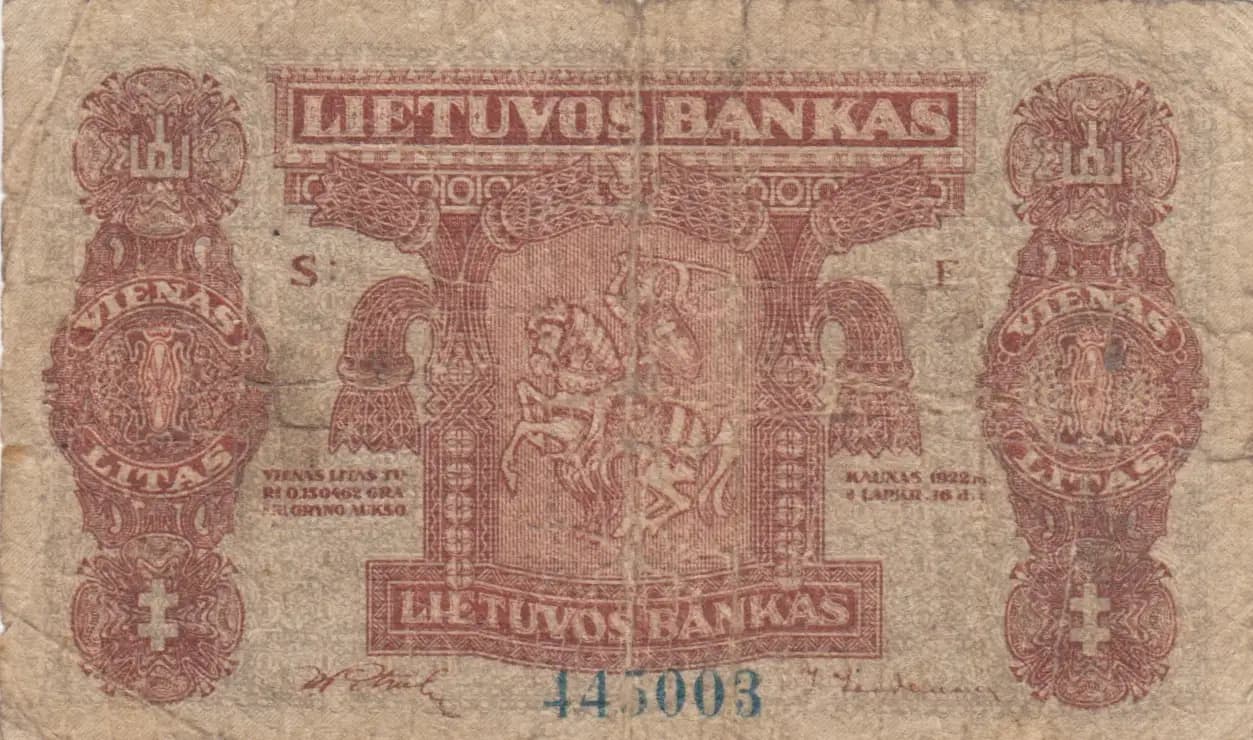
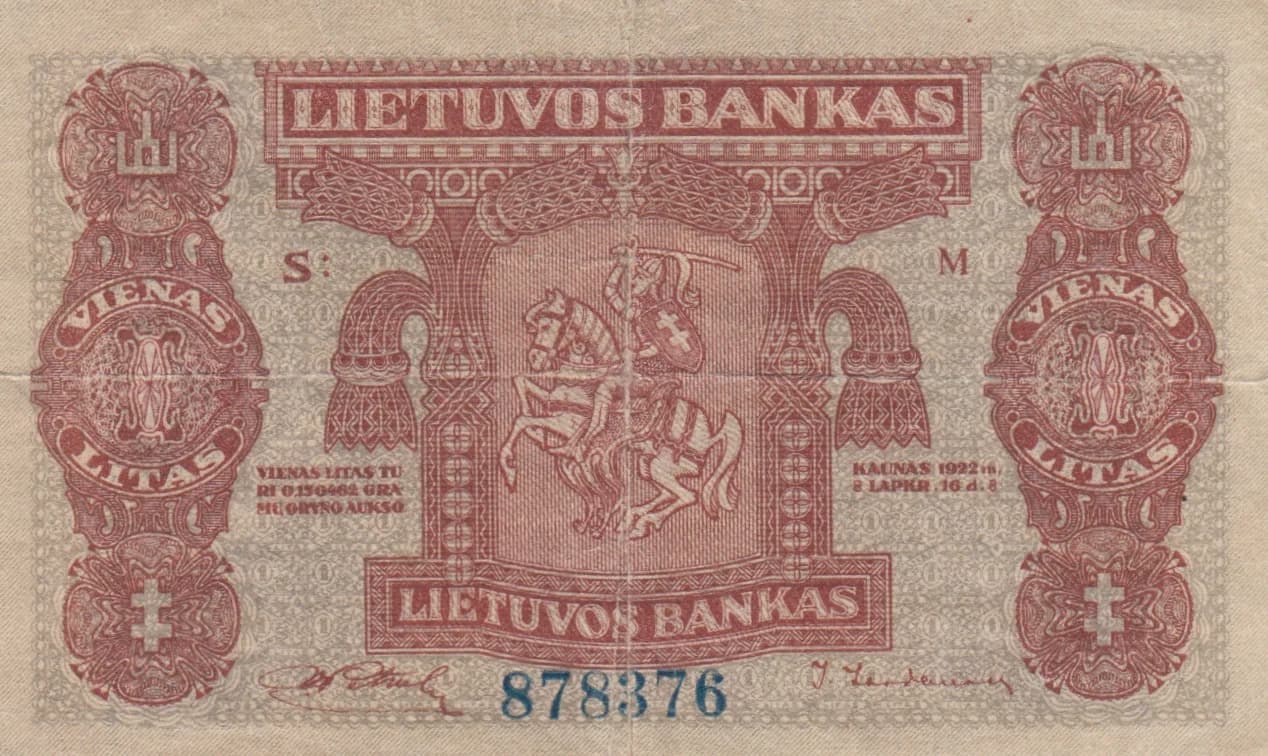
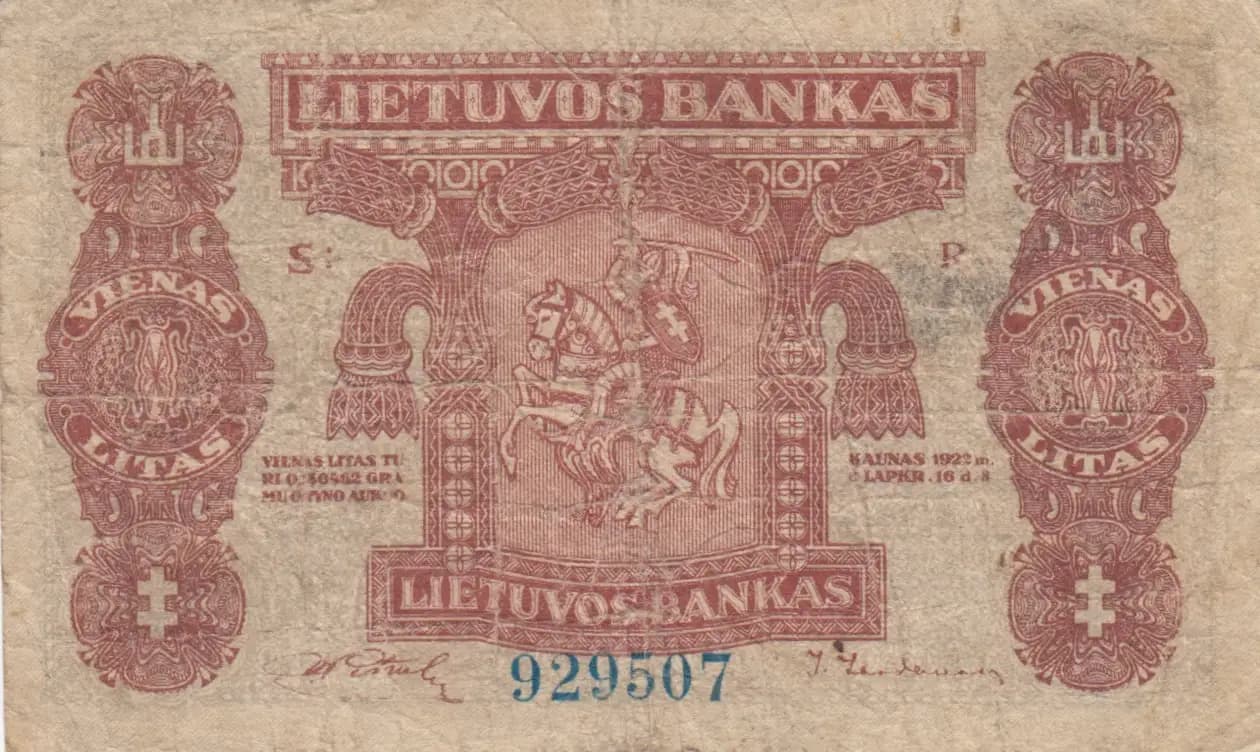
The obverse features a text-dominant layout characteristic of Lithuanian temporary currency, with the denomination and issuing authority prominently displayed in multiple lines across a cream background with blue-toned printing. The reverse showcases a more elaborate artistic composition centered on a circular medallion containing classical allegorical female figures—likely representing virtues such as prosperity, commerce, or national identity in the baroque allegorical tradition common to Central European banking imagery of the period. Flanking this central motif are large ornate numerals '1' within decorative rectangular cartouches, while the entire design is framed by ornamental borders composed of repeating geometric and twisted rope-like patterns. Fine crosshatch and diagonal line patterns throughout serve as security features against counterfeiting.
FRONT: 'Lietuvos Banko laikinasis banknotas' (Temporary banknote of the Bank of Lithuania); 'Pristačiusiam Lietuvos Bankas teičia 1 litų' (The Bank of Lithuania pays to the bearer 1 litas); 'vienas centas' (one cent); 'Kaunas, 1922 m. rugsėjo 10 d.' (Kaunas, September 10, 1922); 'LIETUVOS BANKAS' (Bank of Lithuania); 'Pardubirias išdutymu baudžiamias' (Issued under penalty of law). BACK: 'LIETUVOS BANKO LAIKINASIS BANKNOTAS' (Temporary Banknote of the Bank of Lithuania); 'VIENAS CENTAS' (One Cent).
Intaglio (recess) printing, evidenced by the crisp detail in the ornamental borders, the fine security line patterns, and the sharp definition of the allegorical figures and numerals. The sophisticated engraving work on the central medallion and corner ornaments is characteristic of professional banknote production. The specific printer for this issue is not definitively documented in standard references, though Lithuanian currency of this period was typically produced by established European security printers.
The specific variety designation is P-1a based on PMG population data. The PMG Population Report lists P-1a as the cataloged variant for the 1 Centas denomination. Without visible serial numbers, signatures, or notable overprints clearly discernible in the provided visual analysis, further variety differentiation (such as signature variants or serial number ranges) cannot be definitively established from the images alone. Collectors should consult the note's serial number and any signature variations when determining the precise variety of their specific example.