1 litas 1922
“serie F”
Market Prices
5 salesAbout This Note
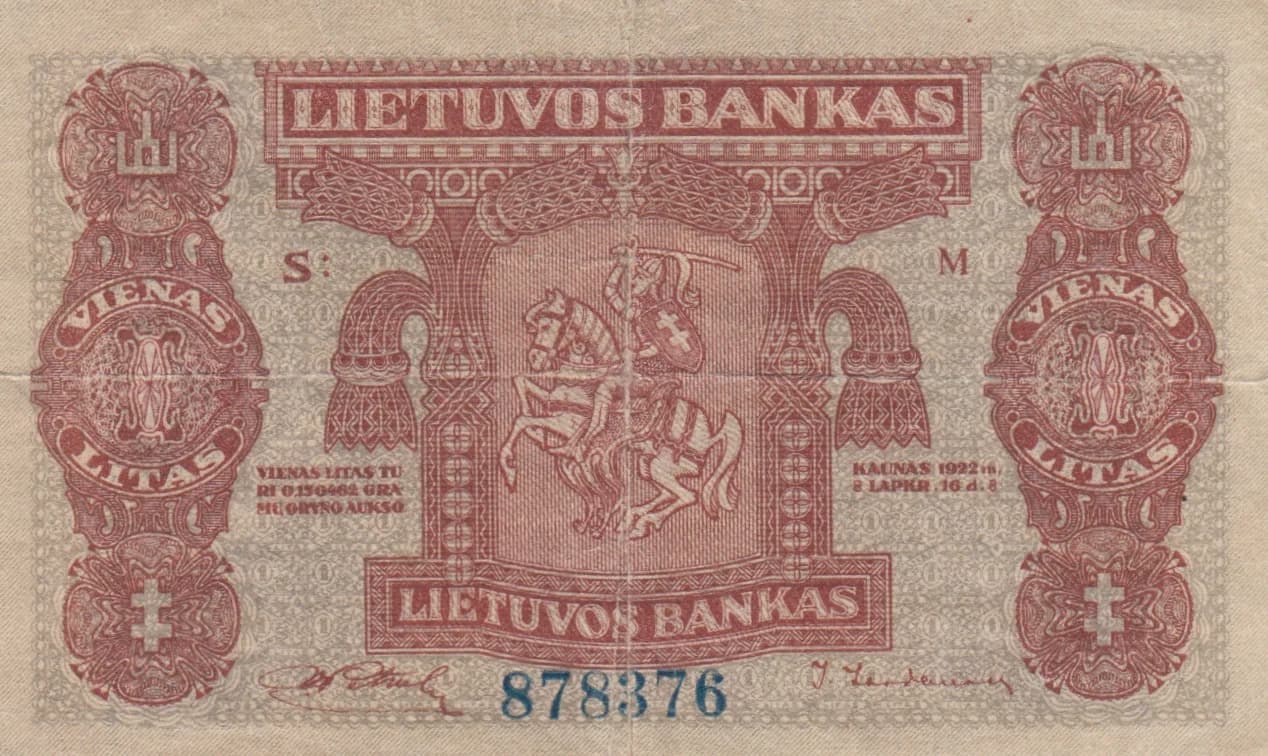
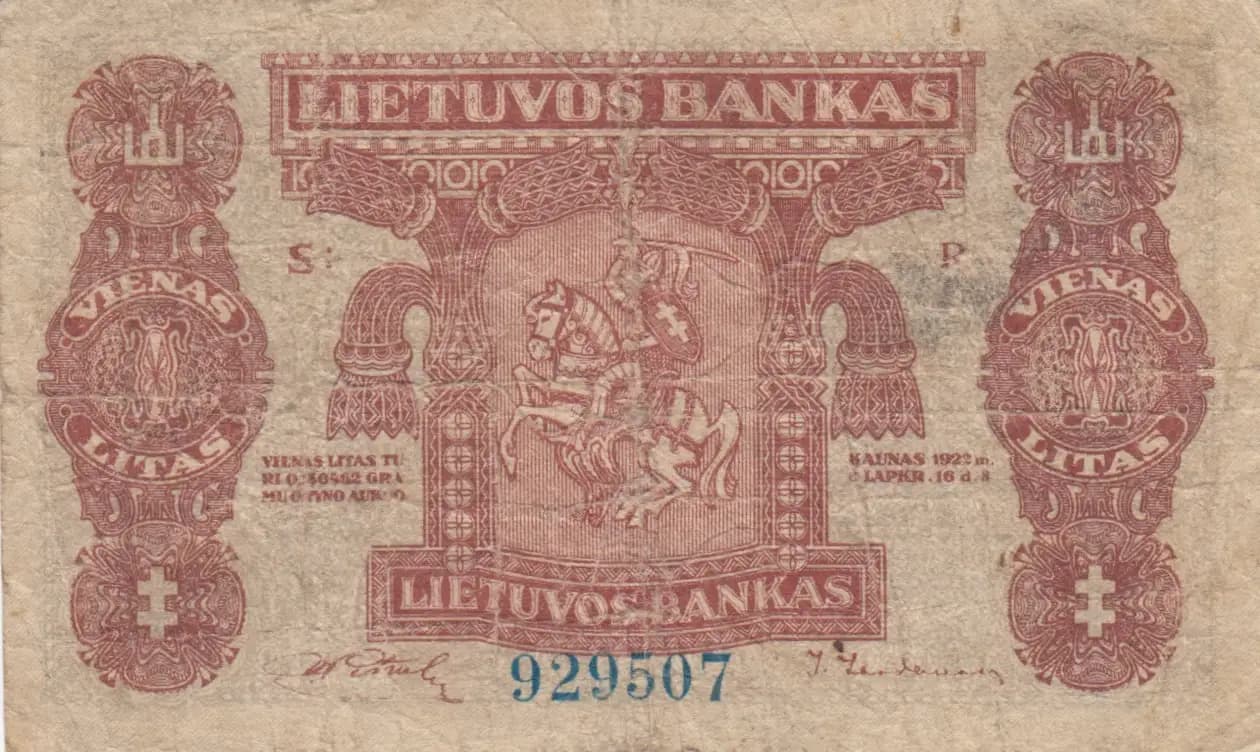
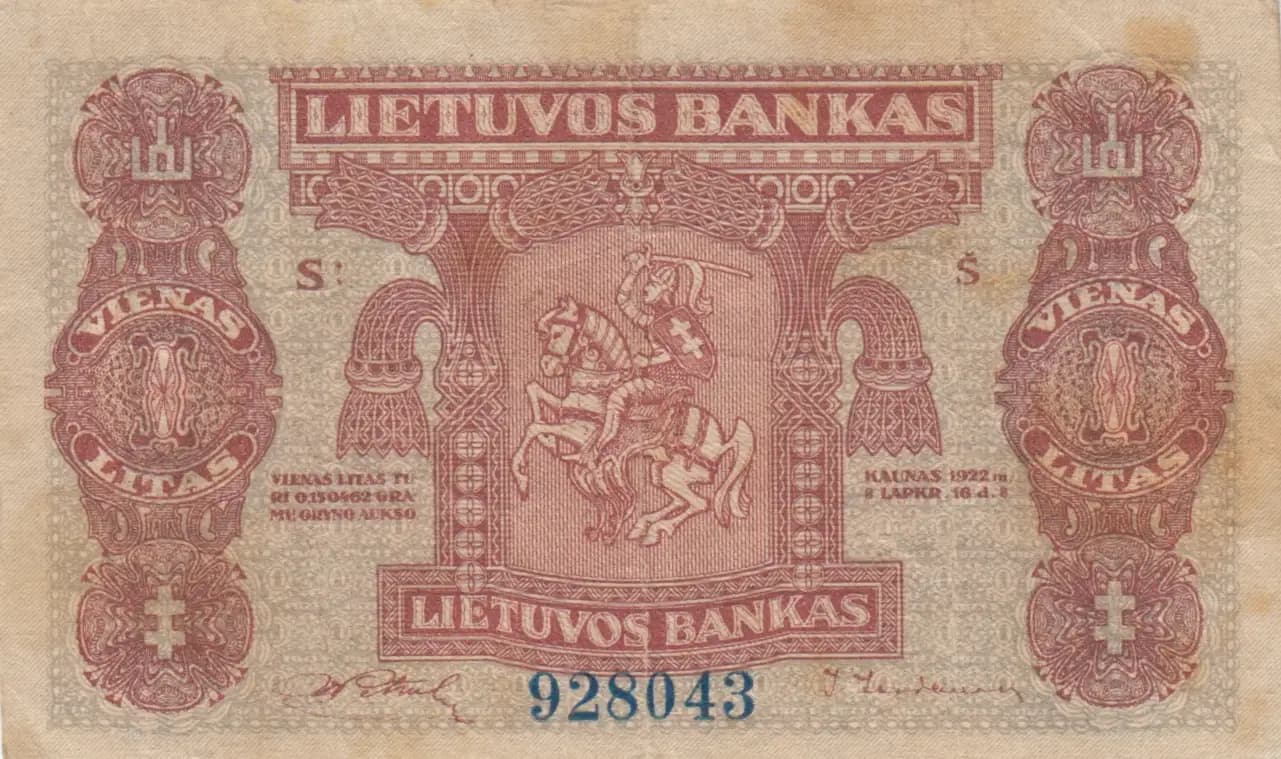
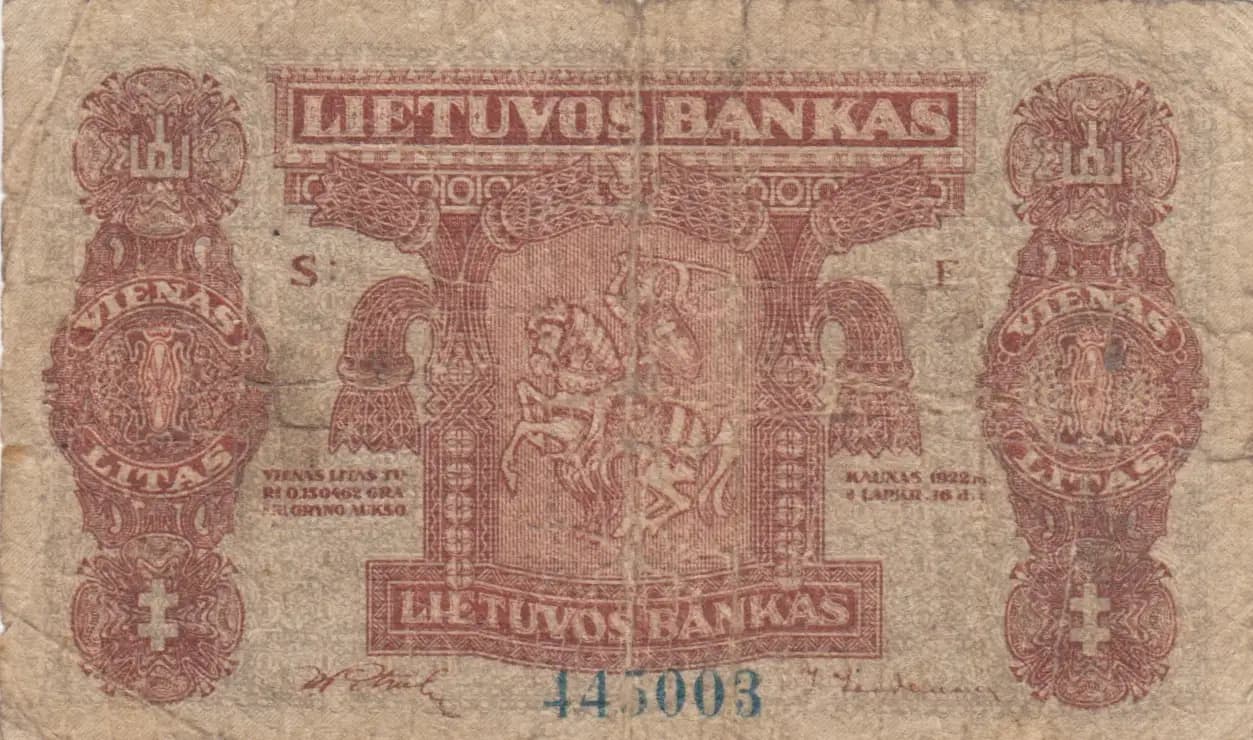
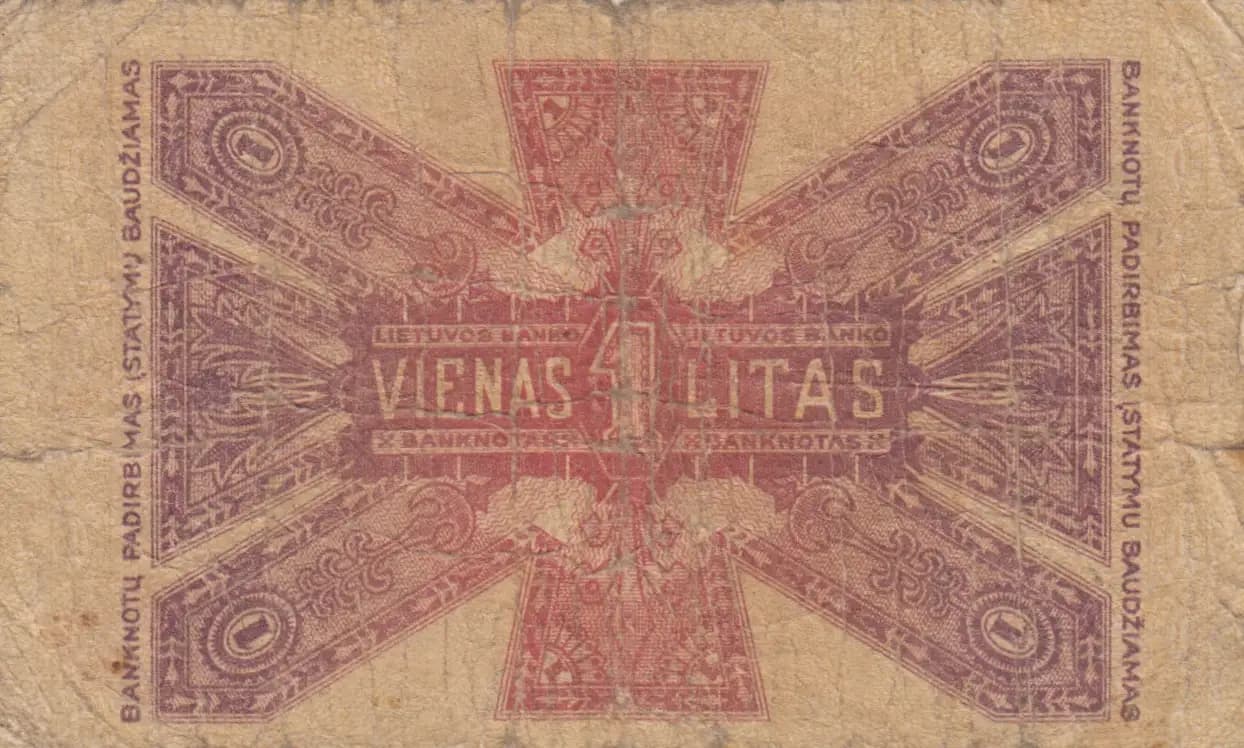
This 1922 Lithuanian 1 Litas banknote (Pick P-13) presents a magnificent example of early Lithuanian currency from the interwar period, featuring the characteristic red/maroon color scheme and ornate heraldic design elements. The note displays moderate circulation wear consistent with a VG grade, with visible creasing and foxing throughout, though the fine engraved details remain legible. The obverse depicts a formal male portrait in profile, while the reverse showcases an elaborate ornate cross surrounded by radiating geometric and floral patterns, making this an important artifact of Lithuania's early monetary independence.
Common. eBay sales data shows consistent market activity with multiple examples selling in the $66-$185 range depending on condition, with VG examples averaging around $66-$72. Catalog values from 2016 list VG at $100, which aligns with observed market prices. The 1922 1 Litas was produced in quantities sufficient to remain readily available to collectors, with no indication of a limited print run or early recall. This was the first denomination issued by Lithuania's newly established central bank, and these notes remained in circulation and subsequently entered collections in substantial numbers.
This note was issued by Lietuvos Bankas (Bank of Lithuania) on November 16, 1922, during Lithuania's first period of independence following World War I and the collapse of the Russian Empire. The heraldic imagery—featuring the double-headed eagles, crowned shields, and ornamental borders visible on both sides—reflects Lithuanian national symbolism and the aspirations of the newly established state. The prominent Latin cross on the reverse demonstrates the cultural and religious significance that informed the nation's visual identity during this formative period of independence.
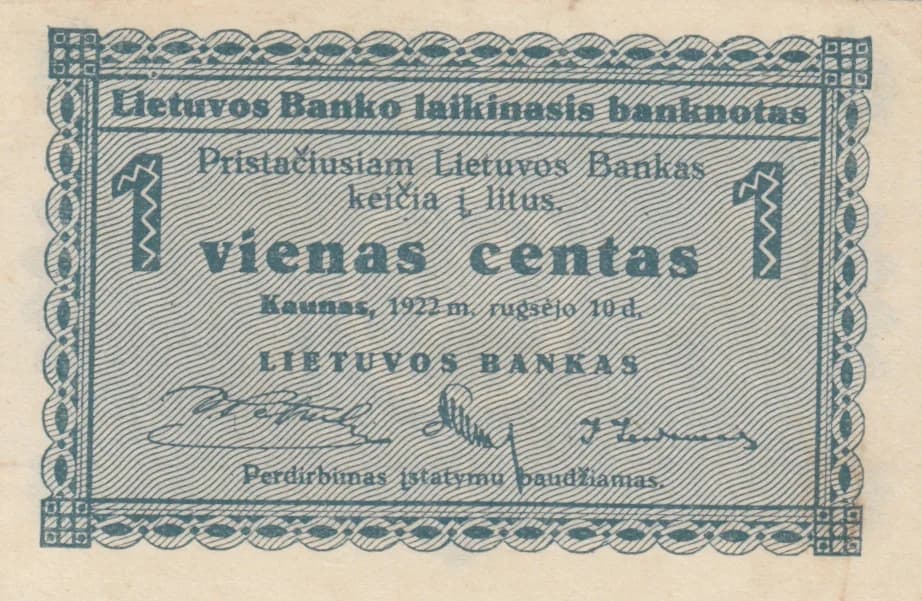
The obverse features a formal portrait of an unidentified male figure in left profile, rendered in classical engraving style and positioned centrally within an elaborate ornamental frame. The portrait is surrounded by double-headed eagles with elaborate decorative scrollwork in the upper corners and crowned heraldic shields on the left and right margins, all characteristic of Lithuanian state symbolism. The reverse displays a large, intricately engraved Latin cross as the central design element, surrounded by symmetrical radiating geometric and floral patterns, with decorative circular medallions positioned in the four corners. The entire note is executed in a complex web of parallel lines and fine engraving, creating intricate background patterns that serve dual purposes as both artistic elements and security features. The color scheme of red/maroon over tan/beige backgrounds unifies both sides.
FRONT: 'LIETUVOS BANKAS' (Bank of Lithuania) appears twice at top and bottom; 'VIENA LITA' (One Lita) appears in denomination frame; Serial number '44.5003' with series letter 'F' visible. BACK: 'LIETUVOS BANKAS' (Bank of Lithuania) appears vertically along margins; 'VIENAS LITAS' (One Lita) and 'BANKINO LITAS' (Bank Lita) appear in text blocks; Additional inscriptions reference banknote preparation and printing test procedures.
This note was produced using intaglio (engraved plate) printing, the standard security printing method for currency of this era. The fine line engraving work visible throughout—including the portrait, heraldic elements, geometric patterns, and decorative borders—is characteristic of steel plate engraving. The complex parallel line work creating the background patterns is typical of security printing intended to prevent counterfeiting. The printer for this series was likely a European security printer, though specific printer attribution is not definitively established from available catalog data.
This note is classified as Pick P-13 with series letter 'F' noted in collector records. PMG records indicate two cataloged variants (P-13a and P-13s3) exist for this base Pick number, suggesting signature or design variations. The observed example bears series letter 'F' and serial number 44.5003. Without access to detailed signature comparison data or high-resolution imaging of variant-specific features, the specific sub-variety (P-13a versus P-13s3) cannot be definitively determined from the information provided, though the series letter may serve as an indicator of variety classification.