1 centas 1922
“serie B”
Market Prices
16 salesAbout This Note
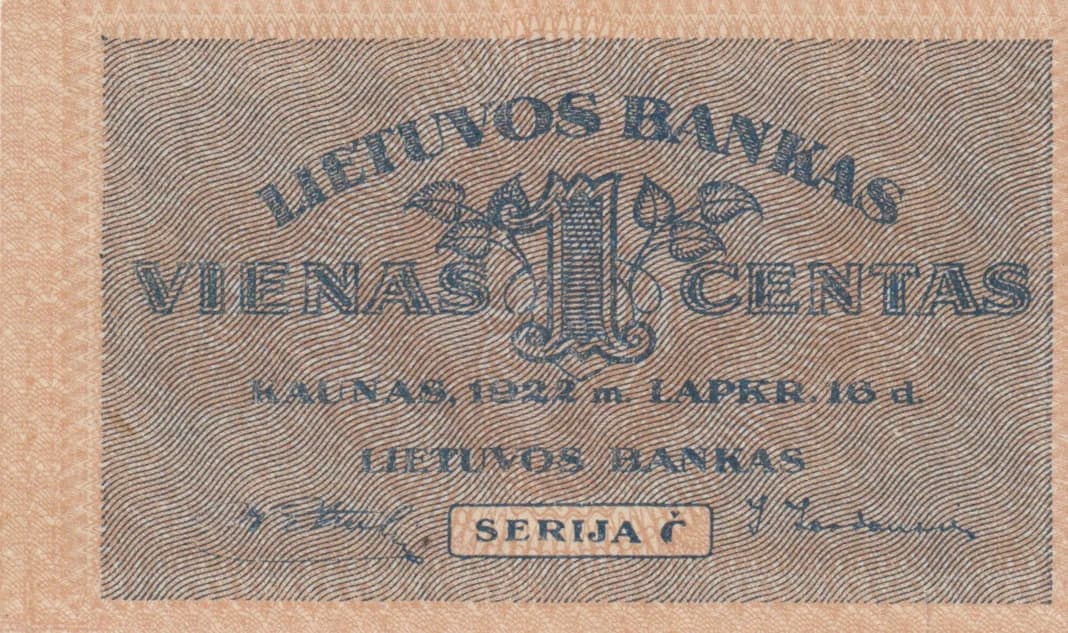
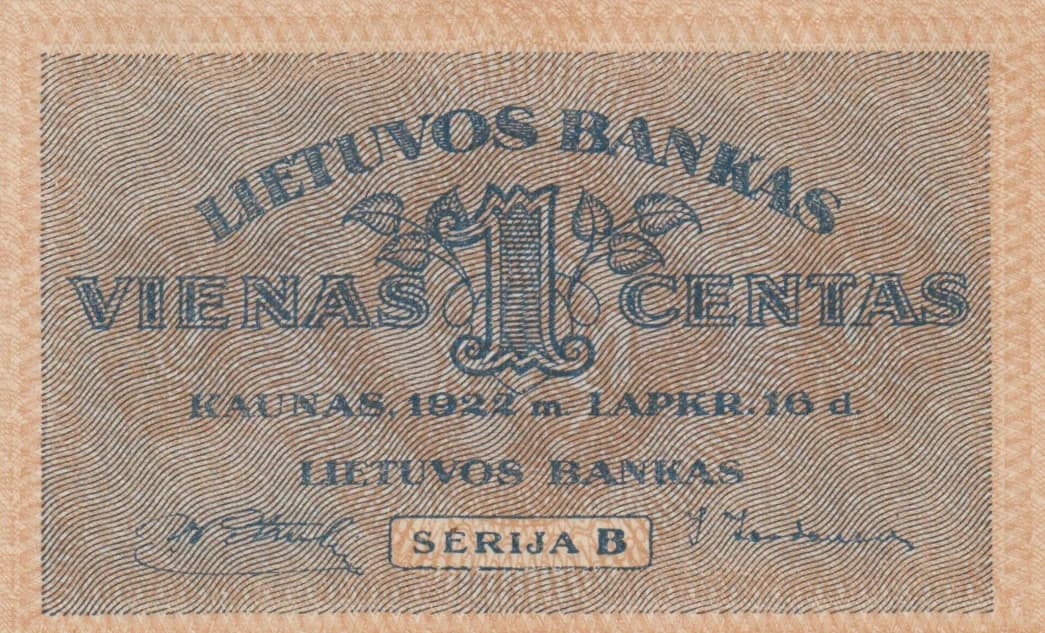
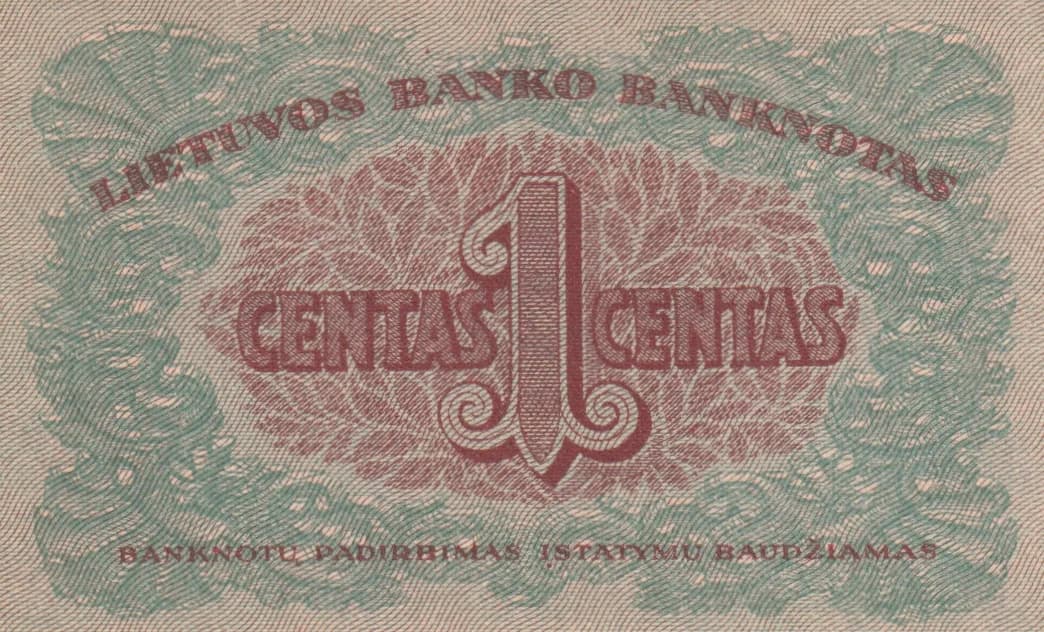
This Lithuania 1 Centas from 1922 is an exceptional example of early Lithuanian currency in AU (About Uncirculated) condition, featuring Series B designation. The note showcases crisp, sharp printing with no visible wear, tears, or creases, displaying the distinctive ornamental numeral '1' design on both sides rendered in fine parallel line engraving. The tan/beige front and multi-colored back (green, red, cream) represent the elegant yet functional design aesthetic of Lithuania's newly independent monetary system established just years after gaining sovereignty.
Common. eBay transaction history shows consistent sales in the $30-$213 range depending on condition grade, with lower-grade examples (F-VF) consistently selling for $30-$80 and uncirculated examples for $70-$180. The 2016 catalog value of $70 UNC aligns with observed market performance. The note's accessibility at modest price points across multiple condition grades, combined with its status as a regular issue from Lithuania's first banknote series (likely moderate-to-large print run), indicates this is a common, widely available note among collectors. Series B examples remain relatively abundant in the numismatic market.
This 1 Centas was issued on November 16, 1922, during Lithuania's early years as an independent nation following World War I and the collapse of the Russian Empire. The Lietuvos Bankas (Bank of Lithuania) established its first banknote series from Kaunas, the temporary capital, to stabilize the economy and assert national identity through currency. The ornamental, security-conscious engraved design reflects the technical standards of early 20th-century European central banking and Lithuania's desire to establish credible monetary institutions.
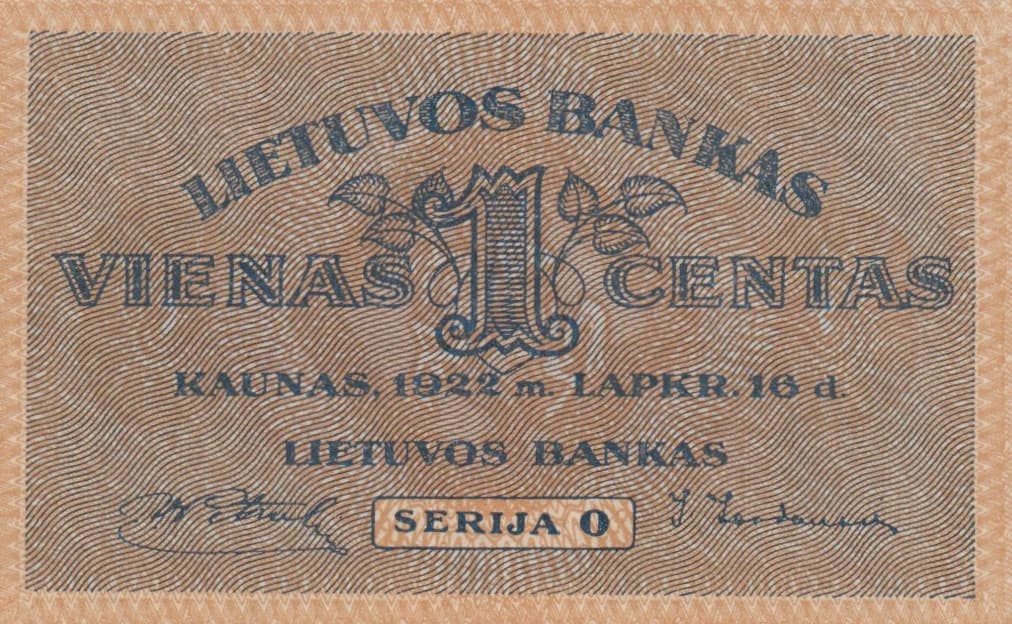
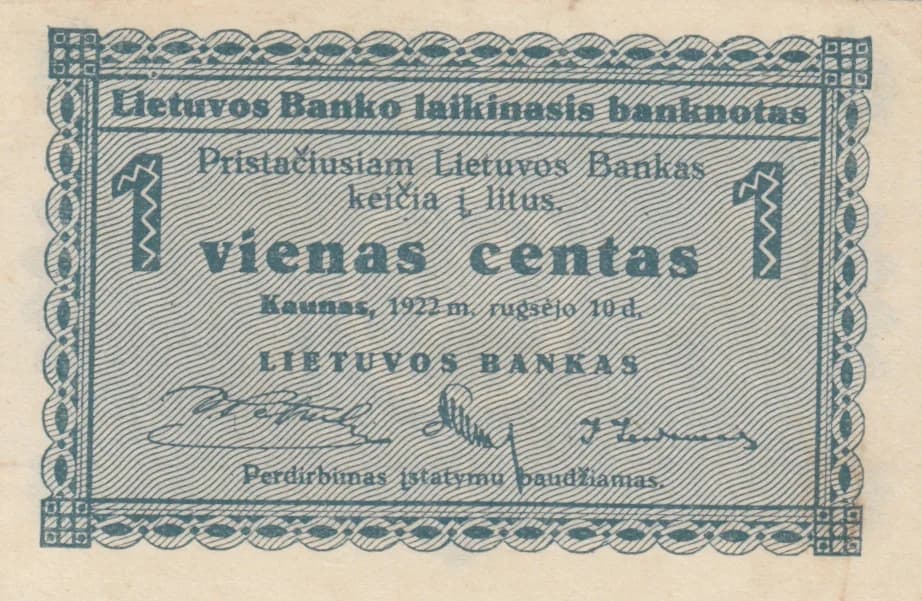
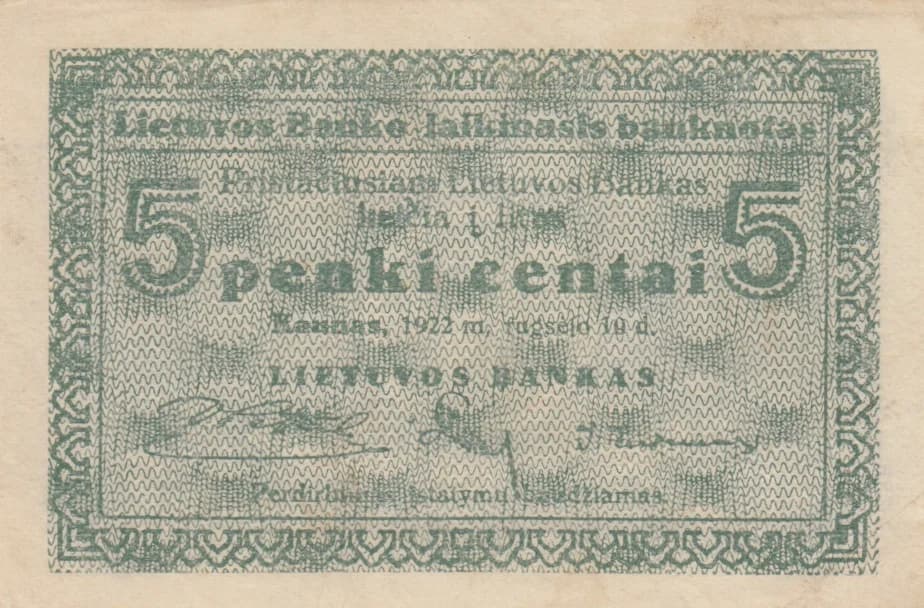
The 1 Centas features a symmetrical, purely typographic and ornamental design without portraits or landmarks, emphasizing geometric and scrollwork elements typical of early 20th-century European banknote aesthetics. The dominant design element is a large, highly decorative numeral '1' centered on both sides with elaborate flourishes and geometric embellishments. The front employs a tan/beige color scheme with blue-gray text and ornaments, while the reverse showcases a polychromatic design in green, red, and cream tones. Fine parallel line engraving creates protective texture throughout, with decorative borders and scrollwork framing the composition on both sides. This typographic approach was economical for low-denomination notes while maintaining security through intricate engraving patterns.
Front side: 'LIETUVOS BANKAS' (Bank of Lithuania), 'VIENAS CENTAS' (One Cent), 'KAUNAS 1922 M. LAPKR. 16 D.' (Kaunas, 1922 November 16), 'SERIJA B' (Series B). Back side: 'LIETUVOS BANKAS' (Bank of Lithuania), 'CENTAS CENTAS' (Cent Cent).
Intaglio engraving (line engraving) produced the fine parallel hatching patterns and detailed ornamental elements visible throughout the design. This traditional security printing method was standard for the era's central bank note production. The precise, sharp reproduction of delicate lines and the crisp text indicate high-quality engraving plates executed by professional security printers of the period.
This note is identified as Pick P-7, Series B. The PMG population report indicates multiple varieties exist for this base Pick number, including P-7a and P-7s3 (specimen). The 'SERIJA B' (Series B) designation is clearly visible on the front, distinguishing this from other series of the same denomination. No signature varieties or overprints are evident from the visual analysis. The specific series designation represents a key distinguishing feature for cataloging and collecting purposes.