2 litu 1922
“serie J”
Market Prices
4 salesAbout This Note
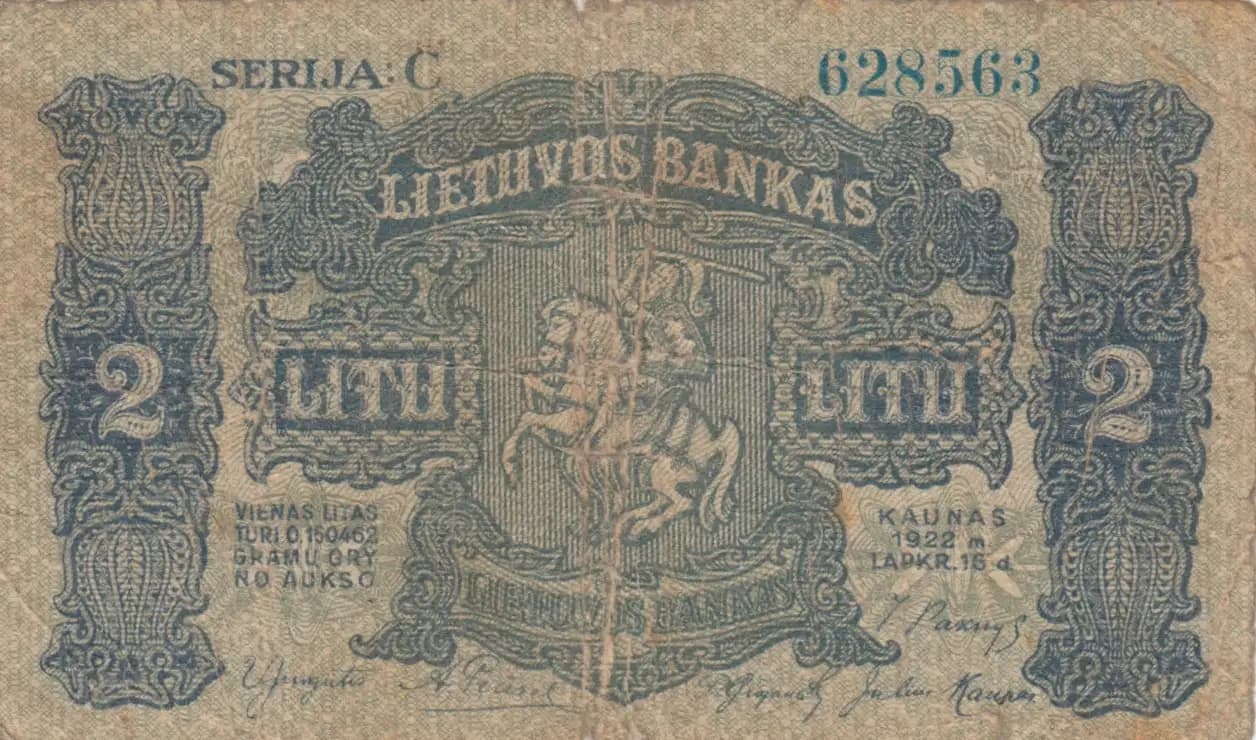
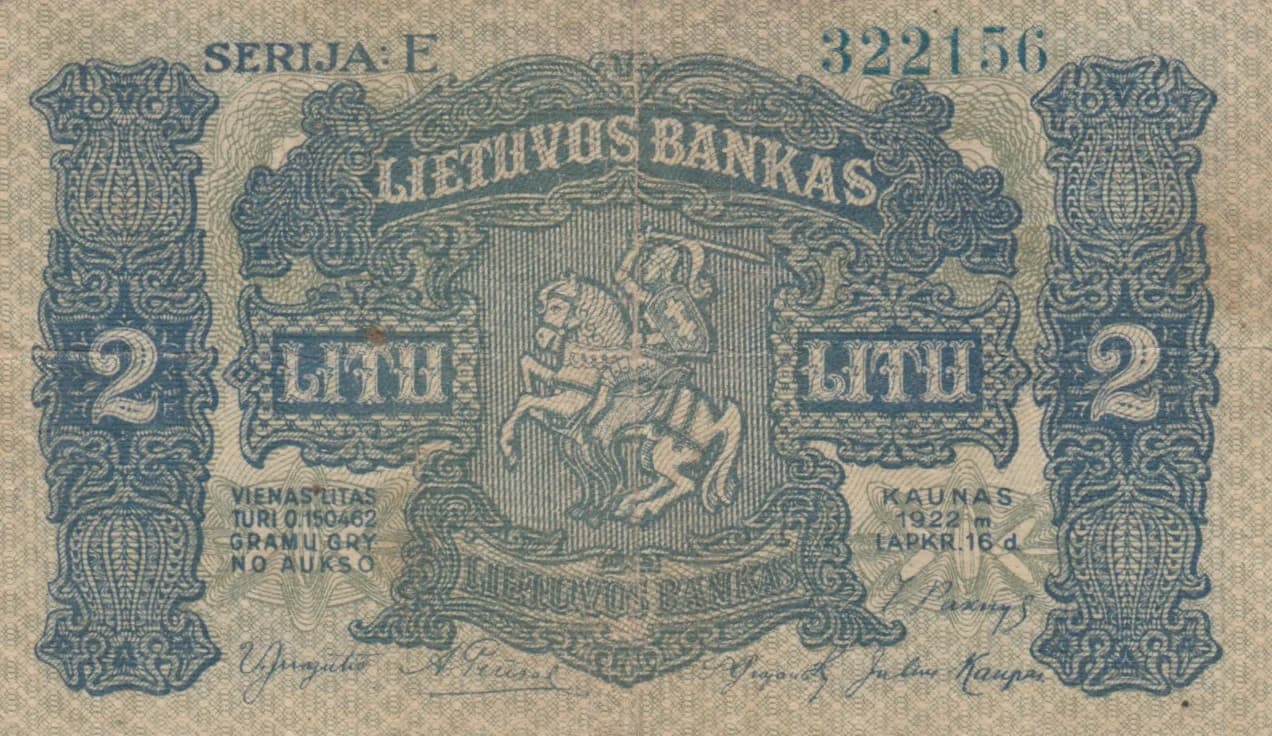
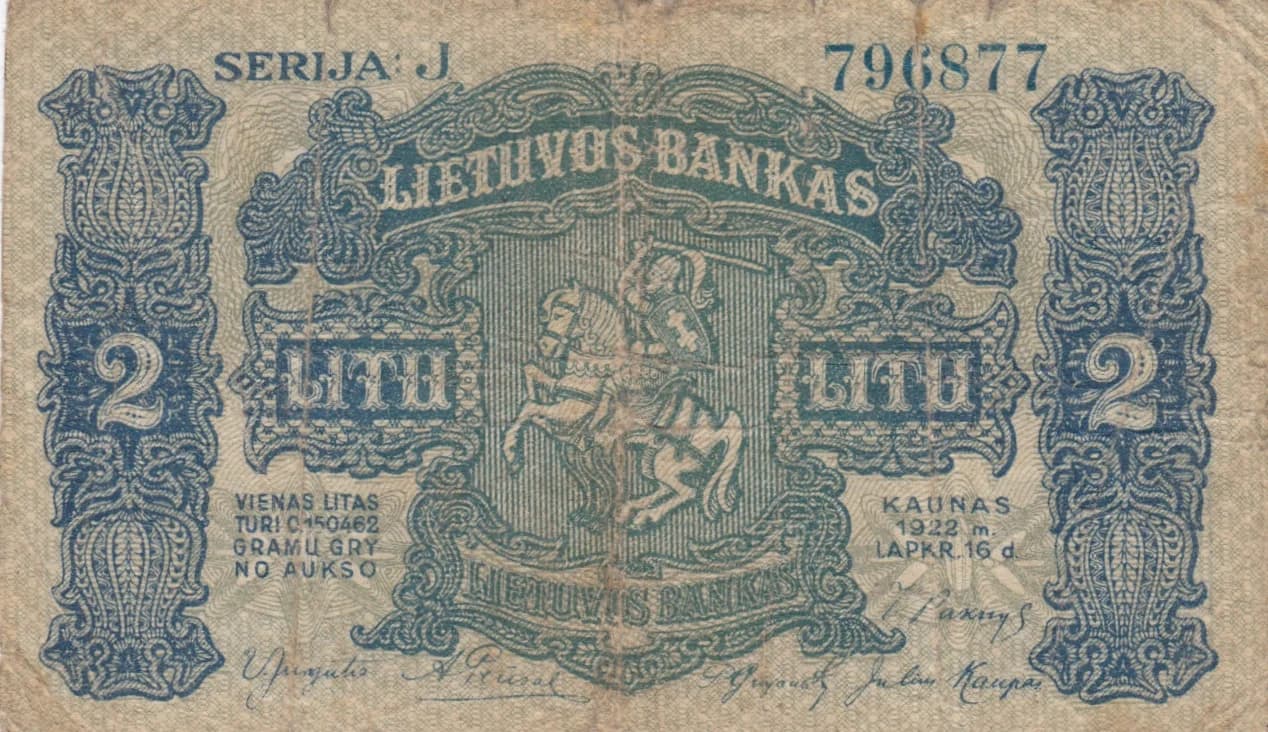
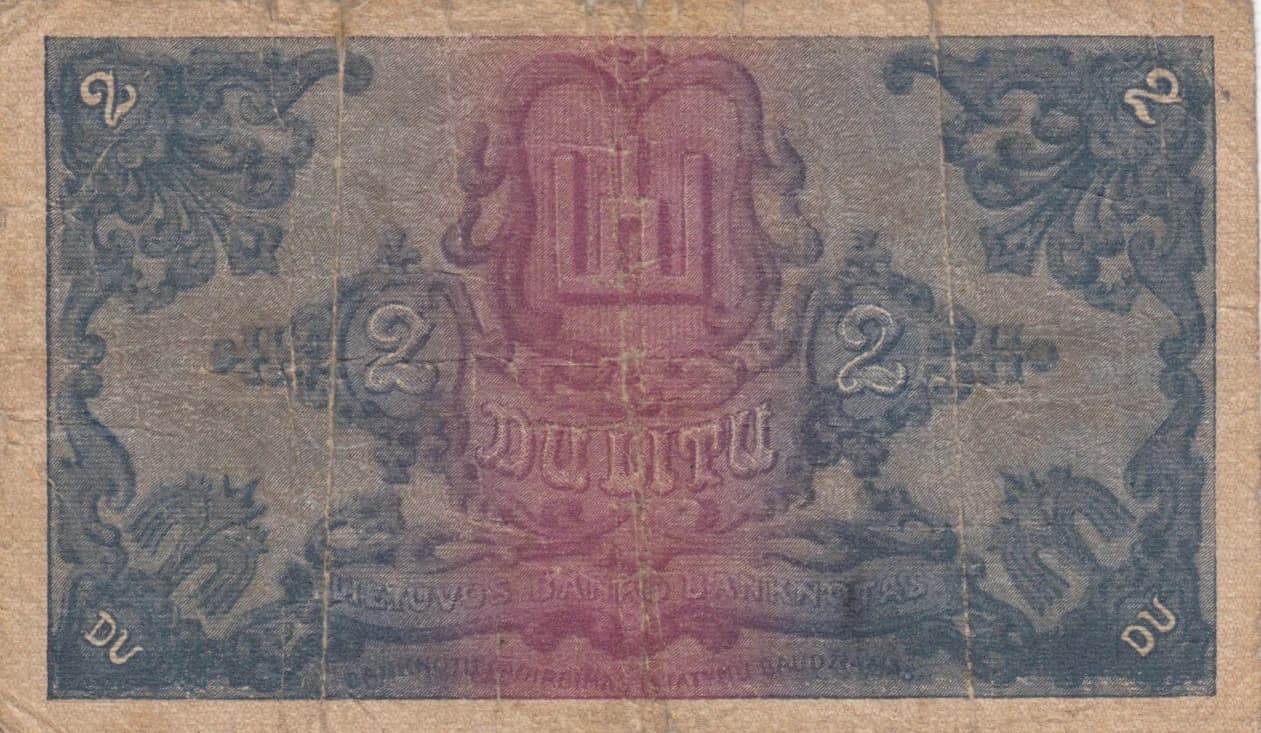
This 1922 Lithuanian 2 litai note (Pick P-14, Series J) presents a striking example of early independence-era currency design with vibrant two-color printing in blue/teal and reddish-pink inks. The obverse features an ornate heraldic coat of arms with mounted knights central to Lithuania's medieval heritage, while the reverse displays an architectural fortress structure in bold magenta. In VG condition with visible circulation wear including creases, folds, and age-related tan discoloration, this note represents an important chapter in Lithuania's monetary history during the interwar period.
Common. The 1922 2 litai (Pick P-14) was part of a substantial initial currency circulation during Lithuania's monetary stabilization period. No specific evidence of limited print runs, recall, or unusual scarcity exists for this denomination or series. Early Lithuanian banknotes of this era, while increasingly difficult to find in high grade, remain relatively common in circulated VG condition in the collector market.
This banknote was issued by Lietuvos Bankas (Bank of Lithuania) on April 16, 1922, during Lithuania's early years of independence following World War I and the Russian Revolution. The heraldic imagery featuring mounted knights reflects Lithuania's medieval Grand Duchy heritage and national identity, while the architectural fortress on the reverse symbolizes the nation's historical strength and sovereignty. The note's inscription referencing the gold standard (one lita contains grams of gold) demonstrates Lithuania's commitment to sound monetary principles during the stabilization of its new currency system in Kaunas, the provisional capital.
The obverse features a symmetrical composition with an ornate coat of arms as the dominant central element, depicting two mounted armored knights on horseback—representing the historical Vytis (Lithuanian Wagenoccoli or mounted warrior) heraldic tradition. The design is framed by elaborate floral and scroll decorative borders in blue/teal with double-headed eagle emblems positioned in the top left and right corners within decorative cartouches containing the denomination '2'. The reverse displays a prominent architectural structure—likely representing a fortress or castle symbolic of Lithuanian defensive heritage—rendered in bold reddish-pink/magenta, surrounded by matching ornamental blue/teal borders and heraldic corner elements. Both sides utilize light tan/beige paper stock consistent with 1920s printing practices.
Front side: 'SERIJA · J' (Series J), 'LIETUVOS BANKAS' (Bank of Lithuania), 'LITU' (litai abbreviation), 'VISNAS LITAS TURI GRAGMU GRYNО AUKSO' (One lita contains grams of gold), 'KAUNAS' (Kaunas city), 'LAPR 16 d' (April 16), serial number '796877', denomination '2'. Back side: Denomination '2' (in corners), 'DU' (Two in Lithuanian), 'LIETUVOS BANKAS DVILITAI' (Bank of Lithuania Two Litai).
The note employs classical banknote engraving and intaglio printing techniques typical of early 1920s currency production, evident from the fine line work in the decorative borders and heraldic details. The two-color printing (blue/teal and reddish-pink/magenta inks applied separately) indicates coordinated multi-pass printing, a standard security measure of the era. The printer for Lithuanian banknotes of this period was typically a European security printer, most likely operating under contract from the newly established Lietuvos Bankas in Kaunas.
This note is identified as Series J (Serija J) based on the series notation visible on the obverse. The serial number 796877 is documented. Dated April 16, 1922 (Lapr 16 d). Early Lithuanian currency issues from 1922 exist in multiple series designations (A through various letters), and collectors may encounter variations in series letters, signatures of officials, and serial number formatting. The specific combination of Series J with this date and serial range represents one of the documented varieties within the 1922 2 litai issue.