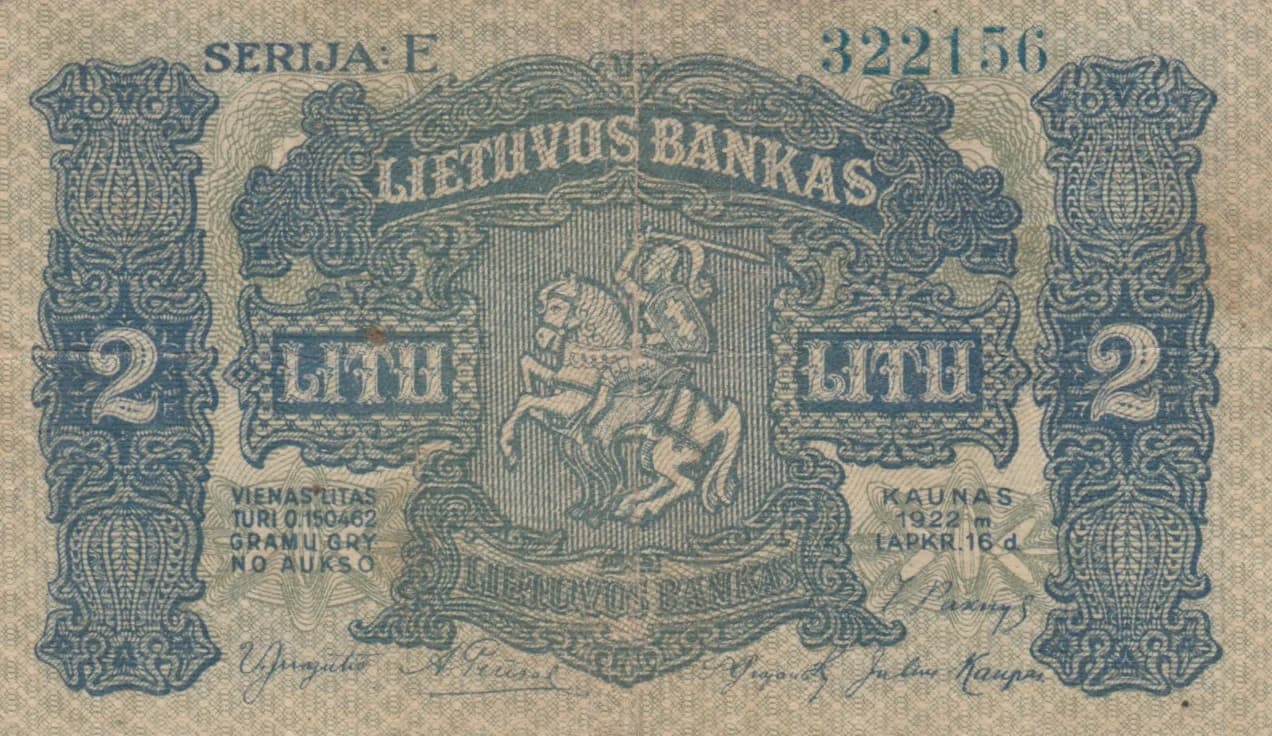
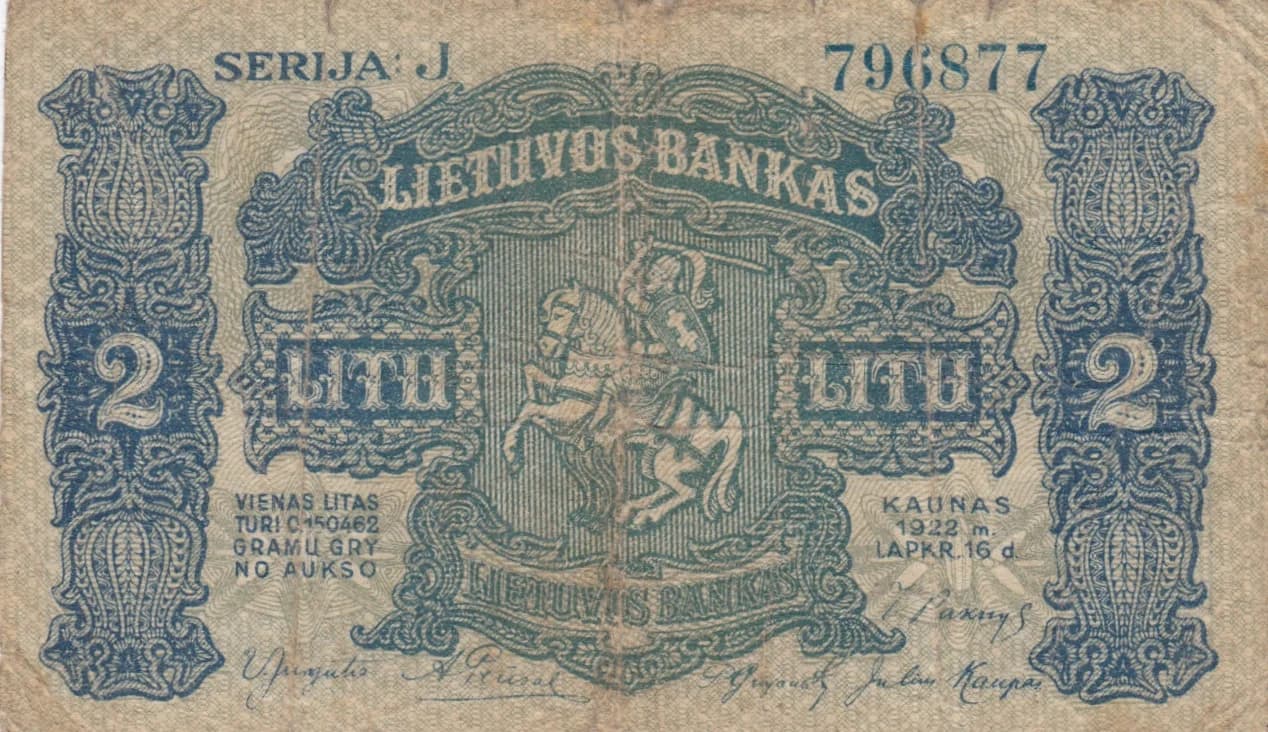
2 litu 1922
“serie C”
Market Prices
4 salesAbout This Note
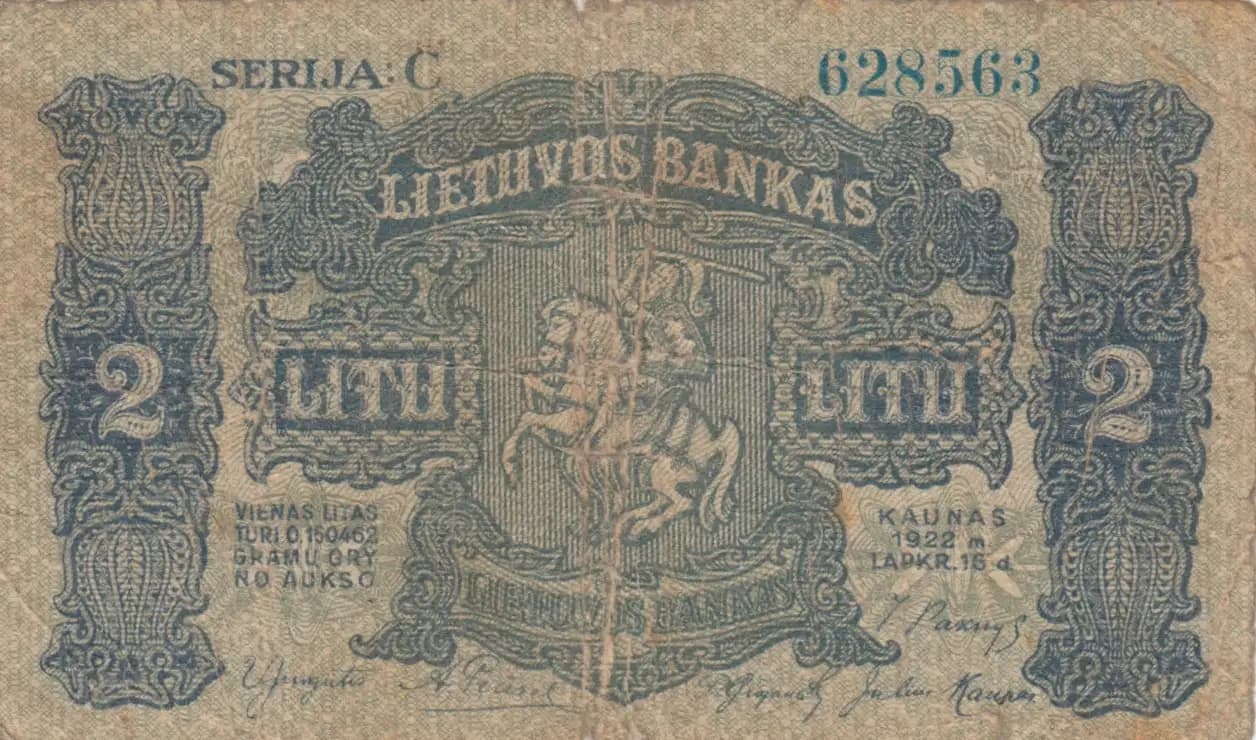
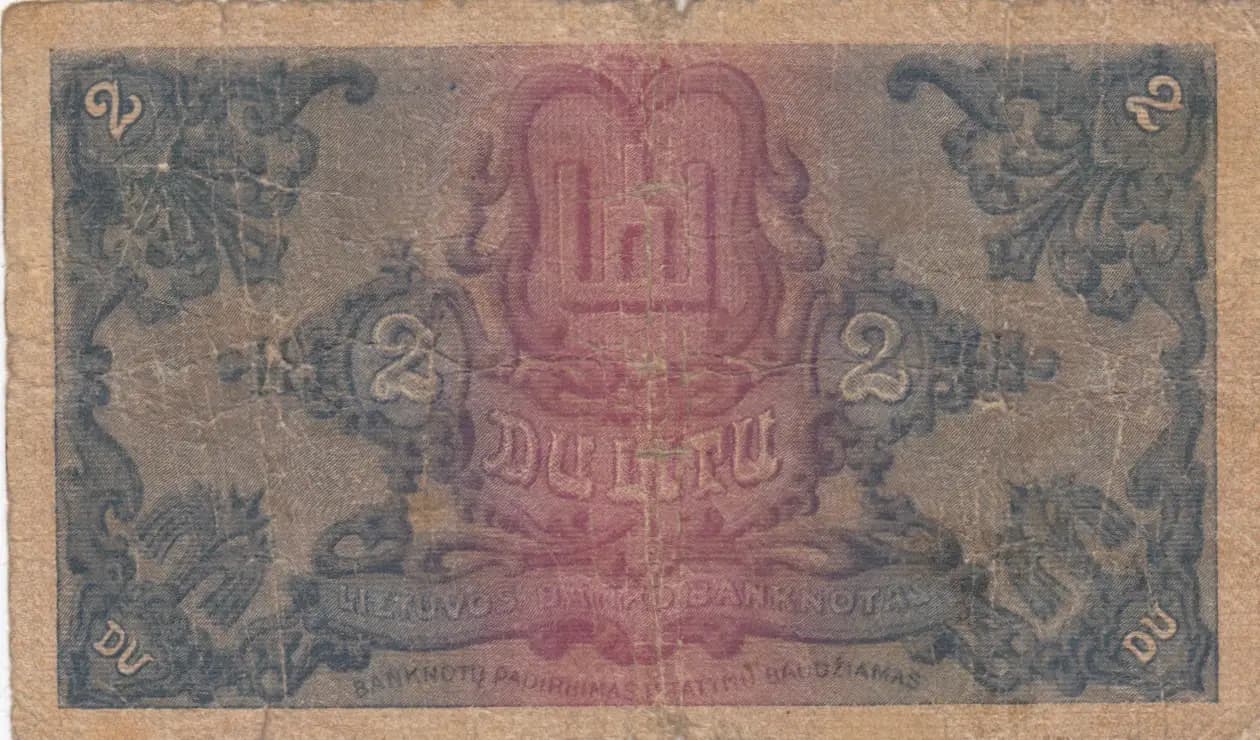
This 2 litu banknote from 1922 represents an early emission of independent Lithuania's currency, issued by Lietuvos Bankas in Kaunas. The note displays the characteristic Vytis (Lithuanian knight on horseback) on the front and an ornate architectural structure on the reverse, rendered in burgundy and grayish-blue tones. In VG condition with visible creasing, foxing, and age-related wear, this Series C example (serial 628563) reflects the circulation history of Lithuania's first national currency during a pivotal period of independence.
Common. Although early Lithuanian issues have historical significance, the 2 litu P-14 from 1922 remains relatively common in the numismatic market. Auction records show examples selling in the $78-182 range for F-VG grades, with 2016 catalogue valuations placing VG examples at $200, indicating steady but not exceptional demand. The note was issued in reasonable quantities for circulation, and multiple examples remain available to collectors. The observed condition (VG) aligns with typical pricing data from realized eBay sales.
This 1922 banknote was issued during Lithuania's early years of independence following World War I and the Russian Revolution, representing the newly sovereign nation's establishment of its own monetary system. The Vytis—the heraldic knight depicted on the front—is Lithuania's national symbol dating back to the Grand Duchy period, chosen to emphasize continuity and national identity. The architectural structure on the reverse likely represents a significant Lithuanian building, serving as a symbol of the nation's institutional stability during this formative period of statehood.
The obverse features a central coat of arms displaying the Vytis—Lithuania's national heraldic emblem of a knight on horseback—surrounded by symmetrical Baroque-style decorative borders on both sides. The denomination '2' appears in ornamental shield-shaped frames at the bottom corners. The reverse presents a centrally positioned ornate architectural structure rendered in burgundy-wine tones against a grayish-blue background, flanked by decorative corner ornaments in similar Baroque style. Both sides employ fine line engraving with substantial decorative borders characteristic of early 20th-century European banknote design. The overall color scheme combines grayish-blue, tan/beige, and burgundy printing.
Front side: 'SERIJA·C' (Series C), '628563' (serial number), 'LIETUVOS BANKAS' (Bank of Lithuania), 'VIENAI LITAS TURIQ ISGALE' (One litas has validity), 'KAUNAS' (city of issue), '1922' with 'm' (year 1922), 'LADKR·18·4' (printer's production code). Back side: 'DU' (Two), 'LITAI' (Litu—plural of litas, the currency unit).
This note was produced using traditional intaglio (engraved) printing methods, as evidenced by the fine, detailed line work visible in the Vytis design, architectural rendering, and decorative borders. The multi-color printing combining grayish-blue, burgundy, and tan inks suggests a multi-pass color engraving process typical of security printing from this era. The printer's mark 'LADKR·18·4' visible on the note indicates the specific production batch or printer involved, consistent with early Lithuanian security printing practices.
This example represents the P-14a variety as catalogued by Pick and PMG, identified as Series C with serial number 628563. The PMG population report indicates two catalogued variants (P-14a and P-14s3), with this being a standard circulation issue rather than a specimen note. The specific series designation 'C' and serial number provide individual identification for collector tracking purposes.