100 litu 1928
Market Prices
11 salesAbout This Note
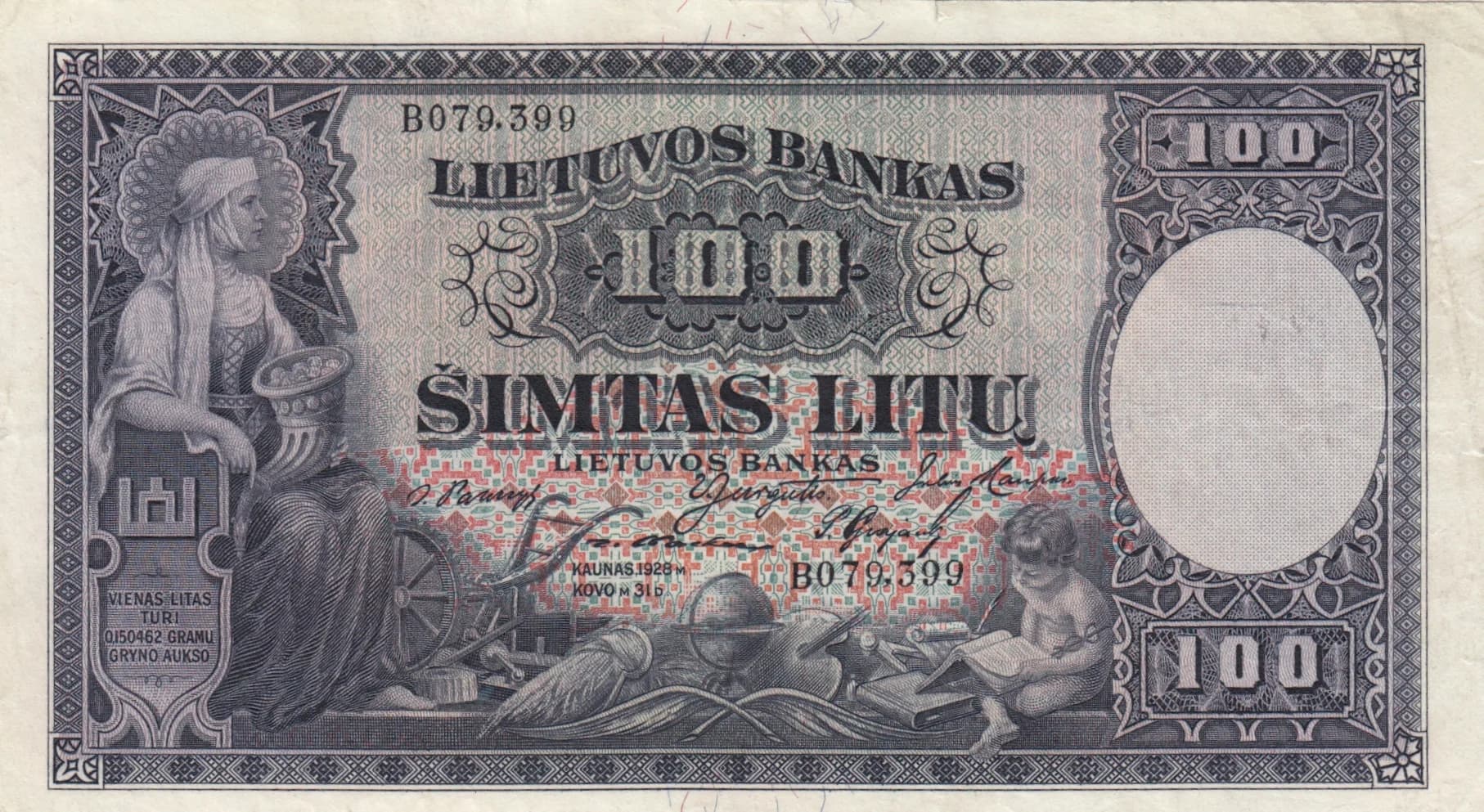
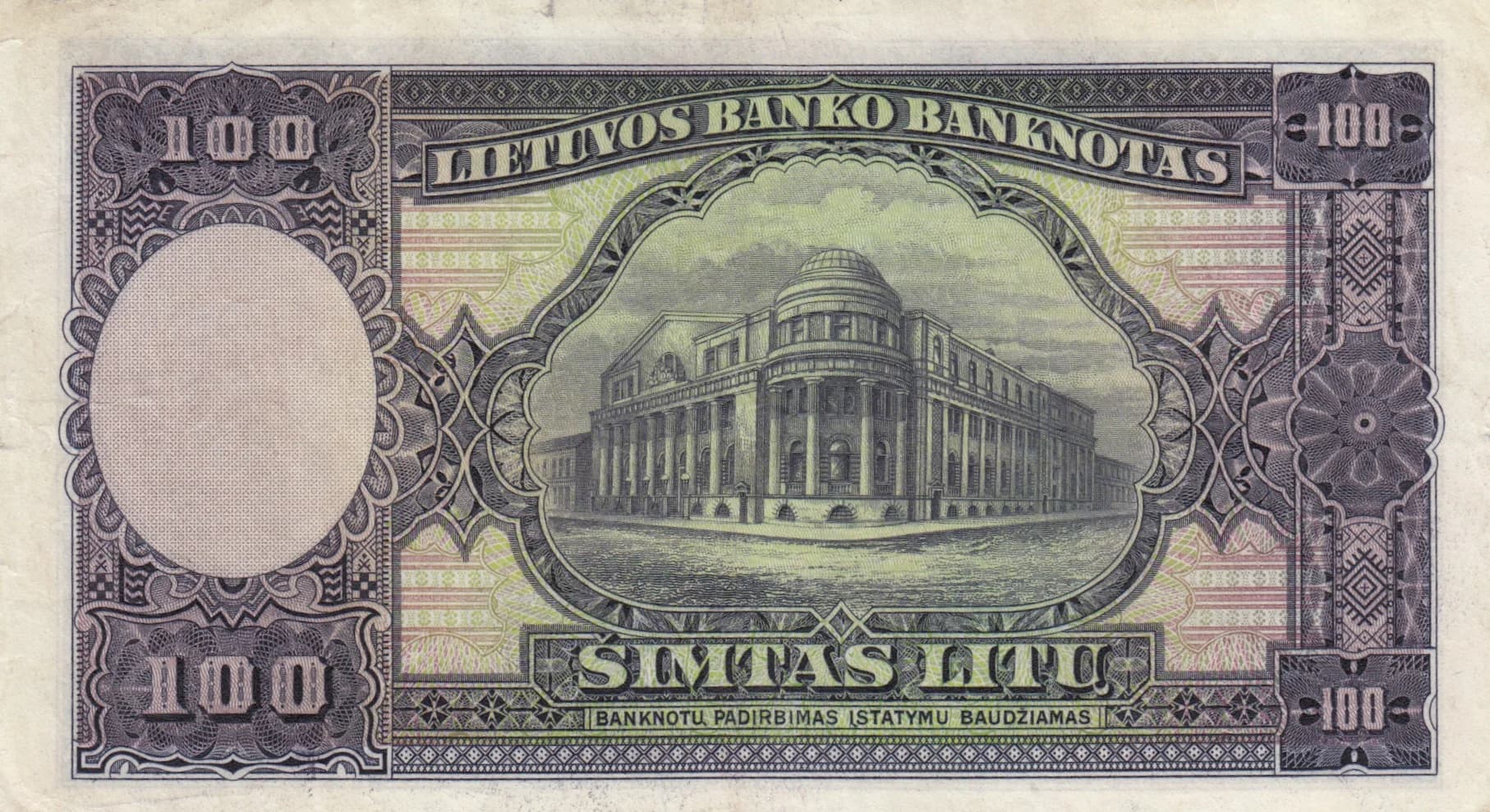
This is a 1928 Lithuanian 100 Litų note issued by Lietuvos Bankas, graded EF, representing an important piece of early interwar Lithuanian numismatics. The note features a portrait of a woman in traditional Lithuanian dress on the obverse and the iconic Lietuvos Bankas building in Kaunas on the reverse, both rendered with fine engraved detail. Despite visible signs of age including foxing, creasing, and wear consistent with historical circulation, the note retains excellent structural integrity and legibility—a desirable example for collectors of Baltic currency.
Common. eBay transaction data shows consistent availability with regular sales spanning from 2009 to 2025, with prices in the $25–$157 range depending on condition. The 2016 catalog value of $70–$250 across VG–UNC grades reflects a note with adequate but not exceptional scarcity. Standard catalog presence and regular market circulation confirm this as a typical interwar Lithuanian issue without restricted print run or recall status.
Issued on March 31, 1928, this note represents Lithuania's monetary sovereignty during the interwar period, shortly after independence from the Russian Empire. The prominent depiction of the Lietuvos Bankas building in Kaunas reflects the nation's choice of Kaunas as its temporary capital and the centrality of banking institutions to the young republic's economic identity. The traditional Lithuanian imagery—the woman in national dress with vessel—symbolized cultural revival and national identity during this formative period of Lithuanian statehood.
The obverse features an allegorical portrait of a Lithuanian woman in traditional national costume with elaborate headdress, depicted holding a vessel or basket—symbolizing fertility, harvest, and Lithuanian cultural heritage. She is framed within an ornate oval cartouche on the left side of the note. The design incorporates Celtic or Lithuanian cross motifs in the top corners and geometric decorative borders throughout. A red overprint crosses the center as a security measure. The reverse displays the neoclassical Lietuvos Bankas building in Kaunas as the central architectural element, featuring a prominent dome, columned facade, and symmetrical design typical of institutional banking architecture of the 1920s. Oval frames and geometric patterns mirror the front's decorative vocabulary. Both sides employ the purple/navy and green color palette characteristic of this issue.
FRONT: 'LIETUVOS BANKAS' (Bank of Lithuania), '100' / 'ŠIMTAS LITŲ' (One Hundred Litas), 'VIENAS LITAS' (One Lita), 'KAUNAS 1928 M' (Kaunas 1928), 'KOvo 9 D.' (March 9), Serial number 'B079.399' (appears top and bottom right). BACK: '100' (repeated in all four corners), 'LIETUVOS BANKO BANKNOTAS' (Bank of Lithuania Banknote), 'ŠIMTAS LITŲ' (One Hundred Litas), 'BANKNOTU PADIRBIMAS ISTATYMU BAUDZIAMAS' (Counterfeiting of Banknotes is Punishable by Law).
Intaglio (engraved) printing, executed by BWC (Brüder Werthmüller & Co.), a noted Swiss security printer. The fine line work visible in the architectural detail, facial features, and decorative patterns confirms intaglio methodology. The red overprint text was applied as a secondary security feature, likely through lithography or additional overprinting.
This note is cataloged as Pick P-25a, the primary variant printed by BWC (Brüder Werthmüller & Co.). The visual analysis shows serial number B079.399, indicating a standard circulation example from the main print series. The red overprint and March 9, 1928 date are consistent with the initial issue specifications. A specimen variety (P-25s) exists but is distinct from this circulation note.