10 litu 1927
“serie G”
Market Prices
3 salesAbout This Note
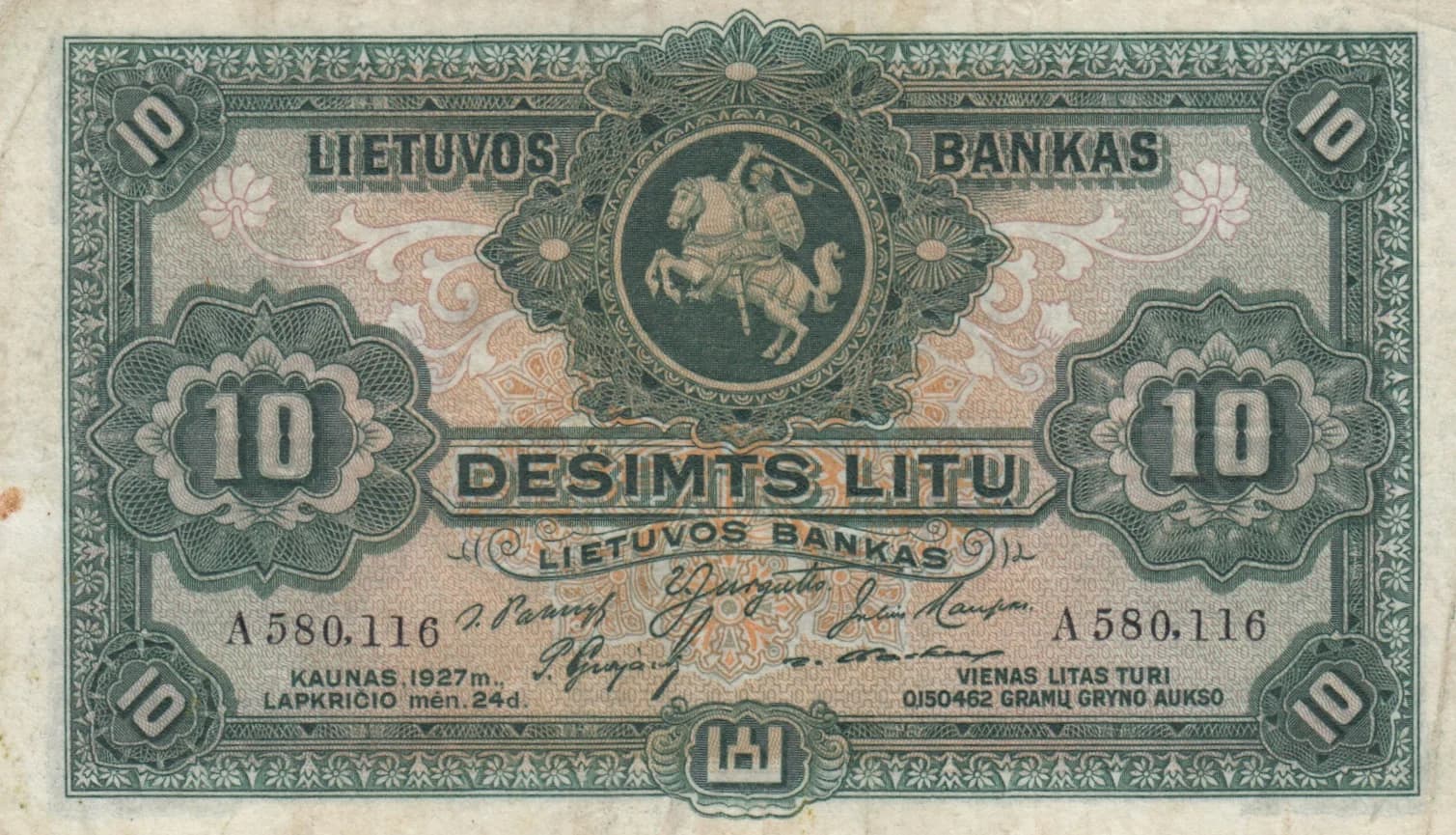
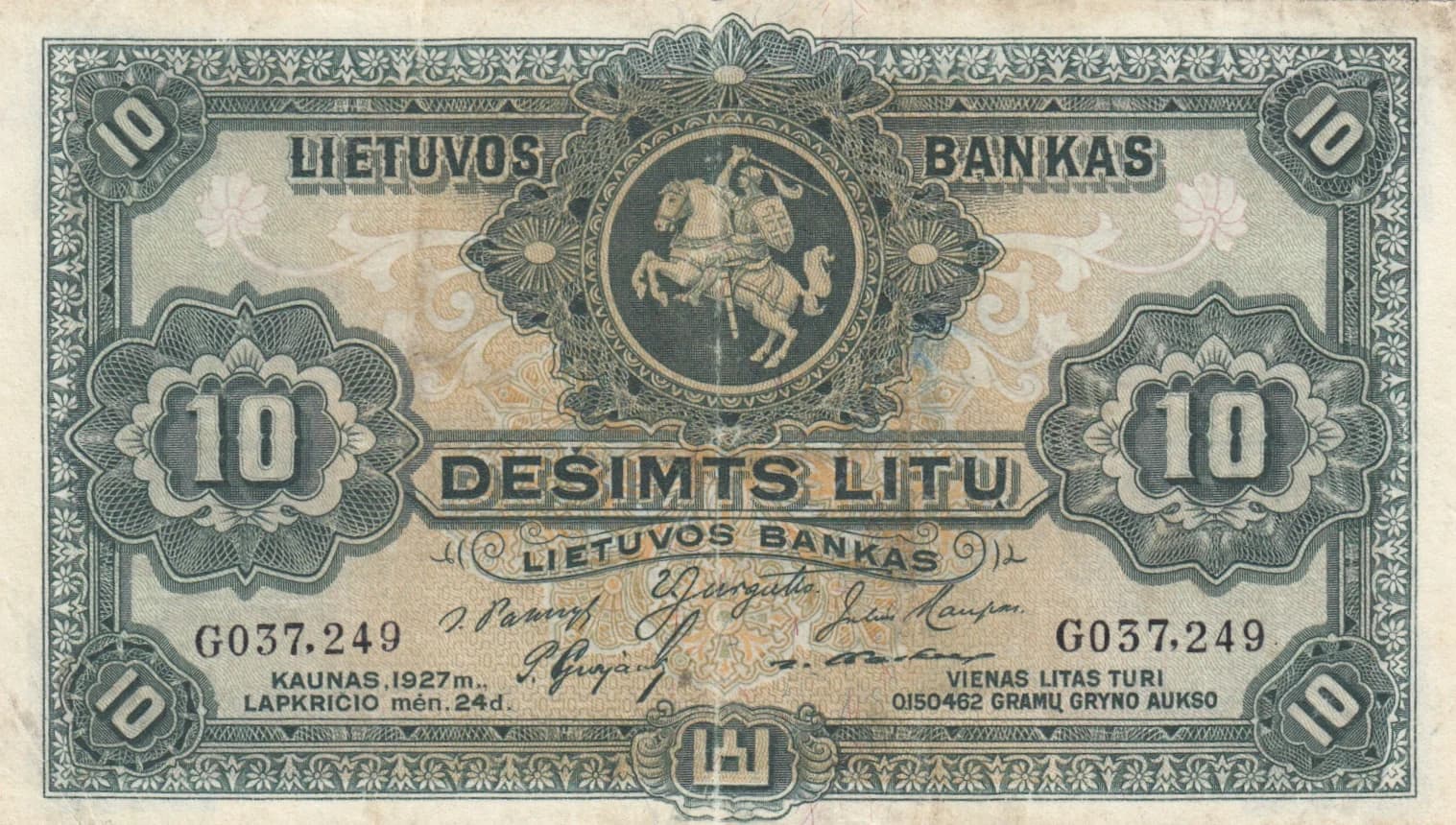
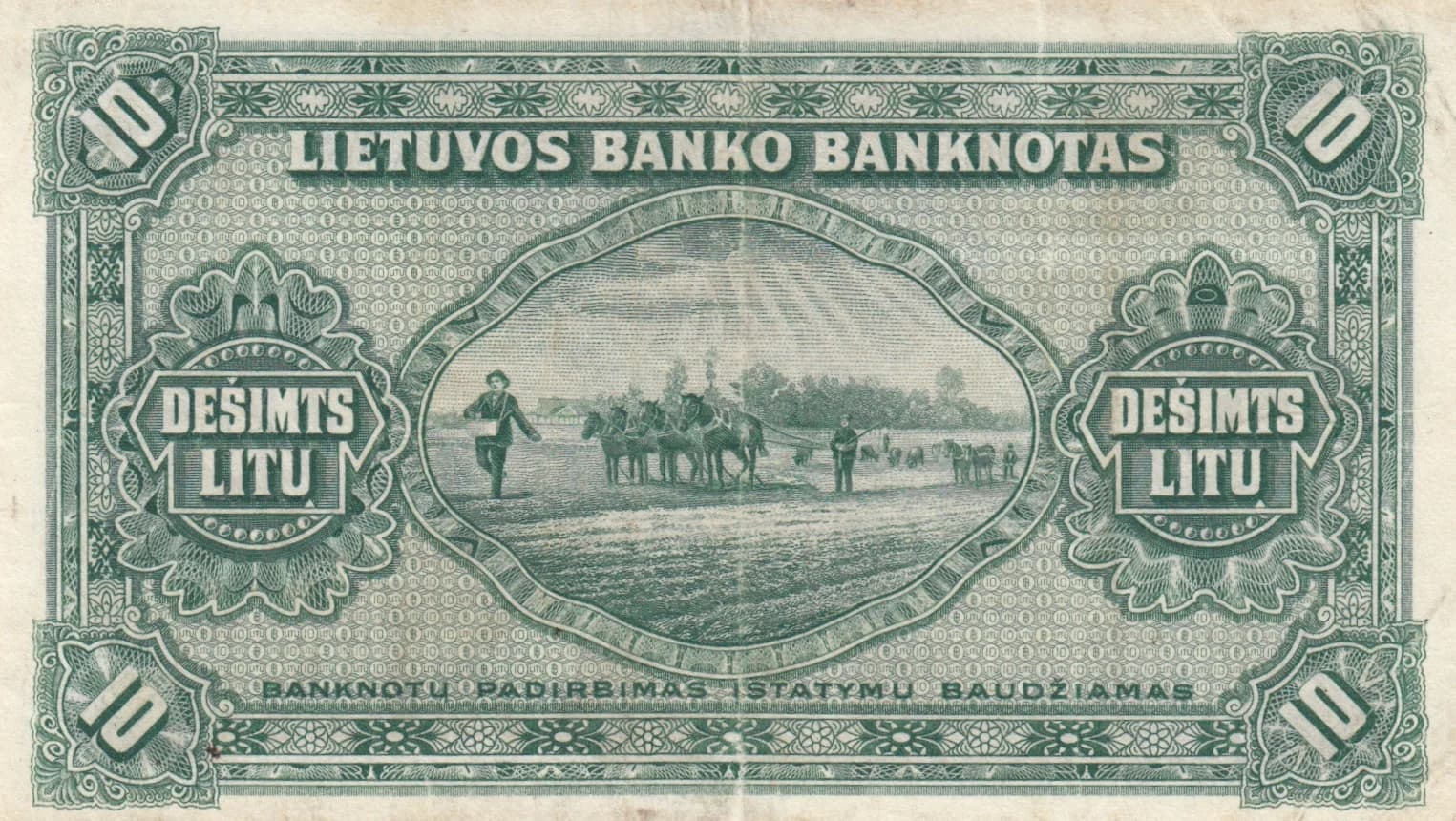
This is a VF-grade Lithuanian 10 litu banknote from 1927, the first year of Lithuanian currency independence. The note features an exceptional equestrian portrait in a circular medallion on the obverse, paired with an agricultural scene on the reverse, both rendered in intricate line engraving. Despite visible age-related creasing and foxing consistent with nearly a century of circulation, the note retains excellent detail clarity and the characteristic aged patina of the period, making it a desirable example of early Lithuanian numismatic design.
Common. The 1927 10 litu (Pick 23) was part of the initial currency issue of the independent Lithuanian state and had a substantial circulation. No evidence of a small print run, early recall, or short-lived issuing period exists. Notes from this series regularly appear in the collector market in various condition grades. The VF grade and series G variety are not rare variants.
Issued on November 24, 1927, by Lietuvos Bankas in Kaunas, this banknote represents Lithuania's transition to independent monetary sovereignty following World War I and the establishment of the Lithuanian state. The obverse portrait depicts a military or national figure on horseback—likely a historical or mythological Lithuanian hero symbolizing national independence and strength—while the reverse's agricultural scene emphasizes the nation's agrarian foundation and economic identity during this formative period. The note's inscription confirming gold backing (0.150462 grams of pure gold per litu) reflects the interwar period's gold standard monetary system.
The obverse features a right-facing equestrian portrait of a military or national hero in formal/military attire, enclosed within an ornately framed circular medallion. The figure and horse are rendered with exceptional fine-line engraving detail. The design employs symmetrical Art Deco-influenced ornamental borders with elaborate floral and vine motifs, shell-and-fan corner elements, and heraldic cartouches containing double-headed eagles—Lithuanian national symbols. The reverse depicts a rural agricultural scene with multiple farmers or agricultural workers operating horse-drawn equipment in an open field with trees in the background, again set within a circular medallion. Both sides utilize the same decorative vocabulary of corner ornaments, geometric pattern fills, and cartouches. The color scheme combines green, gray, cream/beige, and black inks characteristic of interwar European banknote design.
FRONT: 'LIETUVOS BANKAS' (Bank of Lithuania); 'DESIMTS LITU' (Ten litu); '10' (denomination); 'KAUNAS,1927m. LAPKRICIO men.24d.' (Kaunas, 1927, November 24th); 'VIENAS LITAS TURI OI50462 GRAMU GRYNO AUKSO' (One litu contains 0.150462 grams of pure gold); Serial number 'G037.249'. BACK: 'LIETUVOS BANKO BANKNOTAS' (Bank of Lithuania banknote); 'DESIMTS LITU' (Ten litu); '10' (denomination); 'BANKNOTU PADIRBIMAS ISTATYMU BAUDZIAMAE' (Counterfeiting banknotes is punishable by law).
Intaglio line engraving throughout, executed with exceptional intricacy evidenced by the fine detail visible in both the portrait and landscape scenes despite nearly a century of circulation and aging. The complex ornamental borders, repeating geometric background patterns, and security features (fine line work, intricate scrollwork) are consistent with production by a specialized security printer. Based on Lithuanian banknote history, this note was likely produced by a major European security printer contracted by Lietuvos Bankas during the 1920s, though the specific printer attribution requires specialized research.
Serial number G037.249 indicates this note belongs to series G. The date is fixed as November 24, 1927. No known major varieties (such as different signatures, overprints, or design modifications) are documented for the standard 1927 10 litu issue. Varieties, if any, would be identified by changes in bank officer signatures (visible in the center area) or serial number prefixes, but the G-series appears to be part of the standard first issue.