5 livres 1964
Market Prices
5 salesAbout This Note
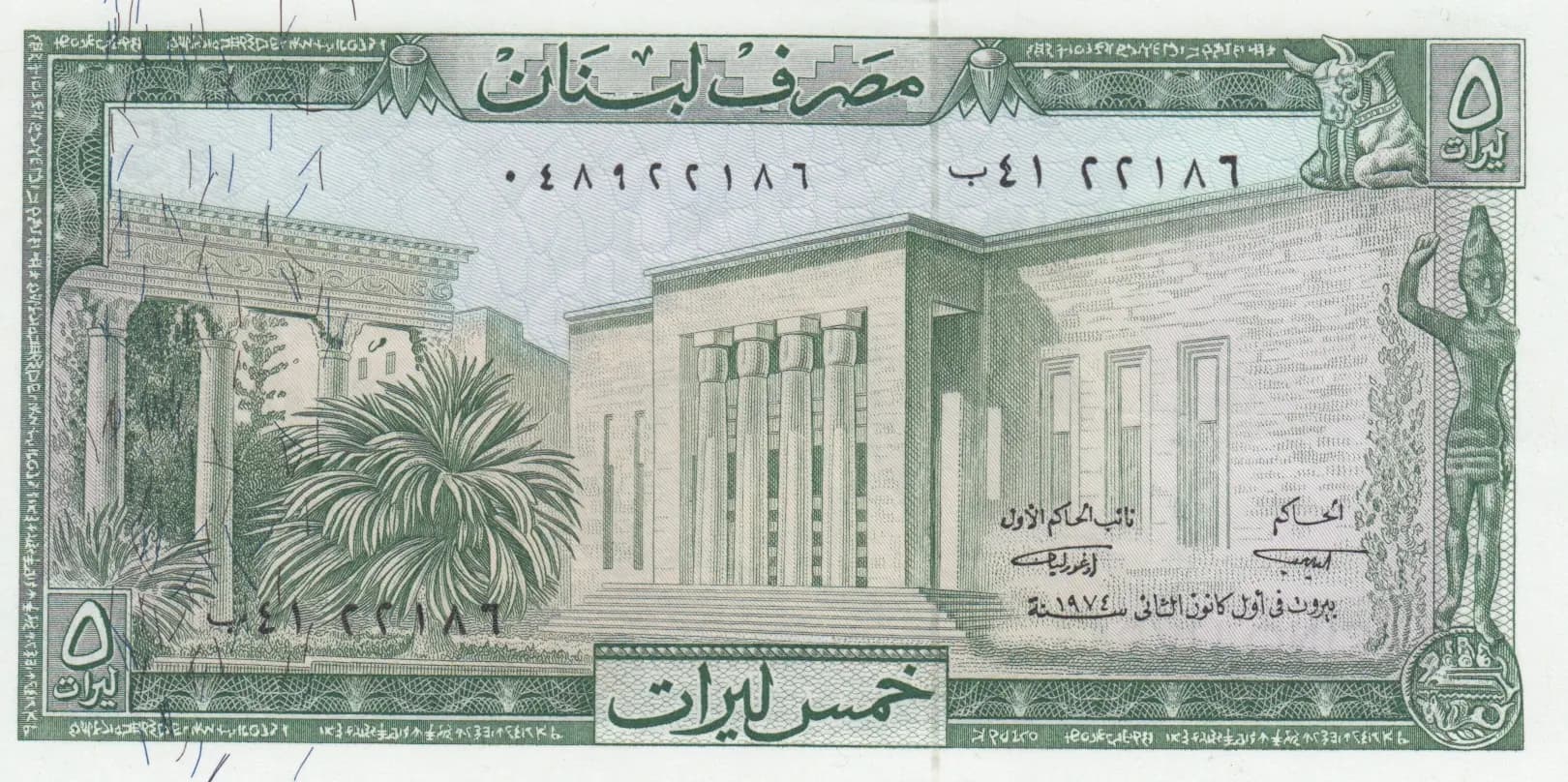
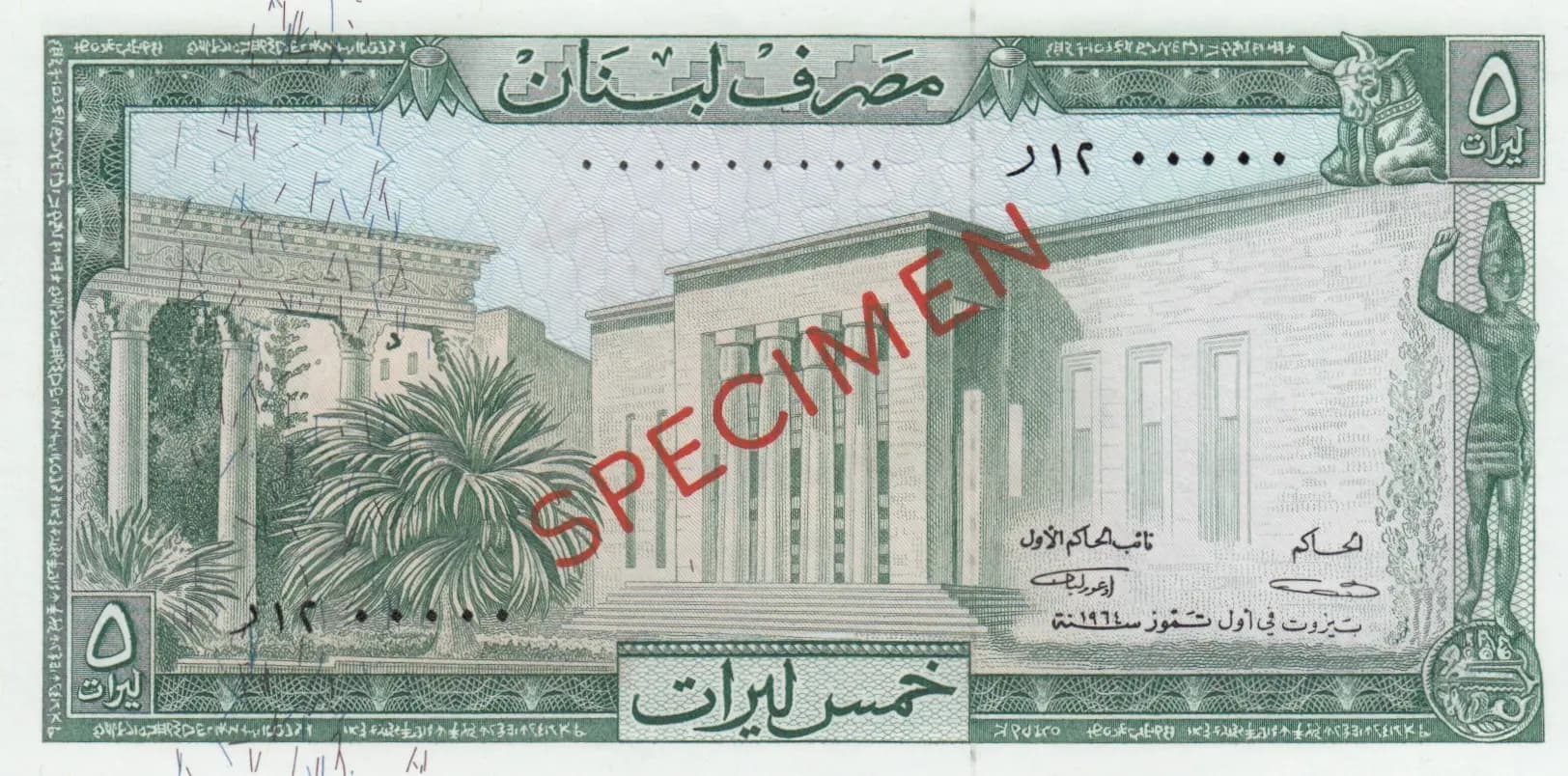
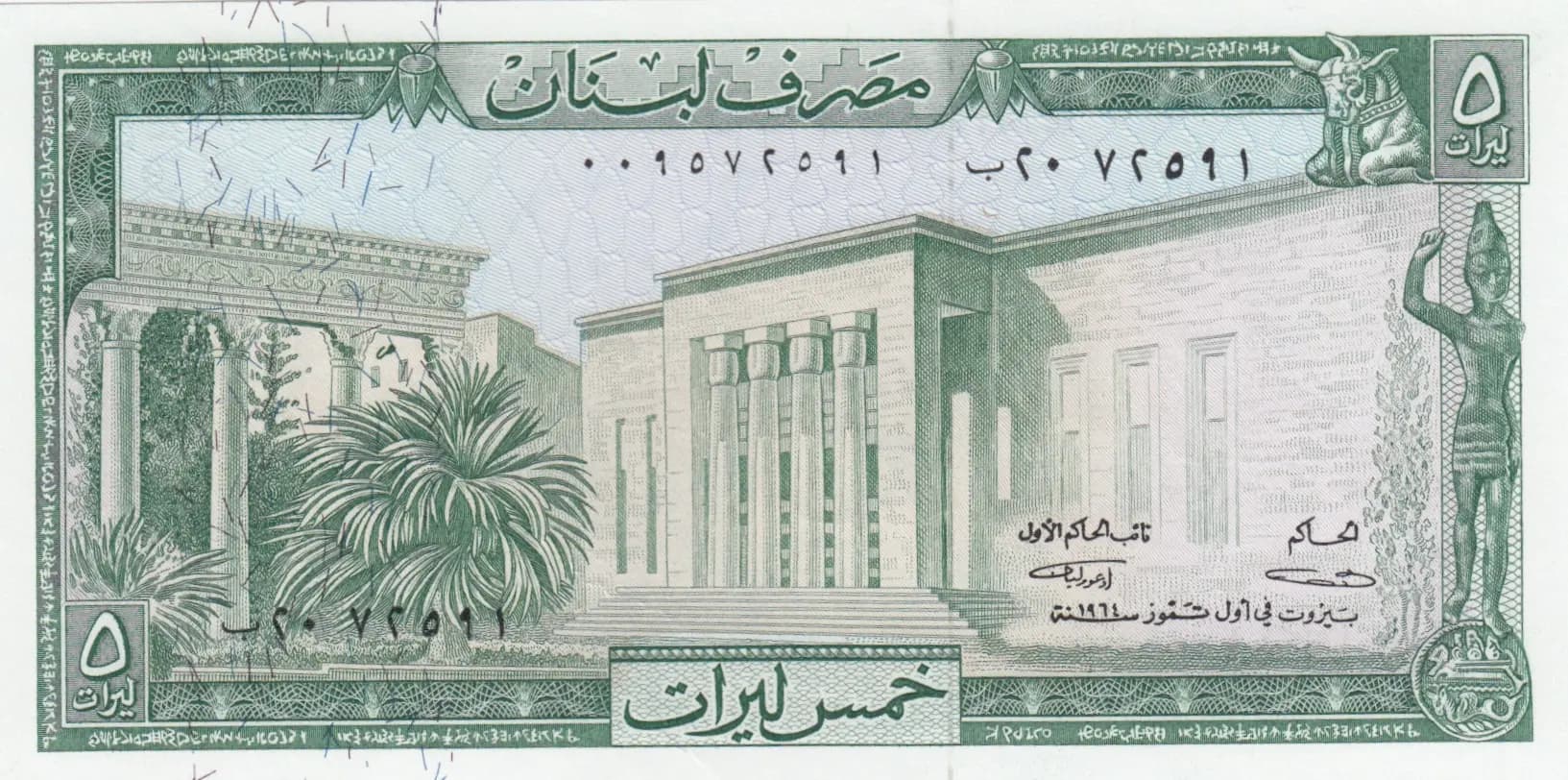
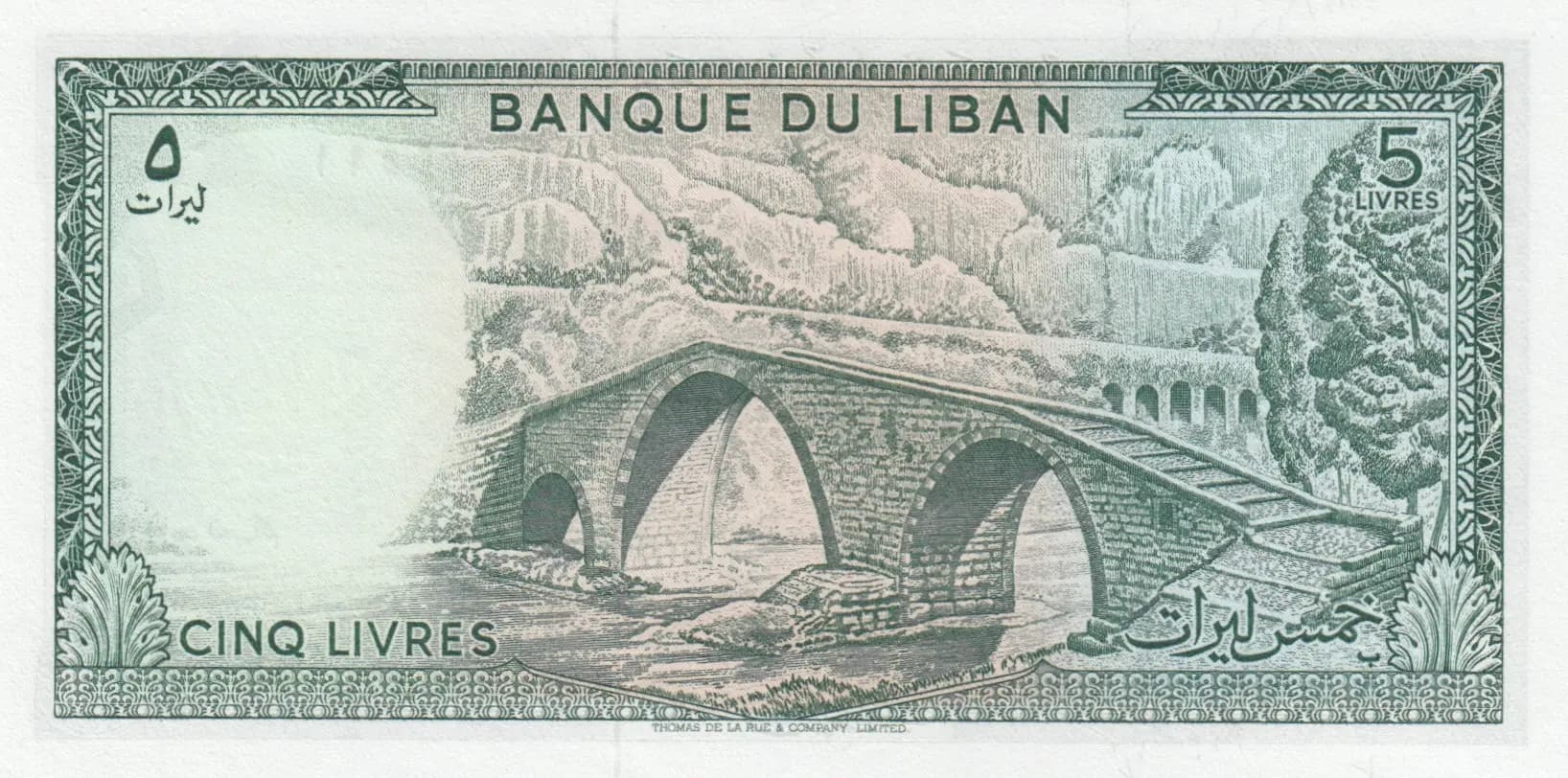
This is a Lebanese 5 Livres banknote from 1964, issued by Banque du Liban and printed by Thomas de la Rue in London. The obverse features the National Museum of Beirut with classical columned architecture and a palm tree, rendered in green tones with fine ornamental borders, while the reverse depicts a multi-arch stone bridge spanning the River Kalb with forested mountainous landscape. The note displays the characteristic bilingual design (Arabic and French/English) typical of Lebanese currency from this era.
Common. The eBay sold price data shows consistent trading in the $5–$113 range depending on condition, with multiple sales documented over a 6-year period (2015–2021). The 2019 catalog value for UNC is listed at $40, and an actual UNC example sold for $113.61 in November 2016. This regular-issue banknote from a major issuer with no documented print run restrictions or recall history shows the trading patterns typical of common, widely available notes. The denomination and 1964–1986 issue window indicate a substantial print run.
This 1964 issue represents Lebanon during a relatively stable period of the mid-20th century, before the country's later political turmoil. The National Museum depicted on the obverse symbolized Lebanon's cultural heritage and modernization aspirations of the 1960s. The River Kalb bridge on the reverse represents the infrastructure development and natural geography of the Levantine nation, reflecting the banknote's role in documenting Lebanon's institutional identity during this specific historical moment.
The obverse features the Banque du Liban building (also referenced as the National Museum of Beirut) as the primary architectural centerpiece, rendered with vertical classical columns and institutional modernist styling. A prominent palm tree in the foreground reinforces the Lebanese/Mediterranean identity. The reverse showcases the multi-arched stone bridge over the River Kalb (Nahr al-Kalb), a historically significant natural landmark in Lebanese geography, depicted with detailed landscape engraving showing evergreen forests and mountainous terrain typical of the Lebanese interior. Both sides employ ornate decorative guilloche borders with floral corner ornaments, characteristic of high-security banknote design from this period.
OBVERSE: مصرف لبنان (Banque du Liban / Bank of Lebanon), خمس لیرات (Five Livres), حاكم (Governor), أول تشرين سنة (October [date notation]), plus serial numbers 0072511 and 001574500, and denomination 5. REVERSE: BANQUE DU LIBAN (Bank of Lebanon - French), CINQ LIVRES (Five Livres - French), 5 LIVRES (denomination - French), لیرات (Livres - Arabic), THOMAS DE LA RUE & COMPANY LIMITED (printer credit - English).
Intaglio engraving (line engraving), the standard security printing method for banknotes of this era. Produced by Thomas de la Rue & Company Limited in London, one of the world's premier security printers. The fine line work visible in the architectural details, landscape rendering, and ornamental borders is consistent with hand-engraved intaglio plates. Security features include dual serial number formats and complex guilloche pattern work throughout.
Pick catalog lists this as P-62a, indicating at least one known variety within the base P-62 designation. The PMG population report confirms P-62s as a catalogued variant. The visual analysis shows specific serial numbers (0072511 and 001574500), which are individual to this specimen but do not necessarily indicate a catalogued variety. Serial number prefixes, signature varieties, and date variations are typical distinguishing features for Lebanese notes of this period; however, without additional specimens or comprehensive variety literature, the exact variety classification beyond P-62a cannot be determined from the available evidence.