5 piastres 1942
“w stamp”
Market Prices
22 salesAbout This Note
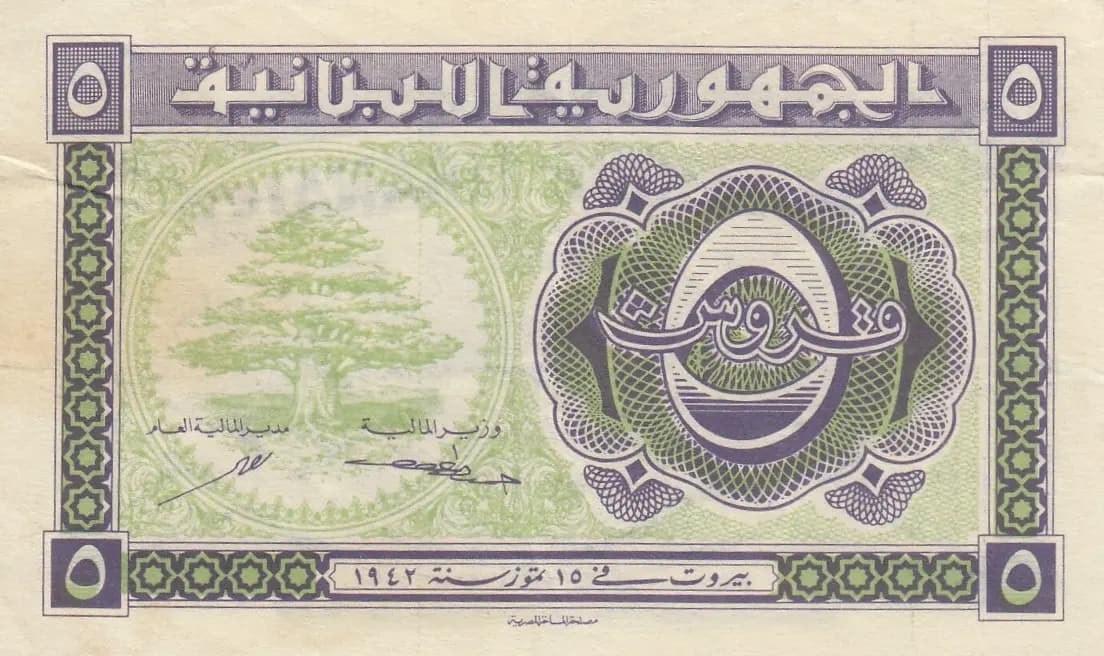
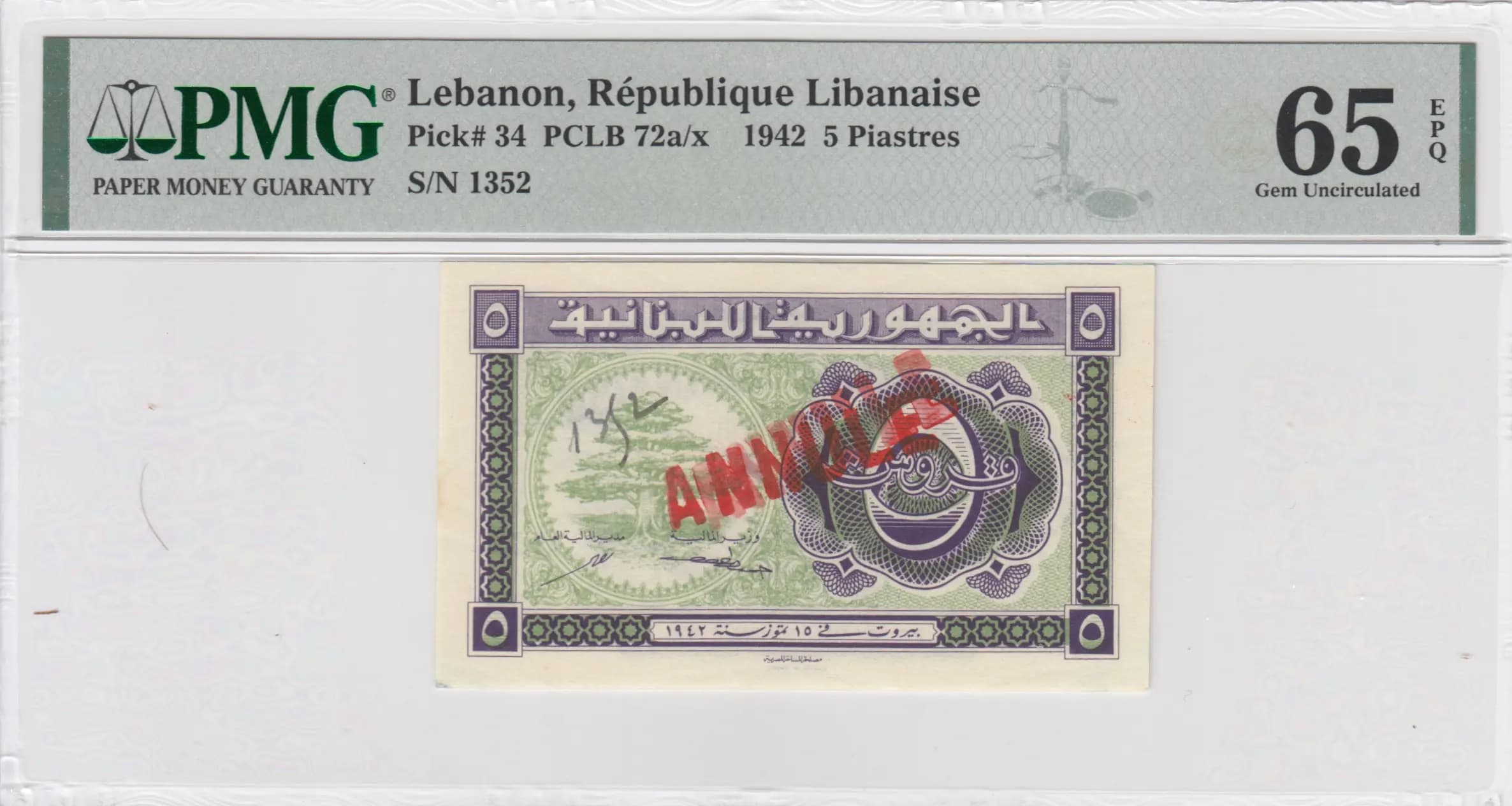
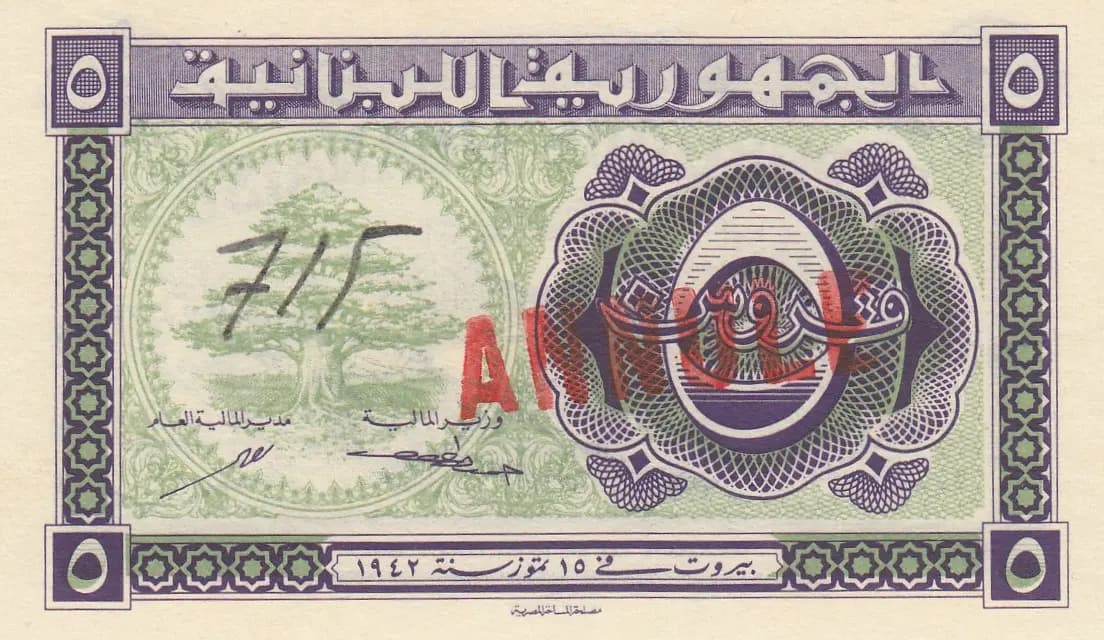
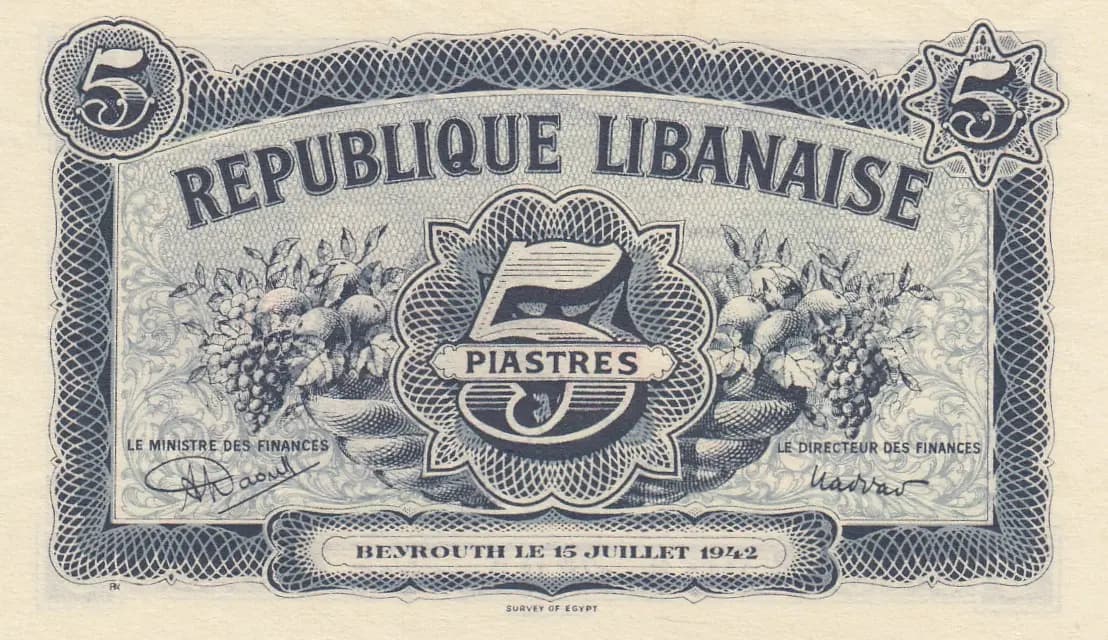
This Lebanon 5 Piastres note from July 15, 1942 (Pick P-34) presents an attractive example of early Lebanese currency featuring iconic national imagery: the cedar tree on the obverse and grape vines on the reverse. While the catalog grade indicates UNC condition, the visual analysis reveals moderate circulation wear including pen markings and red overprinting/stamping (noted as 'w stamp' in collector notes), suggesting this specimen is more accurately positioned in the AU-VF range despite its cataloged grade. The note's bilingual design (Arabic obverse, French reverse) and Survey of Egypt printing reflect Lebanon's post-mandate status and cosmopolitan character during the early independence period.
Common. The eBay market data demonstrates consistent, modest pricing across multiple grades and sales spanning from 2010 to 2025, with most circulated examples (F, VF, VG) selling in the $2–$27 range, and even higher-grade specimens (EF, AUNC, PMG 61) typically achieving $30–$50. The note's catalog value of $35 UNC reflects ordinary market demand. The regular issue status and lack of mention of restricted print runs or recalls, combined with consistent availability in auction records, indicates this was produced in quantities sufficient to satisfy historical circulation demand. Despite its age and historical significance, it remains readily obtainable for collectors at modest cost.
Issued in 1942 by the Republique Libanaise, this note was produced during Lebanon's transition to full independence from the French mandate (formally declared in November 1943). The prominent cedar tree symbolizes Lebanese sovereignty and national identity, appearing on the nation's flag and coinage throughout its modern history. The inclusion of French-language inscriptions on the reverse alongside Arabic reflects the bilingual administrative heritage of the mandate period and Lebanon's Francophone cultural orientation during this era.
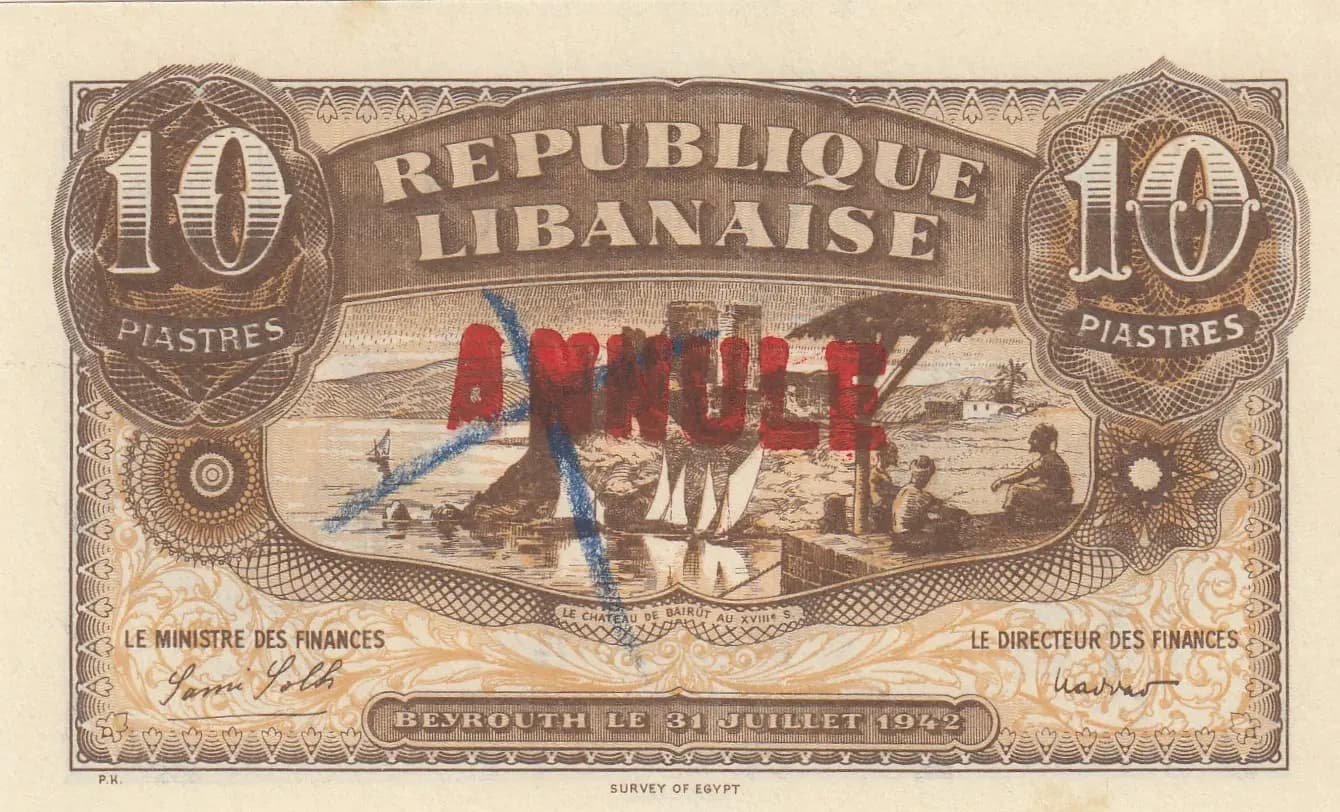
This note features a carefully balanced bilingual design reflecting Lebanon's French-mandate heritage and emerging national identity. The obverse displays a cedar tree—Lebanon's national symbol—in a circular medallion on the left side, rendered in green tones against a purple and cream background. The right side bears an ornate circular emblem containing an eagle (likely the Bank seal or state emblem), surrounded by intricate geometric guilloche patterns and star motifs in the decorative borders. The reverse shifts to a predominantly black and cream palette, centering on an elaborate circular design featuring grape vines with bunches on both sides, symbolizing Lebanese agricultural prosperity. Within this central emblem sits the Lebanese flag alongside the denomination '5 PIASTRES.' Both sides employ fine-line engraving and intricate geometric patterns typical of high-security banknote design of the period. Signatures of the Minister and Director of Finances appear on the reverse.
FRONT (Arabic): 'الجمهورية اللبنانية' (Lebanese Republic); 'وزير المالية' (Minister of Finance); 'مدير المالية' (Director of Finance); 'بيروت 15 يوليو 1942' (Beirut, July 15, 1942); Serial number '711'. BACK (French/English): 'REPUBLIQUE LIBANAISE' (Lebanese Republic); '5 PIASTRES' (denomination); 'LE MINISTRE DES FINANCES' (The Minister of Finance); 'LE DIRECTEUR DES FINANCES' (The Director of Finance); 'BENROUTH LE 15 JUILLET 1942' (Beirut, July 15, 1942); 'SURVEY OF EGYPT' (printer attribution).
Intaglio (engraved) printing on banknote stock, produced by the Survey of Egypt, as credited on the reverse. The note exhibits characteristic intaglio security features including fine-line guilloche patterns throughout, detailed engraved borders with geometric star motifs, and deeply cut ornamental circular designs that are impossible to reproduce without the original printing plates. The intricate engraving of the cedar tree medallion and grape vine vinery, combined with the precision geometric patterns, are hallmarks of high-security bank note production typical of the 1940s security printing standards.
The visual analysis identifies this specimen as bearing a red overprint/stamp (noted in collector notes as 'w stamp') and visible pen markings including '711' across the cedar medallion area. This suggests a post-issue bank or treasury marking, possibly a cancellation, sorting, or archival stamp applied after production. The PMG population report indicates only one variant cataloged for Pick P-34, suggesting no major varieties have been formally distinguished by grading services. The specific overprinting on this example, while reducing its commercial grade, may be of collector interest as evidence of handling and treasury processing during the note's active circulation period.