10 piastres 1942
Market Prices
5 salesAbout This Note
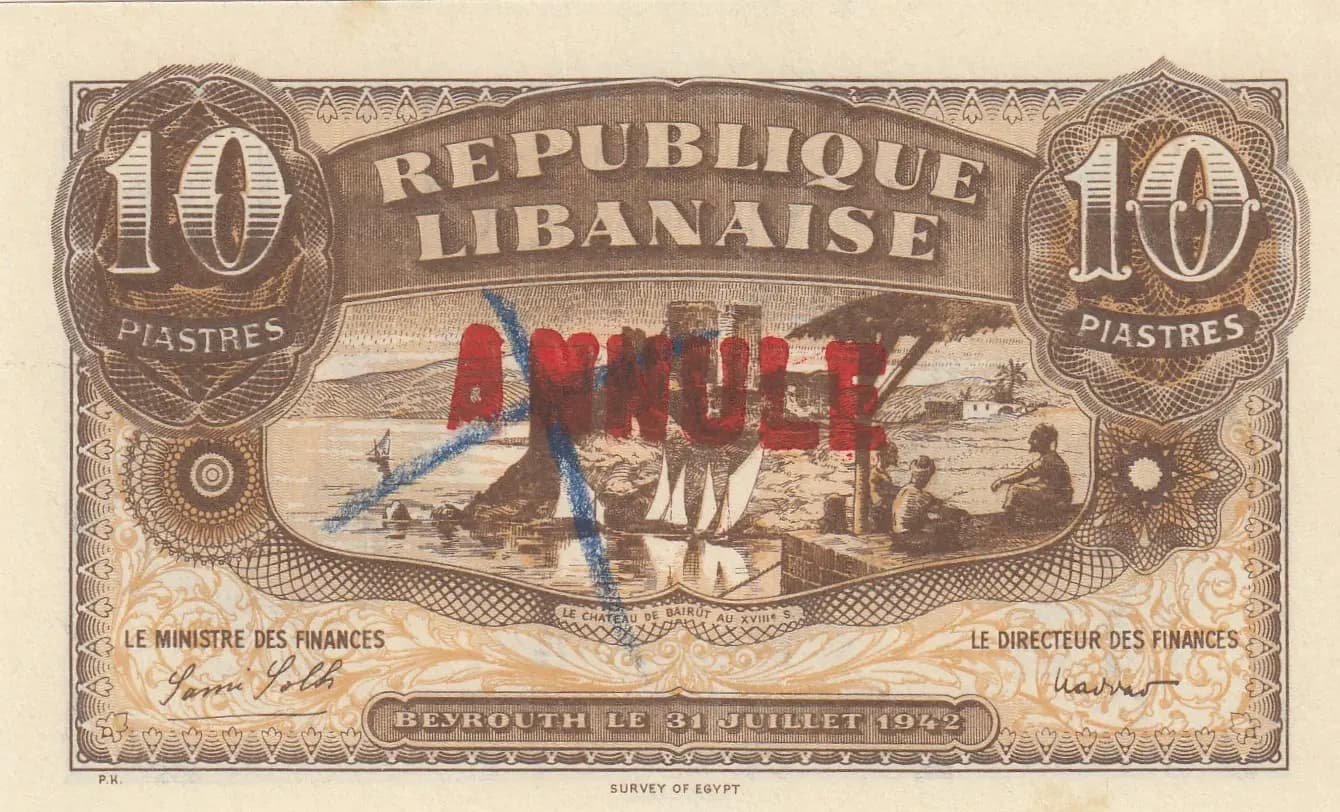
A 1942 Lebanese 10 Piastres note issued by the République Libanaise and printed by Survey of Egypt. This particular specimen features a prominent red and blue 'ANNULE' (cancelled) overprint across the front, indicating it was officially withdrawn from circulation. The note displays classical engraved design work with ornate geometric borders and a central vignette depicting the 18th-century Château d'Alireh with riverside architecture, typical of early Lebanese currency design during the French mandate period.
Common. The eBay price tracking data shows VF specimens selling in the $34-106 range with consistent market activity, and catalogue values place UNC examples at only $45 (2016 pricing). Regular circulation is evidenced by multiple graded examples and steady auction results. There is no evidence of a limited print run or short-lived issue. This is a standard regular issue from the early Lebanese Republic period with moderate collector interest but no scarcity premium.
Issued on July 2, 1942, during Lebanon's transition toward independence from the French mandate (achieved in 1943), this note reflects the period when the République Libanaise was establishing its own monetary authority. The bilingual French-Arabic inscriptions and the depicted Château d'Alireh landmark represent Lebanon's cultural heritage and the nation's effort to establish identity through its currency design. The use of 'Survey of Egypt' as printer indicates the broader regional printing practices of the Middle East during the mid-20th century.
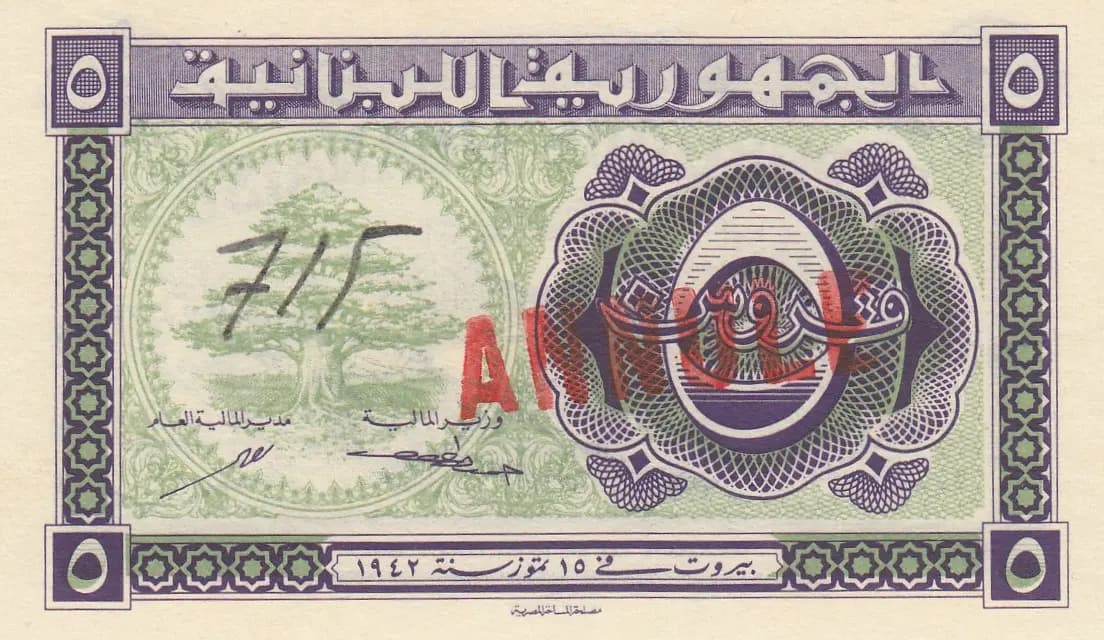
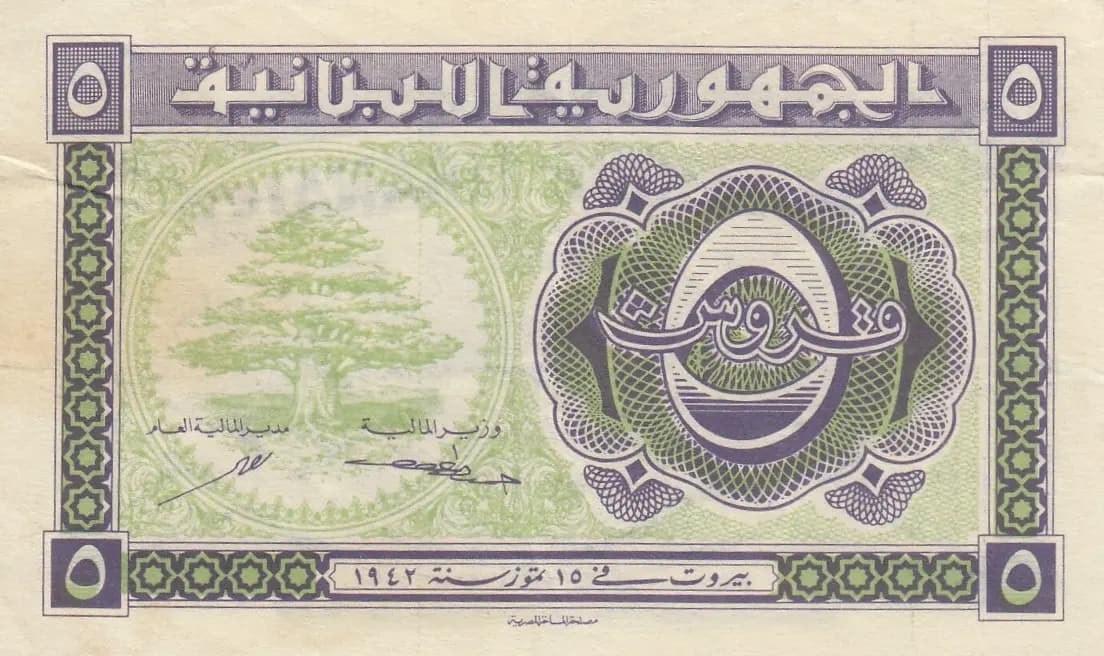
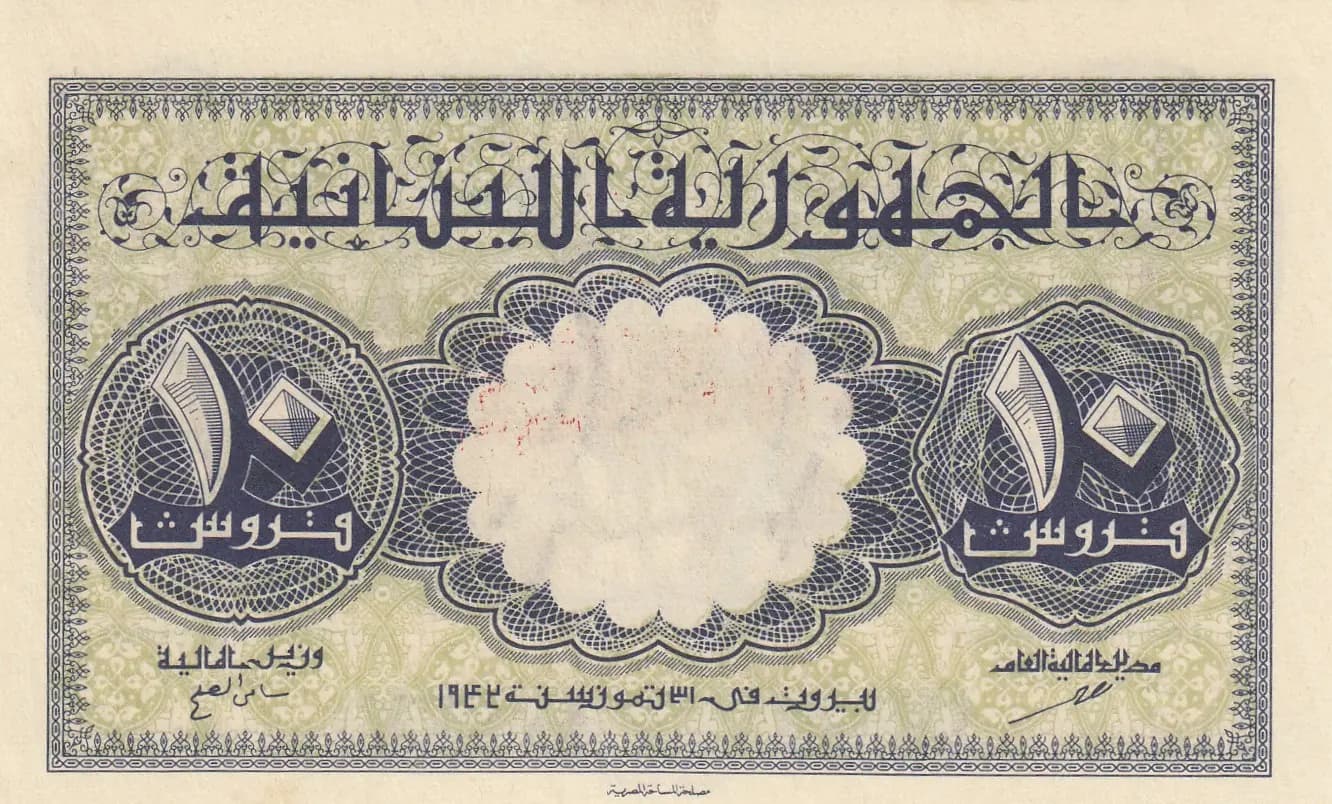
The front features a classical engraved landscape vignette in the center depicting the Château d'Alireh (an 18th-century riverside fortress) with surrounding buildings, boats, and figures engaged in daily activities along the waterfront. Ornamental circles containing the denomination '10' flank both sides, with intricate geometric and floral decorative borders forming a traditional security frame. The back adopts a more minimalist Islamic aesthetic with a large scalloped oval medallion in the center (left blank), flanked by two circular coat-of-arms emblems, surrounded by fine geometric Islamic pattern borders and traditional floral elements. The entire design emphasizes fine-line engraving with sophisticated crosshatching and border work typical of mandate-era Middle Eastern currency.
FRONT: République Libanaise (Lebanese Republic) | 10 Piastres (denomination) | Le Ministre des Finances (The Minister of Finance) | Le Directeur des Finances (The Director of Finance) | Le Château d'Alireh XVIIIe (The Castle of Alireh, 18th Century) | Beyrouth le 2 Juillet 1942 (Beirut, July 2, 1942) | Survey of Egypt (printer) | P.K. (initials) | ANNULE (Cancelled/Annulled - overprint). BACK: جمهورية لبنان (Lebanese Republic) | عشرة فروق (Ten Piastres) | وزارة المالية (Ministry of Finance) | مصلحة المالية العام (General Finance Service) | Reference to 1942 date in Arabic inscriptions.
Intaglio engraving (line engraving) combined with traditional letterpress elements. The note was printed by Survey of Egypt, a recognized security printer of the period. The fine geometric crosshatching, ornamental borders, and detailed landscape vignette are characteristic of high-quality intaglio work. The ANNULE overprint appears to have been applied separately in red and blue, likely through a stamp or additional printing pass.
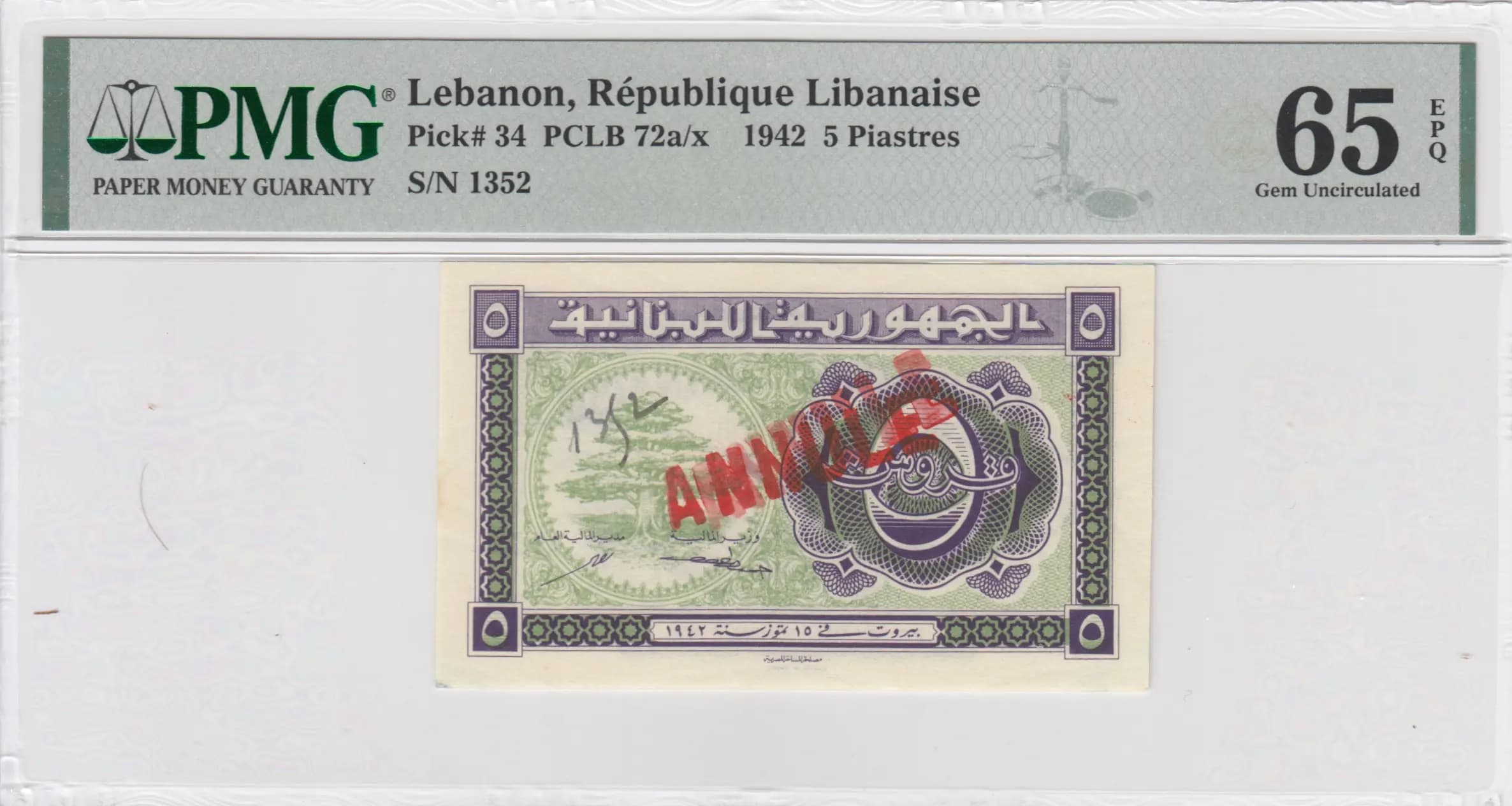
This specimen is the base P-35 variety with the ANNULE cancellation overprint. The PMG population data indicates three catalogued varieties exist for this Pick number (P-35, P-35s, and P-35sp), likely representing different signature combinations or printing variations. The specific date inscription 'Beyrouth le 2 Juillet 1942' and printer attribution to 'Survey of Egypt' with initials 'P.K.' are characteristic of this standard printing. The cancellation overprint itself, while official and therefore legitimate, distinguishes this specimen from circulating uncancelled examples and likely affects its appeal to collectors seeking pristine, unaltered specimens.