100 livres 1967
Market Prices
3 salesAbout This Note
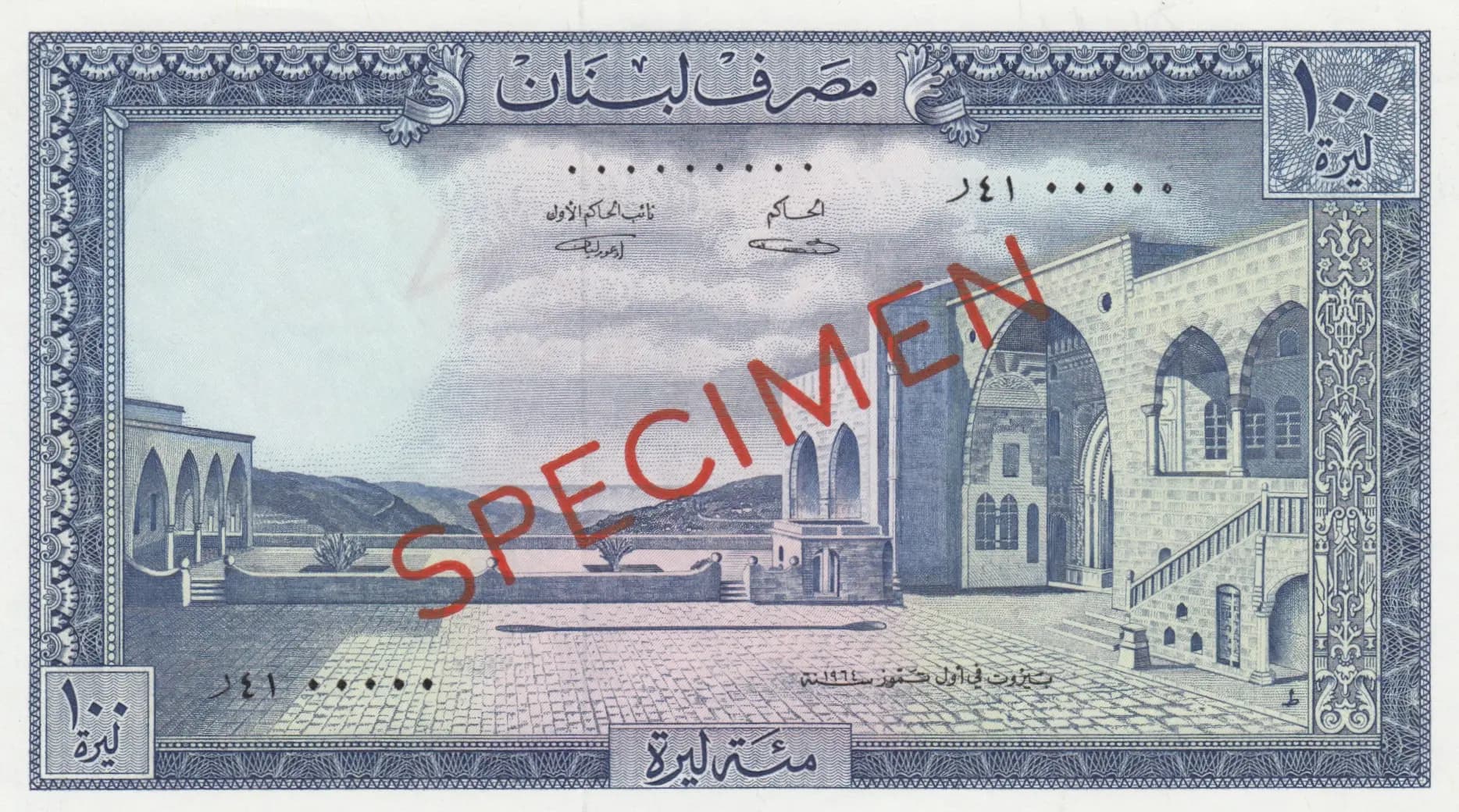
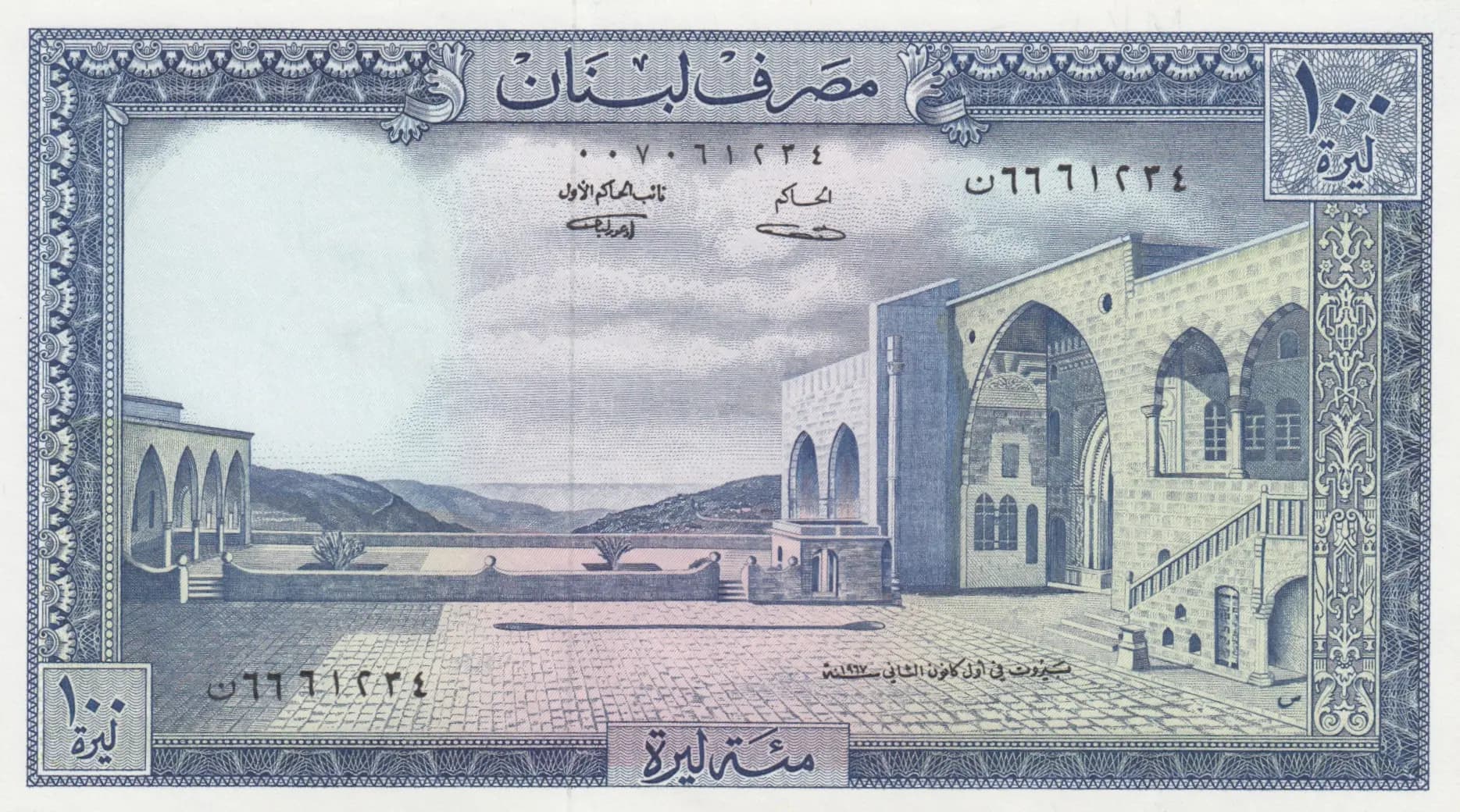
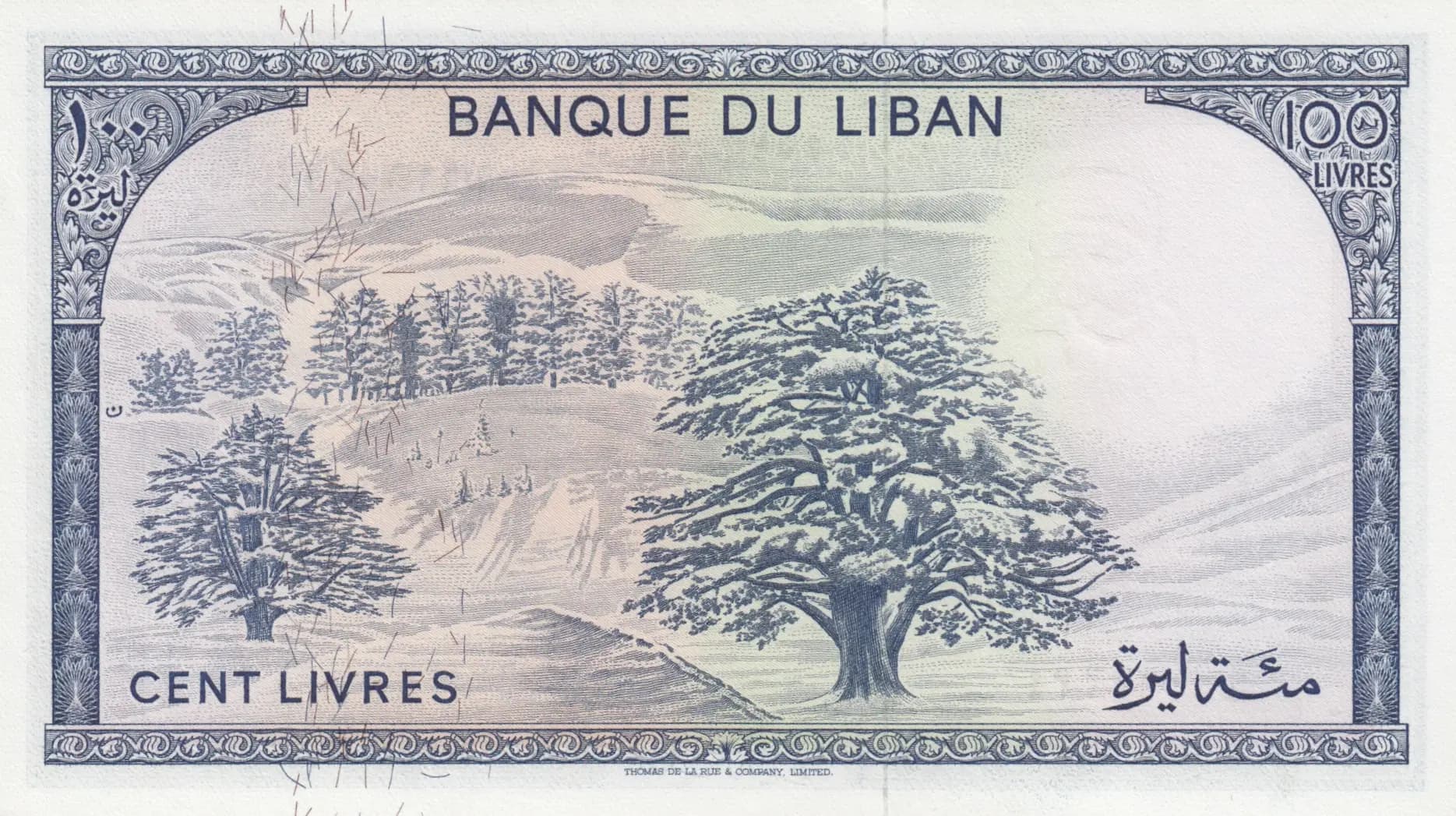
This is a Lebanese 100 Livres banknote from 1967, issued by Banque du Liban and printed by Thomas de la Rue. The note showcases exceptional UNC condition with crisp, clear printing throughout both sides. The obverse features the magnificent Palais Beit-et-Din with its distinctive Islamic courtyard architecture rendered in blue and purple tones, while the reverse displays the iconic snow-capped Cedar of Lebanon trees against a mountainous landscape—powerful national symbols of Lebanon. The intricate decorative borders and fine line work demonstrate the high-quality security engraving characteristic of De la Rue production.
Common. The 100 Livres denomination from this series was produced in large quantities across the 1964-1988 issuance period. Market data from the reference sources shows recent eBay transactions in the $90-$135 range, with catalog valuations at $120 for UNC condition (as of 2019), indicating steady collector interest without scarcity premiums. This is a regular-issue banknote with multiple variants catalogued (P-66a through P-66d plus specimen notes), suggesting substantial print runs for each variety. The relative abundance of professionally graded examples and consistent market pricing at modest levels further confirm this as a common note.
This note was issued during a period of relative stability in Lebanon's modern history, part of a series spanning 1964-1988 that reflected the country's national identity and cultural heritage. The Palais Beit-et-Din depicted on the obverse is one of Lebanon's most important historical monuments, representing the architectural grandeur of Ottoman-era Levantine design. The Cedar of Lebanon on the reverse—the national emblem appearing on Lebanon's flag—symbolizes the nation's independence and enduring heritage, making this banknote a powerful expression of Lebanese sovereignty and cultural pride.
The obverse depicts the Palais Beit-et-Din (also known as Beit-ed-Din Palace), a masterpiece of 19th-century Lebanese architecture featuring its signature crenellated stone facade, pointed archways, and ornate courtyard with multiple colonnade structures. The palace is rendered in shades of blue, purple, gray, and tan against a background of Lebanese mountains, capturing both the architectural sophistication and geographical context of this historic landmark. The reverse showcases two majestic Cedar of Lebanon trees (Cedrus libani), the ancient national symbol depicted with snow-capped peaks—one tree positioned on the left hillside and a larger, more prominent specimen on the right. Both sides feature elaborate decorative borders with repeated geometric and floral patterns in the classical security engraving style. The bilingual presentation (Arabic on obverse, French on reverse) reflects Lebanon's multicultural heritage and official use of both languages during this period.
OBVERSE: 'مصرف لبنان' (Banque du Liban / Bank of Lebanon), 'بالحاكم الاول' (By order of the chief governor), 'حاكم' (Governor), 'مشتري' (Purchaser/Authorized official), 'ليرة' (Livre/Lira), with Arabic numerals for serial numbers and denomination indicator '١٠' (10). REVERSE: 'BANQUE DU LIBAN' (Bank of Lebanon in French), '100' and 'LIVRES' (denomination in English numerals and French), 'CENT LIVRES' (One Hundred Livres in French), 'مشتري' (Purchaser/Authorized official in Arabic corner), 'THOMAS DE LA RUE & COMPANY LIMITED' (printer attribution at bottom center).
Intaglio engraving (copperplate) printing by Thomas de la Rue & Company Limited, London. This is evident from the fine line work visible throughout both sides, the intricate decorative border patterns, the detailed rendering of architectural features and natural elements, and the sharp, crisp impression of all text and imagery characteristic of De la Rue's premium security printing. Multiple color plates were used to achieve the blue, purple, green, gray, and tan tones on light pink and light blue underprints, indicating a sophisticated multi-pass printing process.
This note is catalogued as Pick P-66a, one of five known variants for the 100 Livres denomination in this series. The visual analysis indicates this is a Thomas de la Rue printing (confirmed by 'TDLR' printer mark and 'THOMAS DE LA RUE & COMPANY LIMITED' attribution on reverse). Other variants within the same Pick number group (P-66b, P-66c, P-66d, P-66s) may differ in signature combinations, minor design details, or specimen markings. The specific variant can be definitively determined by examining signature block combinations and any additional overprints not fully visible in the provided images. Serial number format and positioning appear consistent with standard production issues of this period.