10 livres 1964 specimen
Market Prices
1 saleAbout This Note
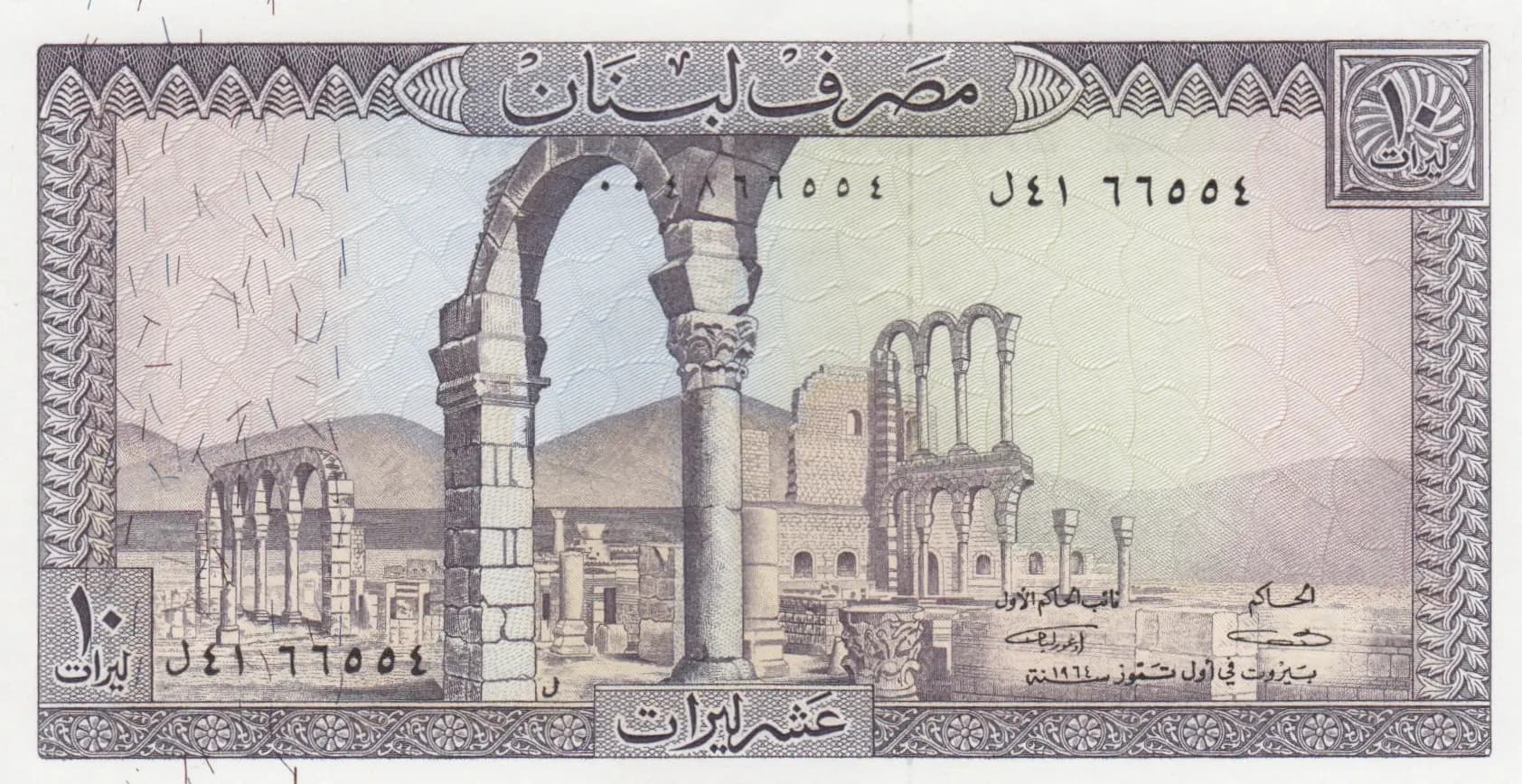
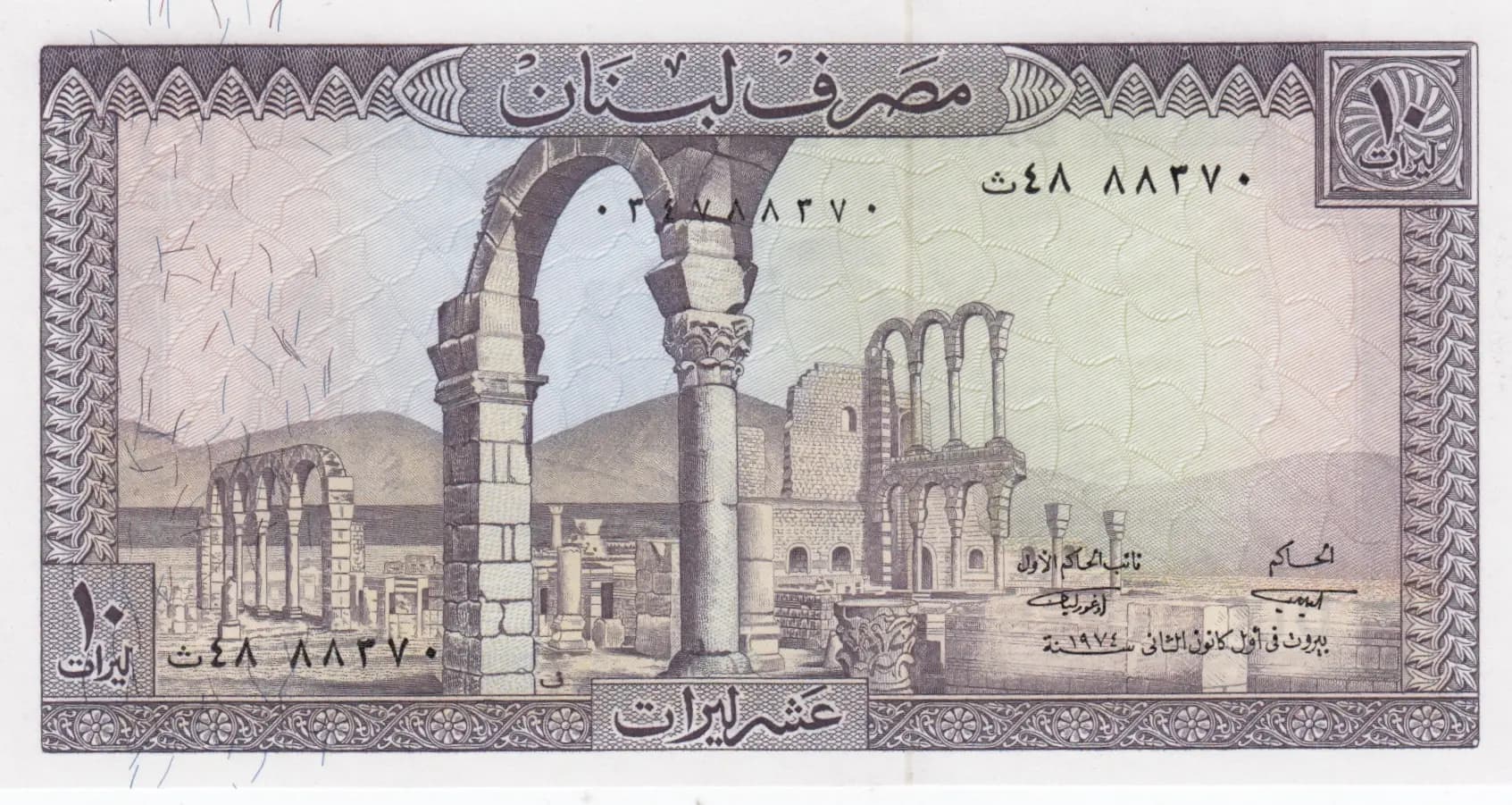
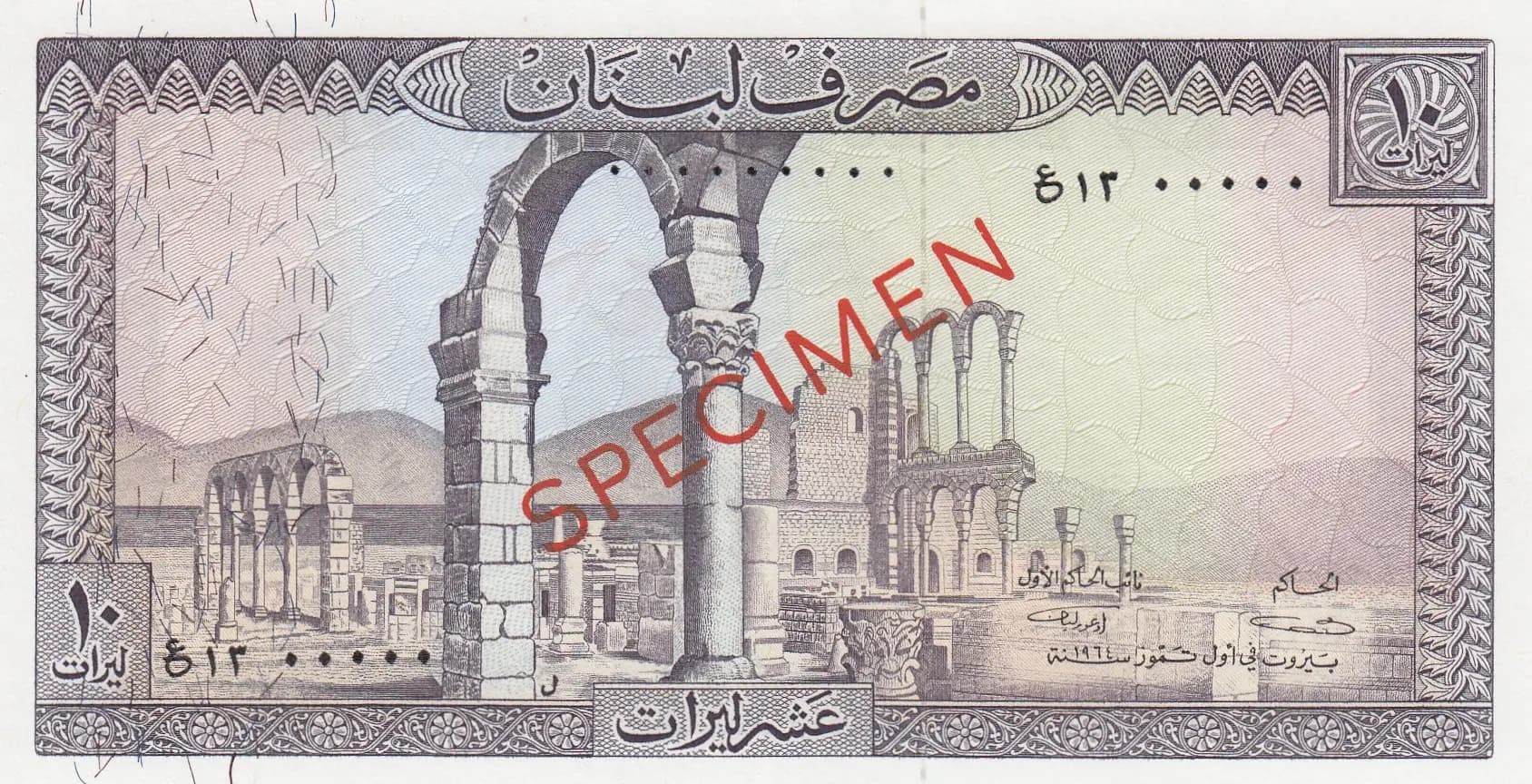
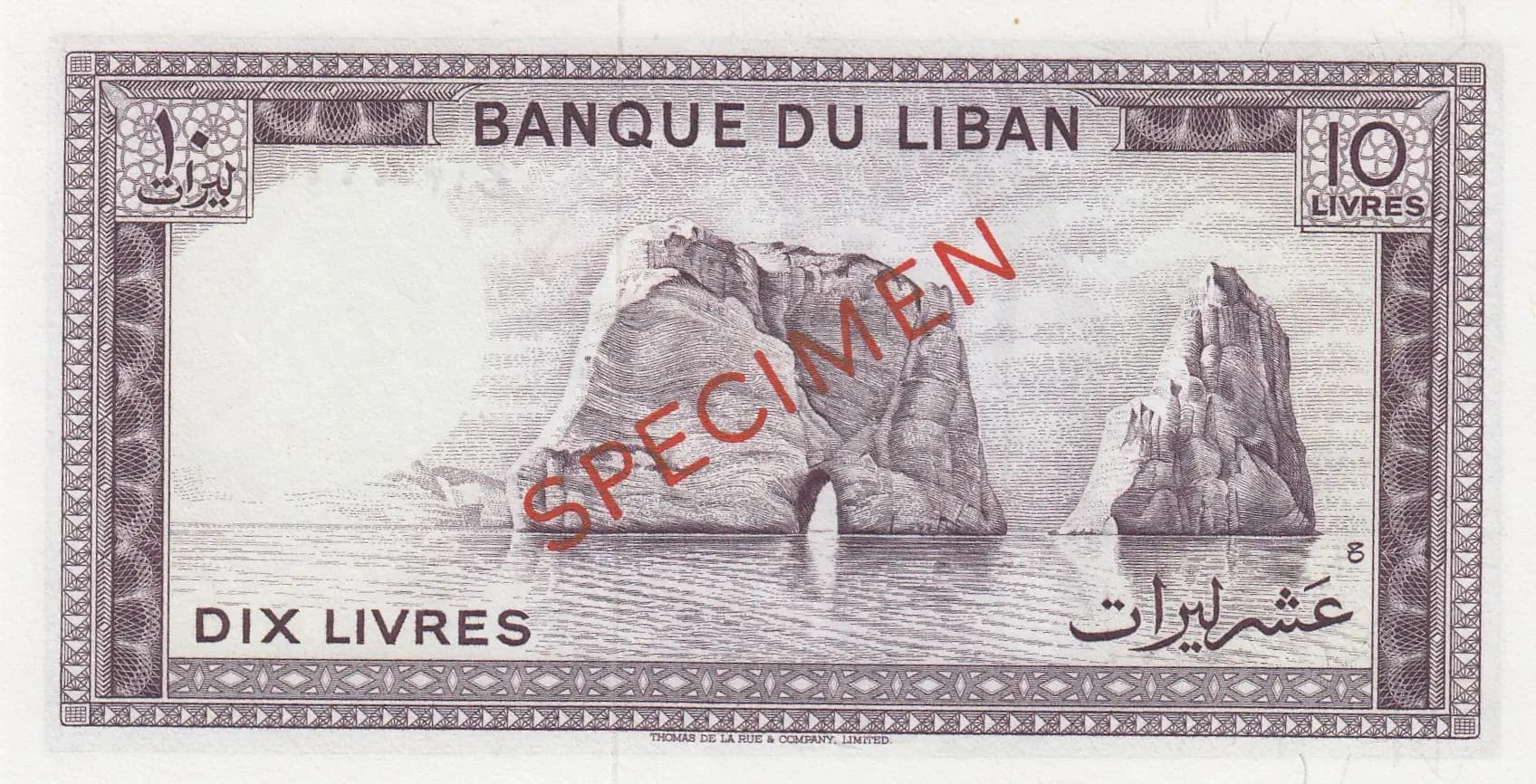
This is a Lebanese 10 Livres specimen note from 1964, issued by Banque du Liban and printed by Thomas de la Rue. The note features beautifully engraved designs depicting the Ruins of Anjar on the obverse and dramatic Rawsheh rock formations on the reverse, both rendered in fine monochromatic line work with decorative geometric borders. In Uncirculated condition with the characteristic red 'SPECIMEN' overprint, this note represents an important early example of Lebanon's mid-20th century currency design and remains a sought-after item for collectors of Middle Eastern banknotes.
Common. While this is a specimen note (which can command premiums over regular circulation issues), the 1964-1986 Lebanese 10 Livres series had substantial print runs. The referenced eBay sale of a PMG 66 example for $152.50 in 2018 indicates moderate market demand but not rarity. Specimen notes from major security printers are typically produced in quantities sufficient for bank distribution and collector availability, and this denomination does not appear to have had a restricted print run or early recall.
Issued in 1964, this note reflects Lebanon's period as a stable financial hub in the Middle East during the early Cold War era. The Ruins of Anjar depicted on the obverse represent Lebanon's rich Umayyad heritage and archaeological significance, while the Rawsheh rock formations near Beirut on the reverse showcase the nation's iconic coastal landscape. This design choice emphasizes Lebanon's cultural patrimony and natural beauty during a time of relative prosperity before the political upheavals that would later affect the region.
The obverse features the Ruins of Anjar, an eighth-century Umayyad archaeological site in the Bekaa Valley, rendered with detailed engraving showing a monumental ornamental arch, multiple standing columns, and temple structures set against a mountain backdrop. The reverse depicts the Rawsheh (also known as Pigeon Rocks), two prominent sea stacks rising dramatically from the waters off the Beirut coast with white-capped waves, a iconic symbol of Lebanon. Both sides are framed with intricate geometric and floral decorative borders in double-line frames, with ornamental corner elements. The note incorporates trilingual text (Arabic, French, and English) reflecting Lebanon's cosmopolitan character, with denomination markings and circular emblems in the top corners of each side.
Front side: 'مصرف لبنان' (Banque du Liban/Bank of Lebanon), 'عشرة ليرات' (Ten Livres), 'بيروت في اول كانون الثاني' (Beirut on the first of January), and Arabic numeral '٢٠' (20). Back side: 'BANQUE DU LIBAN' (Bank of Lebanon in French), '10 LIVRES' and 'DIX LIVRES' (Ten Livres in English and French), 'عشرة لبرات' (Ten Livres in Arabic), 'THOMAS DE LA RUE & COMPANY, LIMITED' (printer attribution), and 'SPECIMEN' (specimen designation on both sides in red overprint).
Intaglio engraving (line engraving), the signature technique of Thomas de la Rue & Company, Limited, one of the world's premier security printers. The fine linear detail visible throughout the architectural ruins, rock formations, border patterns, and decorative elements are characteristic of this method. The printer's attribution is explicitly noted on the reverse of the note.
This is specifically a specimen note variant of Pick 63 (Pick-63s), identifiable by the red diagonal 'SPECIMEN' overprint visible on both obverse and reverse. Specimen notes were produced without serial numbers and distributed to banks and currency exchanges for reference. The note appears to represent the standard design issued between 1964-1986, with no visible signature varieties or date varieties evident from the visual analysis, though the inscription references 'Beirut on the first of January' (possibly indicating an issue date reference).