10 livres 1974
Market Prices
5 salesAbout This Note
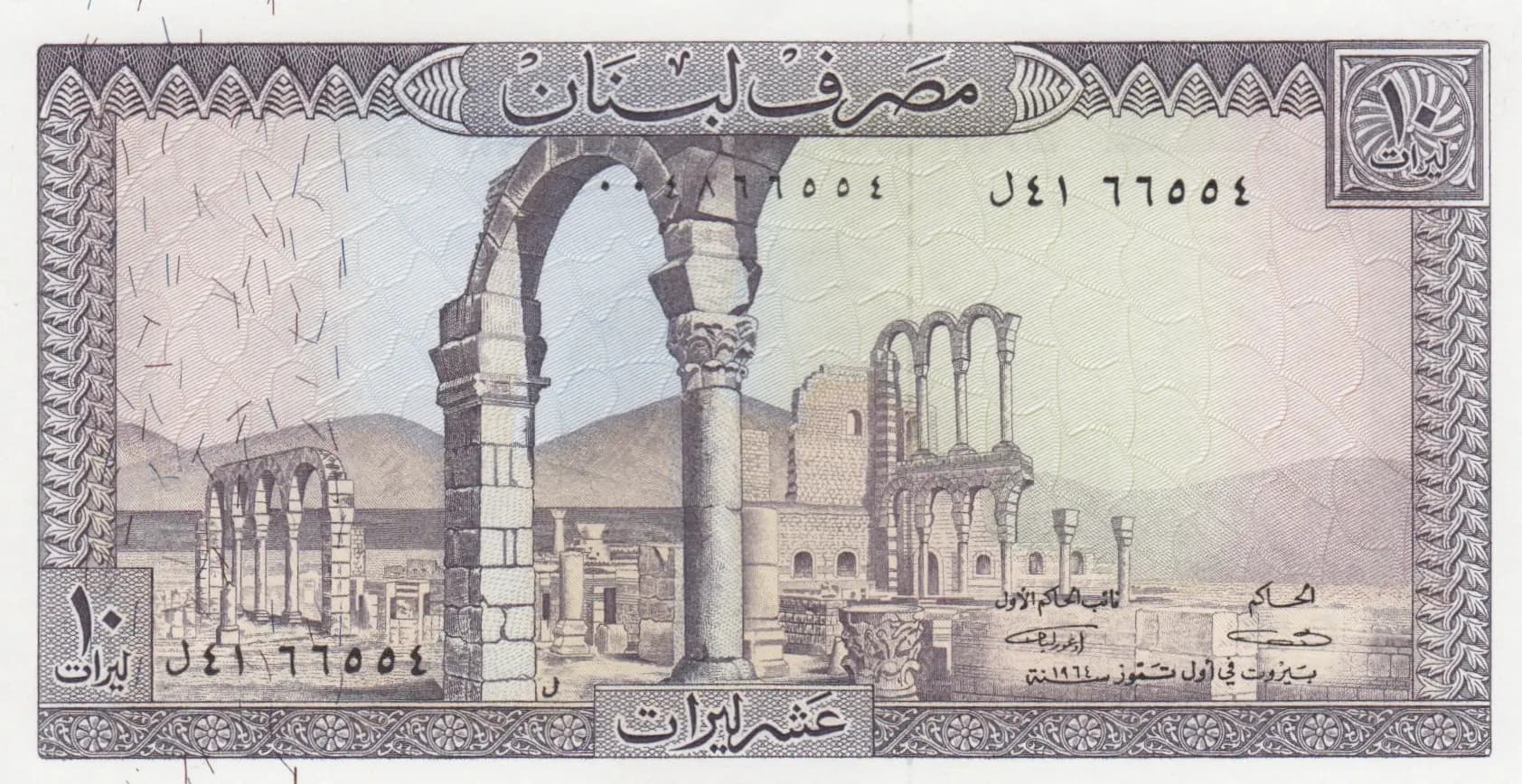
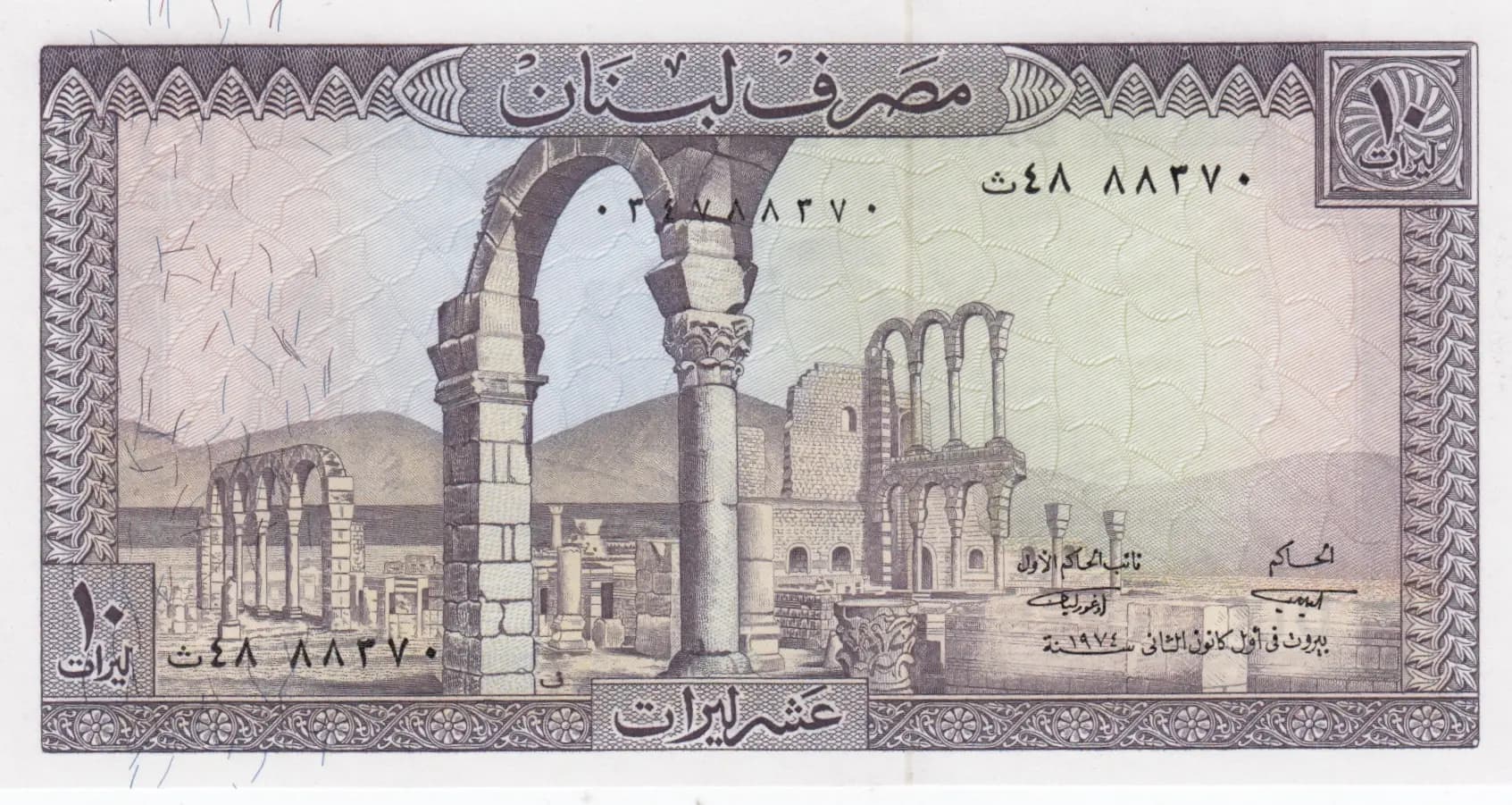
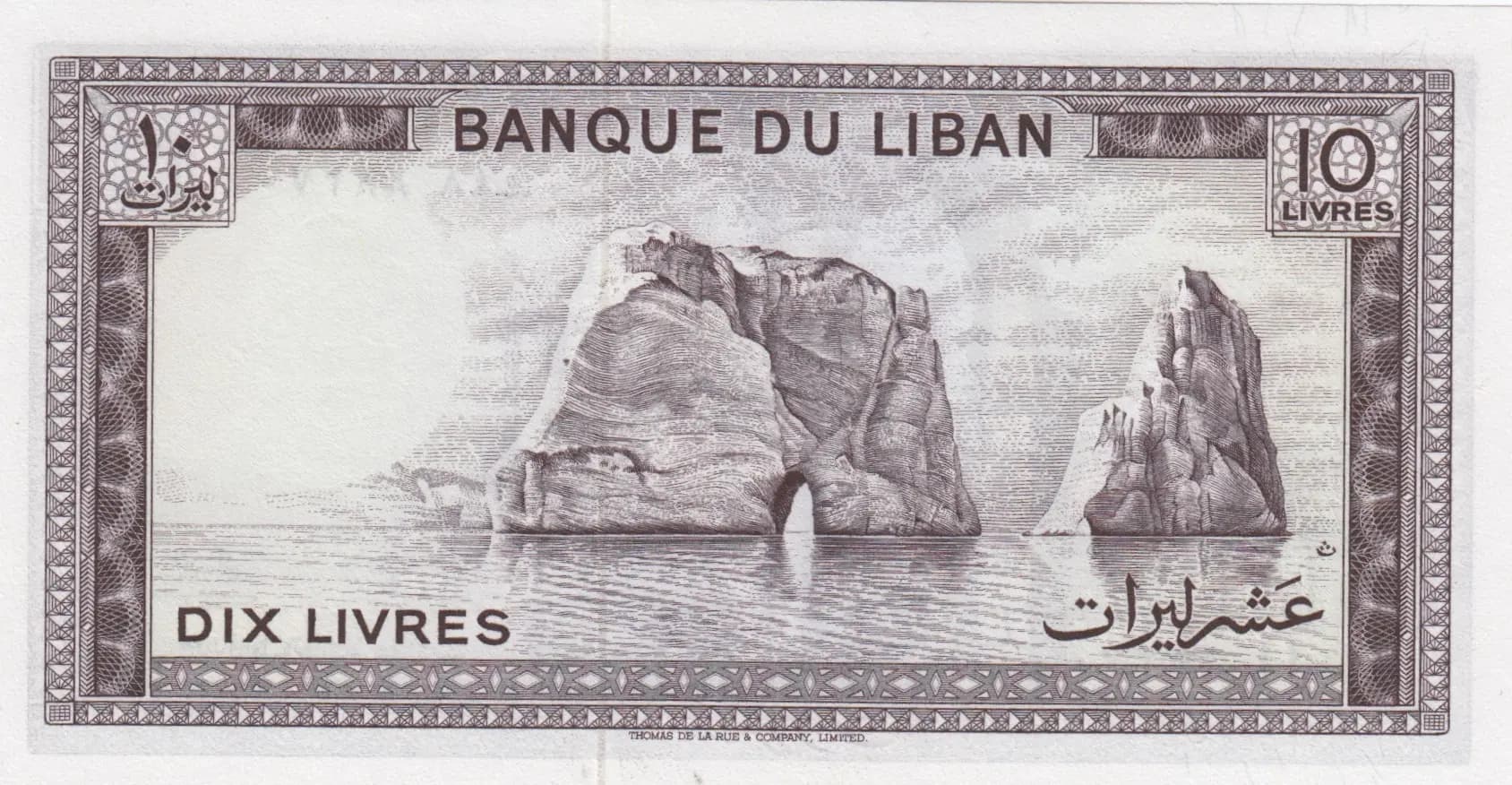
This is a Lebanese 10 Livres banknote from the 1974 issue (Pick 63c) printed by Thomas de la Rue, London. The note features the iconic Ruins of Anjar on the obverse and the famous Rawsheh rock formations near Beirut on the reverse, both rendered in fine intaglio engraving. While the visual analysis indicates visible creasing and fold marks suggesting circulation, the catalog grade of UNC may represent a higher-quality example of this regularly issued denomination.
Common. The 1974 Lebanese 10 Livres (Pick 63c) was part of a regular issue spanning 1971-1986 with substantial print runs by Banque du Liban. Market data from realbanknotes.com shows modest eBay prices ranging from $2.25 to $41 depending on condition, with catalog values of $20 for UNC examples as of 2019. The note's availability on the secondary market and consistent pricing across multiple years indicate healthy supply. While the UNC grade is desirable, it does not significantly elevate scarcity; this remains a standard circulating denomination that was produced in large quantities.
Issued during Lebanon's period of relative stability in the 1970s, before the onset of civil conflict, this banknote celebrates the nation's archaeological and natural heritage. The Ruins of Anjar depicted on the obverse represent an important Umayyad-period palace complex, while the Rawsheh rocks on the reverse (also known as the Pigeon Rocks) are an iconic symbol of Beirut's coastline and Lebanese identity. Together, these images reflect mid-20th-century Lebanese pride in both its ancient history and contemporary geography.
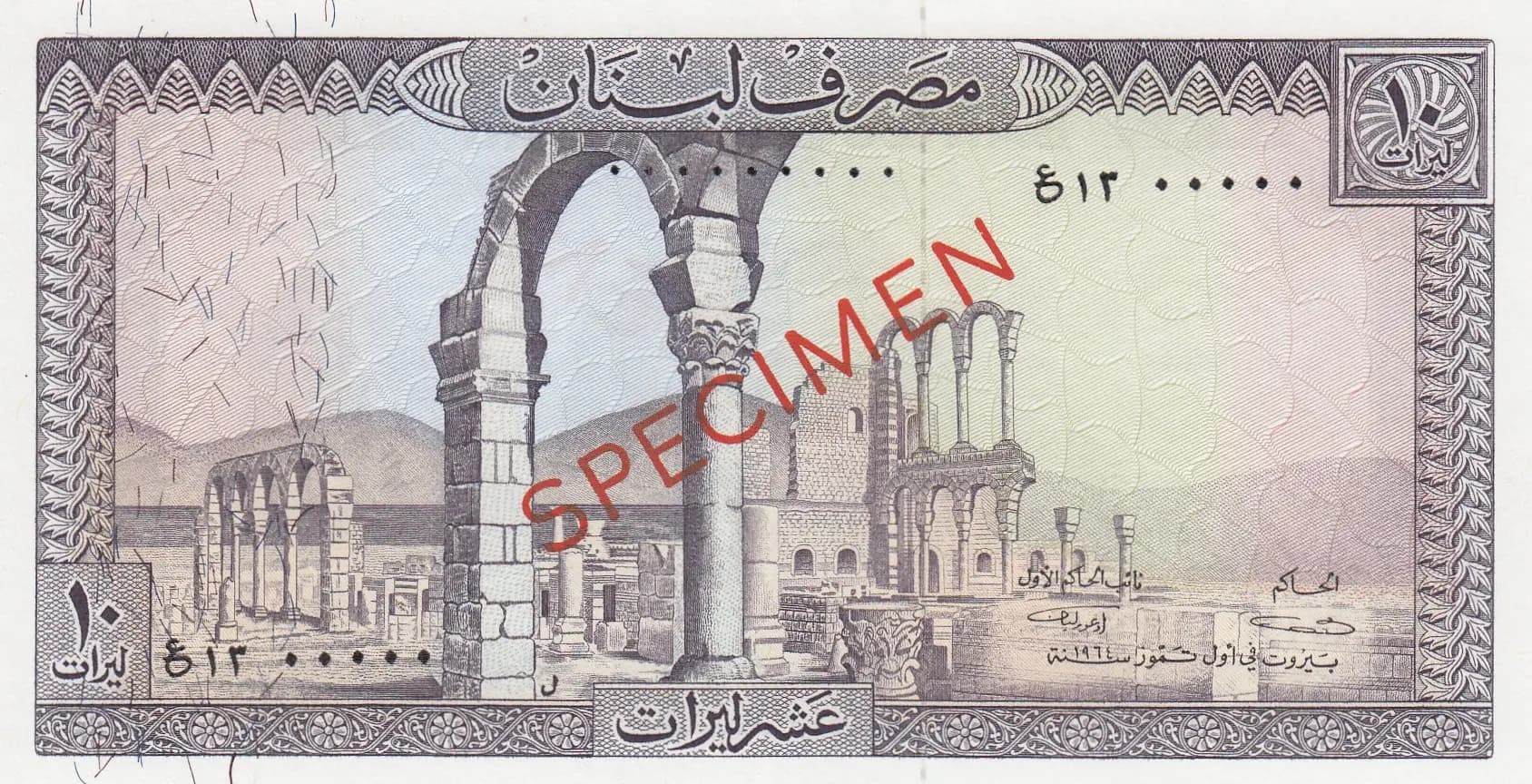
The obverse features a carefully engraved archaeological scene depicting the Ruins of Anjar, a significant Umayyad-period palace complex located in the Bekaa Valley. The composition shows classical Roman-influenced architecture with standing columns bearing decorative capitals, multiple arched openings characteristic of Islamic architectural style, and mountainous terrain in the background. The entire design is framed by ornate decorative borders featuring repeating leaf and palm patterns typical of Levantine artistic traditions. The reverse depicts the Rawsheh rock formations (also called the Pigeon Rocks), the famous limestone sea stacks rising from the calm Mediterranean waters near Beirut, rendered in dramatic detail with fine engraving. Both sides incorporate the official Banque du Liban emblem and denomination indicators in both French and Arabic, reflecting Lebanon's bilingual official status.
FRONT: مصرف لبنان (Banque du Liban / Bank of Lebanon); عشرة الاف (Ten Thousand - likely referring to ten livres); Serial number in Arabic numerals; الحاكم (Governor); نائب الحاكم الاول (First Deputy Governor); بيروت في اول كانون الثاني بتاريخ (Beirut on the first of January, dated). BACK: BANQUE DU LIBAN (Bank of Lebanon); DIX LIVRES (Ten Livres); 10 LIVRES (10 Livres); عشرة لبرات (Ten Livres in Arabic); THOMAS DE LA RUE & COMPANY, LIMITED (Printer attribution).
The note was produced using intaglio engraving (recess printing), the security printing standard of Thomas de la Rue, London, one of the world's premier currency printers. The fine line engraving visible throughout both obverse and reverse, combined with the ornate decorative border patterns and detailed architectural rendering, are characteristic of high-quality intaglio work. The multi-color printing on the obverse (brown, beige, gray, tan tones) combined with the black and white reverse suggests a multi-pass intaglio process with color separation plates.
The Pick 63c designation specifically identifies the 1974 dated variety of this series, which ran from 1971-1986 with annual date variants (1971, 1972, 1973, 1974, and others). The note displays signatures of the Governor and First Deputy Governor as of the issue date, typical of Lebanese currency of this period. The visible serial number (partially visible in the visual analysis) would indicate the specific print batch. No major overprints or special varieties are apparent from the visual analysis; this represents a standard regular-issue example of the 1974 variety within the P-63 series.