10 livres 1964
Market Prices
4 salesAbout This Note
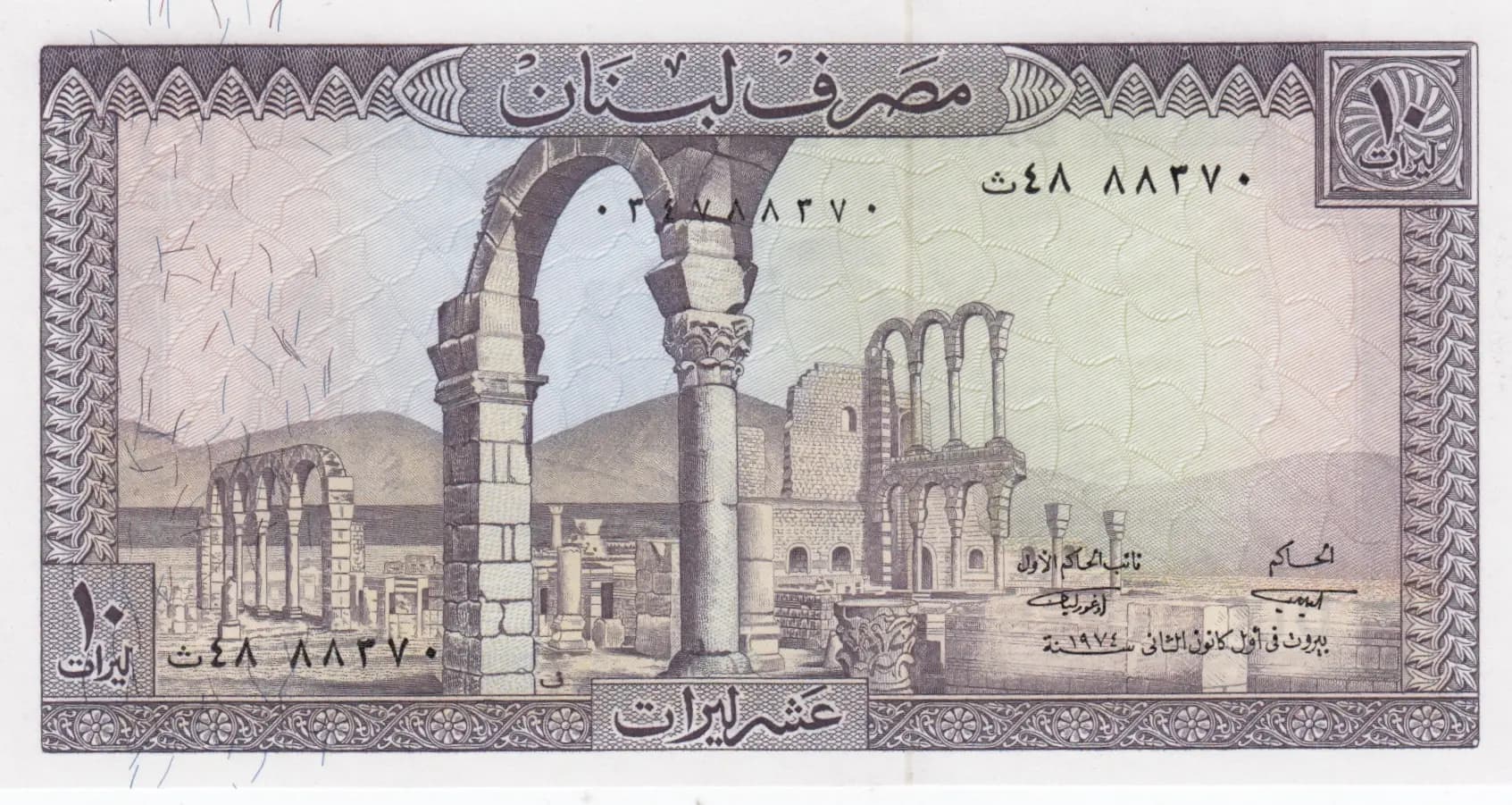
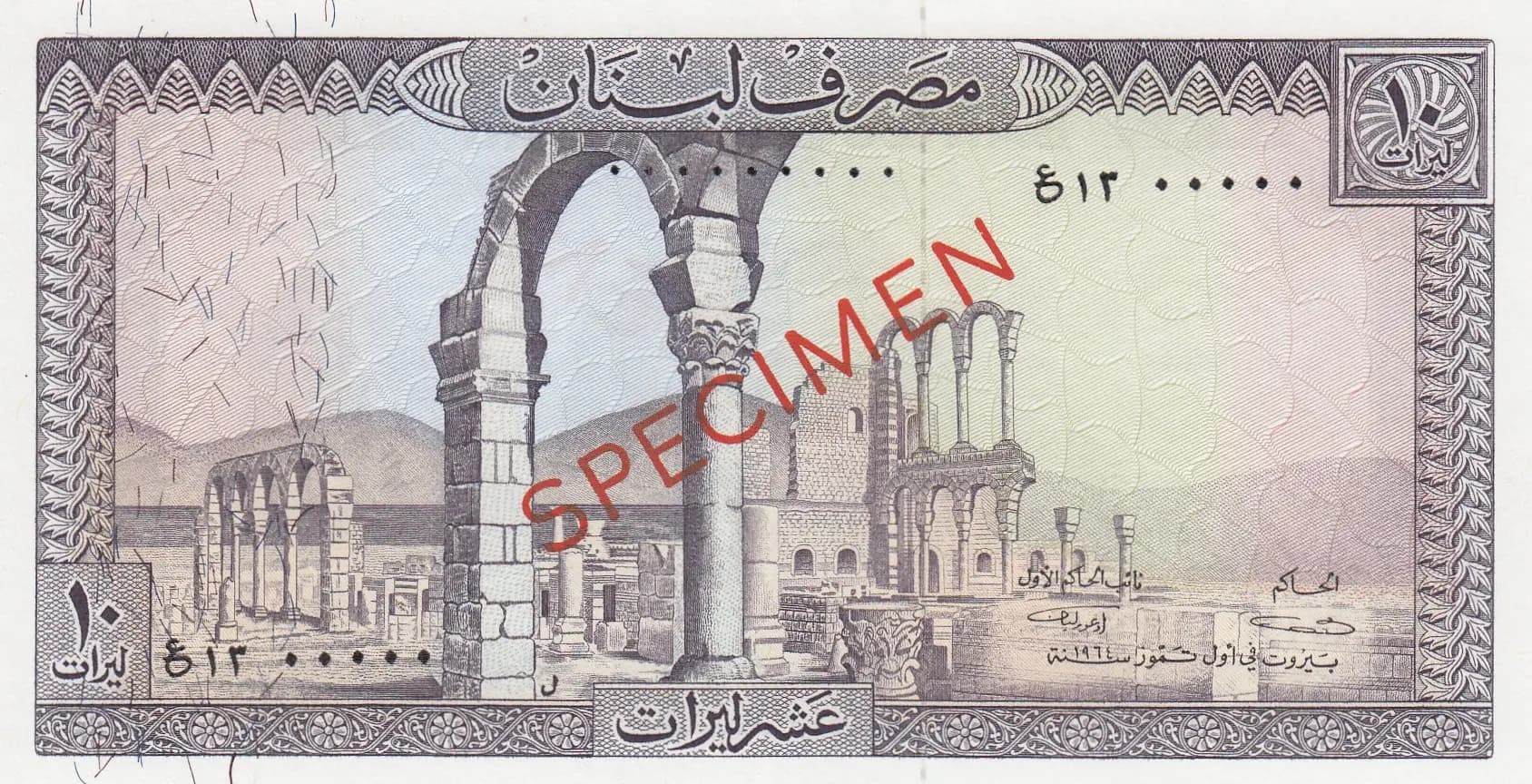
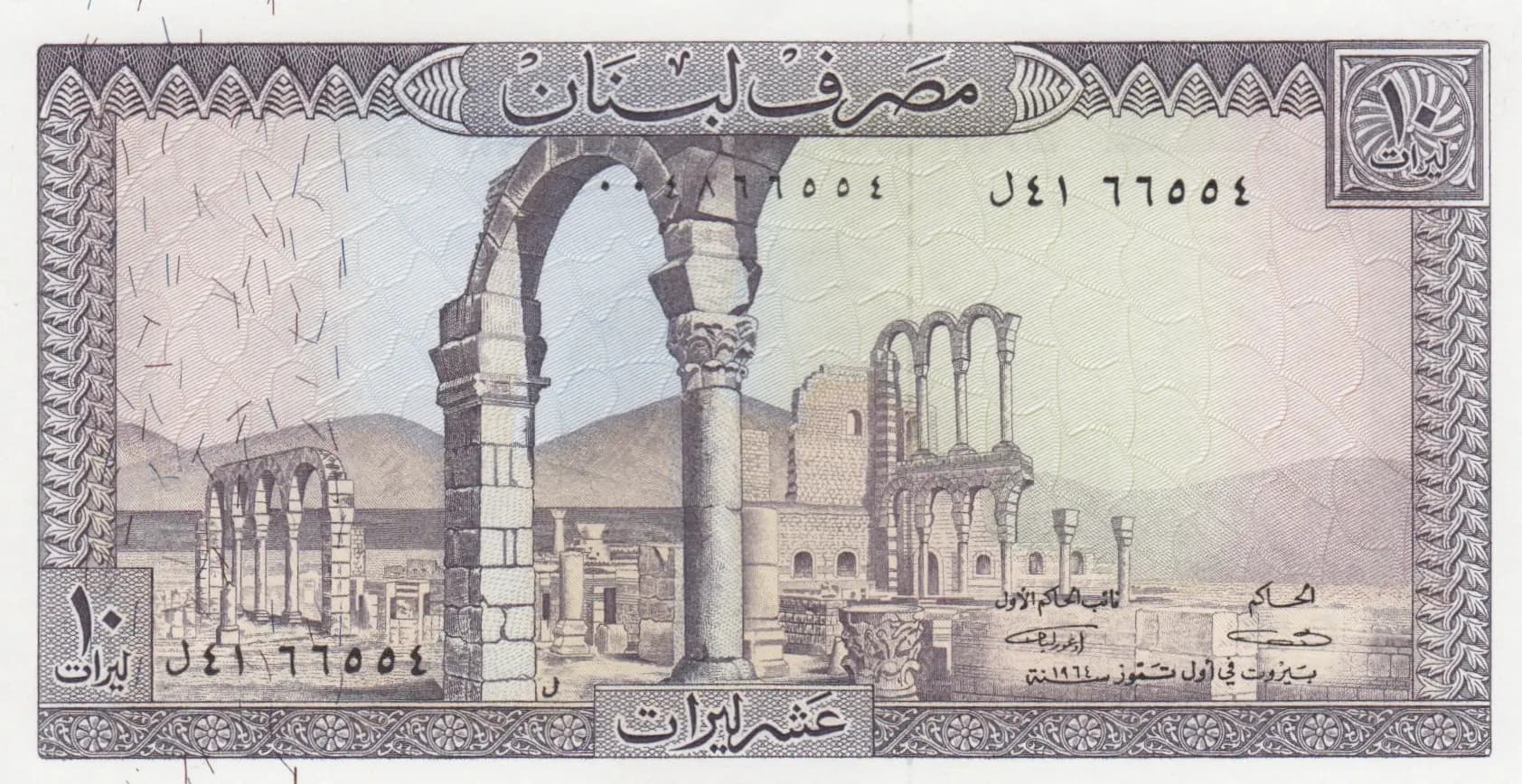
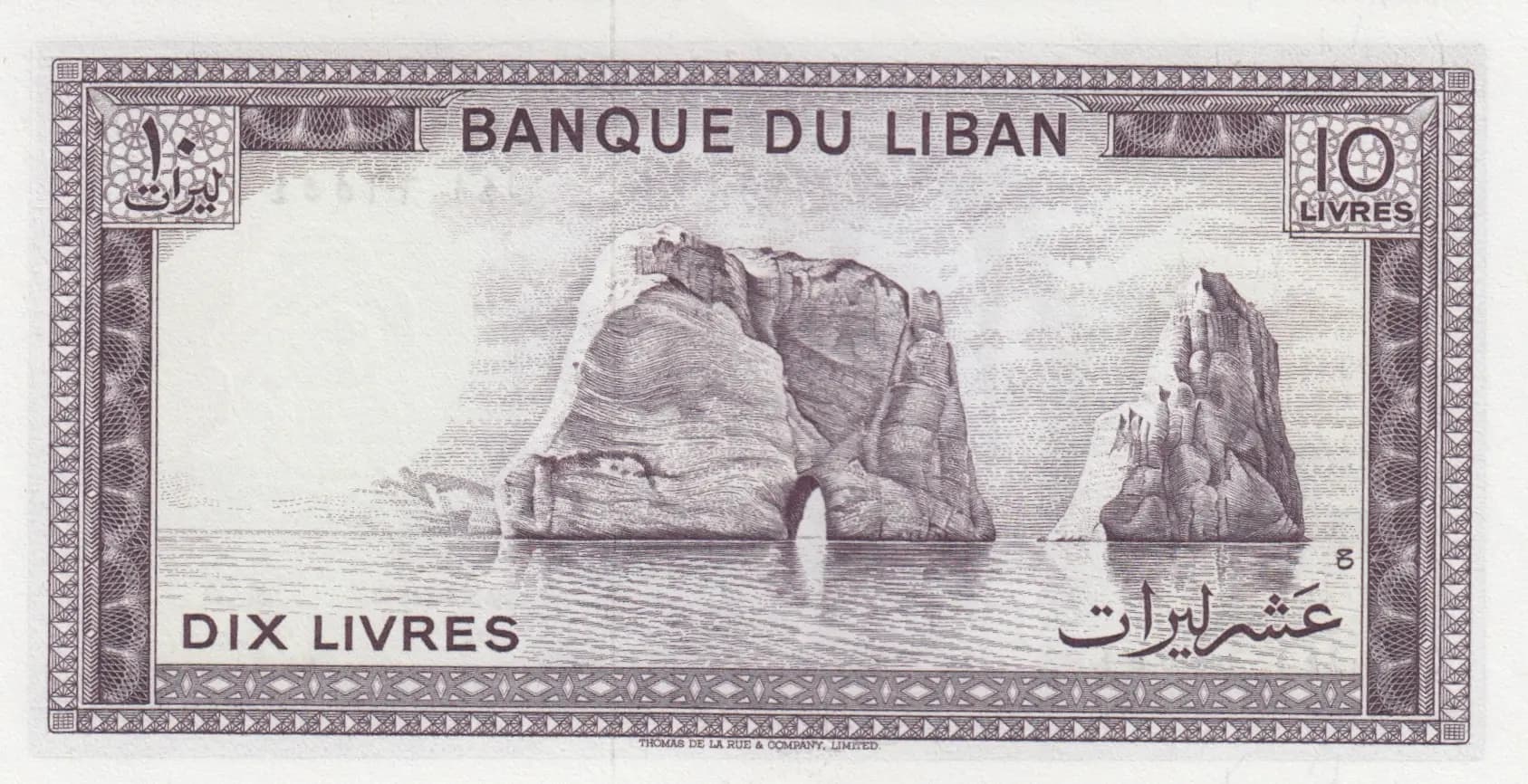
This is a 1964 Lebanese 10 Livres banknote (Pick 63a) issued by Banque du Liban and printed by Thomas de la Rue, London. The obverse features the impressive ruins of Anjar in brown and multicolored tones with ornate decorative borders, while the reverse depicts the famous Pigeon Rocks (Raouché Rocks) in dark purple and black engraving. The note shows visible circulation wear including creases and fold marks across the front, consistent with circulated condition rather than the stated UNC grade, making this an example that warrants careful evaluation.
Common. The eBay price tracking data shows this note in PMG 66 condition selling for $87–$130 in 2018, while UNC examples have cataloged values around $50 (2019). The note was issued over a 22-year period (1964–1986) with substantial print runs typical of regular circulation issues. The low auction prices and ready availability in the market confirm this as a common banknote in all grades.
Issued during Lebanon's period of relative stability in the mid-1960s, this banknote celebrates two of the nation's most iconic cultural and natural landmarks. The Anjar ruins on the obverse represent Lebanon's ancient Umayyad heritage, while the Raouché Rocks on the reverse symbolize Beirut's stunning natural coastal beauty. This note was produced during a time when Lebanon's banking system was developing modern currency designs to reflect national identity and prestige.
The obverse showcases the well-preserved Anjar ruins, featuring prominent Umayyad-era columns and arched gateway structures set against a mountainous backdrop. The design employs a sophisticated color palette of brown, beige, gray with pink and light blue accents. Ornamental emblems appear in the top right corner with decorative leaf and palm motifs framing the design. The reverse presents the natural landmark of the Pigeon Rocks (Raouché Rocks), the distinctive large limestone formations in the waters off Beirut's coast near the Rawsheh district, rendered in fine black and dark purple engraving. Both sides feature intricate geometric border patterns and guilloche work typical of Thomas de la Rue's security printing standards. The dual-language presentation (French and Arabic) reflects Lebanon's bilingual administrative tradition.
OBVERSE: 'مصرف لبنان' (Bank of Lebanon), 'عشرة' (Ten), 'ليرات' (Livres), with serial numbers '2770061' and '1962454'. REVERSE: 'BANQUE DU LIBAN' (Bank of Lebanon in French), '10' and 'LIVRES', 'DIX LIVRES' (Ten Livres), 'عشرة' (Ten in Arabic), and 'THOMAS DE LA RUE & COMPANY, LIMITED' (printer credit line).
Intaglio engraving (line engraving/copperplate printing) by Thomas de la Rue & Company, Limited, London. The fine-line patterns, detailed guilloche borders, and precise stippling visible throughout—particularly in the rock formation details and architectural elements—are characteristic of high-security banknote production. The color separation and multicolored underprint on the obverse indicate the use of multiple printing passes.
This is noted as Pick 63a, indicating it is the primary variety of the 1964 10 Livres issue. The observed serial numbers (2770061 and 1962454) suggest standard numbering. No overprints, signature varieties, or other distinguishing characteristics are evident from the visual analysis that would indicate a sub-variety. The note's design remained consistent throughout its 22-year circulation period, with Pick 63a representing the standard regular issue.