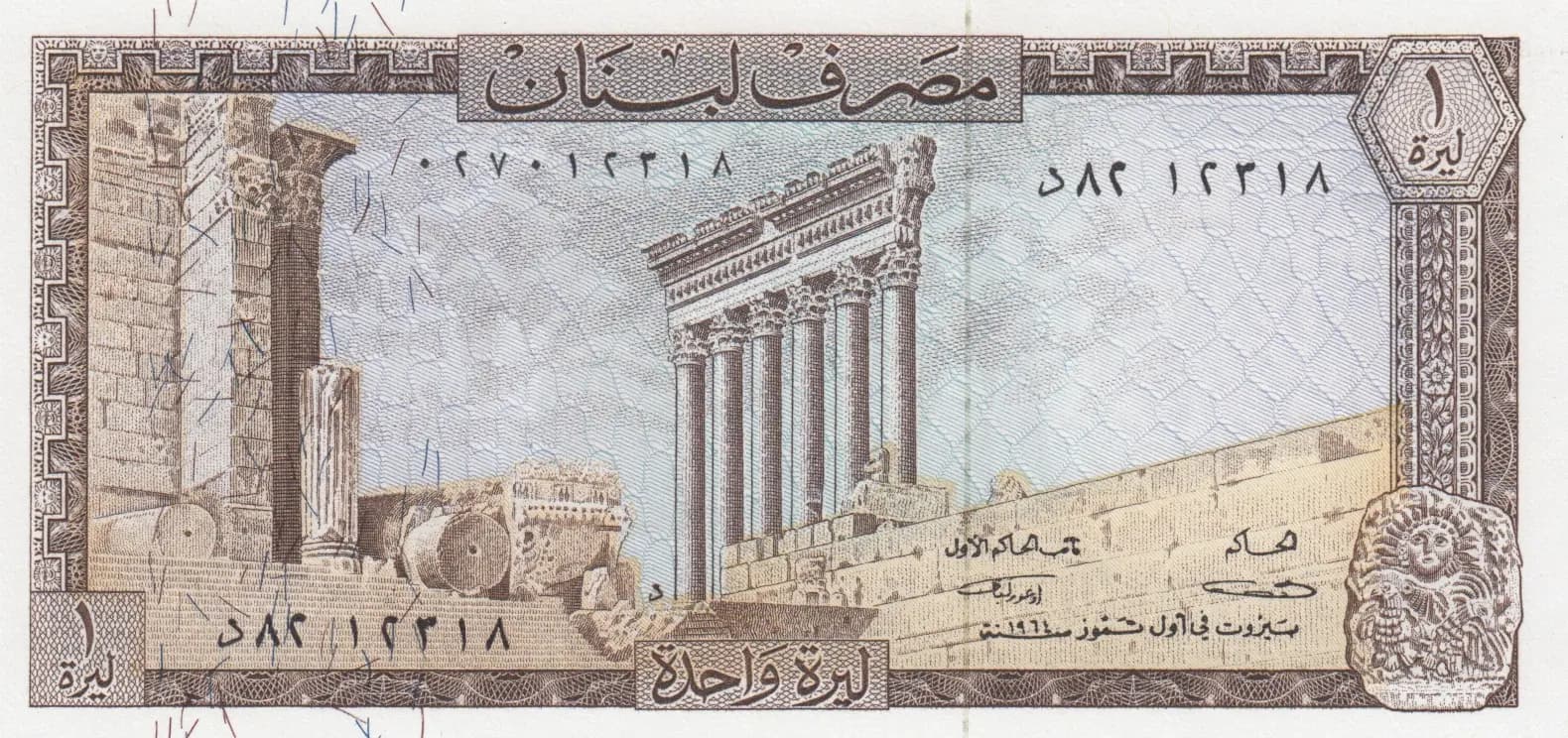
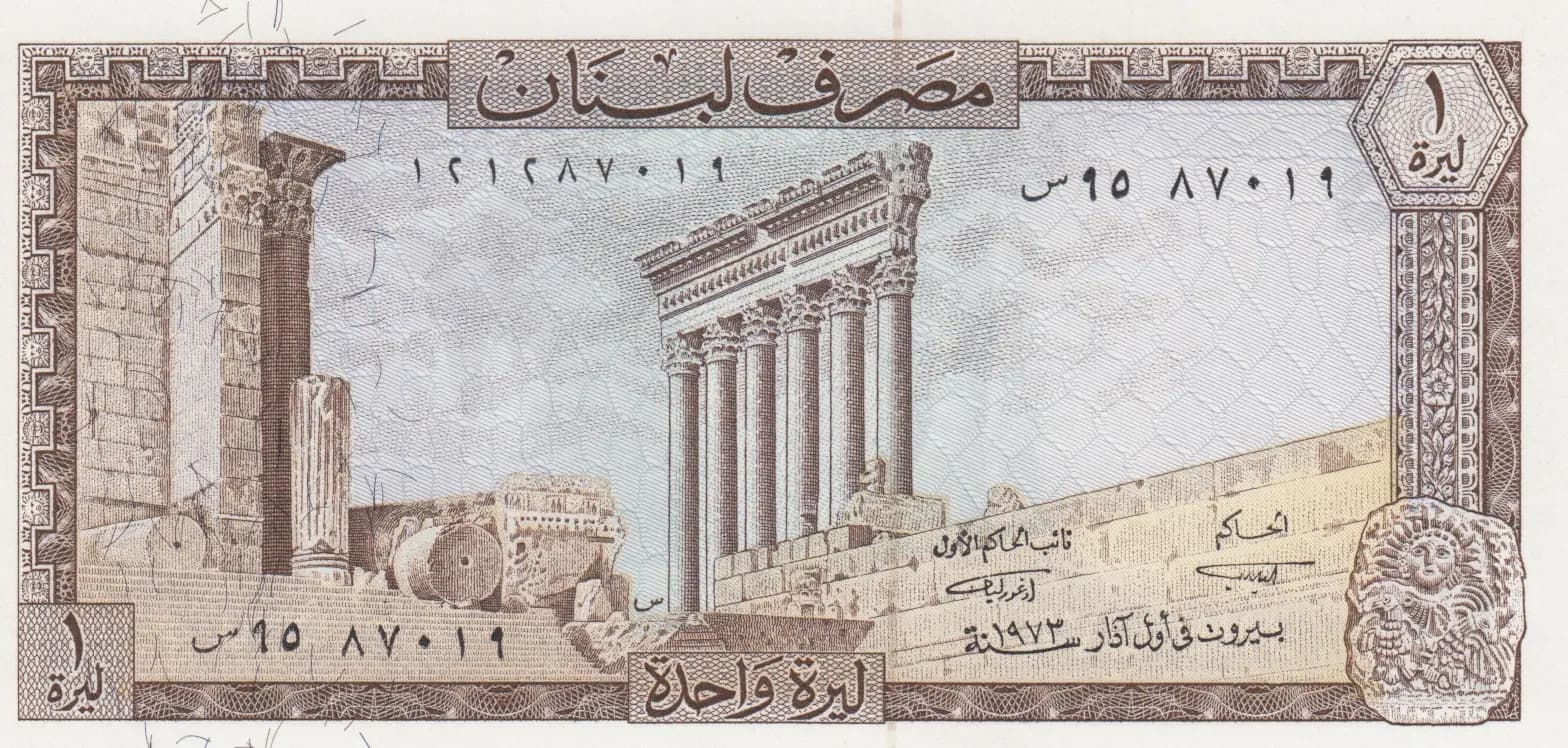
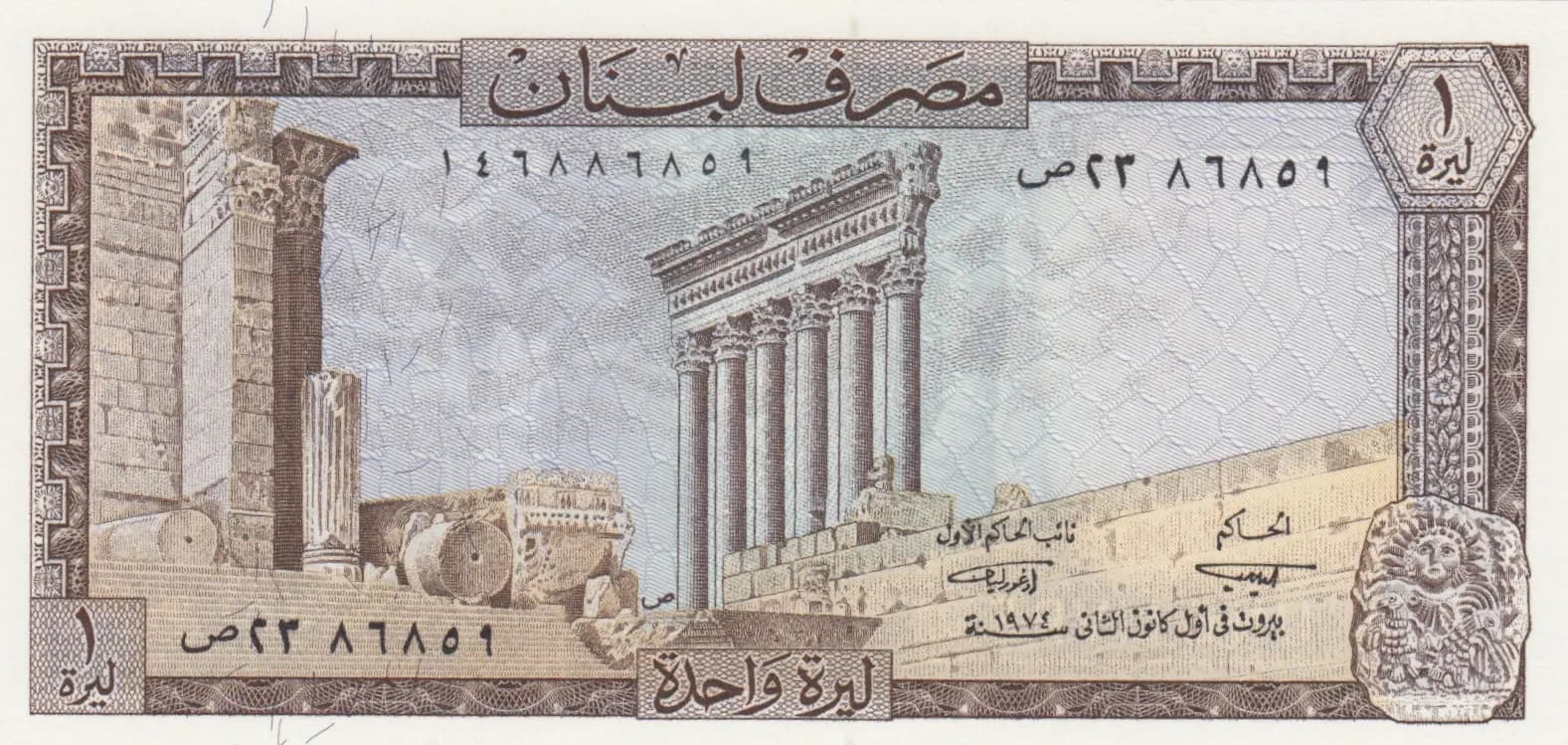
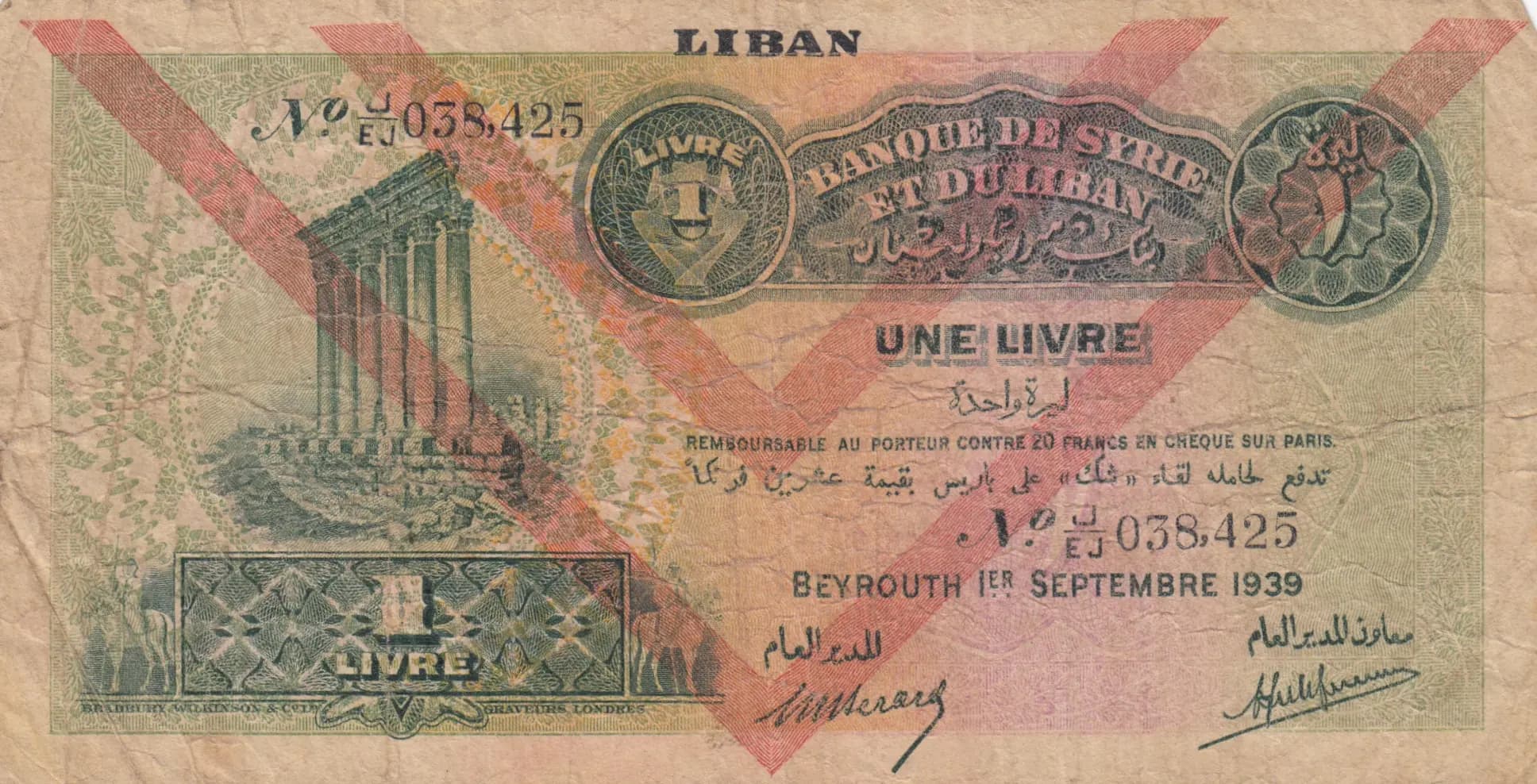
1 livre 1964 specimen
Market Prices
About This Note
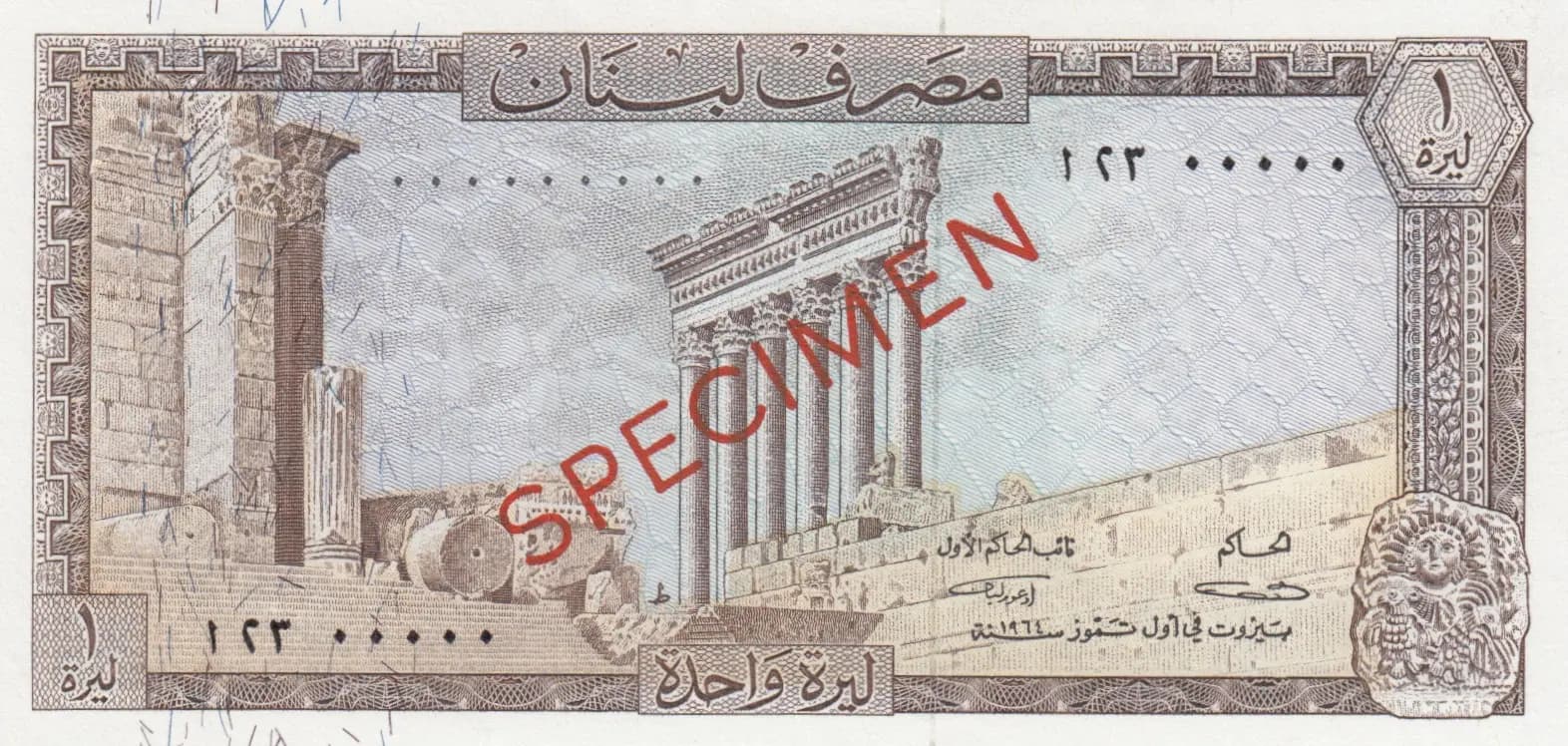
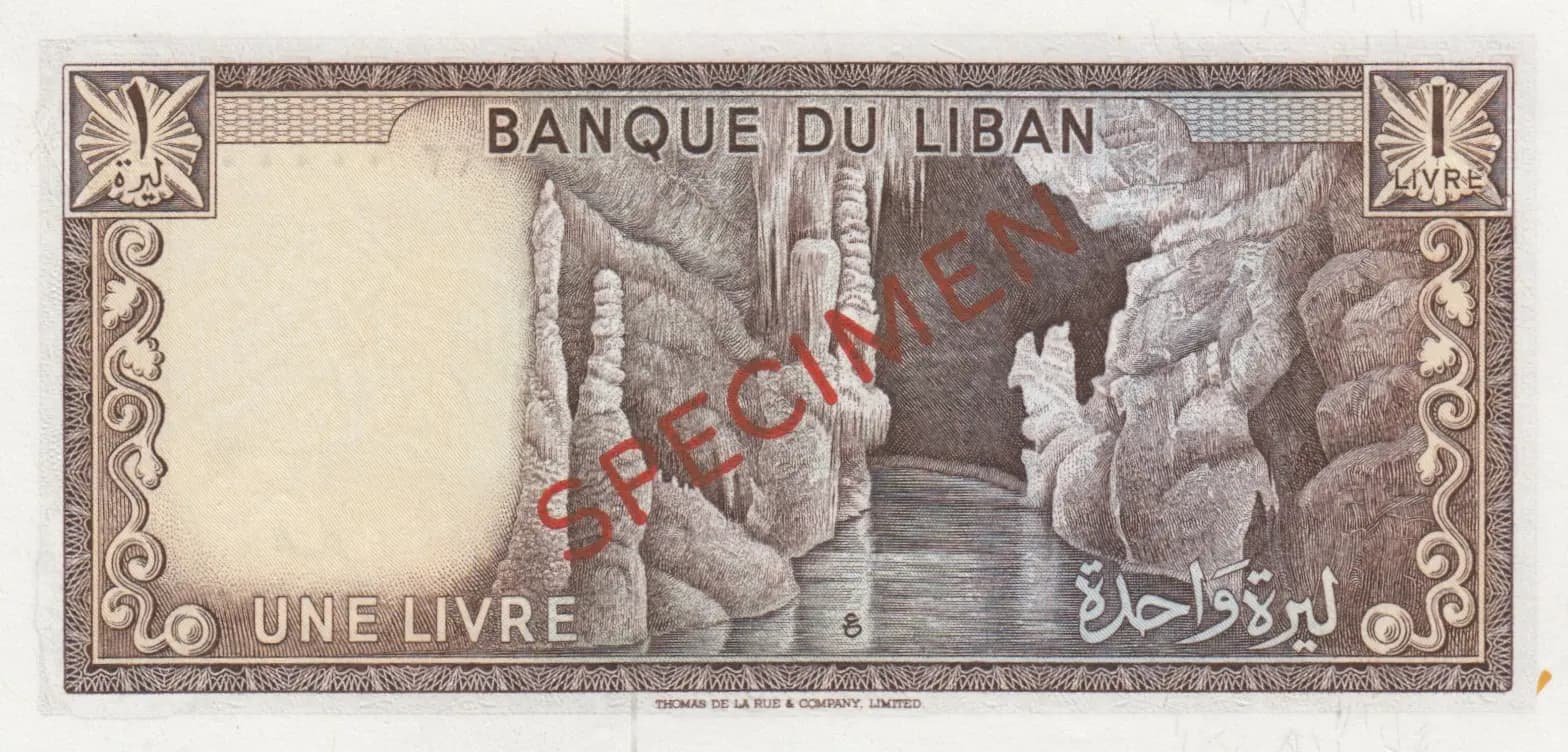
A 1964 Lebanese 1 Livre specimen note issued by Banque du Liban and printed by Thomas de la Rue, London. The note features the iconic Columns of Jupiter Temple at Baalbek on the obverse and the scenic Jeita Cavern on the reverse, both rendered in fine brown and tan engraving on light blue underprint. This UNC specimen bears the characteristic red diagonal 'SPECIMEN' overprint and represents an early example of Lebanon's modern banknote series, with excellent preservation showing minimal age-related wear.
Common. This note was part of a long-lived series (1964-1980 per banknote.ws) with multiple variants, indicating substantial print runs. eBay market data shows specimen examples trading in the $5–$10 range primarily, with only occasional outliers at higher prices ($49.99, $499.99) likely representing different varieties, grades, or market anomalies rather than true rarity. The specimen designation is standard for pre-release or security printer samples and does not confer rarity in the numismatic sense.
Issued during Lebanon's period of economic stability and cultural renaissance in 1964, this banknote celebrates the nation's classical Greco-Roman heritage through the depiction of Baalbek's Jupiter Temple columns—among the world's finest surviving examples of Roman architecture. The reverse imagery of Jeita Cavern, one of the world's longest underground rivers and a natural wonder, reflects Lebanon's pride in both its historical monuments and natural attractions during a period when the country was known as the 'Switzerland of the Middle East.'
The obverse features the Columns of Jupiter Temple at Baalbek, one of the most impressive Classical Roman ruins in the Middle East, depicted with detailed Corinthian capitals and ornate architrave stonework rendered through fine line engraving. The reverse depicts Jeita Cavern's underground grotto, showing naturalistic rendering of stalactite formations and water channels flowing through limestone rock formations. Both sides employ an elaborate ornamental border with geometric and spiral floral motifs, with decorative hexagonal emblems and radiant sunburst medallions positioned in the corners. The color scheme—brown on light blue underprint—provides excellent contrast for the intricate engraving work. Arabic text identifies the issuer (Banque du Liban) on the obverse, while French text (Banque du Liban) appears on the reverse, reflecting Lebanon's bilingual official status during this period.
OBVERSE: مصرف لبنان (Masraf Lubnan) = 'Bank of Lebanon'; لبرواحد (Livre Wahid) = 'One Livre'; SPECIMEN (English overprint). REVERSE: BANQUE DU LIBAN = 'Bank of Lebanon' (French); UNE LIVRE = 'One Livre' (French); لبرواحد (Livre Wahid) = 'One Livre' (Arabic); SPECIMEN (English overprint); THOMAS DE LA RUE & COMPANY, LIMITED = printer attribution (English).
Intaglio (line engraving) printing by Thomas de la Rue & Company, Limited, London—the premier security printer of the era. The fine dot patterns, intricate border work, detailed architectural and geological rendering, and multi-colored underprint are characteristic of TDLR's high-security banknote production. Security features include fine line engraving throughout, ornate decorative borders with geometric precision, and the two-eagle watermark noted in reference materials.
This note is catalogued as Pick P-61s, where the 's' suffix indicates 'specimen' status. The Pick catalog references the series as dating 1964-1980 with multiple print dates (1964, 1968, 1971, 1972, 1973, 1974, 1978, 1980), though this specific example is from the inaugural 1964 issue. The specimen overprint and lack of serial numbers are defining characteristics. The visual analysis notes handwritten markings in the top left margin, which may indicate security printer notation or issuing bank handling marks typical of specimen notes. No signature varieties are apparent due to the specimen status.