1 livre 1973
Market Prices
23 salesAbout This Note
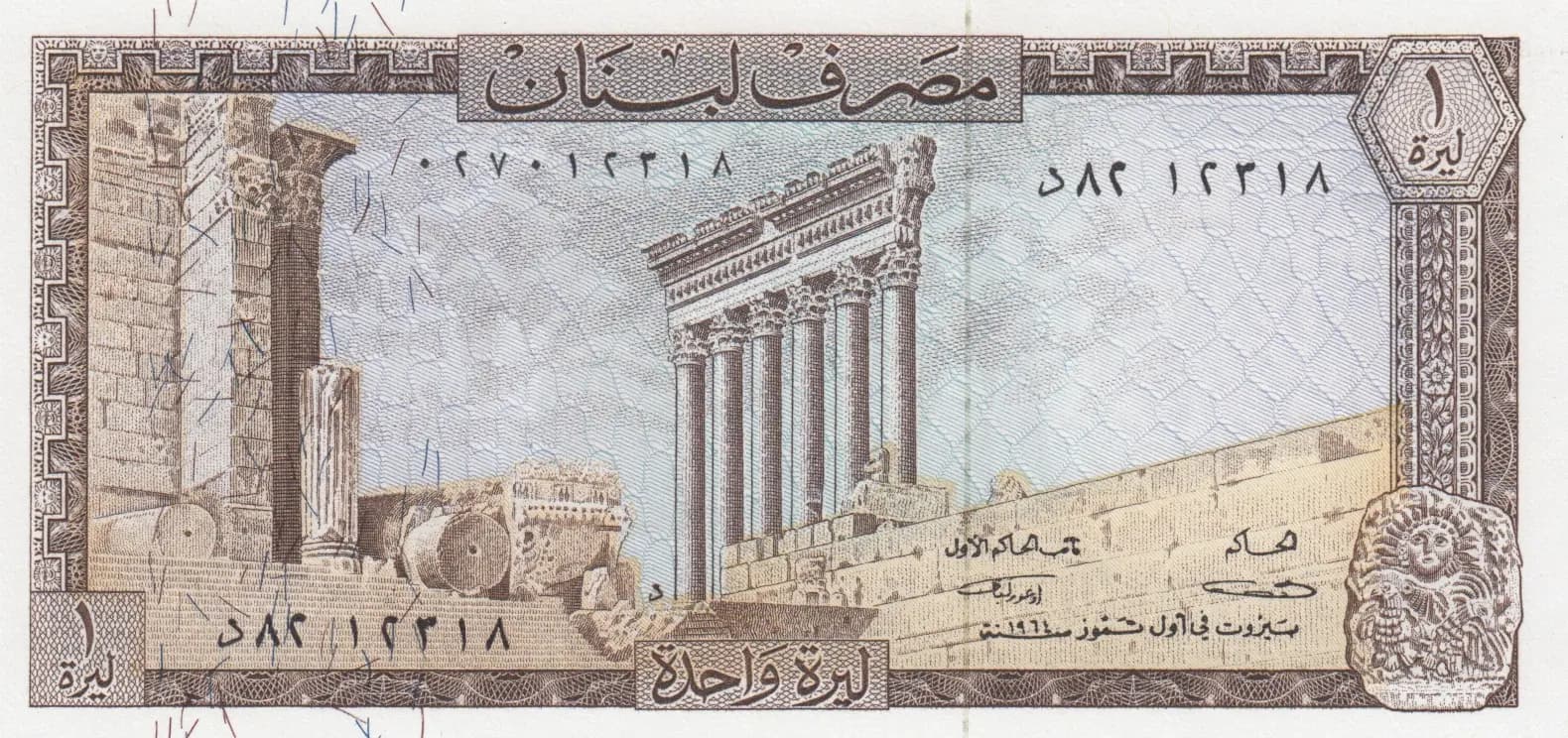
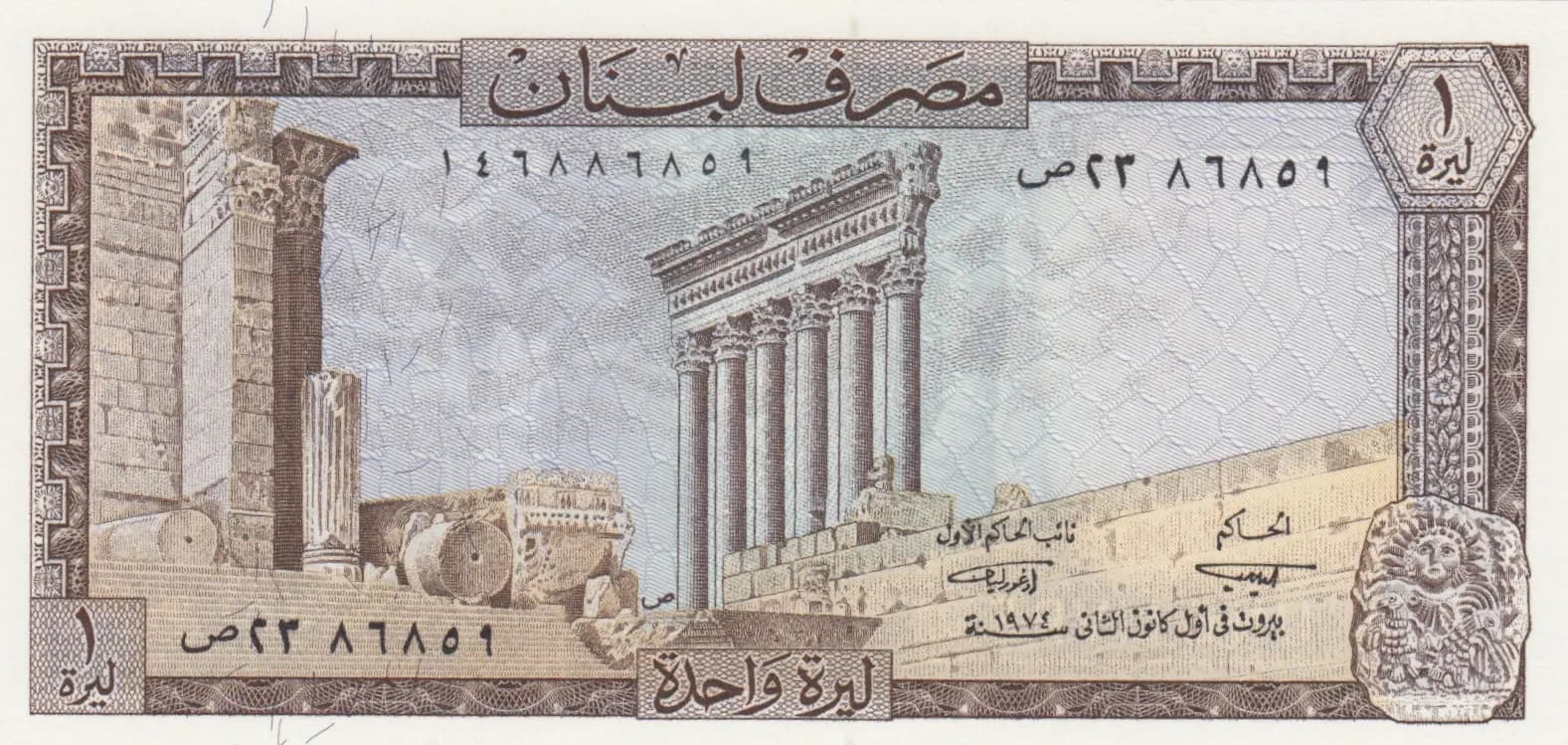
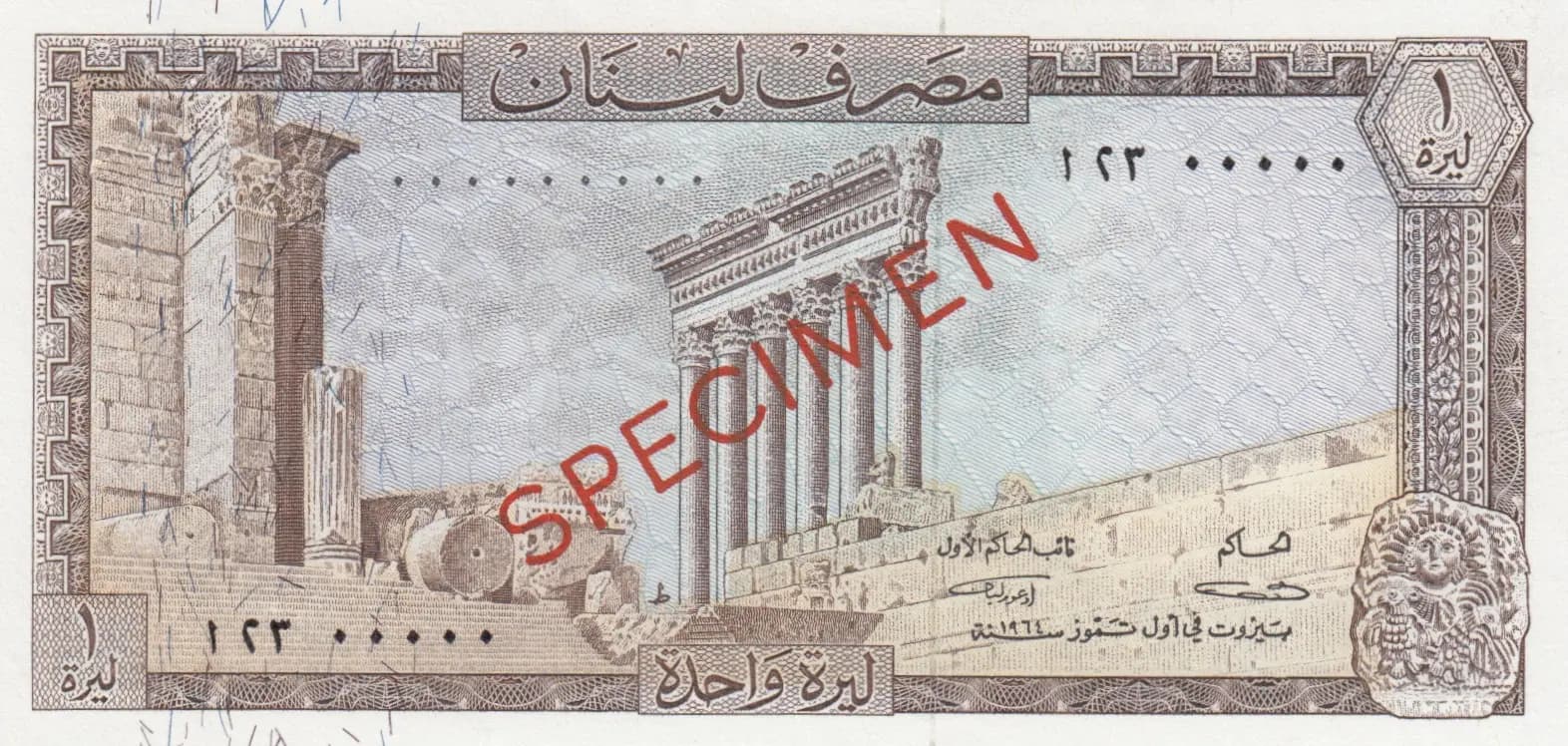
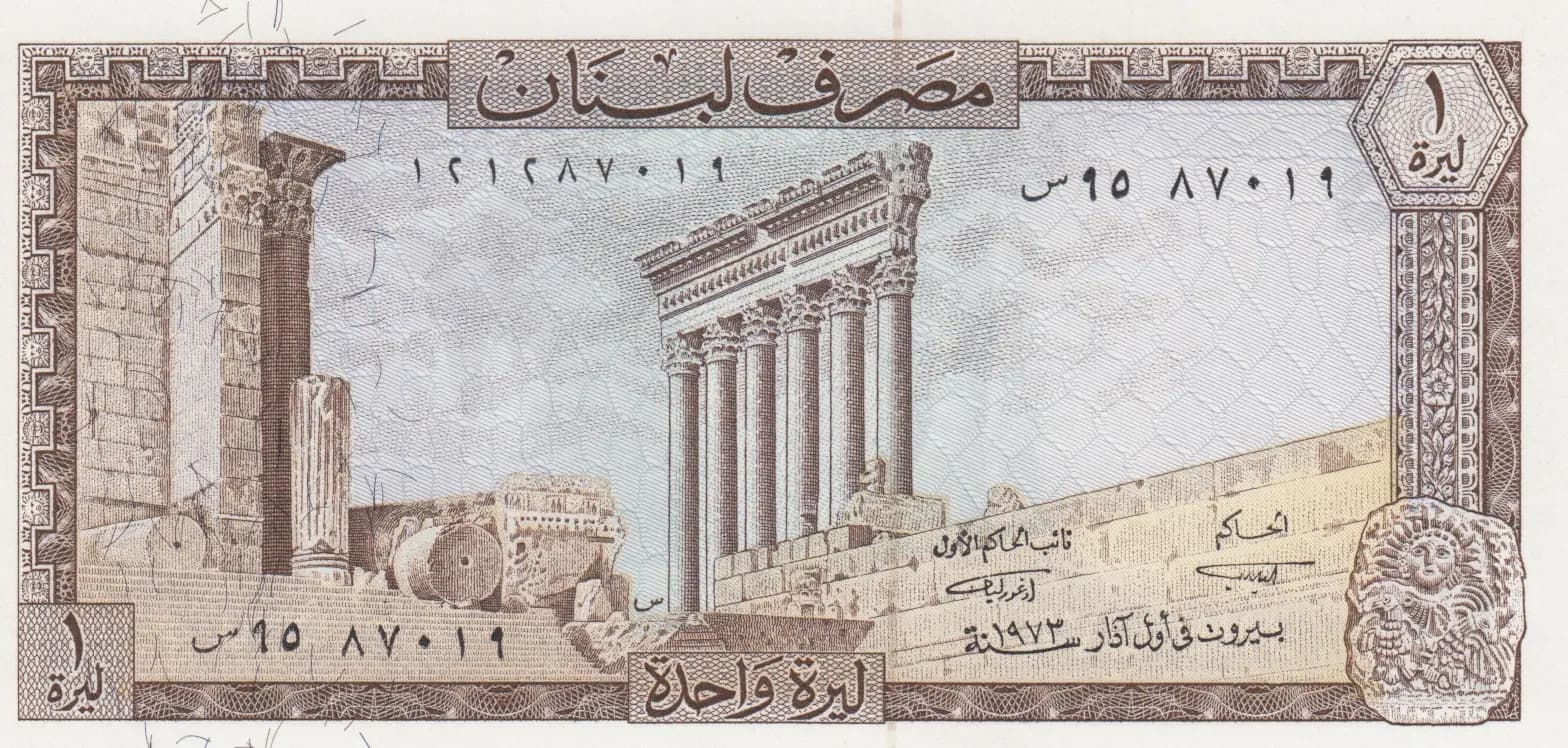
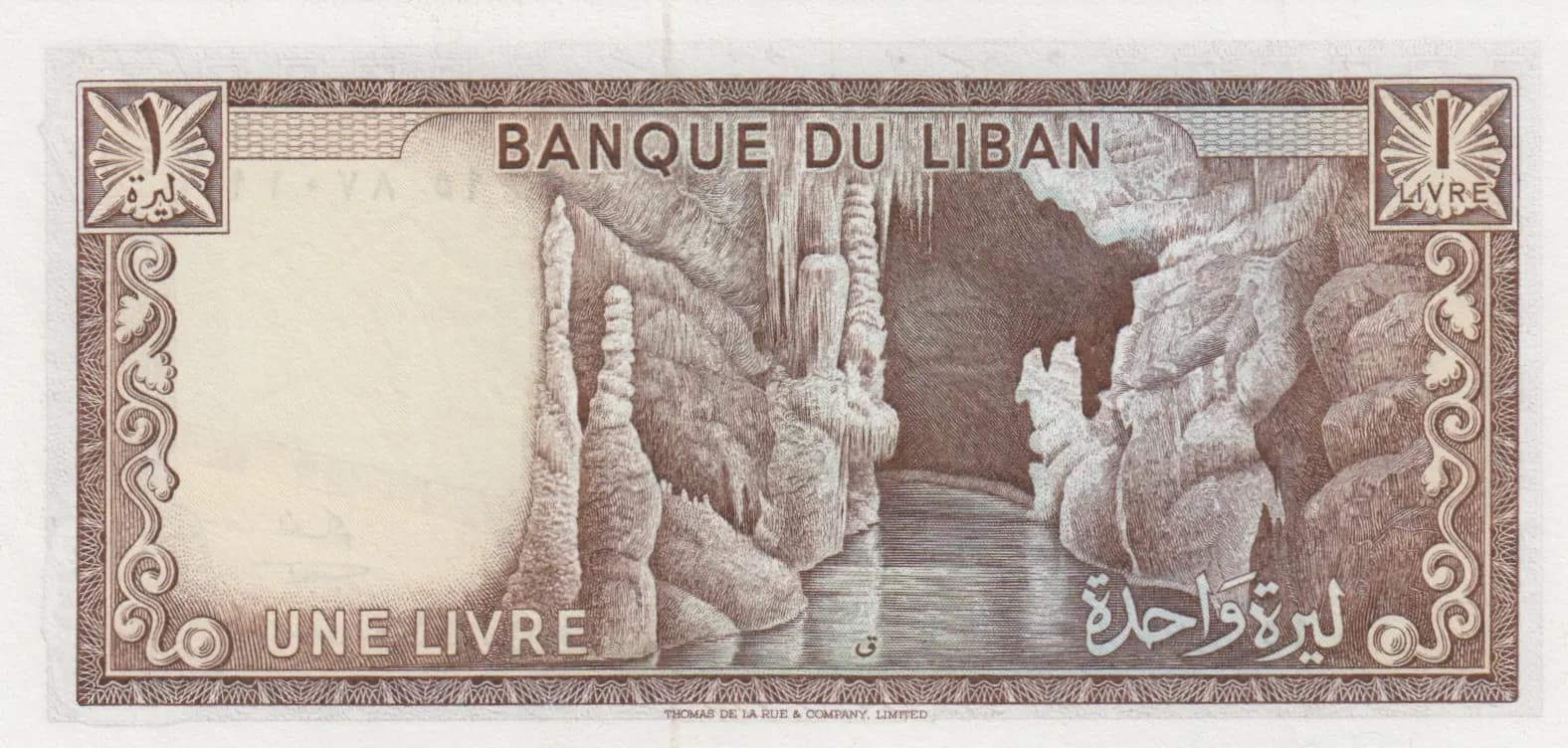
This is a Lebanese 1 Livre banknote from 1973 (Pick P-61b), printed by Thomas de la Rue in UNC condition. The note features exquisite intaglio engraving on both sides: the obverse depicts the iconic Corinthian columns of the Jupiter Temple at Baalbek amid fallen architectural fragments in brown and light blue, while the reverse showcases the stunning Jeita Cavern with its dramatic stalactites and underground river rendered in sepia tones. The ornate decorative borders and fine line work are characteristic of high-quality security printing from this era.
Common. Secondary market data from realbanknotes.com shows consistent UNC sales ranging from $2.08 to $33.99, with 2019 catalogue valuation of $30 for UNC condition. The wide range of sold prices and frequency of sales indicate this is a regularly traded note with no scarcity premium. The multiple print runs across 1971-1974 and the note's straightforward design without special varieties or low mintage characteristics place it firmly in the common category.
Issued during a politically unstable period in Lebanon's modern history, this 1973 note represents the Banque du Liban's effort to celebrate the country's rich Greco-Roman heritage and natural wonders. The Jupiter Temple columns at Baalbek depicted on the obverse symbolize Lebanon's classical past as a center of ancient civilization, while the Jeita Cavern on the reverse showcases the nation's geological significance and natural beauty—both imagery designed to project national pride during the early stages of the Lebanese Civil War era.
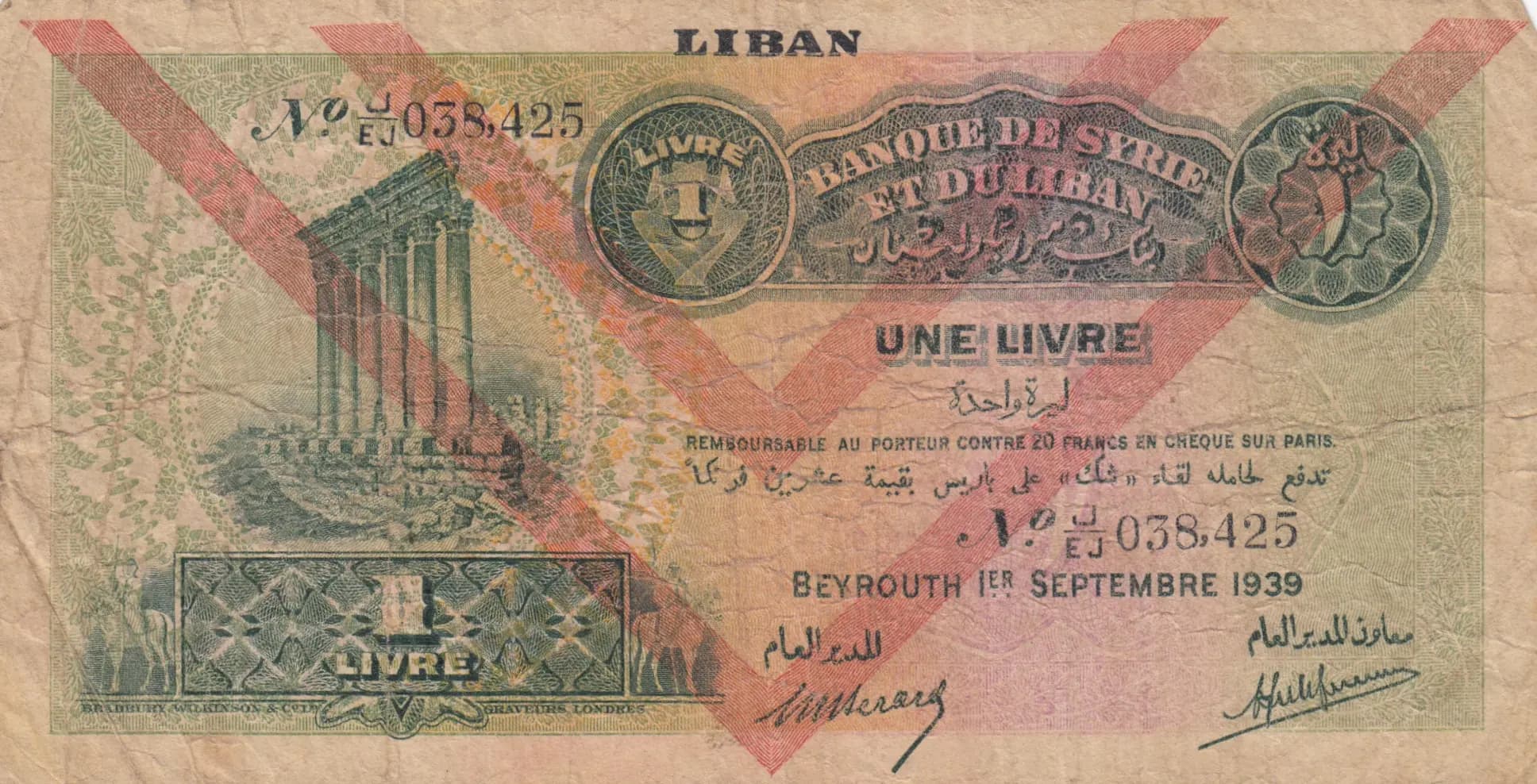
The obverse features the columns and ruins of the Temple of Jupiter at Baalbek (Heliopolis), one of the largest and best-preserved Roman temples in the world, located in the Bekaa Valley of Lebanon. The Corinthian capitals and fallen architectural fragments are rendered with meticulous detail, set against a light blue sky. The reverse depicts the Jeita Cavern (Grotte de Jeita), a spectacular natural wonder featuring a subterranean river, limestone stalactites, and dramatic rock formations. Both designs are framed by ornate Art Deco-influenced borders with geometric and floral patterns. The dual-language inscriptions (Arabic and French) reflect Lebanon's bilingual administrative tradition during this period.
Front (Obverse): مصرف لبنان (Banque du Liban / Bank of Lebanon), ليرة واحدة (One Livre), denomination numeral 1, and Arabic date numerals. Back (Reverse): BANQUE DU LIBAN (Bank of Lebanon in French), UNE LIVRE (One Livre), LIVRE (Livre), الليرة اللبنانية (Lebanese Pound/Livre in Arabic), THOMAS DE LA RUE & COMPANY, LIMITED (printer attribution), and denomination numeral 2.
Intaglio engraving (steel plate engraving), the traditional security printing method employed by Thomas de la Rue & Company, Limited, the renowned London-based security printer. The fine line work, detailed shading, and complex border patterns visible in both the visual analysis and on the actual note are characteristic of high-quality intaglio production. Security features include the intricate border designs and fine engraving details throughout.
Pick P-61b represents the 1973 printing variant of the 1 Livre series issued between 1971-1980. The visual analysis indicates this specific note bears Arabic dates (11.87.10 format, equivalent to 1973 in the Islamic calendar). Varieties exist within this base Pick number including different date printings (1971, 1972, 1973, 1974) and potentially different serial number prefixes, but without visible examination of the serial number and exact date placement, the specific sub-variety cannot be definitively determined from the images provided. The brown-on-light blue color scheme and Baalbek/Jeita design are consistent across all variants of Pick P-61b.