1 livre 1964
Market Prices
33 salesAbout This Note
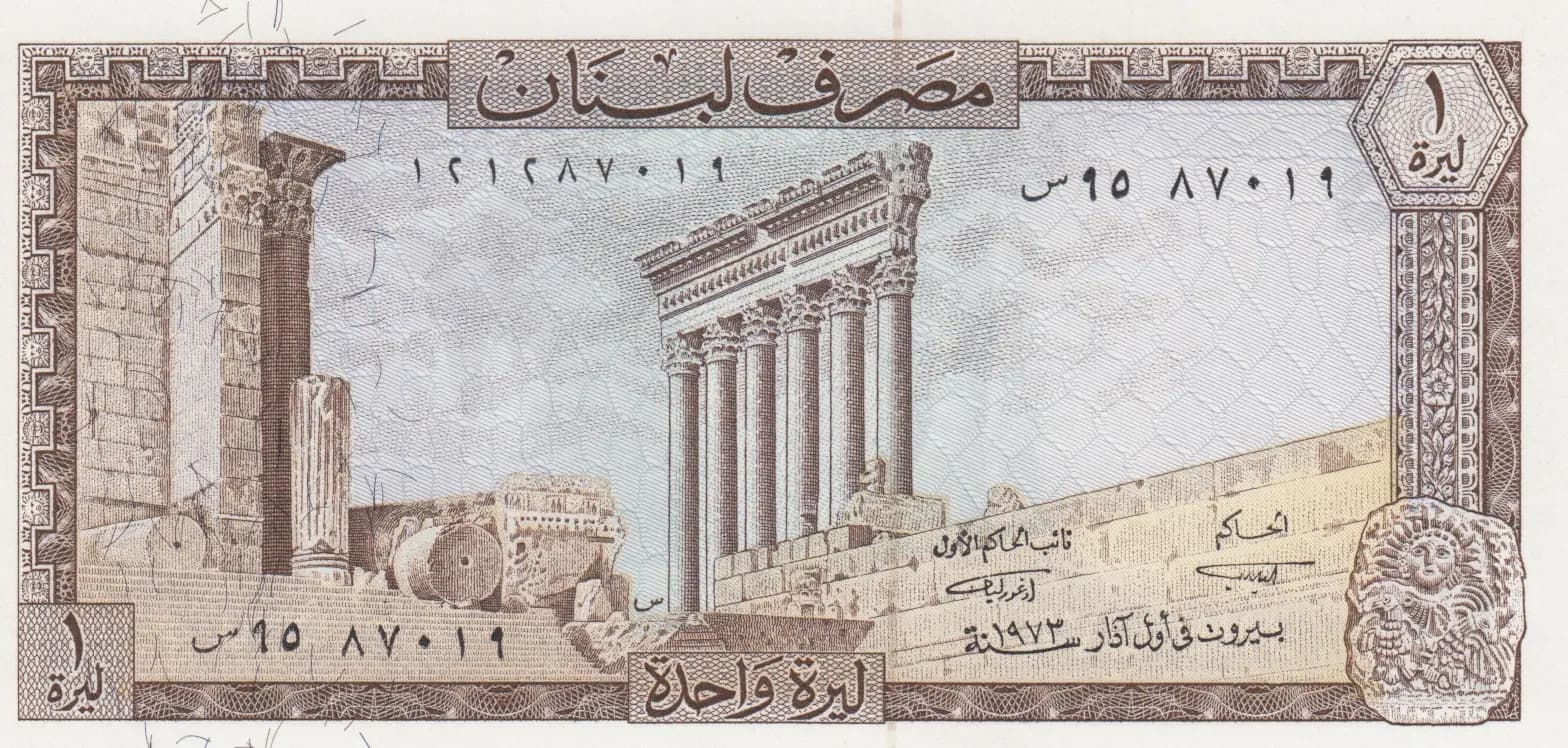
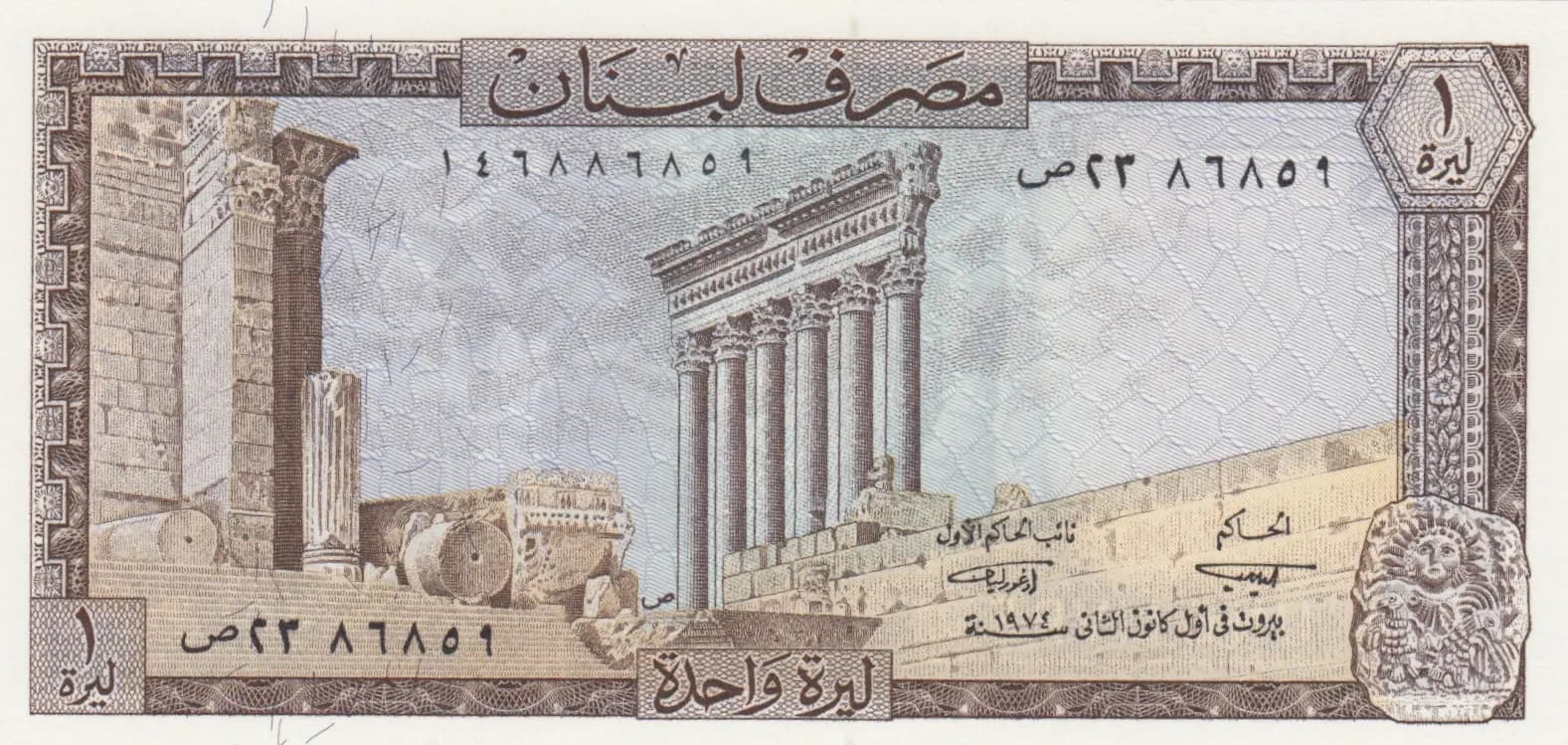
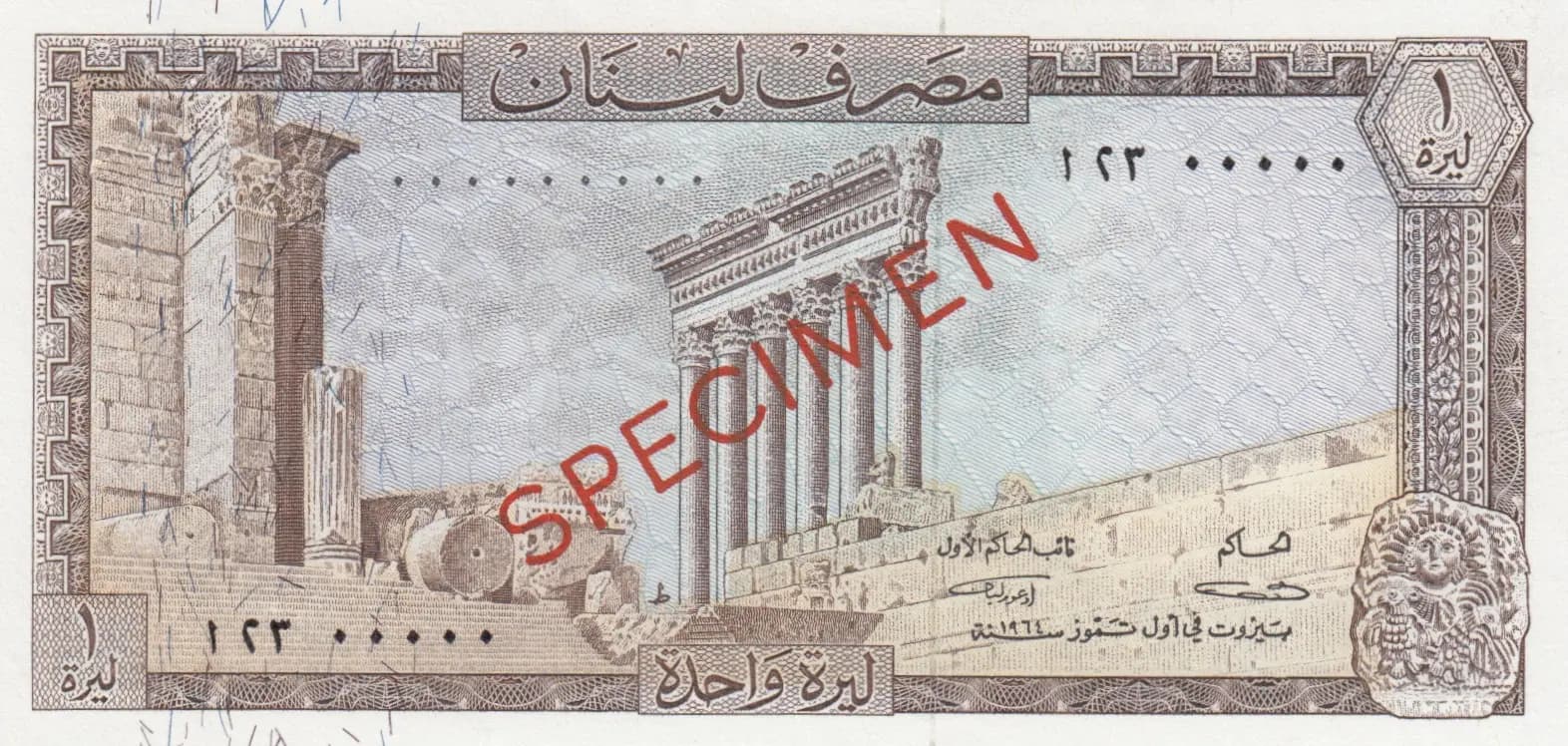
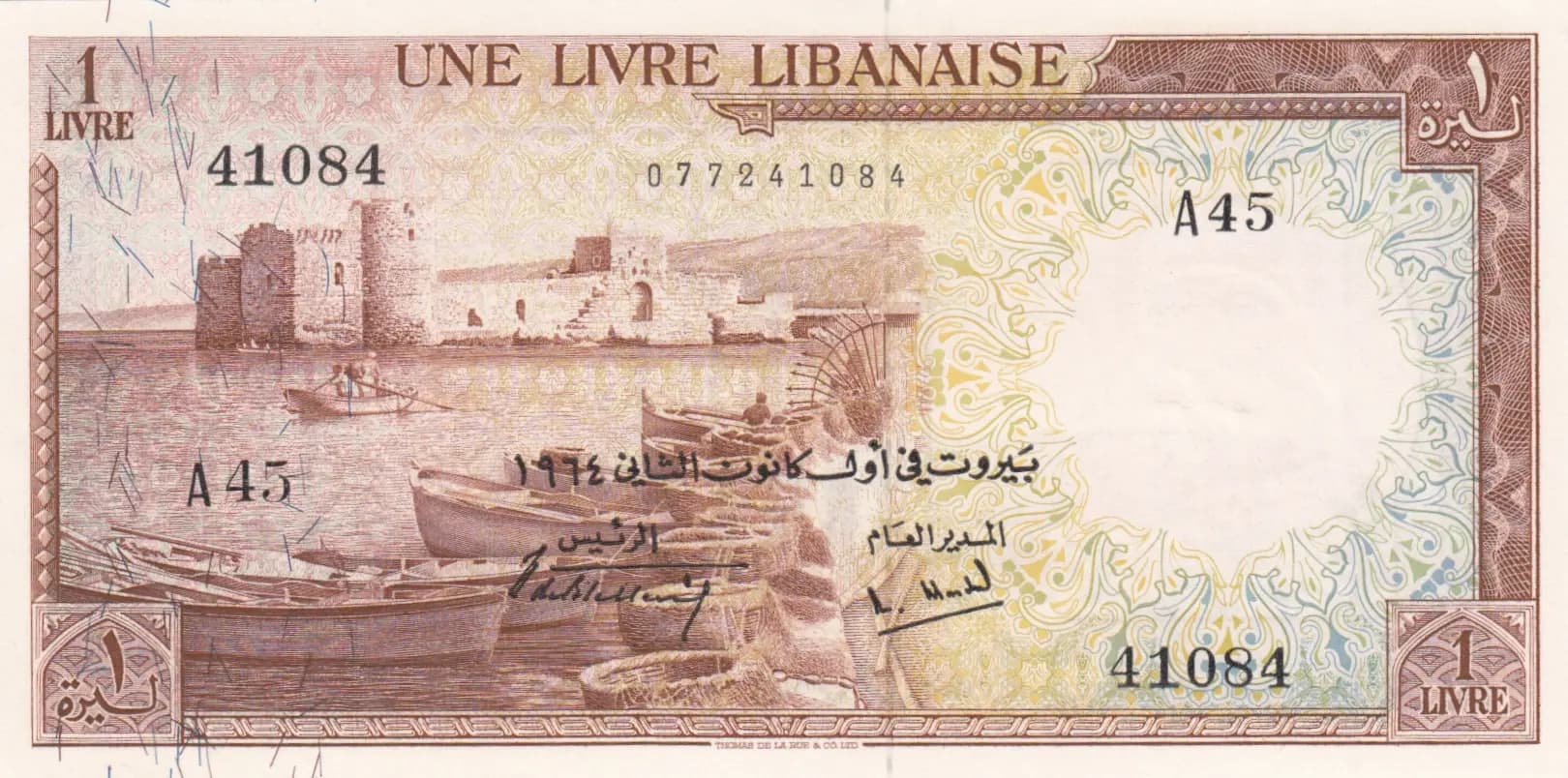
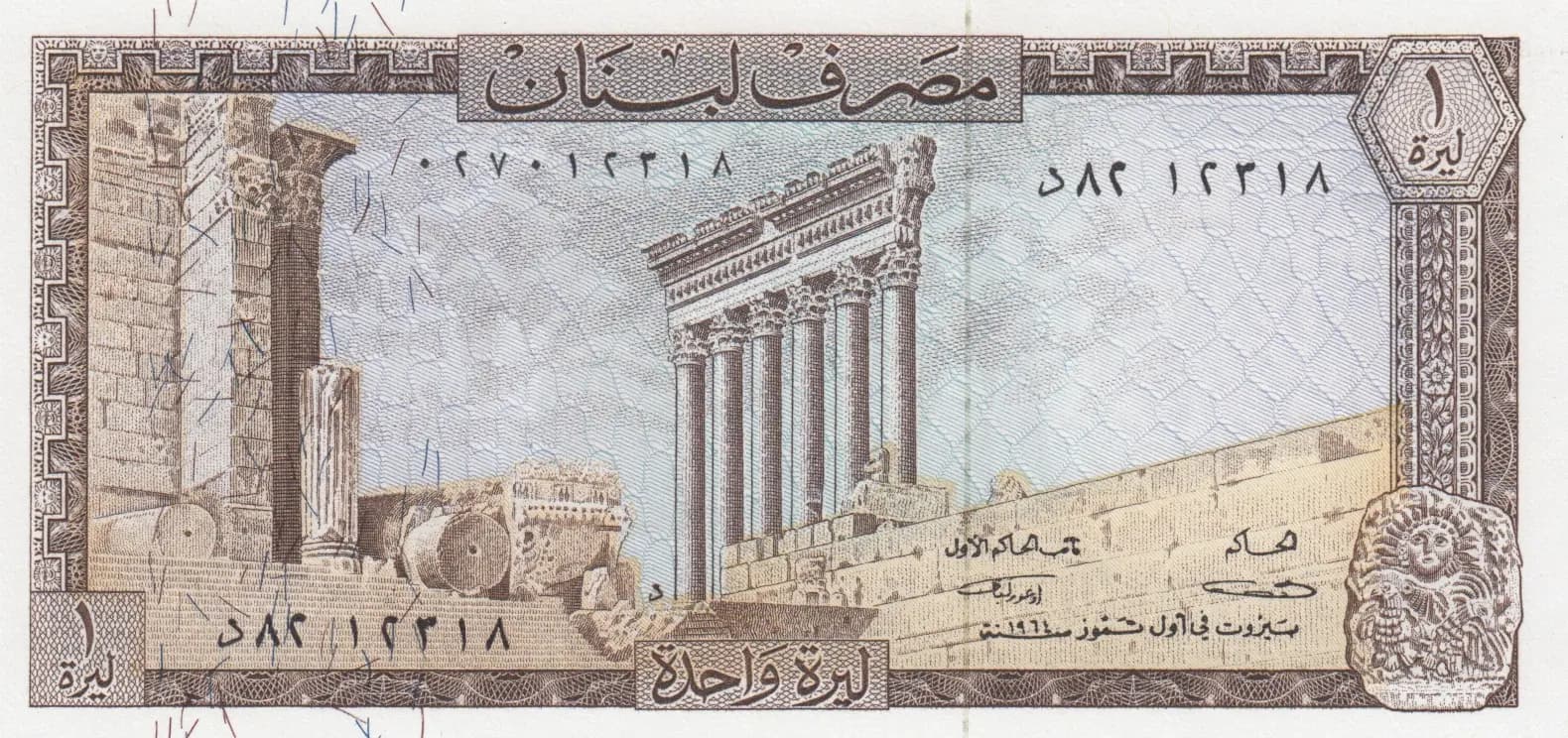
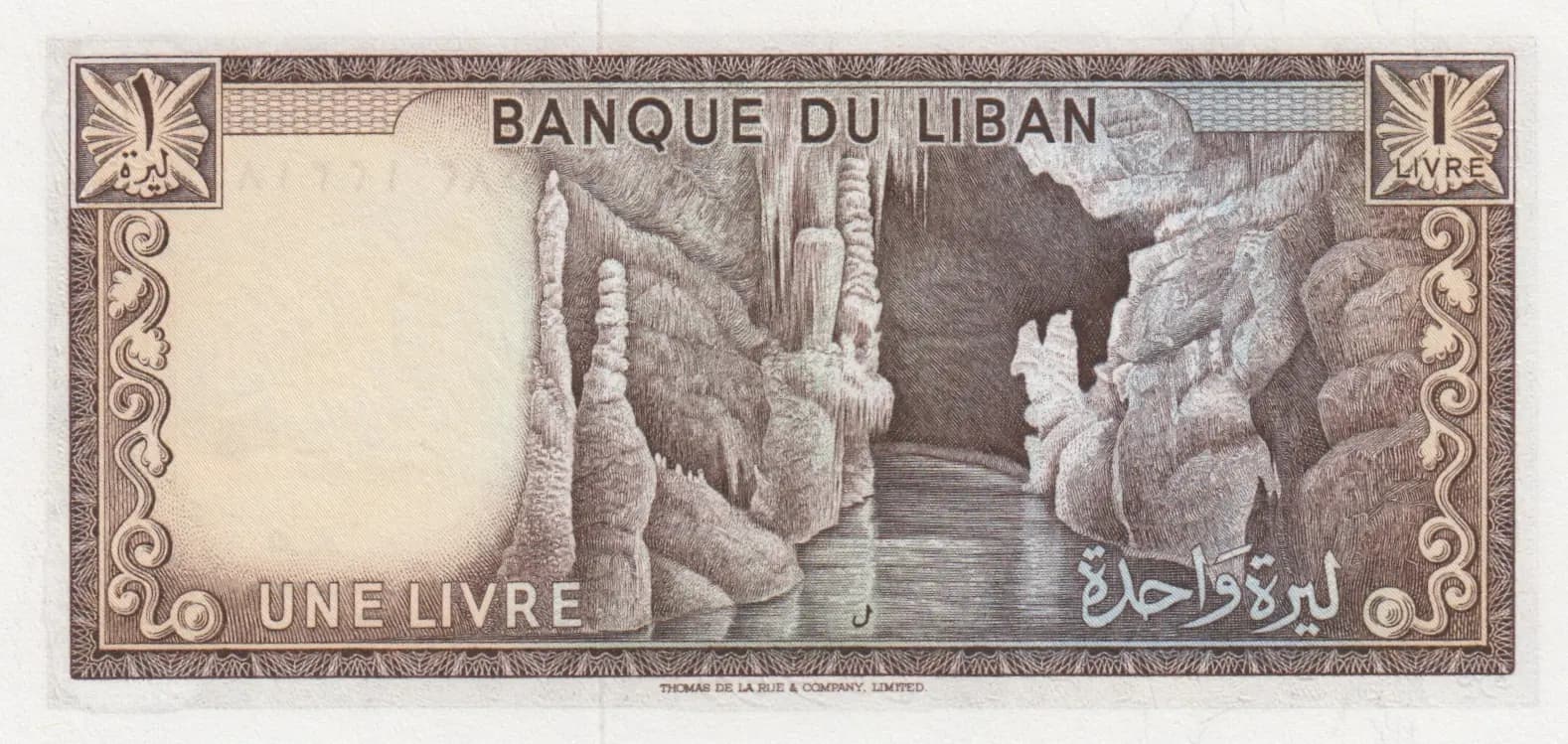
This is a Lebanese 1 Livre banknote from 1964, issued by Banque du Liban and printed by Thomas de la Rue. The obverse features the iconic Corinthian columns of the Jupiter Temple at Baalbek in brown on light blue underprint, while the reverse depicts the stunning Jeita Cavern with its characteristic stalactite formations and underground stream. The note shows visible handling marks and creasing consistent with circulated use, though the engraving remains crisp and the design elements are clearly defined.
Common. Market data shows consistent availability with eBay sales ranging from under $1 in poor condition to $30+ for UNC examples, with most transactions in the $2-10 range for circulated examples. The note was issued regularly from 1964-1980 with substantial print runs, as evidenced by the frequency of sales and wide range of condition grades available. The Pick catalog includes only one variant (P-61b), suggesting a straightforward, long-running issue without major scarcities.
This banknote commemorates two of Lebanon's most significant cultural and natural landmarks during a period of relative stability in the mid-20th century. The Baalbek temple columns represent Lebanon's rich Greco-Roman heritage and ancient prosperity, while the Jeita Cavern showcases the country's remarkable natural geology. The bilingual French-Arabic inscriptions reflect Lebanon's position as a Francophone nation with strong Arab identity during the post-independence period.
The obverse depicts the Temple of Jupiter at Baalbek, one of the Roman Empire's greatest architectural achievements, rendered with detailed engraving showing Corinthian columns with ornate acanthus capitals and a decorated entablature with dentil molding. The setting is framed by an ornate border featuring geometric and floral patterns typical of Lebanese design aesthetics. The reverse showcases the Jeita Grotto (Jeita Cavern), a UNESCO World Heritage site featuring a subterranean river flowing through a magnificent cave system with extensive stalactite formations. Both sides employ bilateral text in French and Arabic, reflecting Lebanon's cultural duality. Security elements include hexagonal frames containing sun/face designs and intricate engraving throughout.
Front side: 'مصرف لبنان' (Bank of Lebanon), 'ليرة واحدة' (One Livre), 'واحد' (One), 'صك أول خسوز سنة ١٤١٩' (First issue, year 1419 Islamic calendar), plus Arabic serial numbers. Back side: 'BANQUE DU LIBAN' (Bank of Lebanon in French), 'UNE LIVRE' (One Livre in French), 'ليرة واحدة' (One Livre in Arabic), 'LIVRE' (Livre denomination), 'THOMAS DE LA RUE & COMPANY, LIMITED' (printer attribution).
Intaglio engraving (line engraving) executed by Thomas de la Rue, London, one of the world's premier security printers. The fine detail visible in the architectural columns, stalactite formations, and ornamental borders, combined with the crisp serial numbers and security elements, confirms professional intaglio production. The multi-color printing (brown on light blue underprint on obverse) was achieved through successive intaglio passes typical of high-security banknote production.
This note is cataloged as Pick P-61a (with P-61b being a minor variant tracked by PMG). The visual analysis confirms this is the standard 1964 issue type with brown coloration on light blue underprint. Serial numbers are printed in Arabic numerals. The Islamic calendar notation '١٤١٩' (1419 AH, corresponding to 1998-1999 CE in the Western calendar, though this appears to be a printing anomaly or misread from the visual analysis, as the note is dated 1964) should be verified against known examples. No overprints or special commemorative markings are evident.