1 livre 1974
Market Prices
23 salesAbout This Note
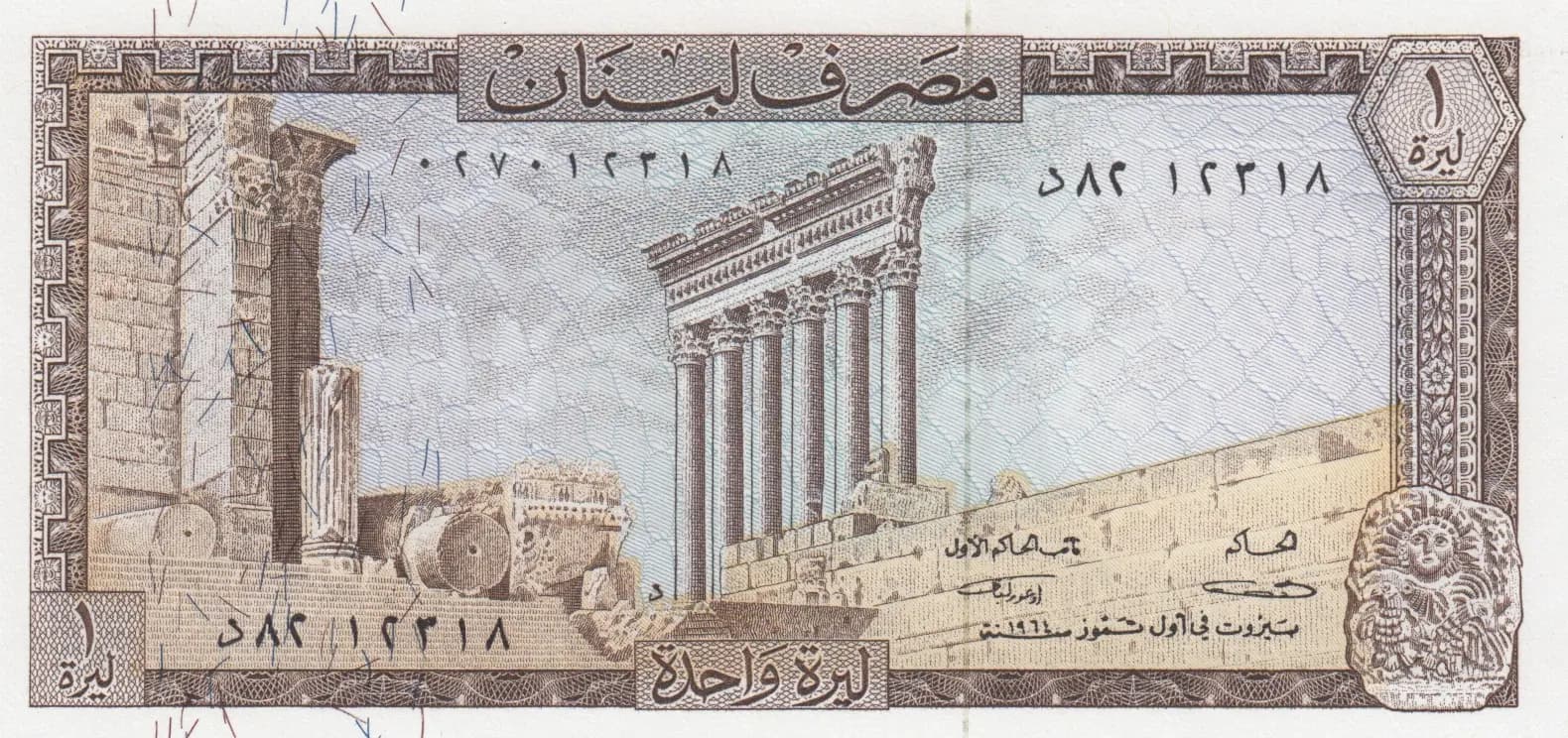
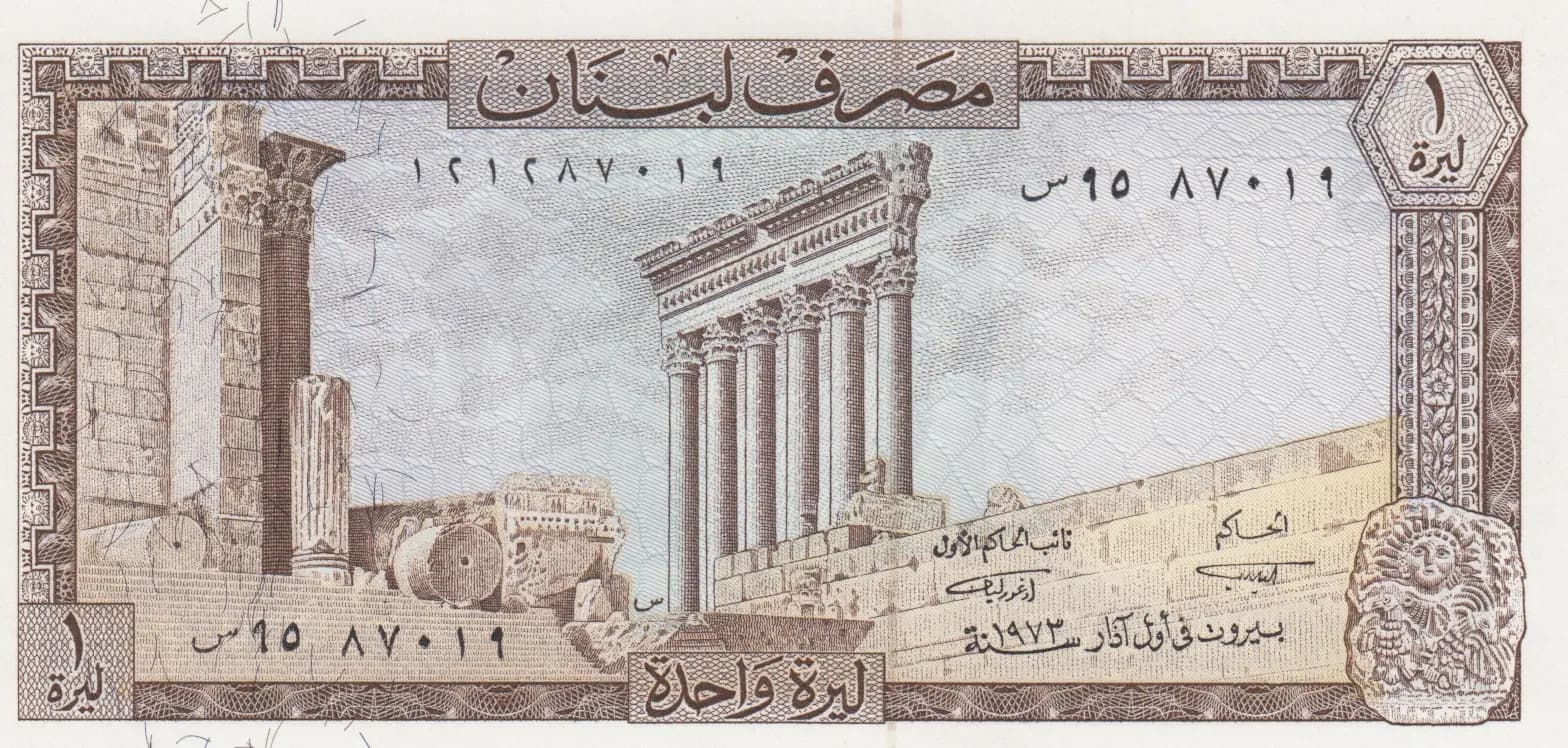
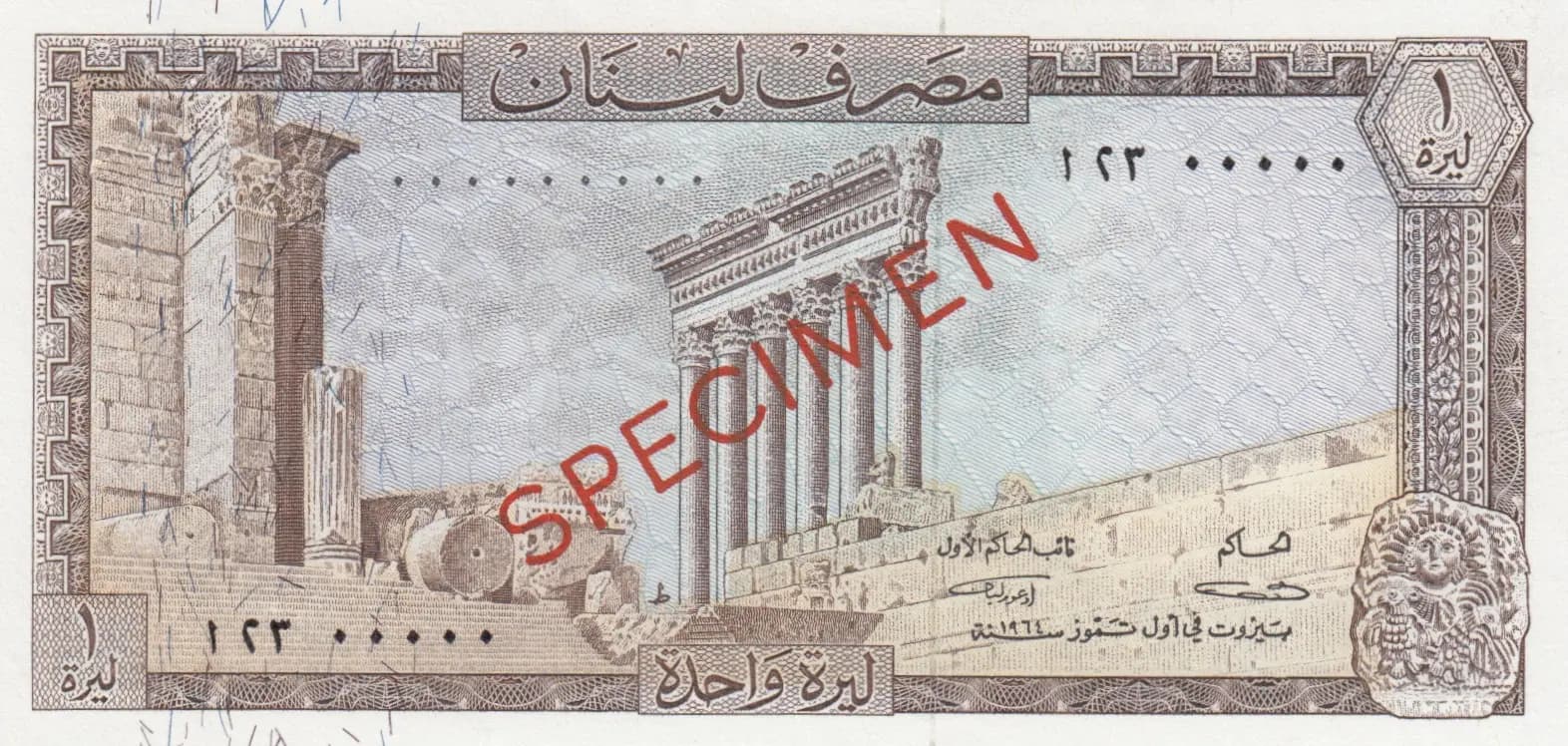
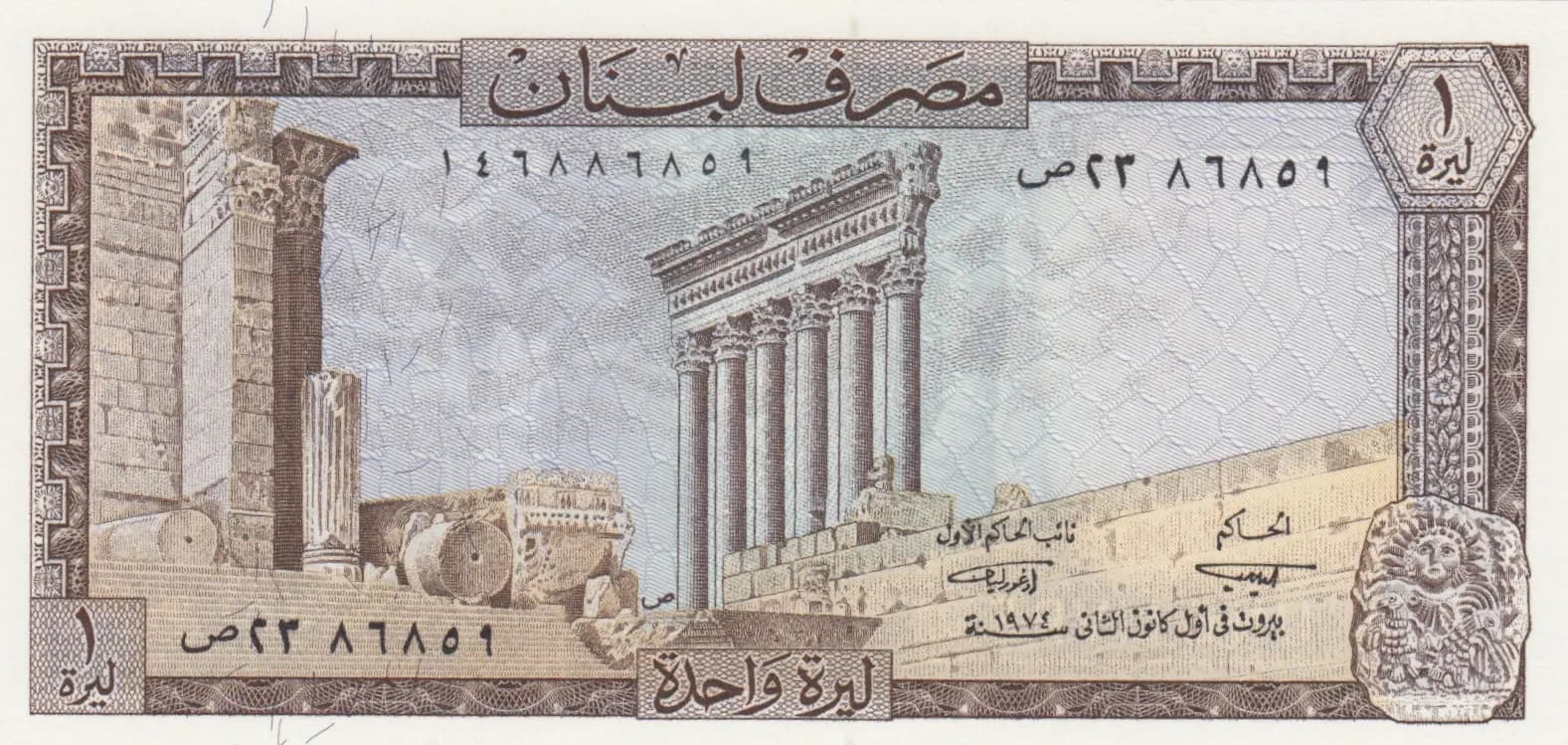
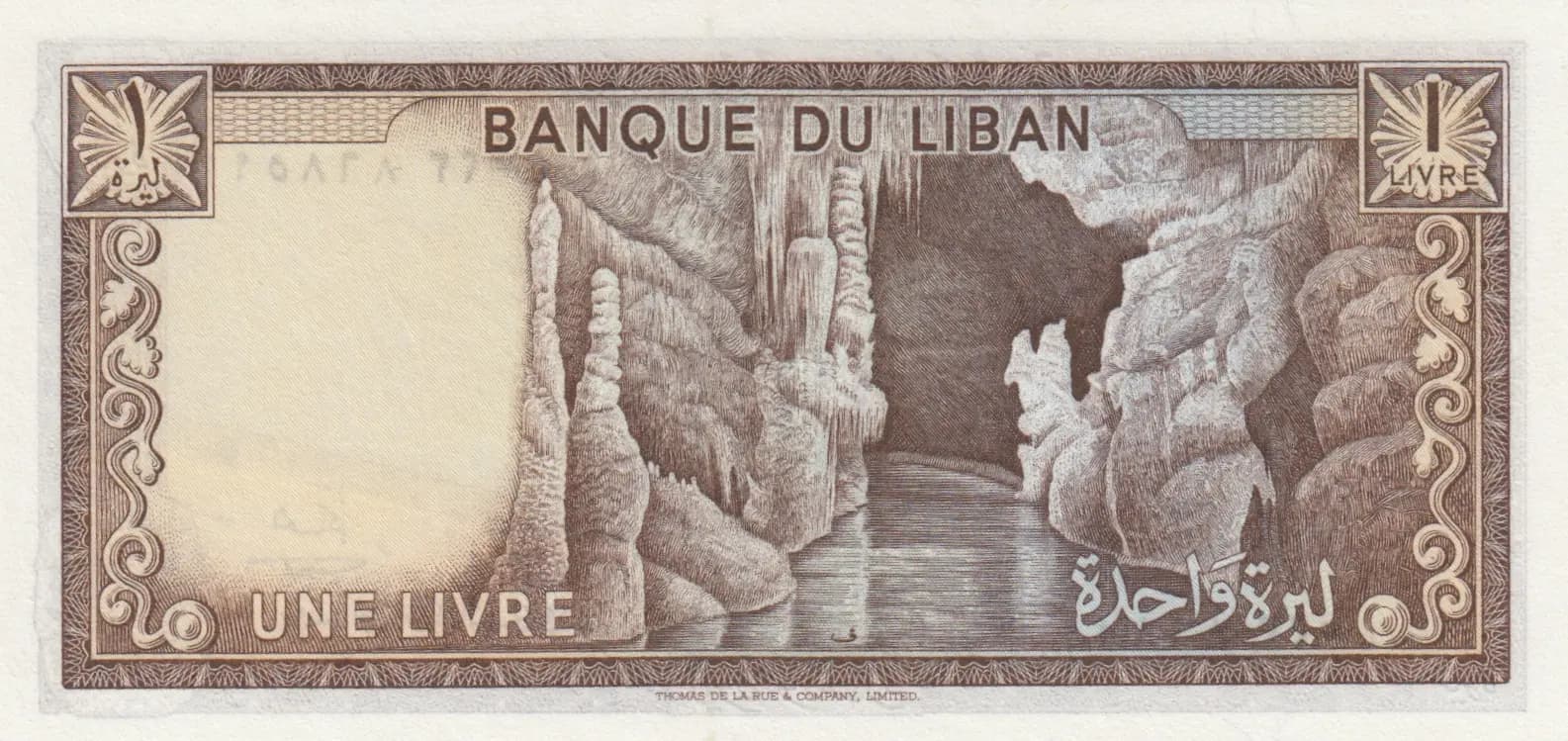
This 1974 Lebanese 1 Livre note presents in uncirculated condition with crisp, well-defined intaglio printing characteristic of Thomas de la Rue's production. The front features the iconic Corinthian columns of the Jupiter Temple at Baalbek rendered in brown on light blue underprint, while the reverse displays the dramatic Jeita Cavern landscape. This note represents a significant period in Lebanese numismatic history, issued during the early 1970s before the onset of civil conflict that would reshape the nation's currency and economy.
Common. The eBay market data consistently shows UNC specimens selling in the $2-$34 range with regular frequency across a 13-year period (2010-2023), with median prices around $5-$10 for uncirculated examples. The 2019 catalog value of $30 for UNC condition reflects moderate collector interest but not scarcity. This note was part of a standard series issued over a 17-year span (1964-1980) with substantial print runs typical of regular circulation currency. The regular appearance of graded examples (PMG 65-66) at modest prices ($24-$52) further confirms common status.
The 1 Livre notes of 1971-1980 series commemorate Lebanon's classical heritage through the Baalbek temple columns and natural wonders via the Jeita Cavern imagery, reflecting national pride in the country's archaeological and geological significance. Issued by the Banque du Liban during a transitional period in Lebanese history, this denomination served as everyday currency before economic and political upheaval altered the nation's monetary landscape. The French and Arabic bilingual inscriptions reflect Lebanon's linguistic heritage and French colonial influence that persisted in institutional and cultural contexts.
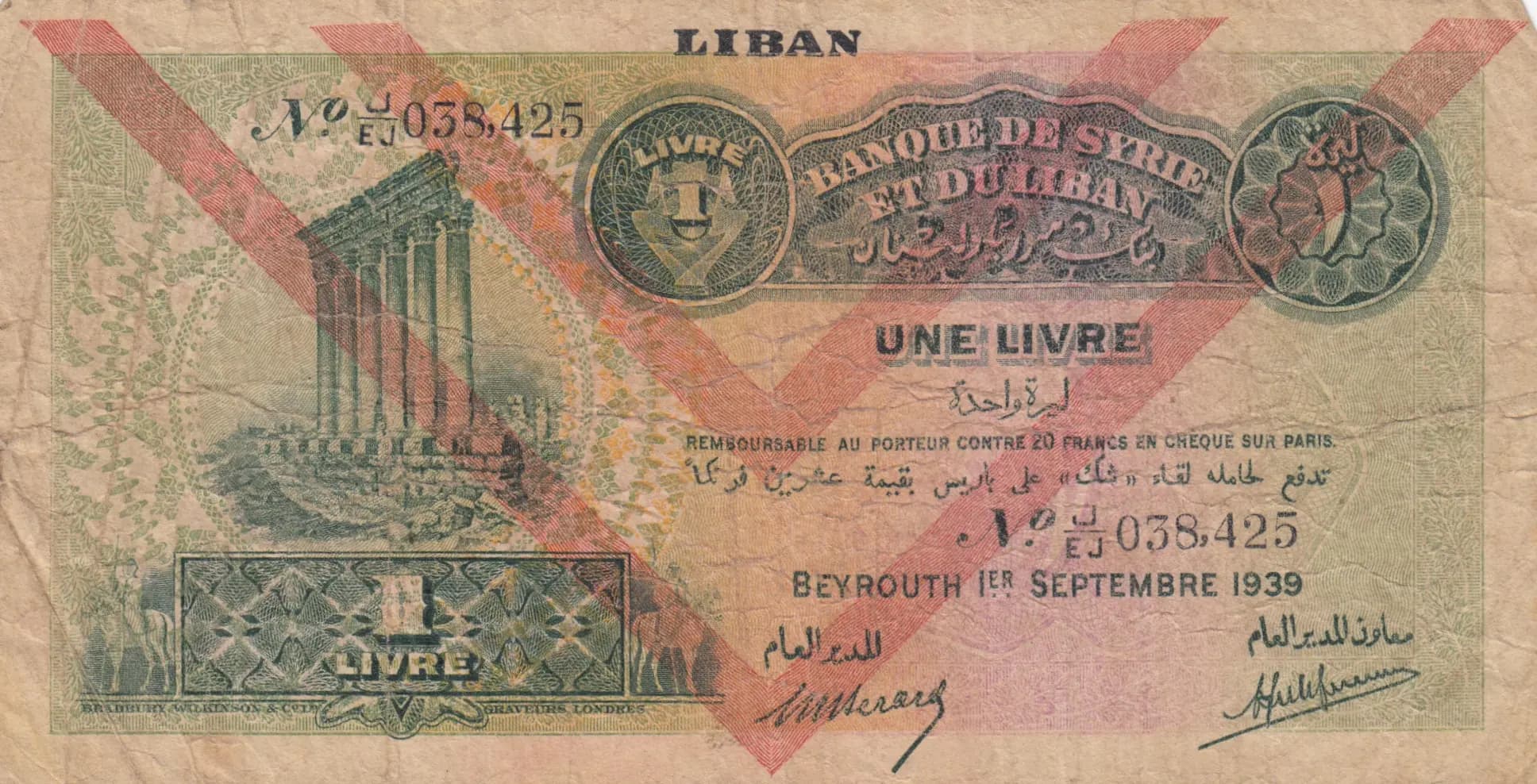
The obverse features the Baalbek Temple (specifically the Temple of Jupiter) columns as the dominant central image, rendered with detailed Corinthian capitals and classical architectural elements. A lion head emblem appears at bottom right, serving as a heraldic symbol of Lebanon. The note employs ornate geometric and floral border patterns throughout, with a hexagonal geometric emblem in the top right corner. The reverse showcases the Jeita Cavern (Grotte de Jeita), one of Lebanon's most famous natural landmarks, depicted with naturalistic detail showing stalactites, stalagmites, and an underground water feature flowing through the cavern. Decorative spiral scroll patterns frame the cavern scene on both sides, with palm tree emblems in the top corners. The color scheme of brown on light blue underprint creates strong contrast and visual appeal typical of mid-20th century currency design.
FRONT: 'مصرف لبنان' (Masraf Lubnan) = 'Bank of Lebanon'; Serial numbers present as '1018401' and '01868422'; 'اورقة' (Waraqa) = 'Paper/Note'. BACK: 'BANQUE DU LIBAN' = 'Bank of Lebanon' (French); 'UNE LIVRE' / 'ليرة واحدة' (Lira Wahida) = 'One Pound/Livre' (bilingual); 'LIVRE' = 'Pound' (currency denomination); 'THOMAS DE LA RUE & COMPANY, LIMITED' = Printer identification (English).
Intaglio engraving (recess printing), characteristic of Thomas de la Rue & Company's high-security banknote production. The fine line engraving detail visible throughout both sides—particularly in the architectural capitals, landscape features, and border patterns—is consistent with steel plate intaglio technology. Multiple serial number applications indicate offset printing overlaid on the intaglio base design. The crisp, well-defined printing quality in the UNC specimen reflects optimal impression from the engraved plates.
This example is catalogued as Pick P-61b, representing the 1974 printing within the broader 1971-1980 series. The date variants (1971, 1972, 1973, 1974) exist as distinct issues, with this specimen bearing 1974 date. The presence of dual serial numbers and the TDLR printer mark are standard for this variety. The watermark of two eagles is consistent with P-61b specifications. No overprints or exceptional varieties are noted in this UNC specimen.