5 rubli 1919
“serie B”
Market Prices
5 salesAbout This Note
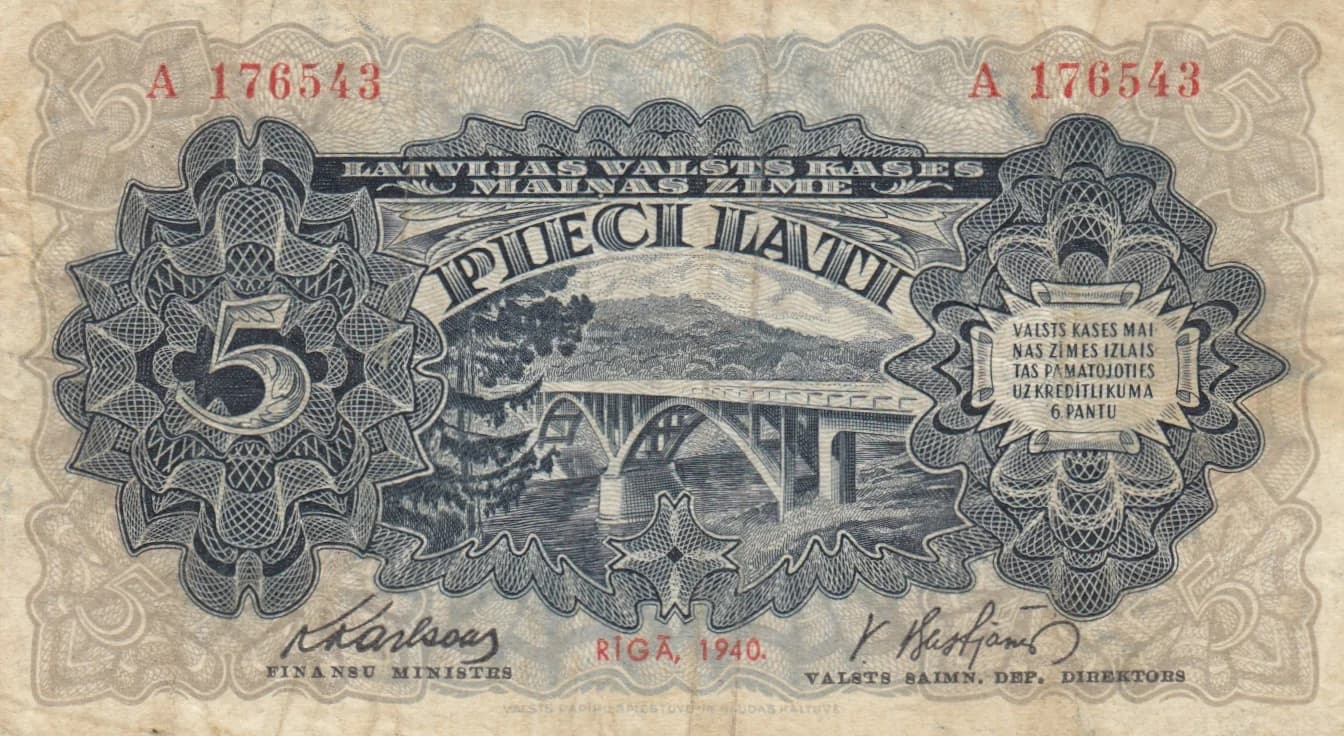
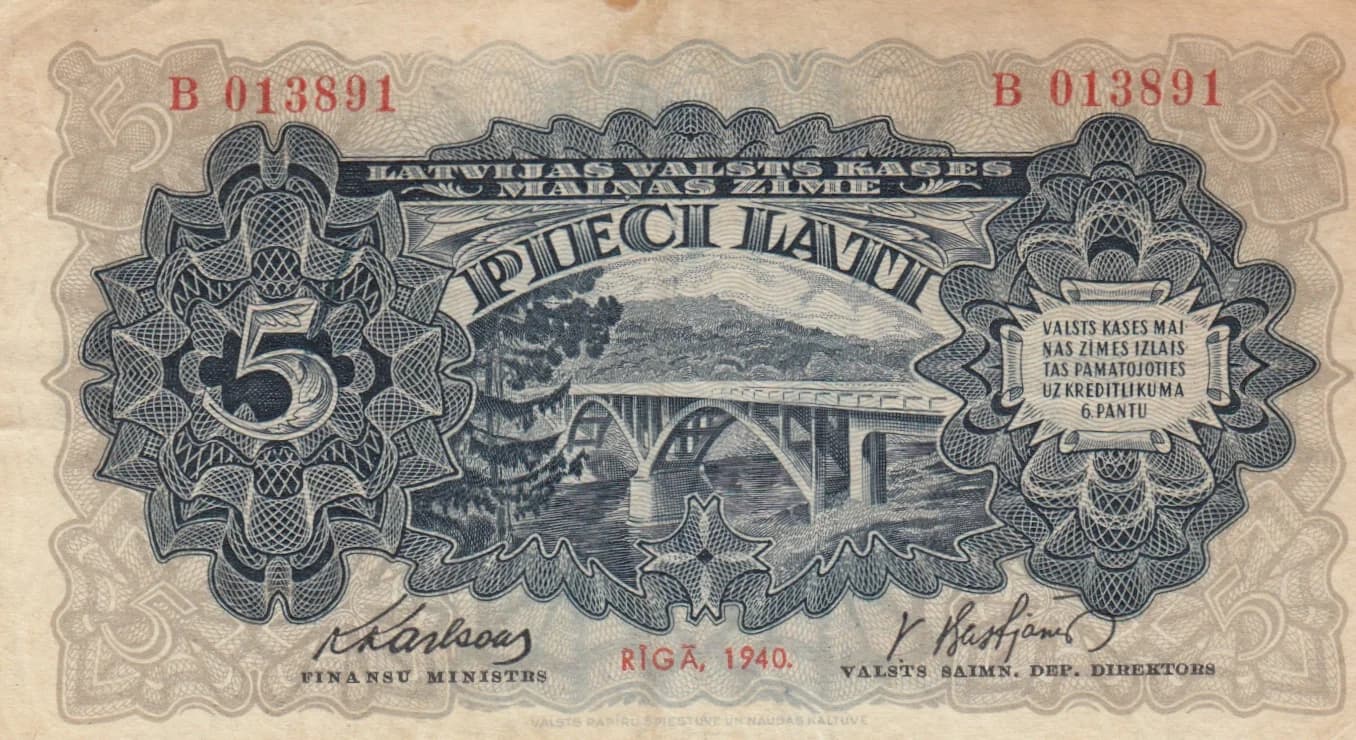
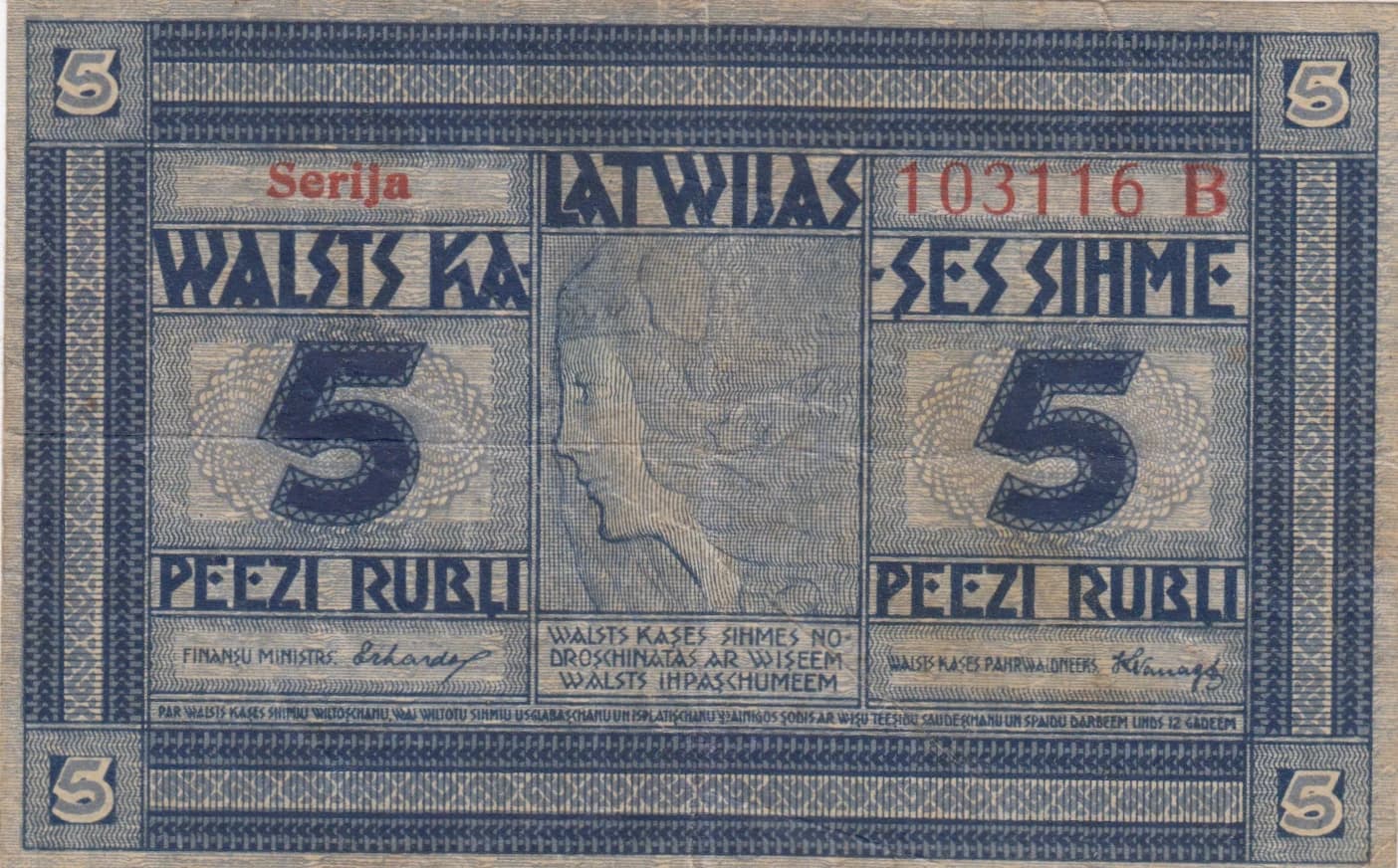
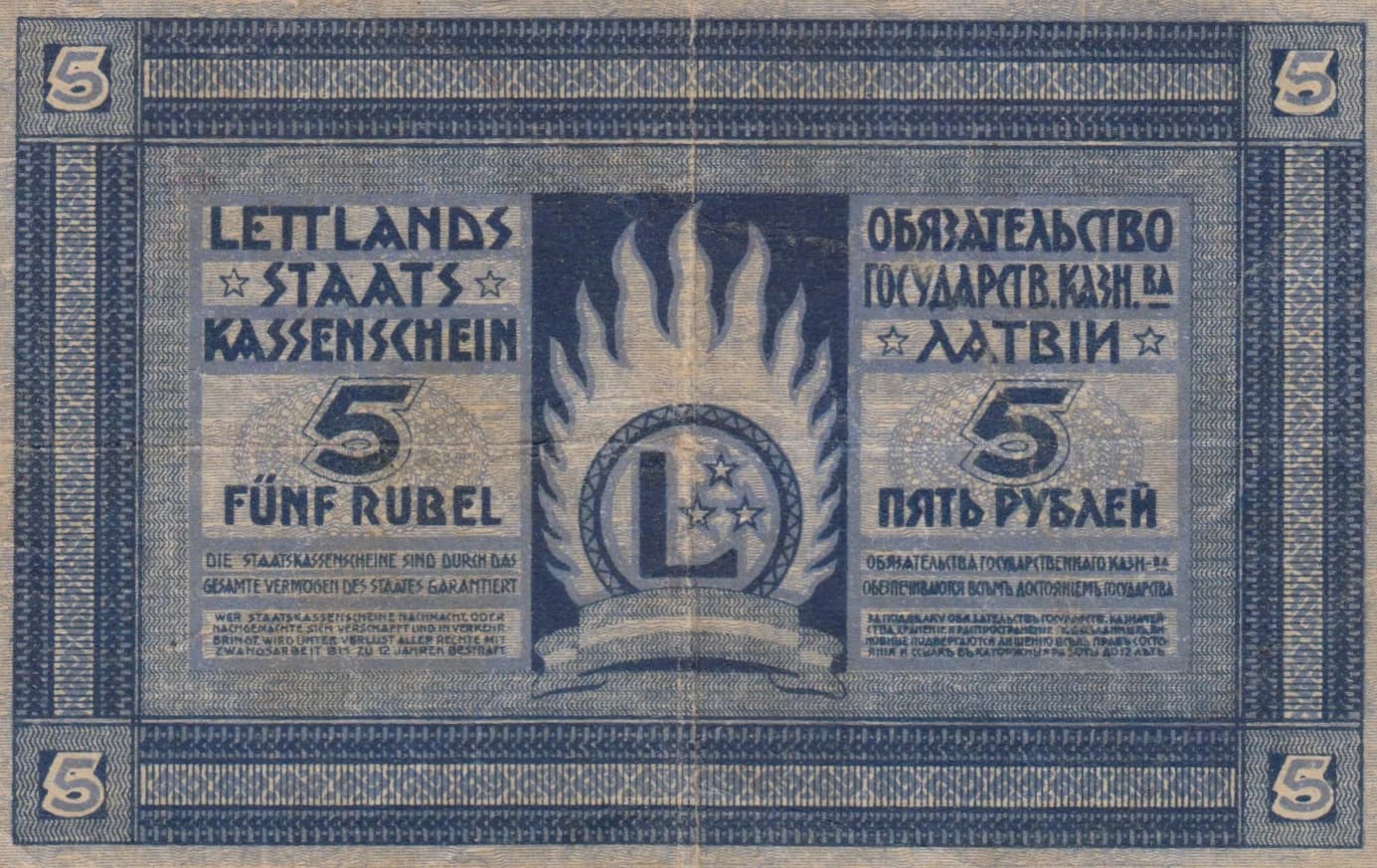
This is a Well Fine (VF) example of Latvia's 1919 5 Rubli banknote (Pick P-3b), featuring elegant Art Deco design with a striking three-panel layout divided by ornate geometric borders in navy blue and cream tones. The note displays a left-facing portrait in the center panel, flanked by ornamental numeral '5' frames, with multilingual text reflecting Latvia's complex linguistic environment. The note's excellent state of preservation, sharp engraving, and minimal wear make it a desirable specimen for collectors of early Latvian currency.
Common. The 1919 5 Rubli (Pick P-3b) was issued in substantial quantities as part of Latvia's initial currency system and remains readily available to collectors in both circulated and uncirculated grades. Series B notes like the specimen described are standard varieties without premium scarcity. No historical evidence suggests limited print runs, recalls, or extraordinary survival factors that would elevate this note's rarity status.
This 1919 note was issued during Latvia's early period of independence following World War I, when the newly formed Latvian state established its own currency system separate from the Russian ruble. The multilingual inscriptions in Latvian, German, and Russian reflect the complex ethnic and political landscape of the Baltic region during this transitional period. The reverse side's central emblem featuring a flaming torch and the letter 'L' symbolizes Latvia's sovereignty and aspirations for independent statehood during the tumultuous post-war years.
The 5 Rubli note exhibits a sophisticated tripartite design typical of early 20th-century European state treasuries. The front features a left-facing portrait in the center medallion, likely representing a historical or allegorical figure relevant to Latvian national identity, though not specifically identified in the visual analysis. Large ornamental numeral '5' frames occupy the left and right vertical sections, enclosed in decorative circular and square borders with Art Deco styling. The reverse side showcases a central emblem featuring a flaming torch (symbolizing enlightenment and eternal vigilance) rising above an ornamental letter 'L' representing Latvia, supported by scrollwork and decorative banners. The entire composition is framed with intricate geometric patterns and fine linear borders, reinforcing the note's security and artistic merit.
FRONT SIDE - Latvian text: 'Serilla' (location), 'Walsts Ka' (State), 'Peezi Rubli' (Five Rubles), 'Finandu Ministrs' (Finance Minister), 'Walsts Kases Sihmes No-Droschinas Tas Ar Wiseem Walsts Ihpas-Chumeem' (State Treasury Certificate with State liability), 'Walsts Kases Pahrwalnieks' (State Treasury Administrator), with date reference '1031.6.13'. BACK SIDE - German text: 'Lettlands Staats Kassenschein' (Latvia State Treasury Certificate), '5 Fünf Rubel' (5 Five Rubles), 'Die Staatskassenscheine Sind Durch Das Gesamte Vermögen Des Staates Garantiert' (The state treasury notes are guaranteed by the entire assets of the state), 'Wer Staatskassenscheine Nachgemacht Oder Verfälscht...' (Counterfeiting or forging state treasury notes is punished according to the law of January 20th). Russian text: 'Обязательство Государств.Кассы Латвии' (Obligation of the State Treasury of Latvia), '5 Пять Рублей' (5 Five Rubles), 'Обязательства Государственного Кассы-Ла Обеспечиваются Всем Достоянием Государства' (State treasury obligations are secured by all state property).
The note was produced using intaglio engraving, evident from the sharp, fine line work visible throughout both sides, the intricate geometric borders, and the precise rendering of the portrait and numeral frames. The multi-color printing (navy blue, cream, tan, and red accent text) was achieved through sequential intaglio passes on high-quality paper. This technique was standard for European government security printing during the 1919 period and provided substantial anti-counterfeiting protection through the complexity of the engraved designs.
This example is identified as serie B based on collector notation. The 1919 5 Rubli notes were issued in multiple series (A, B, C, etc.), with series designations typically appearing on the note's surface. No specific date variants, signature varieties, or overprints are noted in the visual analysis for this particular specimen. The note's standard design without any unusual overprints or printing anomalies indicates it is a regular issue of the B series.