10 rubli 1919

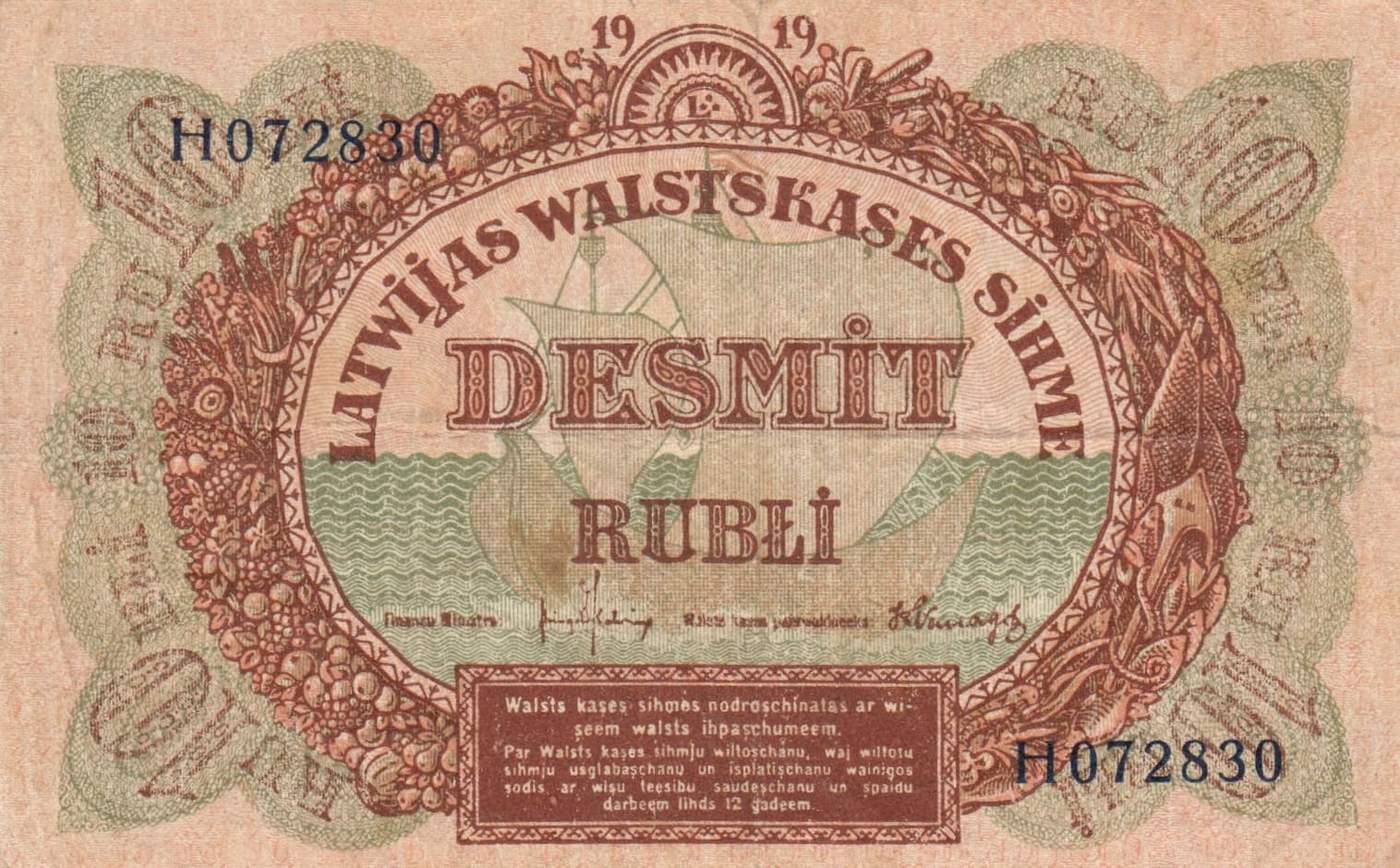
“serie H”
Market Prices
9 salesAbout This Note
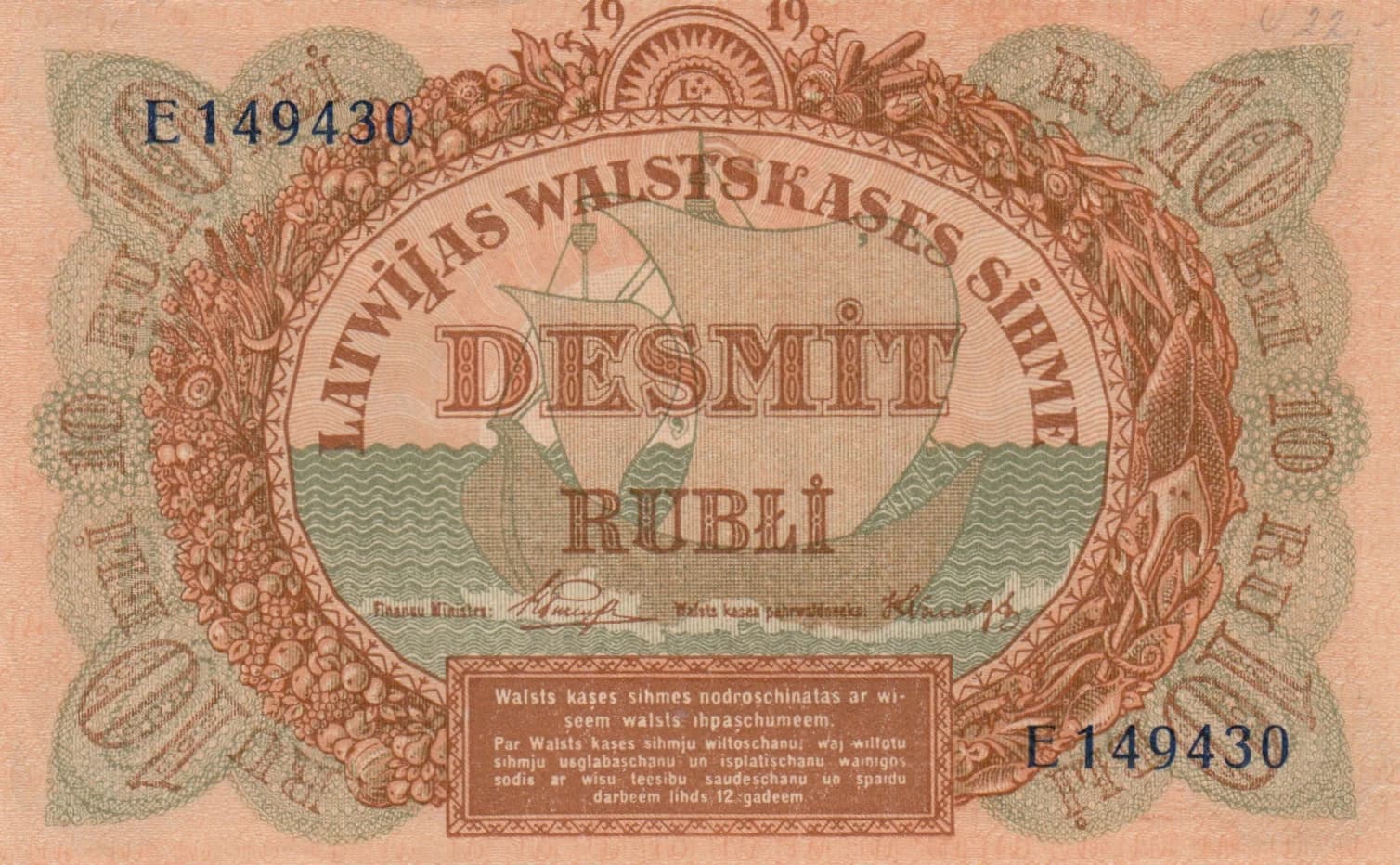
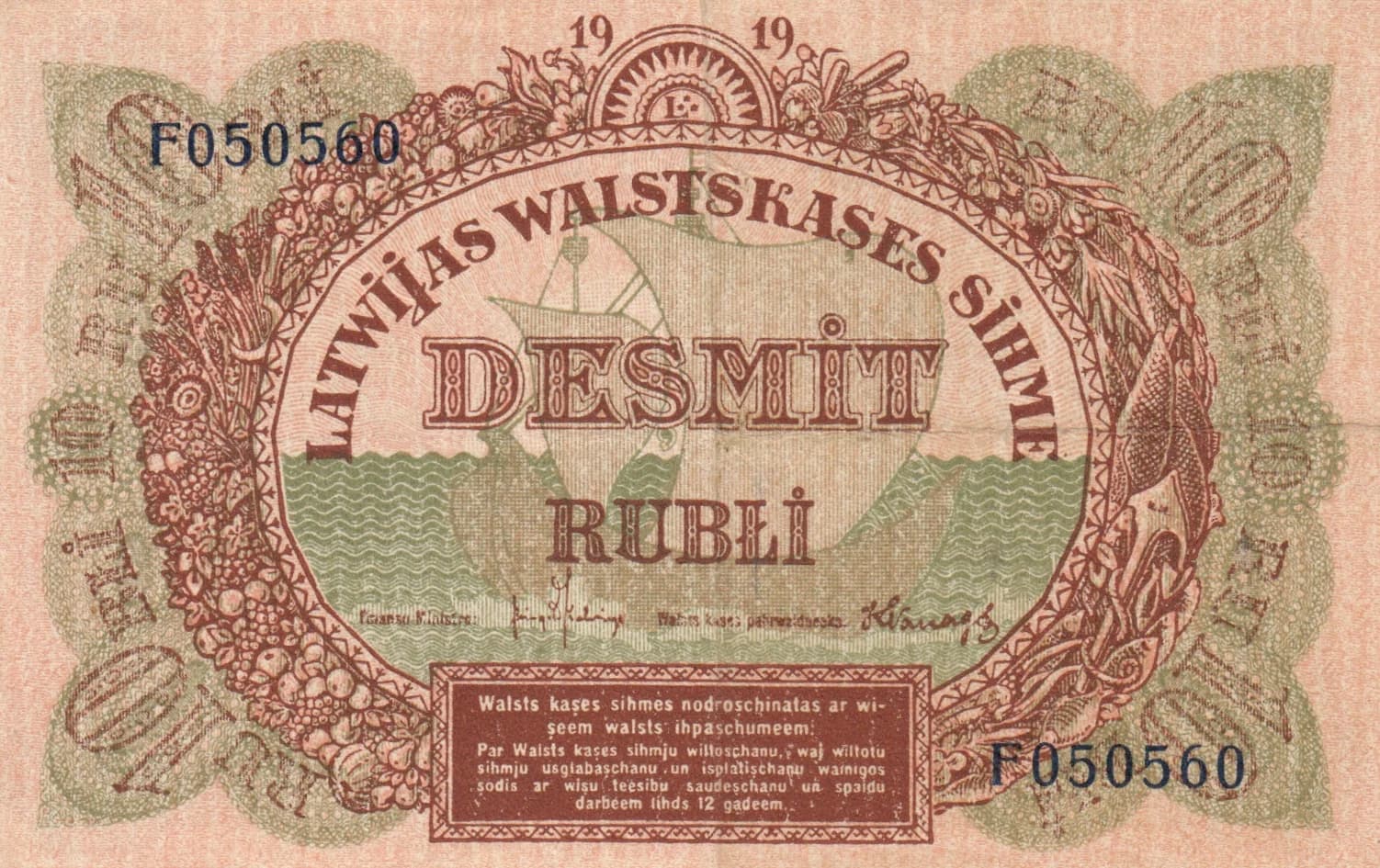
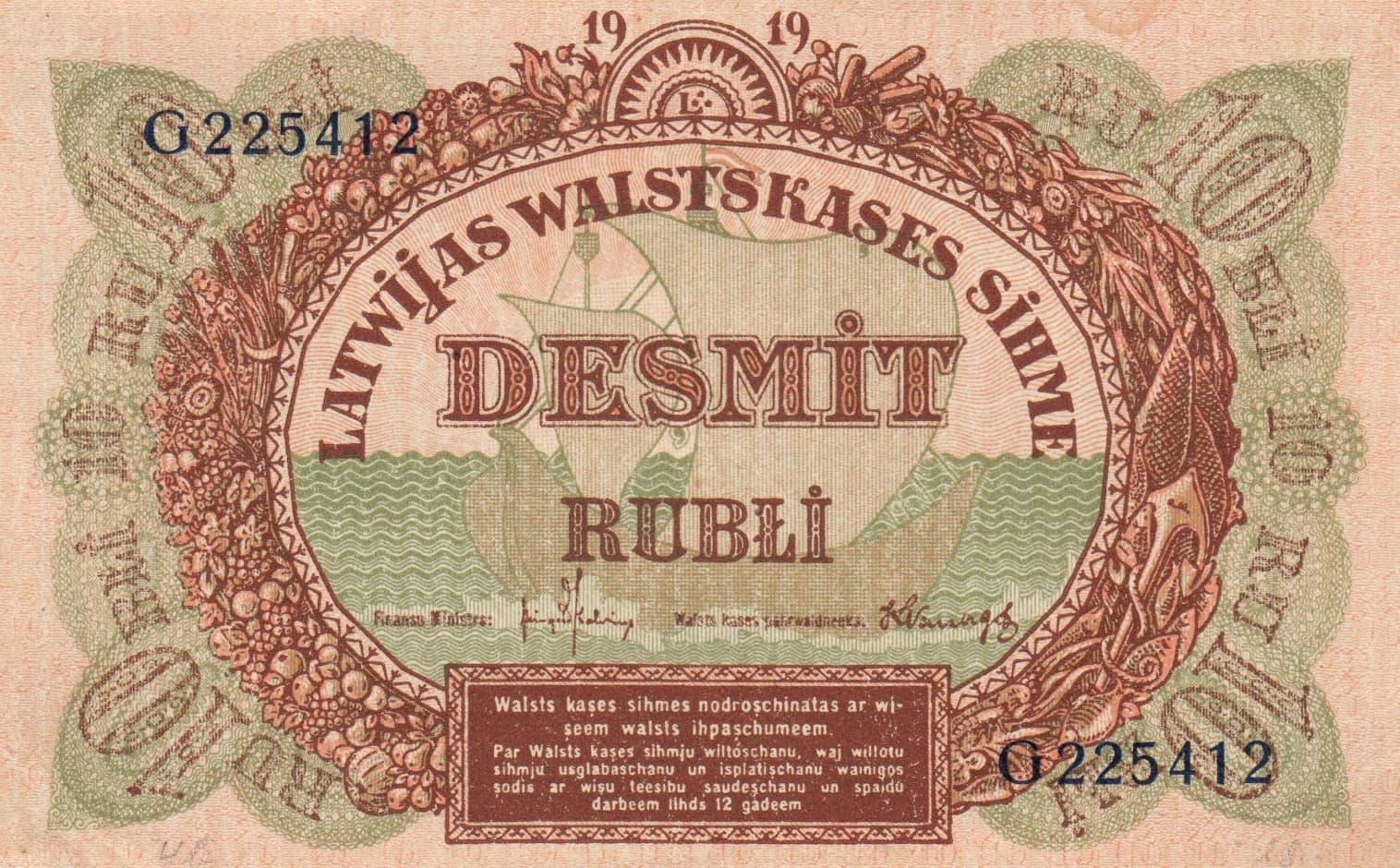
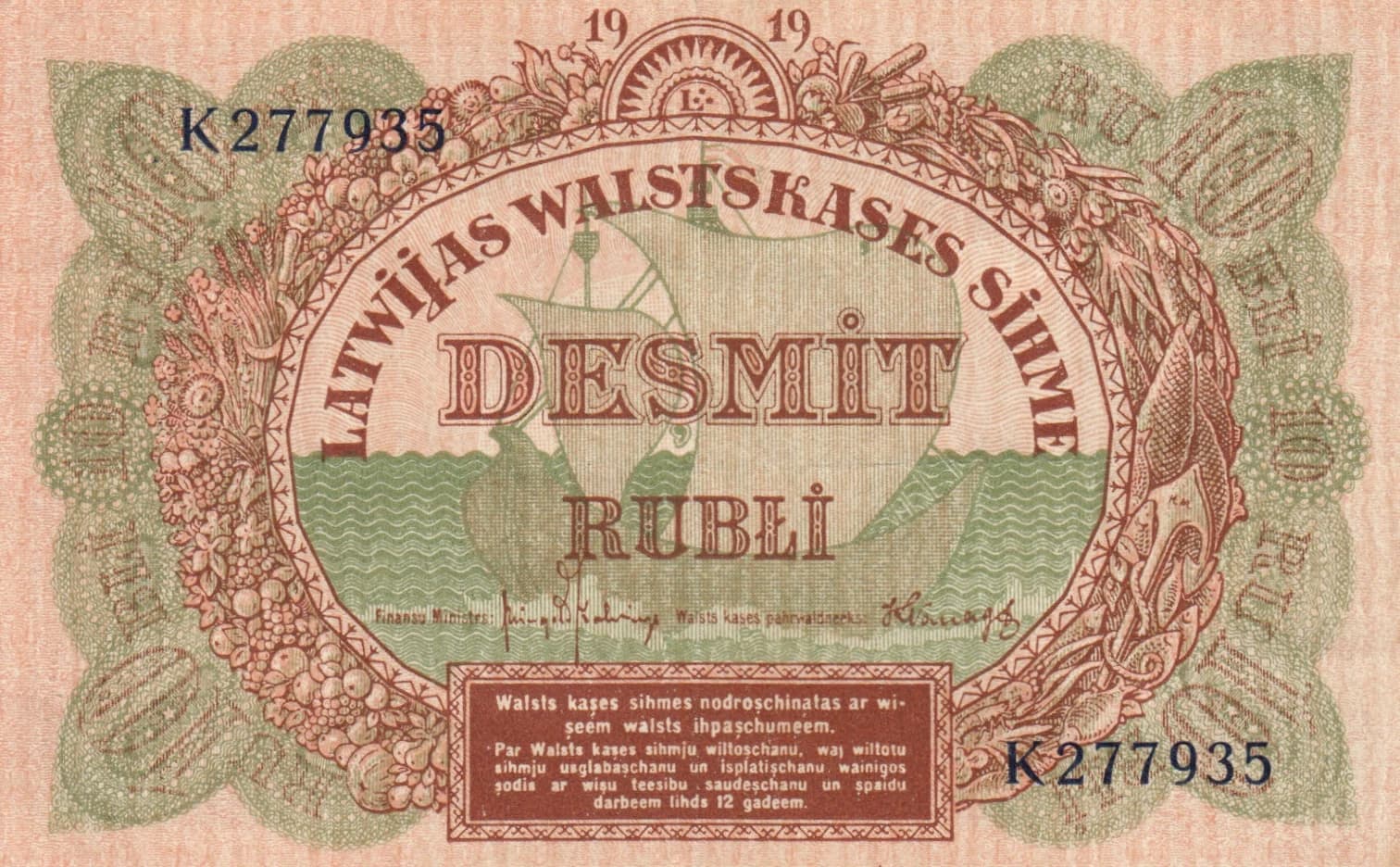
This is a VF-graded 10 Rubli note from Latvia's 1919 first currency issue, featuring an attractive peach-pink and green color scheme with an ornate classical border. The note displays crisp, well-defined printing with vibrant colors and no visible wear, presenting an allegorical female figure within a circular medallion framed by elaborate floral scrollwork and security engraving. As part of the early Latvian State Treasury emissions, this series H example represents an important artifact from Latvia's independence period and remains desirable for collectors of Baltic currencies.
Common. The 1919 Latvian 10 Rubli (Pick 4f) was part of the foundational currency issue of the new Latvian state and saw substantial circulation. While early issues of newly independent nations can attract collector interest, the print run for this denomination was sufficient to make it readily available in today's numismatic market. VF examples are not scarce, and the series H designation does not indicate a particularly limited variety. Prices for this note typically remain modest, consistent with common early 20th-century European issues.
Issued in 1919 following Latvia's declaration of independence, this note represents the first currency of the nascent Latvian state, replacing Tsarist rubles with a distinctly national monetary system. The allegorical female figure and fortress architectural elements depicted in the central medallion symbolize Latvia's sovereignty and territorial identity during the tumultuous post-World War I period. The text referencing state property backing and legal penalties for counterfeiting reflects the new nation's efforts to establish monetary credibility during a period of significant political and economic instability.
The obverse presents a classical allegorical composition centered on a large circular medallion containing a female figure personifying the Latvian state, depicted in draped neoclassical style. The figure is positioned within a landscape featuring water waves and fortification architecture, symbolizing Latvia's geographic and defensive character. The medallion is crowned with an ornate sunburst motif and framed by an intricate decorative border of floral garlands and symmetrical scrollwork in dark red-brown against a cream field. The overall color palette—peach-salmon pink as the primary field with green and dark brown accents—creates a harmonious, formal appearance befitting a national treasury note. The inscription band encircles the medallion, providing legal and denominational information in Latvian.
Front side inscriptions: 'LATVIJAS VALSTS KASES DESMIT RŪBĻI' (Latvian State Treasury Ten Rubles); 'DESMIT RŪBĻI' (Ten Rubles) — repeated denomination text in the central medallion; 'Valsts kases sihmes nodroscinatas ar wi-seem valsts ihpaschumeem' (State treasury notes secured with all state property); 'Par Walts kases sihmu willoschantu, wai wiltotu sithmju usglabaschanw un isplatischanw, wainigos sodia ar wisu teesibu saudeschanu un spaldu darbeem linds lz oadeem' (For the circulation, safekeeping, and distribution of State Treasury notes, offenses are punished with full legal consequences and hard labor); Serial numbers: K2779335 (top left) and K2779935 (bottom right); Date notation: '19' (indicating 1919).
Intaglio (copperplate) engraving, evidenced by the fine line work, detailed cross-hatching in background areas, and the crisp, raised impression characteristic of this method. The intricate ornamental borders, delicate floral patterns, and fine security engraving are hallmarks of intaglio production. This note was likely produced by a European security printer specializing in currency production, consistent with the high quality of execution and standard practices for early 20th-century Baltic state currencies.
This note is identified as Pick 4f and belongs to series H based on the collector notation provided. The serial number prefix 'K' and the specific numerical sequences (K2779335 / K2779935) represent standard production variants. Series H notes from this 1919 emission are known, though specific print run data for individual series letters is not extensively documented in standard catalogs. No major overprints, date variations, or signature varieties are evident in the visual analysis that would distinguish this as a particularly noteworthy sub-variety.