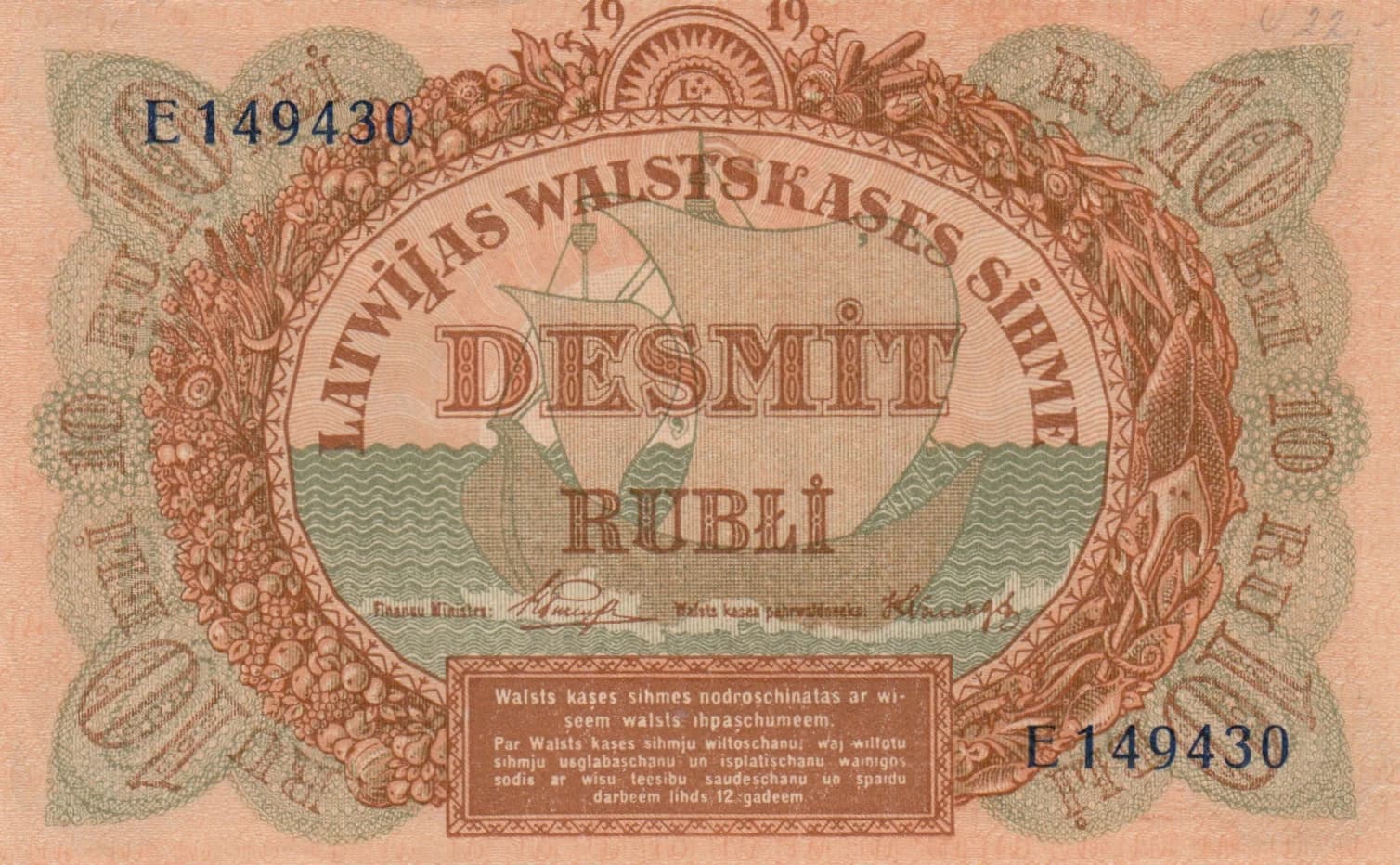
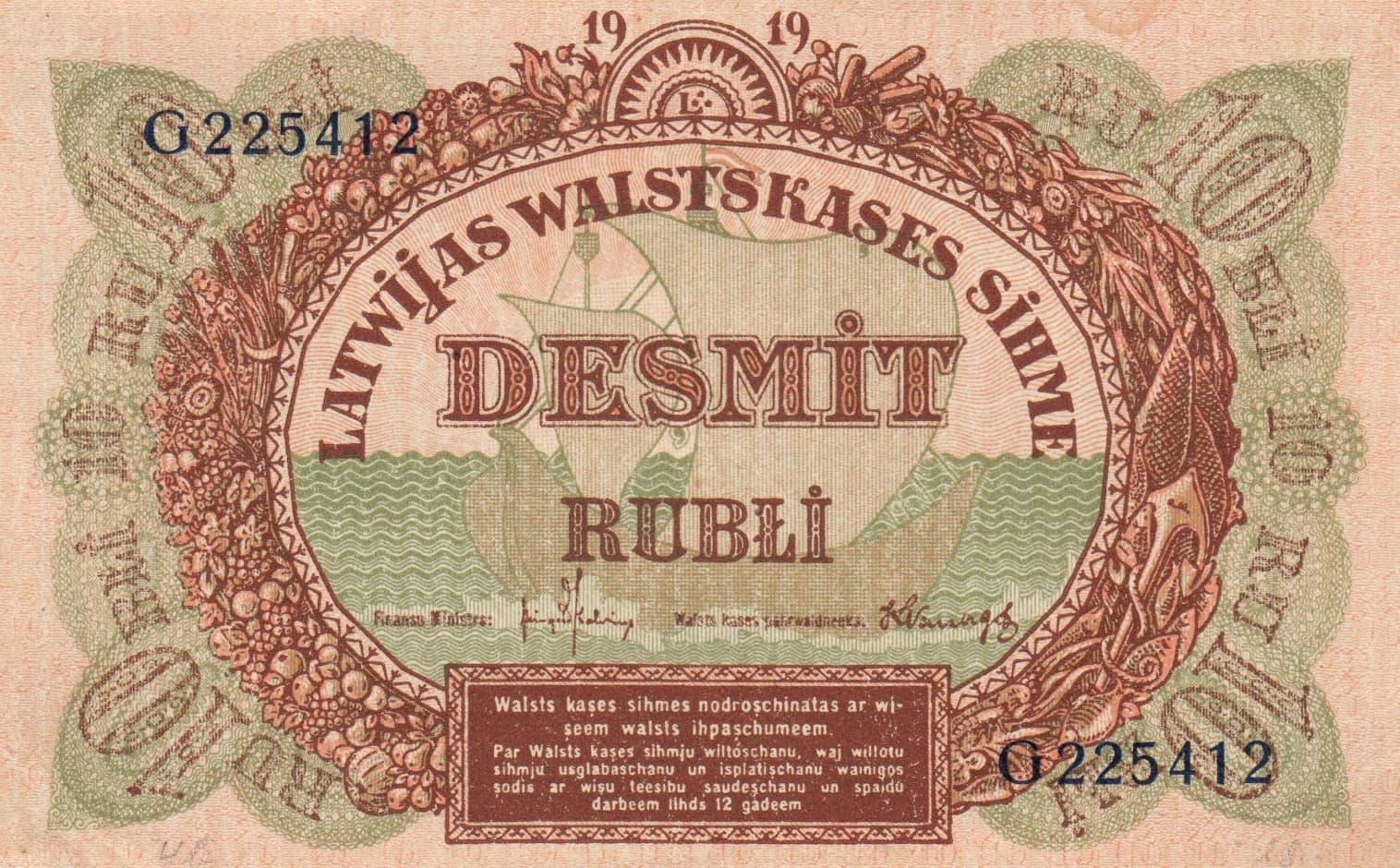
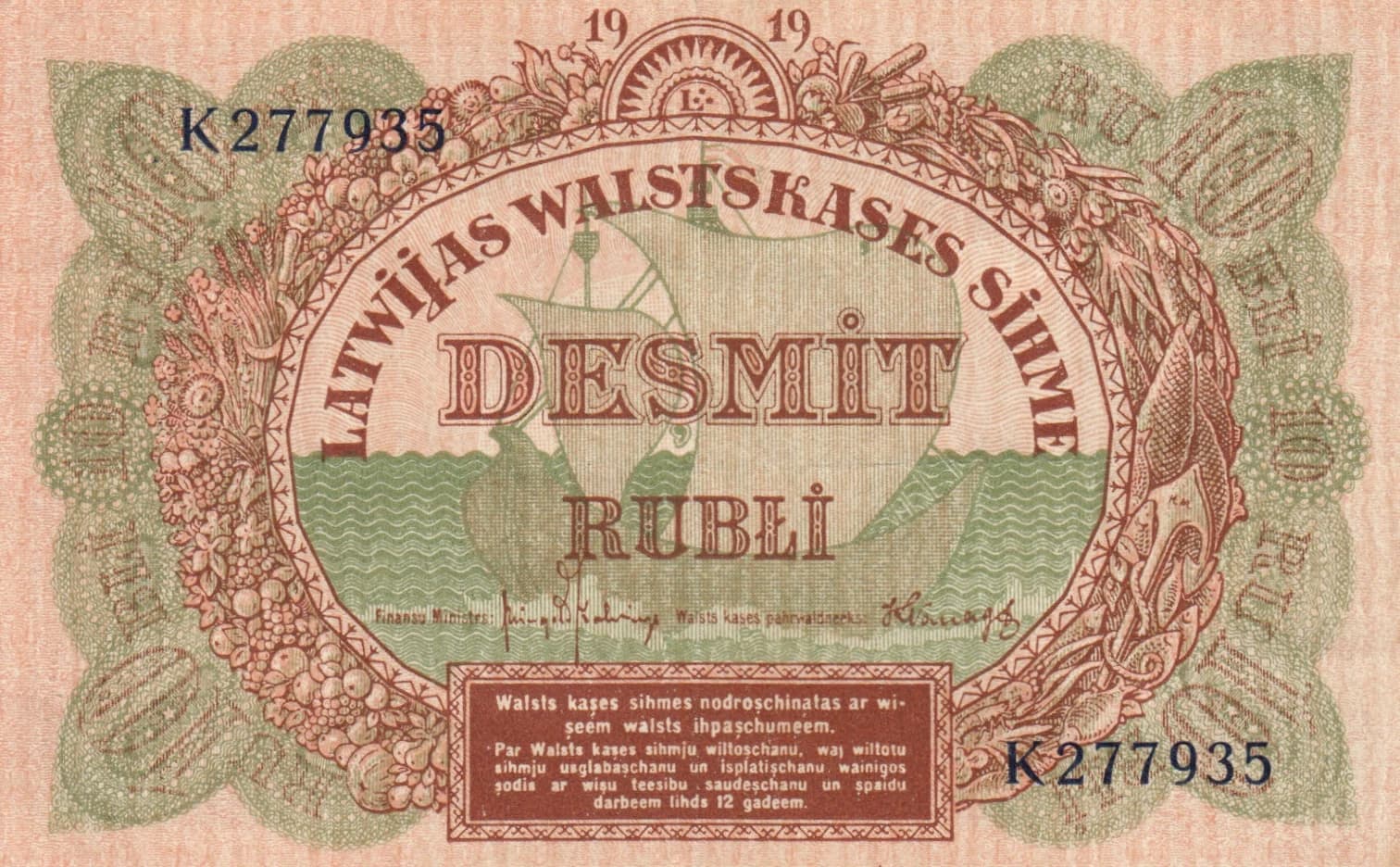
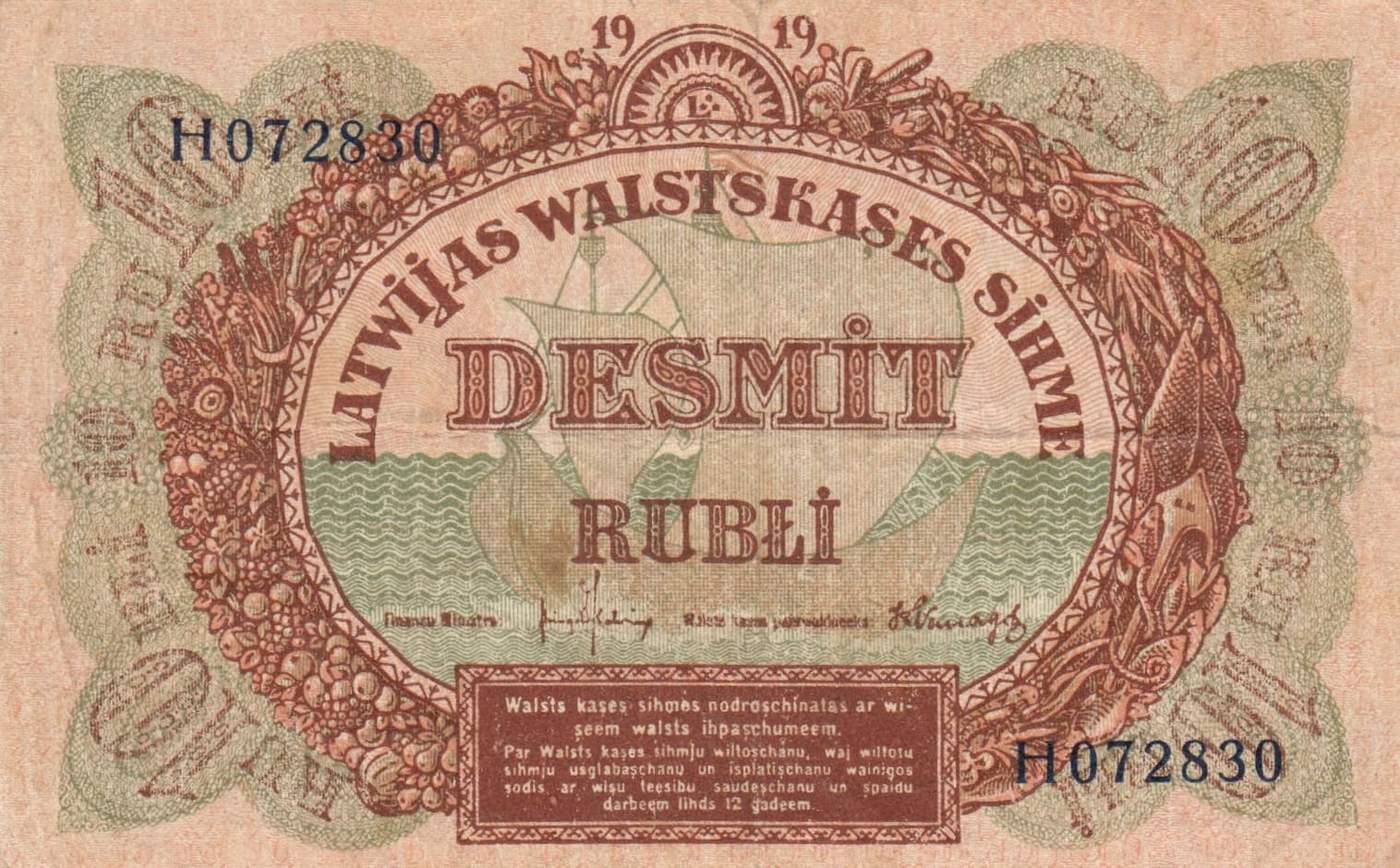
10 rubli 1919
“serie F”
Market Prices
9 salesAbout This Note
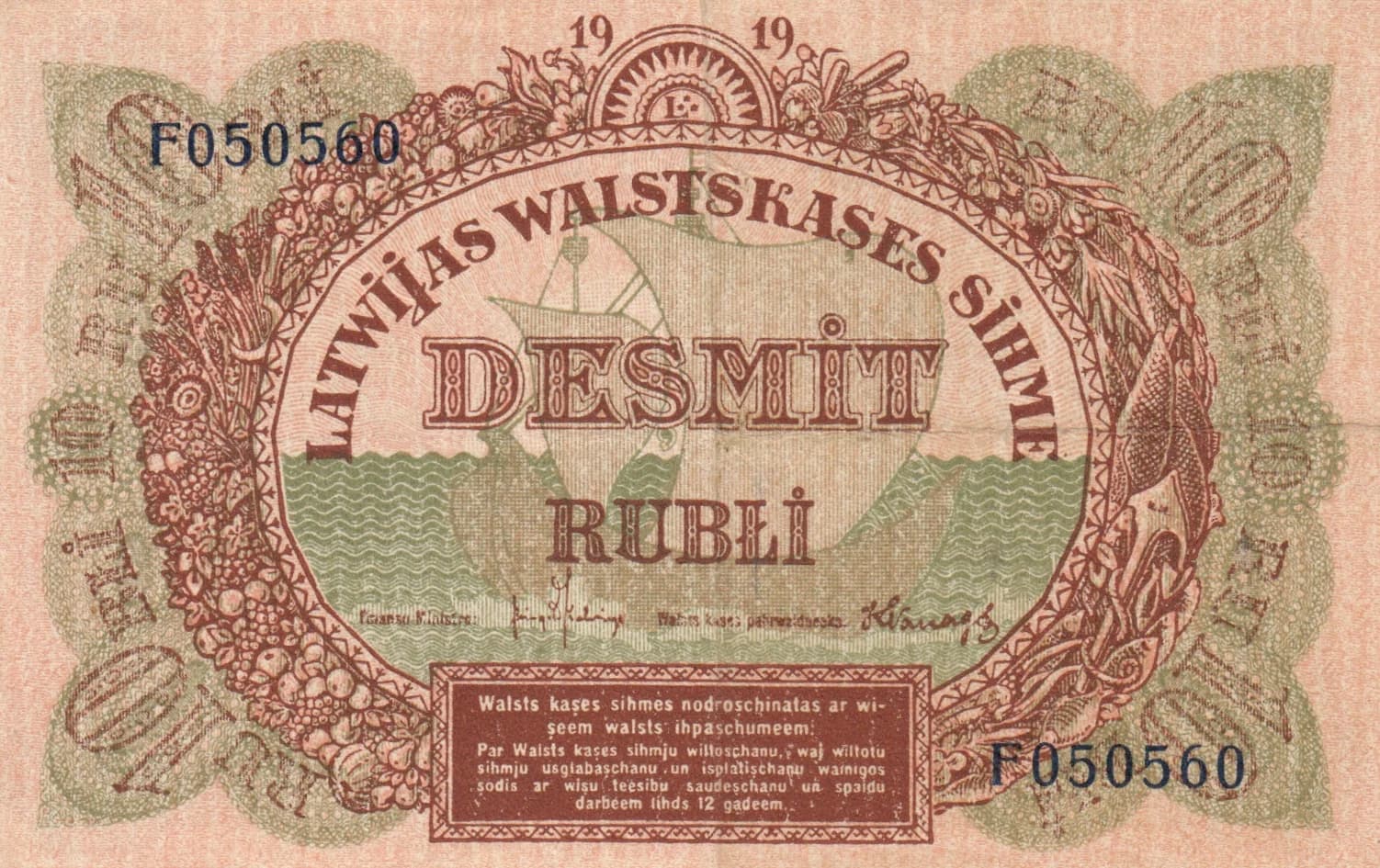
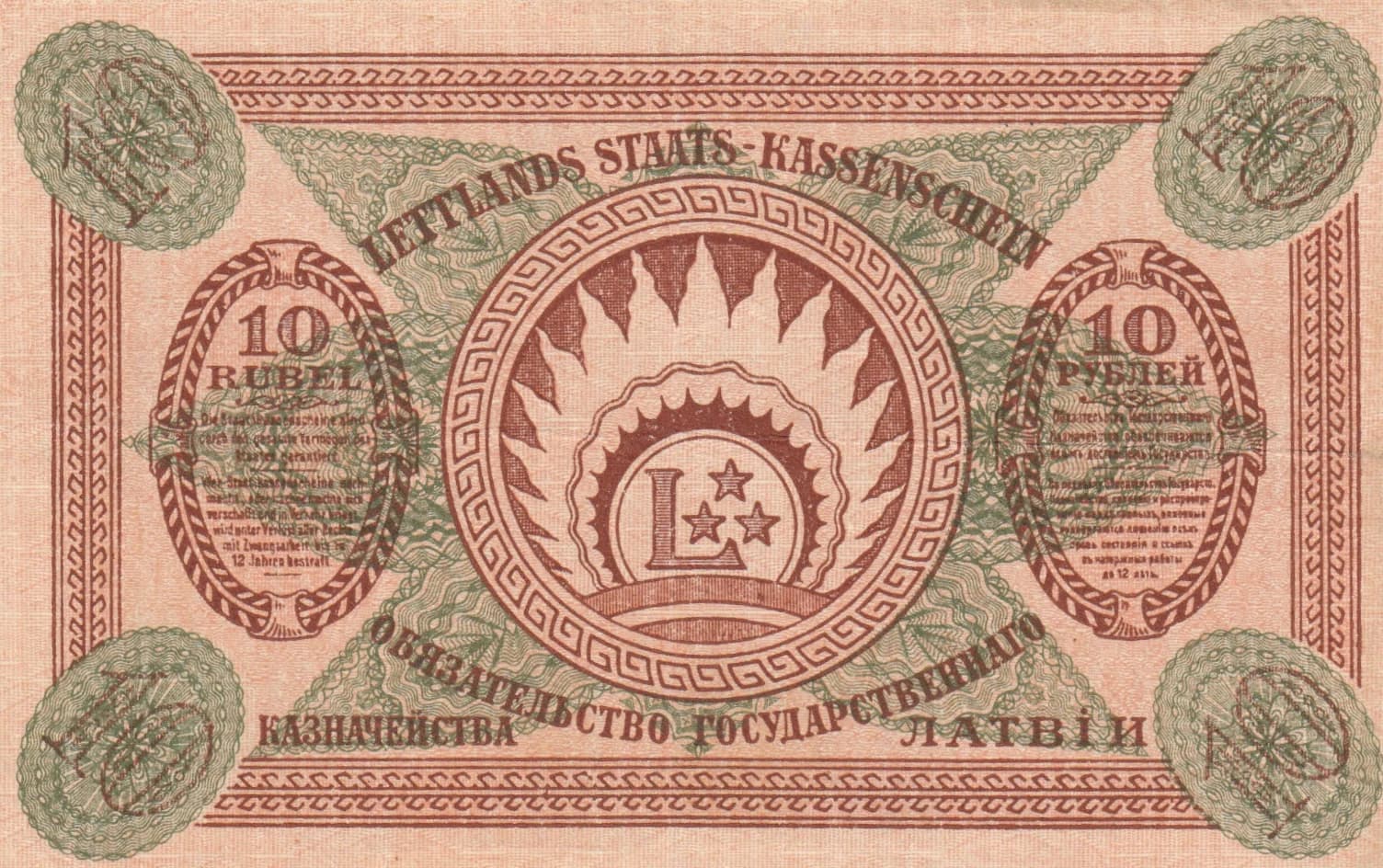
This 10 Rubli note from 1919 represents an exceptional example of early Latvian currency issued during the nation's independence movement. The note exhibits uncirculated condition with crisp, well-defined printing throughout, displaying the distinctive pale peachy-tan coloring with burgundy and green accents characteristic of this issue. The obverse features a rising sun symbol and wavy water lines within an ornate oval, while the reverse displays a formal heraldic composition with a crescent moon and stars emblem, making this Series F variant a notable specimen of interwar Latvian numismatic design.
Common. The eBay transaction history shows consistent sales activity spanning from 2009 to 2021, with VF specimens regularly selling between $10–$30, and the 2016 catalogue value for VF at $40. The note's Series F designation appears in multiple documented variants (P-4b through P-4f), indicating substantial print runs. No evidence of short print runs, recalls, or scarcity markers exists. The consistent availability at moderate prices on secondary markets confirms this is a standard issue within the 1919 Latvian rubli series.
Issued in 1919 by the Latvian State Treasury (Latvijas Walsts Kases) during Latvia's newly won independence from the Russian Empire, this note represents a transitional period in Baltic monetary history. The trilingual inscriptions (Latvian, German, and Russian/Cyrillic) reflect the complex political and cultural milieu of the newly independent nation, while the heraldic symbolism—the crescent moon and stars on the reverse—evokes both historical Baltic traditions and the nation's aspirations for sovereignty. The note's legal text warning of severe penalties for counterfeiting (up to 12 years imprisonment) underscores the government's commitment to establishing monetary credibility in its first year of independence.
The note showcases a classical Art Nouveau aesthetic typical of early 20th-century Central European banknote design. The obverse centers on an oval medallion containing the denomination 'DESMIT RŪBĻI' (Ten Rubles) in large burgundy letters, framed by a rising sun symbol at the apex and wavy horizontal lines suggesting water or landscape below—likely representing the Baltic region's connection to maritime commerce. The design is enclosed within an elaborate rectangular border of burgundy and green floral scrollwork and acanthus leaf patterns. The reverse adopts a more formal heraldic composition with a central circular emblem featuring a crescent moon and three stars (likely representing historical Lithuanian or Baltic symbolism), flanked by symmetrical oval cartouches displaying the denomination. Greek key pattern borders and decorative wreaths in the four corners complete the formal arrangement. The consistent use of pale peachy-tan stock with burgundy and green printing provides strong visual contrast and security through color differentiation.
FRONT: 'DESMIT RŪBĻI' (Ten Rubles); '19' flanking a rising sun symbol; 'LATVIJAS WALSTS KASES SIHME' (Latvian State Treasury Note); Serial number 'F050560'; Legal text: 'Walsts kases sihmes nodrošcinalas ar wiseem walsts ihpaschumeem. Par Walsts kases sihmu wiltoschanu u wiltoiju sihmu usgtabaschanau, un ispiatischanau wainigos sodis ar wisu leesibu, saudeschianu' un spaidu dardeem lihds 12 gadeem.' (State treasury notes are backed by all state property. For counterfeiting or forging state treasury notes and using forged notes, guilty parties face penalties including imprisonment and other legal measures up to 12 years). BACK: 'METTLANDS STAATS-KASSENSCHEIN' (German: Latvian State Treasury Note); 'DEMIISTLICHSTVO-GOSUDARSTVA LATVII' (Russian/Cyrillic: Treasury of the State of Latvia); '10 RUBLI' (Ten Rubles) appears in two oval cartouches with additional legal text in small Cyrillic script within each cartouche regarding counterfeiting penalties.
Intaglio engraving (line engraving/recess printing), evidenced by the fine, crisp line work visible throughout both the ornamental borders and denominational text, the sharp serifs on lettering, and the detailed patterning of the security features. The precision of the floral scrollwork, Greek key borders, and fine parallel lines of the wavy background pattern are hallmarks of steel plate intaglio work. The printer for this Pick number is not definitively identified in the available PMG population data, though Latvian Treasury notes of this era were often produced by European security printers such as the Latvian State Printing House or contracted European facilities.
This note is identified as Pick catalog P-4f, representing the Series F variant with light line watermark. The PMG population report documents at least five distinct varieties of the 10 Rubli denomination from this issue (P-4b, P-4c, P-4e, P-4f, and additional unnumbered variants), distinguished by watermark types and series letters. The serial number 'F050560' with the 'F' prefix confirms the Series F classification. The note exhibits the standard 1919 issue characteristics with no overprints, date variations, or signature varieties visible, placing it within the regular issue category for this denomination.