100 kip 1974
Market Prices
39 salesAbout This Note
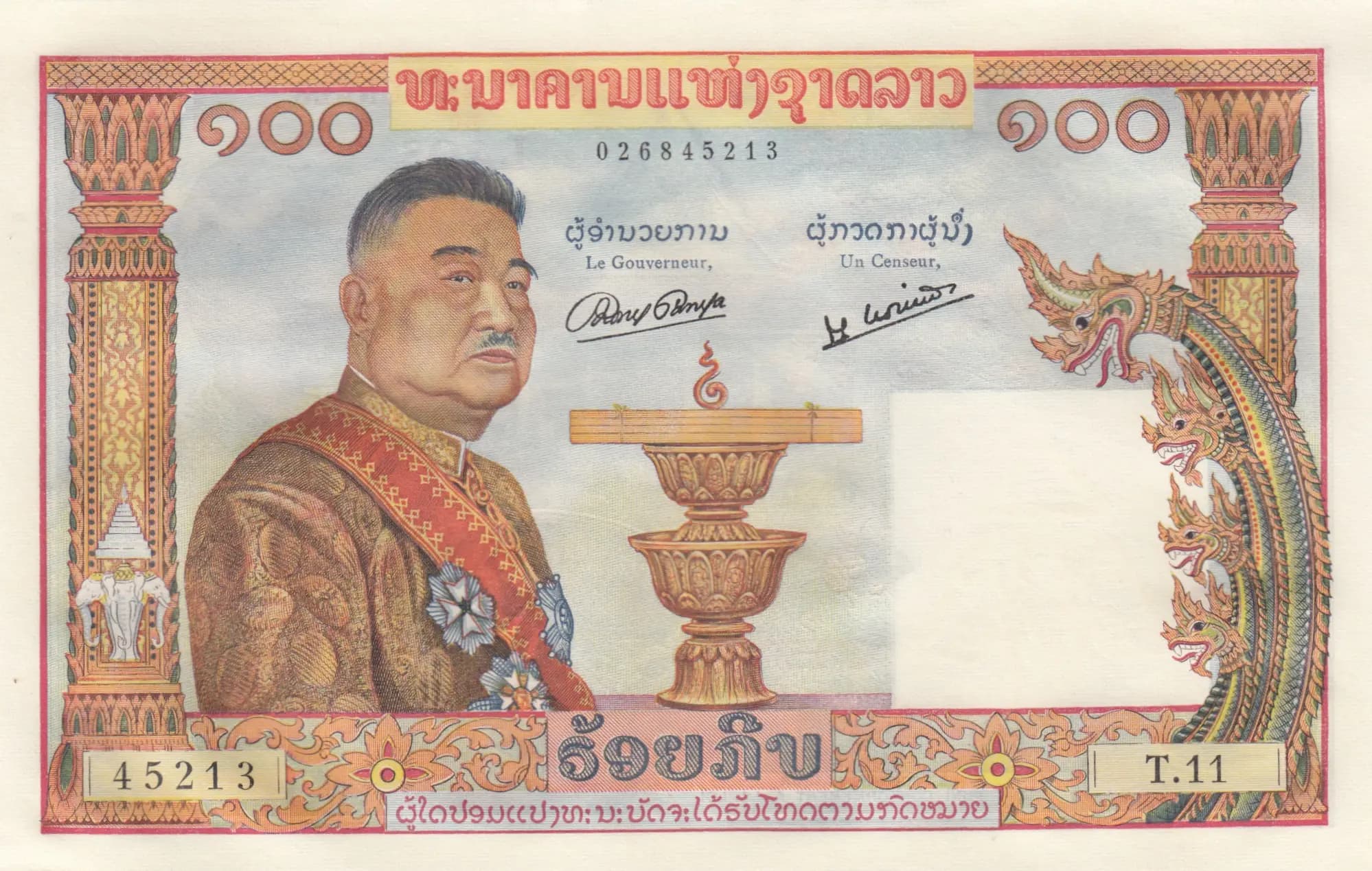
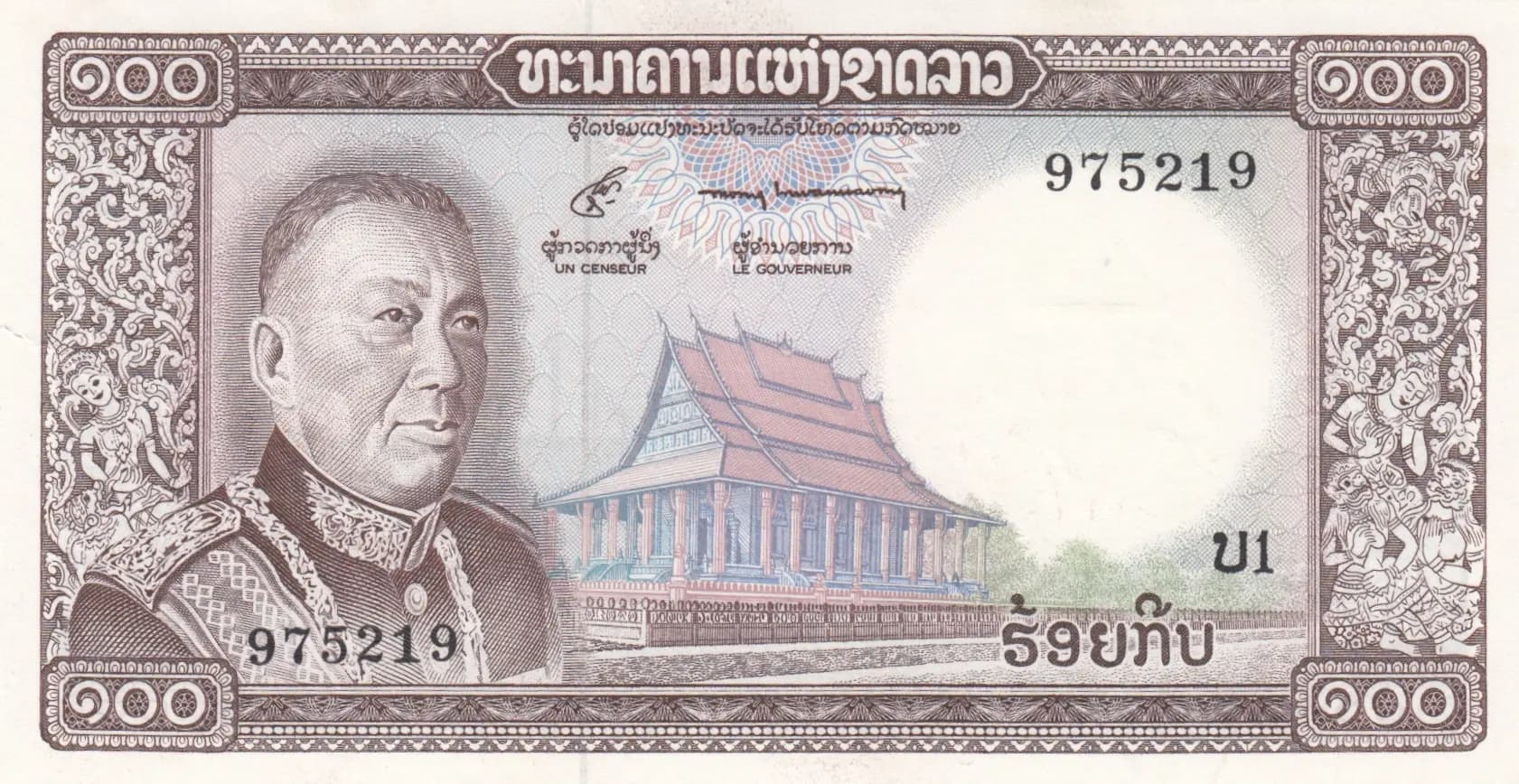
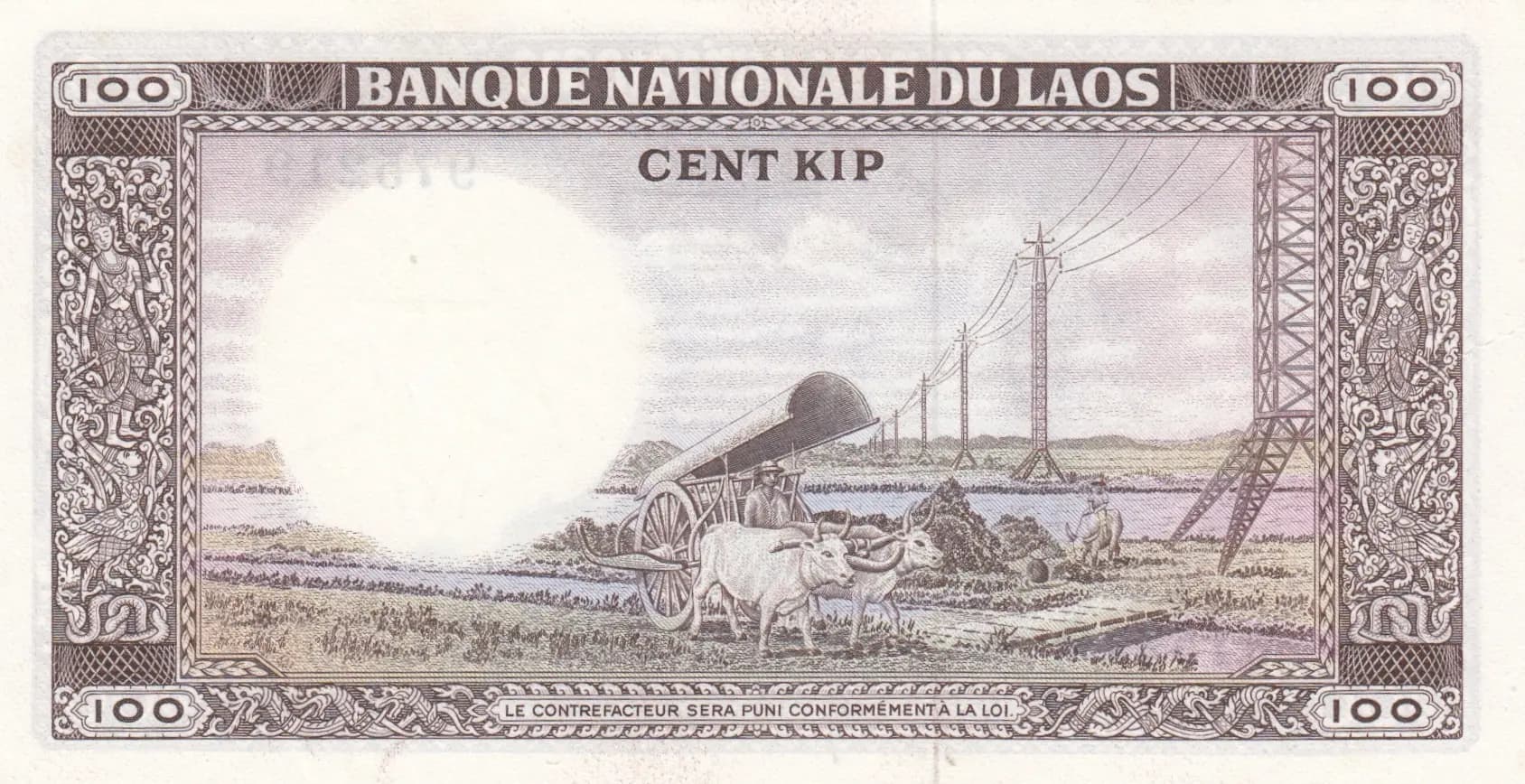
This uncirculated 1974 Laos 100 kip note presents a striking example of early post-revolutionary Laotian currency design, featuring a portrait of King Savang Vatthana in military dress on the obverse and a symbolic ox cart scene on the reverse. The note displays sharp engraving throughout with crisp, clean surfaces consistent with the UNC grade, and the multi-color printing (brown, blue, red, and gray tones) shows excellent register and color vibrancy typical of the finest examples of this issue.
Common. This note trades regularly in the secondary market with consistent eBay sales data spanning over a decade, with UNC examples selling for $1.25 to $4.30 and graded examples (PMG 65-68) commanding $8 to $38. The catalog value (2019) lists UNC at $3, and recent sales data (March 2025) confirms a UNC specimen sold for $3.25, indicating steady, modest demand typical of commonly issued mid-20th century Asian currency. The high circulation of sales records and low price points are characteristic of common issues with substantial original print runs.
This note was issued in 1974 by the Banque Nationale du Laos during a transitional period in Laotian history, issued under the reign of King Savang Vatthana before the Pathet Lao takeover in 1975. The imagery—depicting both the monarch and rural agricultural symbolism through the ox cart and power transmission lines—reflects the nation's efforts to modernize while maintaining traditional cultural elements, with the Ho Phra Keo temple representing the country's strong Buddhist heritage.
The obverse features a formal portrait of King Savang Vatthana in full military dress uniform, positioned at the left side of the note, rendered in fine engraved detail. The central vignette depicts the Ho Phra Keo (Emerald Buddha Temple) in Vientiane, shown with its characteristic red-tiled sloped roofs and blue pillared structure, a significant Buddhist landmark. The note employs the Lao national emblem and ornamental circular corner designs with elaborate scrollwork borders throughout. The reverse presents a symbolic image of rural Laos—an ox cart laden with agricultural products against a backdrop of modern infrastructure including electrical transmission lines and poles, topped by a large celestial orb (sun or moon) in the upper left, visually representing the nation's blend of traditional agrarian culture with modernization. The color palette shifts to brown, purple, gray, and tan tones on the reverse.
Front side: 'ສາທາລະນະລັດ ປະຊາທິປະໄຕ ປະຊາຊົນ ລາວ' (Lao People's Democratic Republic), 'ຜູ້ບໍລິຫານ' (Administrator/Governor), 'UN CENSEUR' (A Censor - French), 'LE GOUVERNEUR' (The Governor - French), 'ຮ້ອຍກີບ' (One Hundred Kip - Lao), serial number '975219', and denomination '100'. Back side: 'BANQUE NATIONALE DU LAOS' (National Bank of Laos - French), 'CENT KIP' (One Hundred Kip - French), denomination '100', and 'LE CONTREFACTEUR SERA PUNI CONFORMÉMENT À LA LOI' (Counterfeiting will be punished in accordance with the law - French).
Intaglio (engraved) printing on cotton-fiber banknote paper, evidenced by the fine line work, sharp portrait detail, and intricate border engraving visible in both obverse and reverse designs. The multi-color printing was applied using traditional offset color separation techniques layered beneath and around the primary intaglio elements. The PMG population report indicates the P-16s variety was printed by TDLR (Thomas De La Rue), the renowned British security printer.
This specimen appears to be the standard P-16a variety based on visual characteristics. The PMG population report documents two catalogued varieties for Pick-16: P-16a (standard) and P-16s (security printer variant by TDLR). The serial number '975219' and absence of visible overprints suggest this is the standard circulation issue. No signature varieties or date variations are apparent, as ND (no date) issues from 1974 are consistent across catalogued examples.