10 kip 1968
Market Prices
28 salesAbout This Note
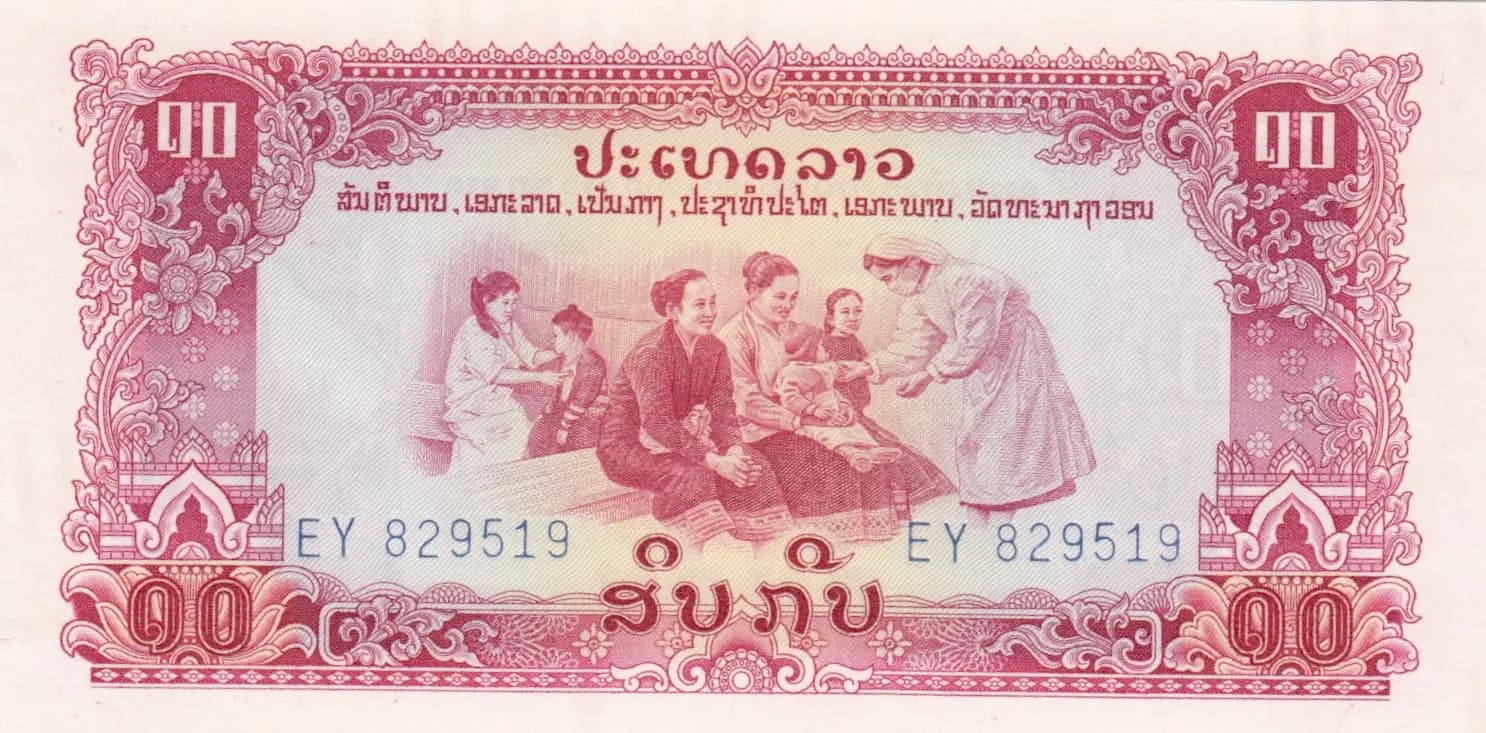
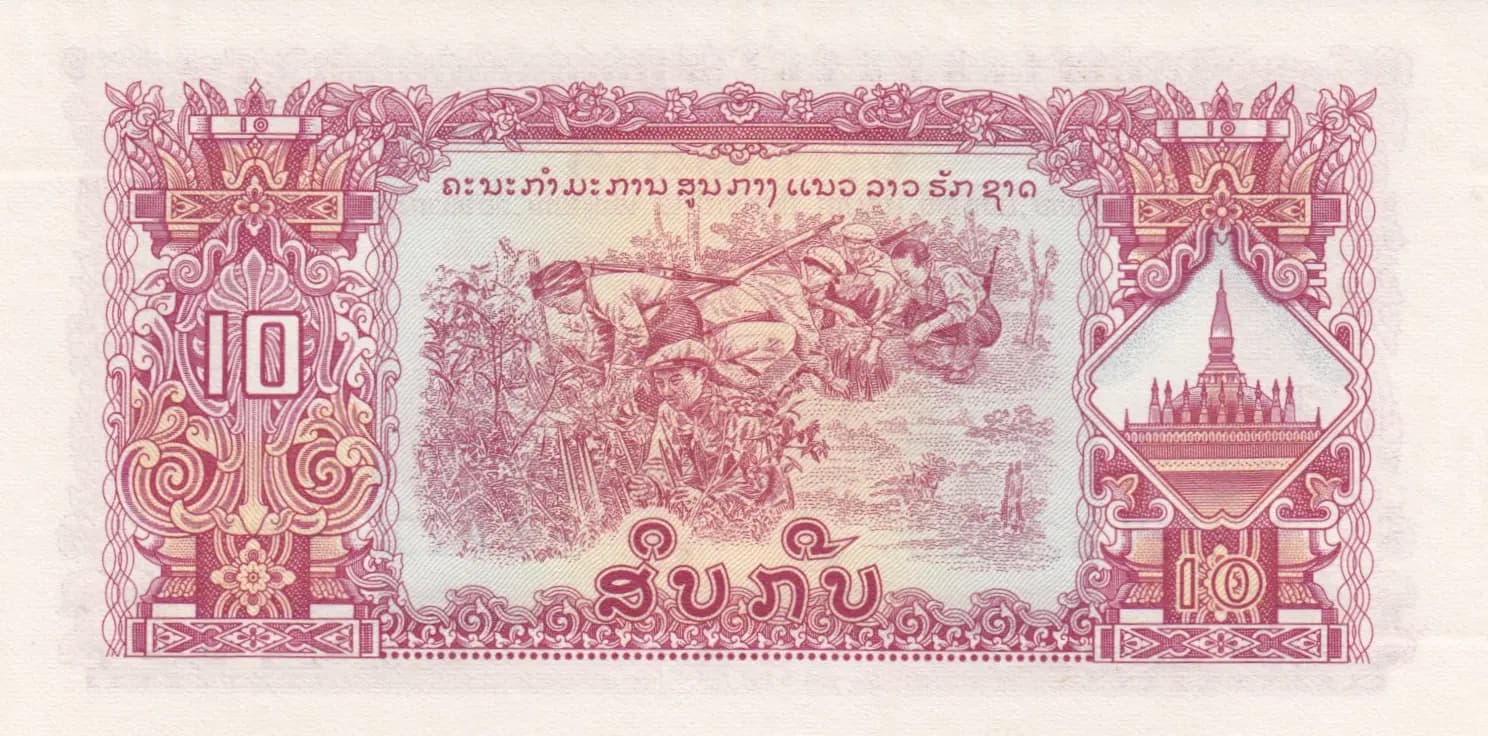
A pristine example of the scarce 1968 Lao Central National Committee 10 kip note (Pick P-20a), graded UNC. This historically significant banknote features a tender medical care scene on the obverse and depicts fighters preparing an ambush with the iconic Pha That Luang pagoda on the reverse. The note exhibits exceptional clarity and sharpness throughout with no visible wear, creases, or damage, making it an exemplary specimen of this important Revolutionary-era issue that became legal tender nationwide following the 1975 Pathet Lao victory.
Common. While historically significant and scarce relative to modern currency production, the eBay price data demonstrates consistent sales in the $1–16 range over nearly a decade, with UNC specimens regularly selling for $2–6 in recent years. The PMG population report shows only one catalogued variant (P-20a), but the consistent availability and modest pricing indicate adequate supply in the collector market. This note is not a rarity; its appeal lies in historical significance rather than scarcity.
Issued by the Lao Central National Committee and printed in the People's Republic of China, this 1968 note circulated exclusively in Pathet Lao-controlled territories during the Lao Civil War. The imagery—depicting medical care provision and revolutionary fighters conducting an ambush—directly reflects the Communist movement's propaganda themes of social progress and military struggle. Following the 1975 victory, these notes were legitimized as the sole legal currency for all of Laos, making them foundational to the newly unified nation's monetary system.
The obverse presents an elaborate medical examination scene rendered in the Socialist Realist style characteristic of Revolutionary-era Lao currency. The central vignette depicts women and children in traditional Lao dress receiving healthcare services from a medical authority figure, symbolizing the revolutionary government's commitment to public health. The composition is framed by ornate floral and scrollwork borders with architectural corner decorative elements. The reverse depicts historical fighters (soldiers of the Pathet Lao) preparing a bamboo ambush in a landscape setting, emphasizing the military struggle. Notably, the reverse also features the Pha That Luang (the Great Stupa) of Vientiane, Laos's most sacred Buddhist monument, rendered in a diamond-shaped cartouche on the right side—a deliberate design choice acknowledging national religious heritage despite the Communist issuer's ideology. The denomination (10) appears in both Lao numerals and Arabic numerals in corner positions on both sides.
Front side: Country designation in Lao script (ประเทศลาว = 'Laos'), denomination text in Lao script indicating 'Ten Kip', denomination reference marking (รูปบาป = 'denomination'), and serial number in Latin characters (EY 829519). Back side: Denomination numeral in Lao script (๑๐ = '10'), commemorative or historical inscription in Lao script, and denomination reference marking (รูปบาป = 'denomination').
Intaglio engraving with multicolor offset printing, typical of security currency production from the era. The note was printed by the Chinese state printer in the People's Republic of China, as noted in historical records. The sharp clarity of fine linework visible in the ornamental borders and the consistent color registration across both sides are characteristic of professional security printing. The dominant rose/mauve pink and cream palette was achieved through careful overlay of colored inks.
Pick P-20a is the primary variety catalogued for this denomination and issue. The observed serial number 'EY 829519' represents a prefix variant within the note's production run. No overprints, date variations, or signature variants are evident in this specimen. The 1968 dating (printed for 1968 circulation) with the ND (No Date) designation reflects the note's issue practice, though some catalog sources list 1976 as a circulation date when these notes were officially legitimized. This UNC specimen represents the standard type without known varieties.