1000 won 1950
About This Note
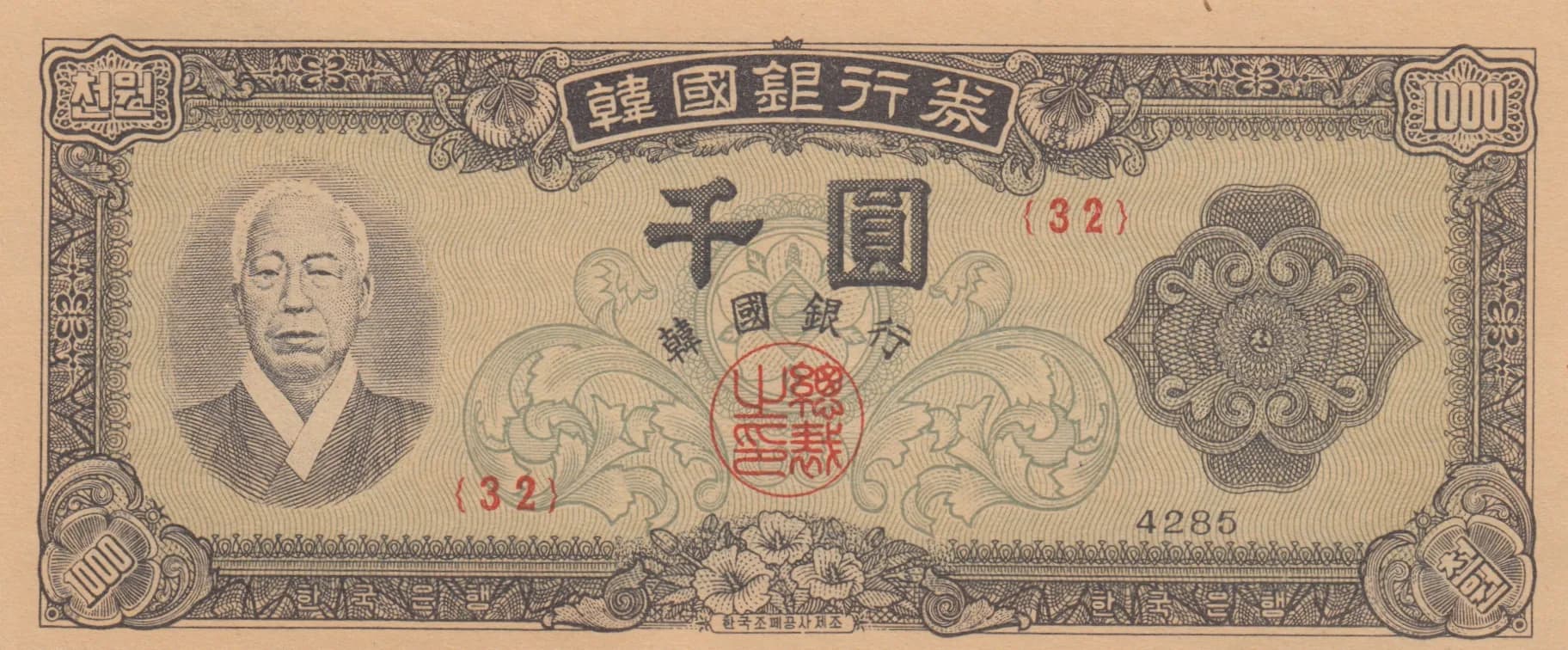
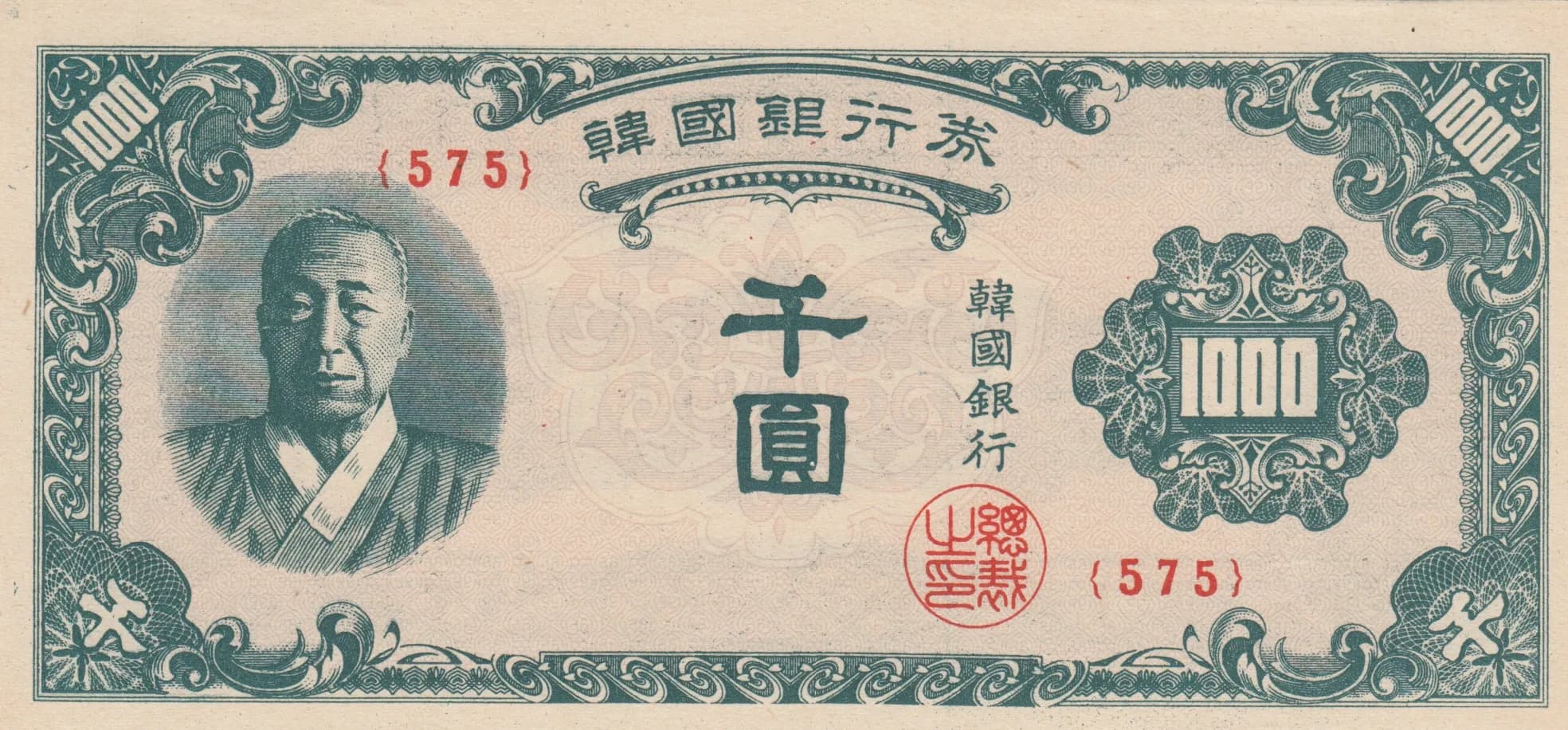
This is an exceptional example of the 1950 Bank of Korea 1000 won note (Pick P-8), presented in uncirculated condition with crisp printing and pristine paper quality. The note features an elegant bilingual design with traditional Korean portraiture on the obverse and ornate decorative borders throughout, exemplifying the early post-independence Korean currency aesthetic. As one of the first denominations issued by the newly established Bank of Korea following the nation's liberation, this note represents a significant piece of Korean monetary history in remarkable preservation.
Common. The 1000 won denomination from 1950 was a standard circulation note produced in substantial quantities by the Bank of Korea for general commerce. While all 1950-dated Korean currency has historical significance, this specific denomination and Pick number does not exhibit characteristics of rarity such as extremely limited print runs, recall status, or production by a short-lived authority. Uncirculated examples command collector interest primarily for their historical value and condition rarity rather than numismatic scarcity of the issue itself.
Issued in 1950 by the Bank of Korea, this note was produced during the critical early years of South Korea's independence and the establishment of its central banking system. The design reflects the transitional period between Japanese occupation and Korean sovereignty, incorporating both traditional Korean cultural elements (evident in the portrait's traditional jeogori dress) and modernizing bilingual inscriptions in both Korean/Chinese characters and English. This denomination and design preceded the Korean War by mere months, making surviving examples particularly historically significant.
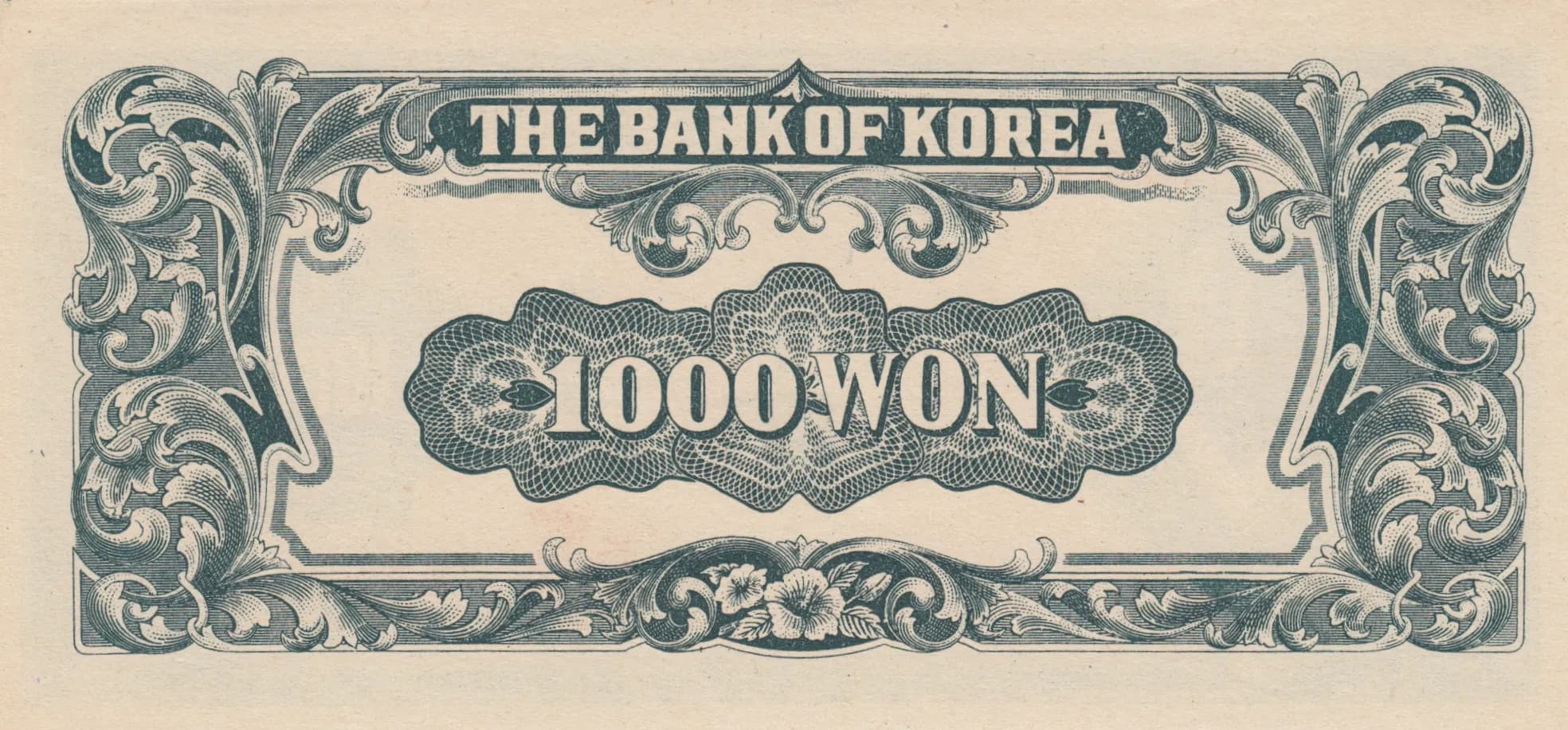
The obverse features an unidentified middle-aged male portrait in profile facing left, dressed in traditional Korean jeogori (jacket), representing Korean cultural heritage. The portrait is positioned on the left side of the note. The center displays the denomination in large Korean characters (千圓) vertically oriented. The reverse presents a mirror-image design philosophy with the English denomination '1000 WON' prominently displayed in an ornamental square cartouche at center. Both sides feature elaborate baroque-influenced decorative borders with intricate scrollwork, floral motifs, and geometric patterns in teal/green and cream coloring. Red seals and stamps appear on the obverse, characteristic of official banking documents of the era. The bilingual presentation (Korean/Chinese on obverse, English on reverse) reflects South Korea's early international positioning.
Front Side: '蘇州國銀行' (The Bank of Korea - banner inscription); '千圓' (1000 won - vertical center denomination); '韓國銀行' (Bank of Korea); '(575)' (reference/series number). Back Side: 'THE BANK OF KOREA' (English banner inscription); '1000 WON' (English denomination in cartouche).
Intaglio engraving with fine line work throughout. The detailed scrollwork borders, portrait rendering, and ornamental cartouches show the precision characteristic of steel plate engraving. The complex security patterns in the borders and the crisp impression of the red stamps indicate high-quality intaglio printing, likely produced by the Bank of Korea's printing facilities or a contracted security printer specializing in currency production during this period.
The note exhibits the reference number '(575)' in red ink, which may indicate a specific printing batch or series designation. Further research into Bank of Korea archival records would be necessary to determine if this number represents a catalogable variety. The bilingual design (Korean characters and English) is standard for this Pick number, with no obvious overprints, signature variations, or date modifications visible in the UNC example examined.