10 hwan 1955
About This Note
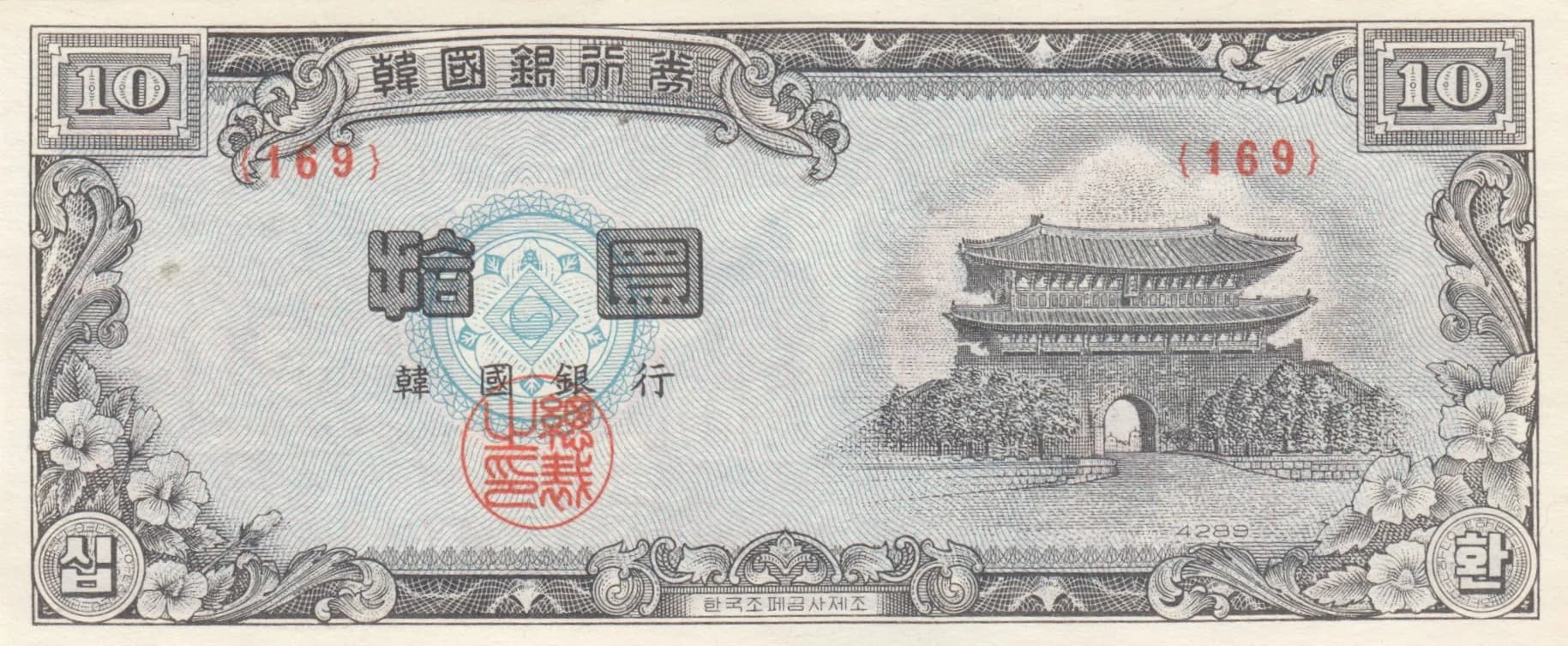
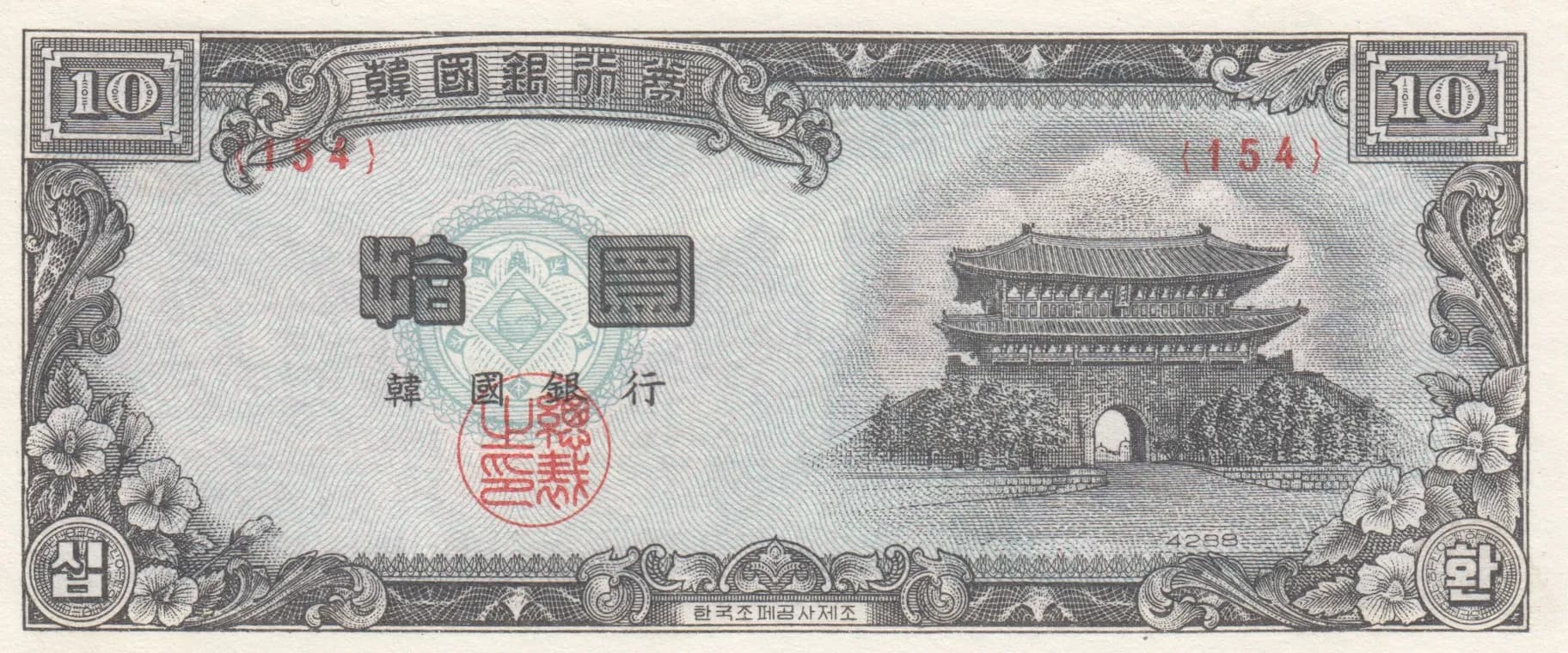
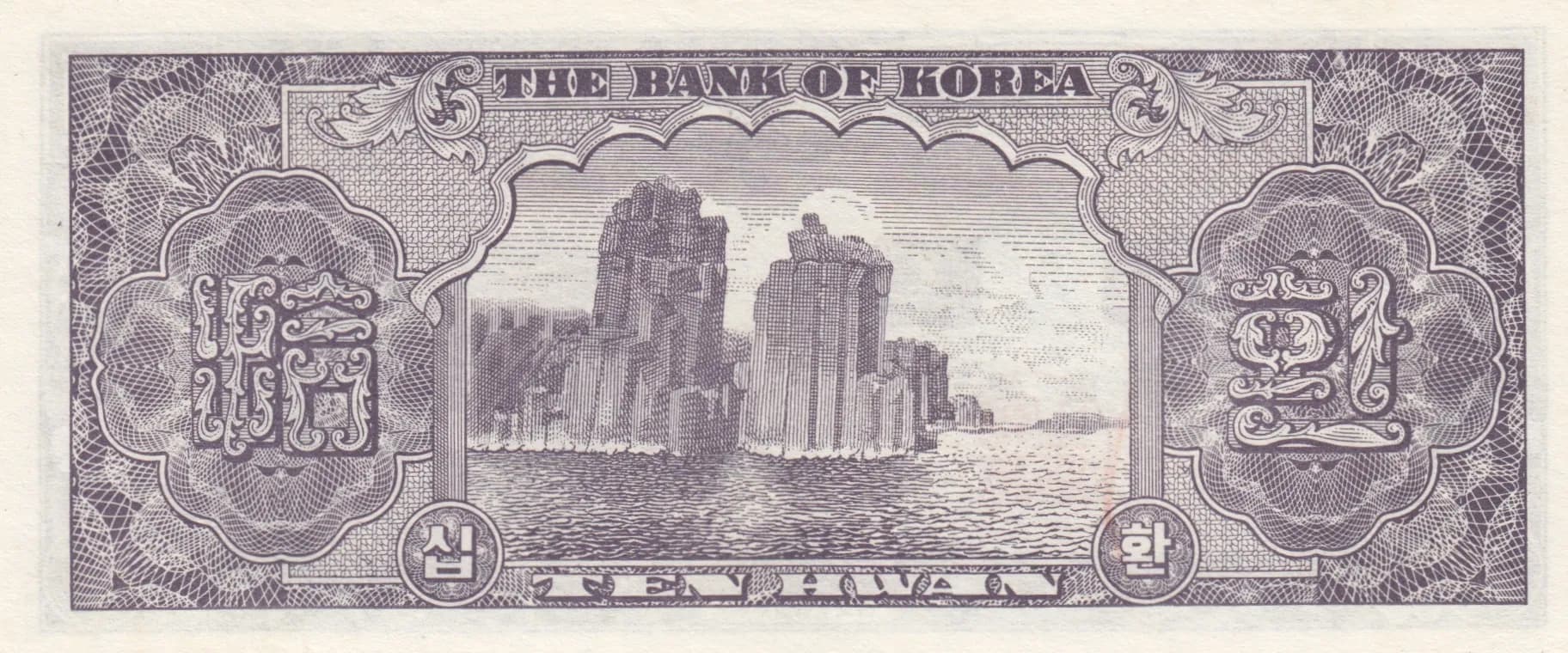
This 1955 Bank of Korea 10 hwan note (Pick P-17c) is presented in uncirculated condition with crisp, well-preserved printing on both sides. The front features a traditional Korean gate structure with ornate decorative borders and official red seals, while the reverse displays a modern cityscape in purple tones, reflecting the post-war period's blend of tradition and development. The presence of administrative red markings suggests this may be a specimen or archival copy, adding historical documentation value to an already significant early Korean monetary issue.
Common. The 10 hwan denomination from 1955 (P-17c) was issued in substantial quantities as part of the Bank of Korea's standard currency circulation series during the postwar reconstruction period. The Pick catalog includes multiple varieties and date variants of this denomination, indicating widespread production. While early Korean currency has collector interest, this specific denomination and year combination does not show evidence of limited print runs or premature withdrawal from circulation that would elevate it to scarce or rare status.
Issued in 1955, this note represents the early years of the Bank of Korea's independent currency operations following the Korean War's conclusion in 1953. The iconography reflects South Korea's dual focus during this period: the traditional Korean gate on the front symbolizes cultural heritage and historical continuity, while the modern cityscape on the reverse depicts the nation's post-conflict reconstruction and modernization aspirations. The parallel use of English ('THE BANK OF KOREA'), Hanja, and Hangul inscriptions demonstrates the linguistic transition occurring in early postwar South Korea.
The obverse features a finely engraved traditional Korean fortress gate with characteristic curved roofline and multi-level architecture, set within a landscape of trees and fortifications. This likely depicts a historically significant Korean gate structure, rendered in detailed line work. A circular geometric emblem containing diamond patterns and horizontal lines serves as a central security device above the gate. Ornate floral and scrollwork decorative elements frame all corners and borders. The reverse depicts a modern cityscape with multiple tall skyscraper buildings viewed across a body of water, rendered in detailed cross-hatching and engraving techniques. Decorative circular medallions with geometric patterns occupy the bottom corners. The entire note employs fine-line engraving with complex ornamental patterns as security measures against counterfeiting.
FRONT SIDE: '10' (Arabic numerals, denomination); '韓國銀行' (Hanja: Bank of Korea); '한국은행' (Hangul: Bank of Korea); '대한민국중앙은행' (Hangul: Central Bank of South Korea). BACK SIDE: 'THE BANK OF KOREA' (English, issuing institution); '십' (Hangul: ten); '환' (Hangul: hwan, currency denomination).
Intaglio (engraved) printing, a traditional security printing method standard for currency production in the 1950s. The crisp line work, fine cross-hatching patterns, and ornamental detail observed throughout both sides are characteristic of intaglio technology. The Bank of Korea employed established security printers for this issue; production likely utilized De La Rue or similar international security printing houses common for Korean currency during this period.
The red administrative seals and handwritten markings visible on this example suggest it may be a specimen or archival copy rather than standard circulation currency. The presence of both Korean Hanja and Hangul inscriptions reflects the orthographic standards of 1955 South Korea. Pick catalog P-17c designates this as a specific variety within the 10 hwan 1955 series; collectors should verify serial number prefixes and seal variations to confirm exact variety classification, as the Bank of Korea issued multiple seal variants during this period.