100 won 1950
About This Note
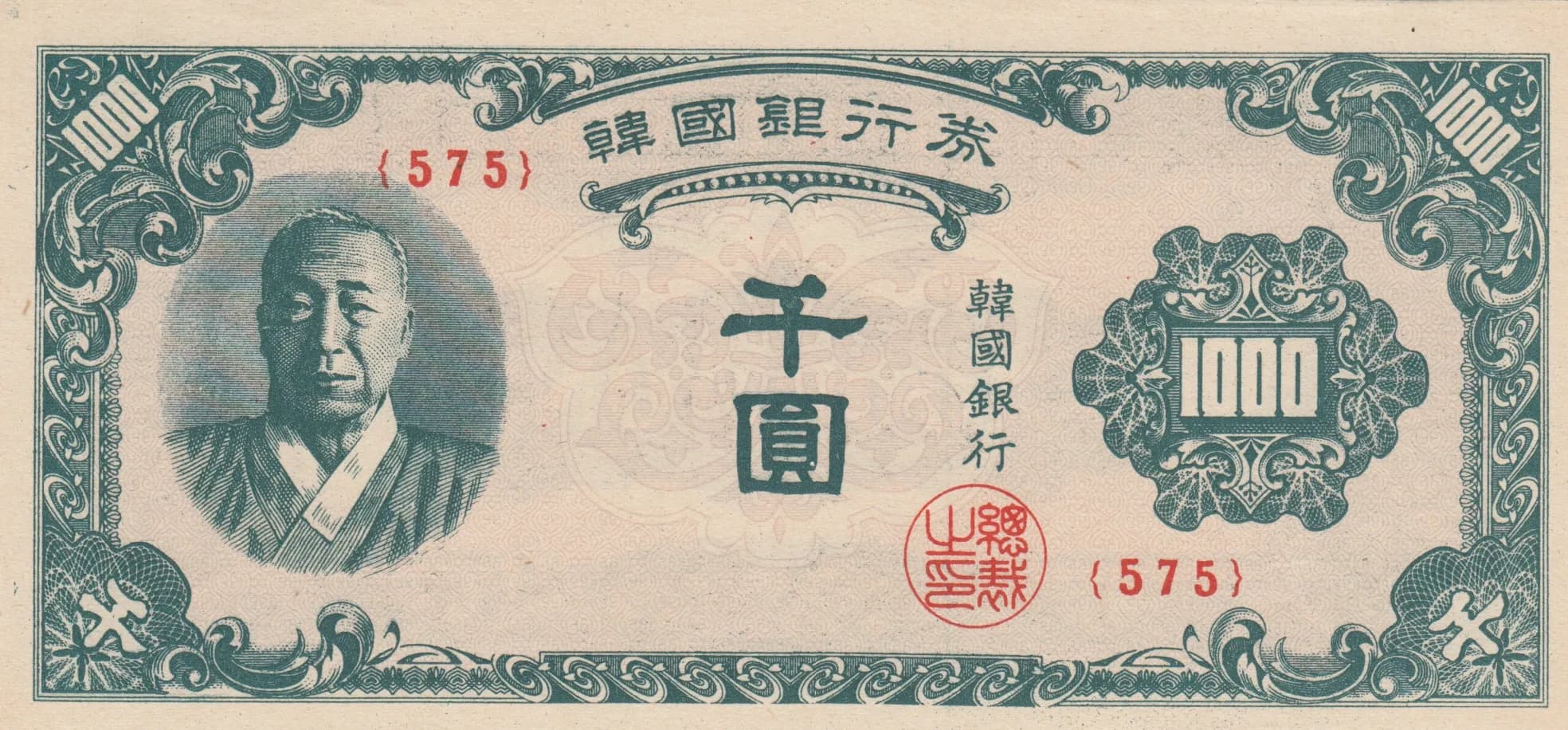
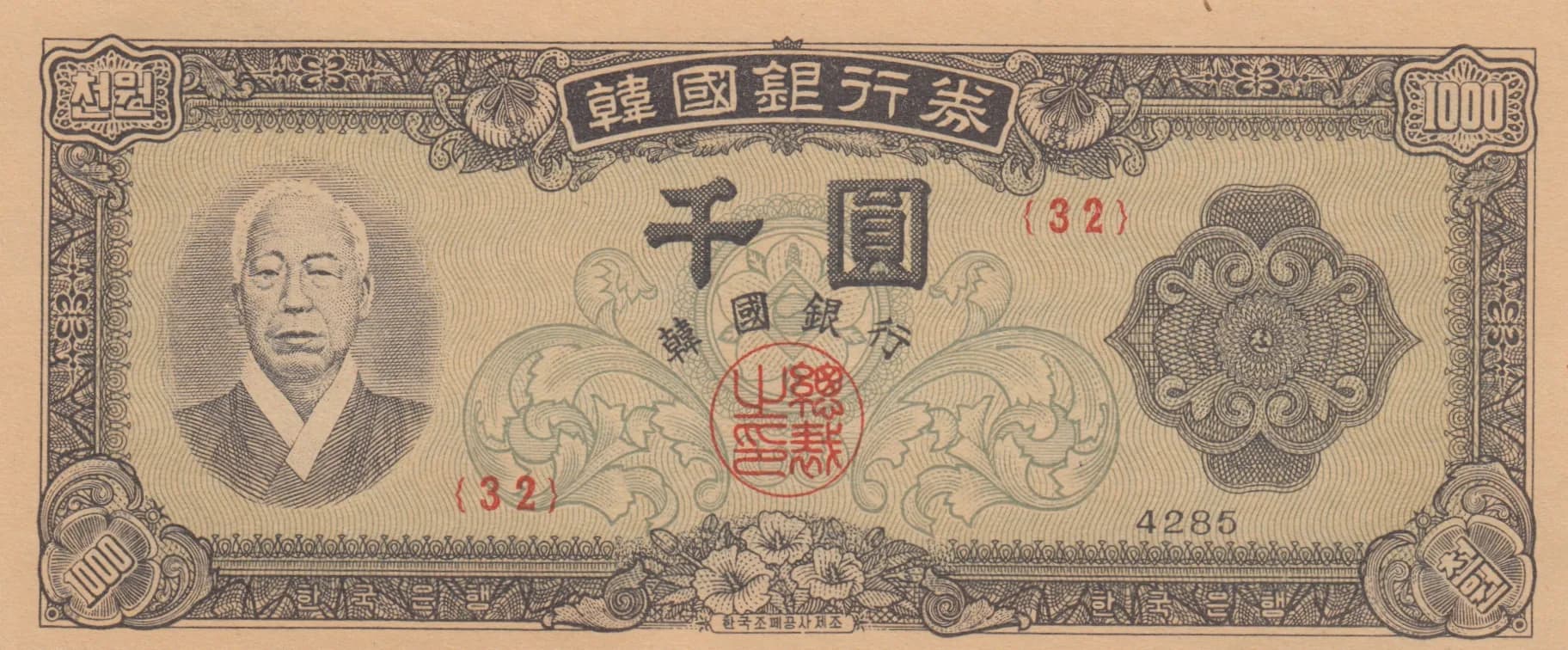
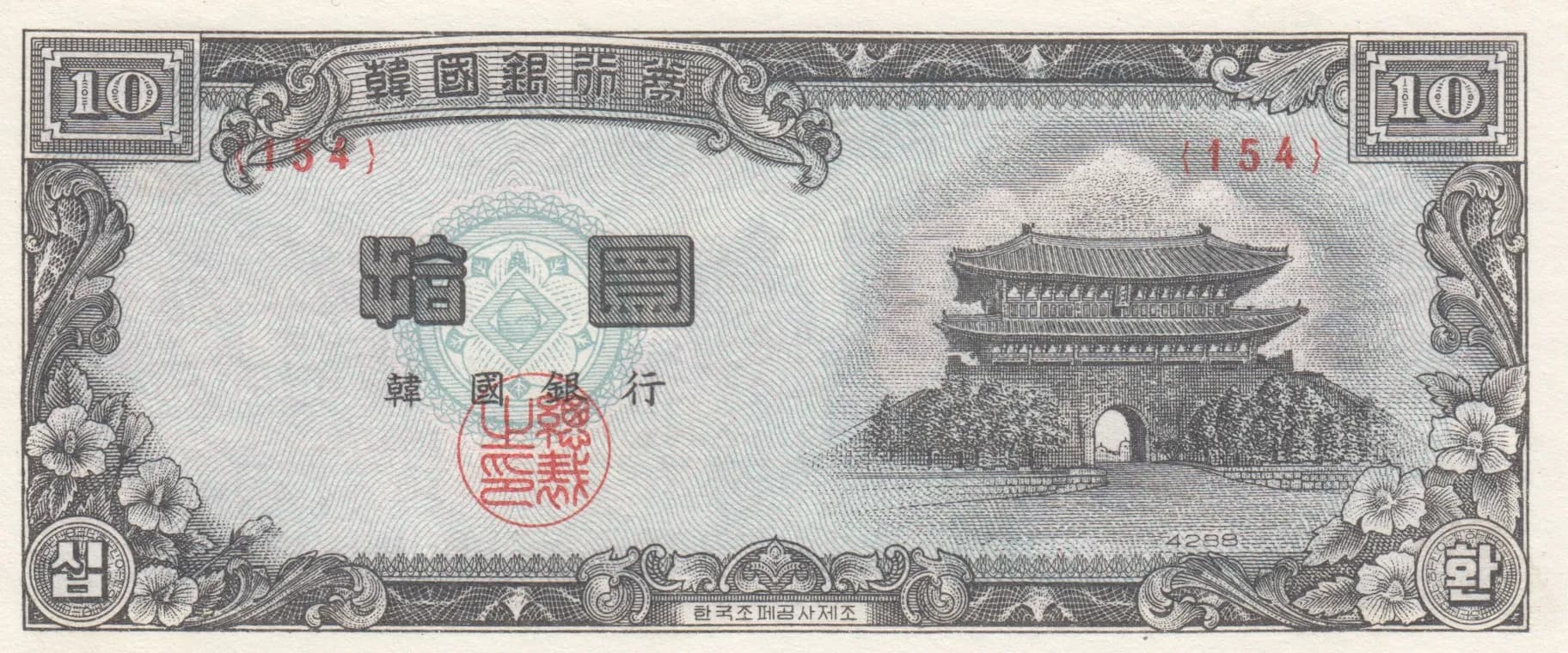
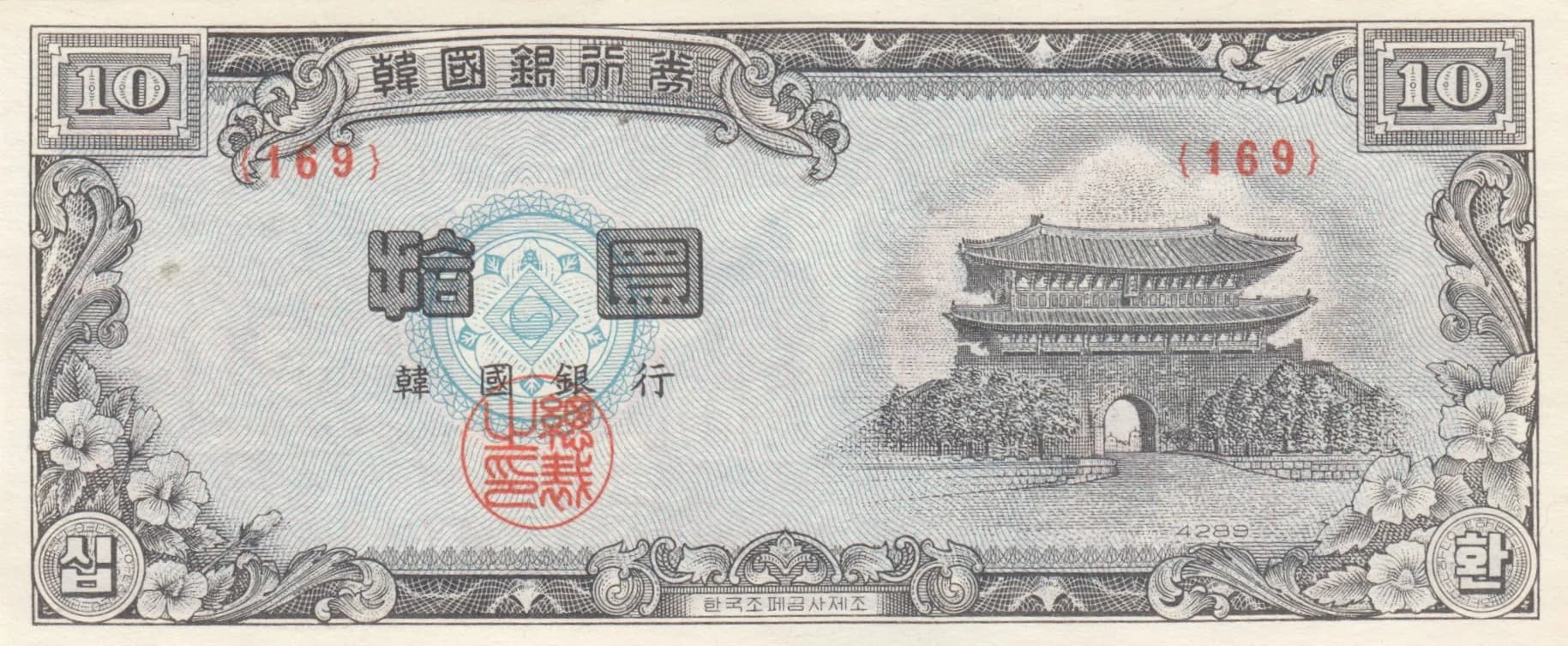
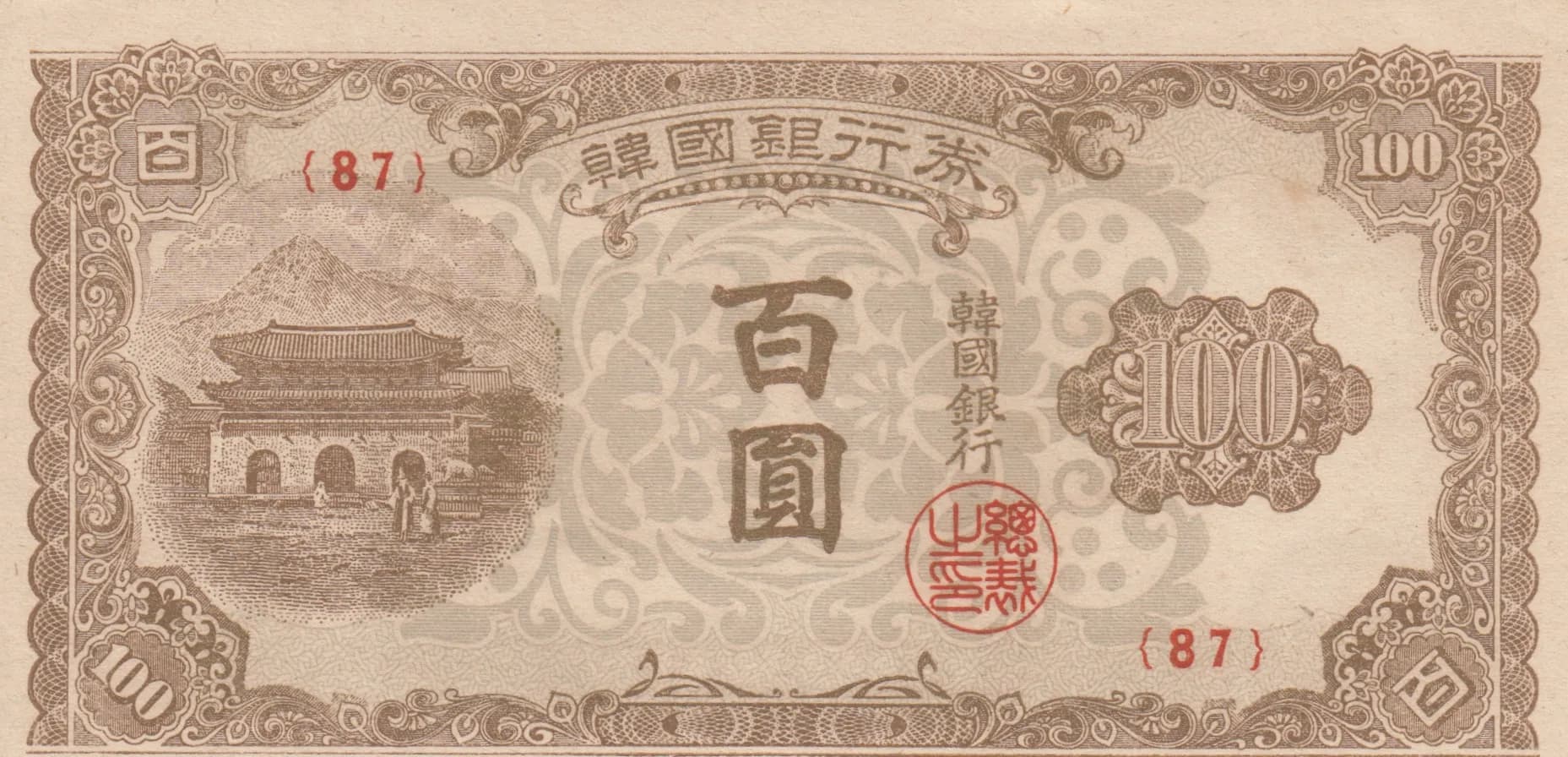
This is a 1950 Bank of Korea 100 Won note (Pick P-7) in UNC condition, representing an important early emission of post-liberation Korean currency. The note features a traditional multi-tiered East Asian architectural building on the obverse with bilingual inscriptions in Hanja and English, ornate engraved borders throughout, and a distinctive red seal stamp characteristic of this early series. The cream-to-tan patina and overall preservation suggest careful storage since its 1950 issue date, making this an excellent example of early Korean monetary independence.
Common. The 100 Won Pick P-7 from 1950 is a standard denomination from the early post-war Bank of Korea series with a substantial original print run. Notes from this issue are regularly encountered in the market across various condition grades. While UNC examples command a modest premium over circulated specimens, the denomination and issue are not scarce, and the series does not have a restricted issue history that would limit availability.
This note was issued in 1950 by the Bank of Korea, just five years after Korean independence from Japanese colonial rule and during the tumultuous period preceding the Korean War. The architectural landmark depicted on the obverse likely represents a significant Korean historical or cultural building, symbolizing national pride and restoration. The bilingual presentation in both Hanja (reflecting East Asian tradition) and English (reflecting Western/international commerce) reflects Korea's transitional period as it established its own currency identity independent from colonial Japanese yen.
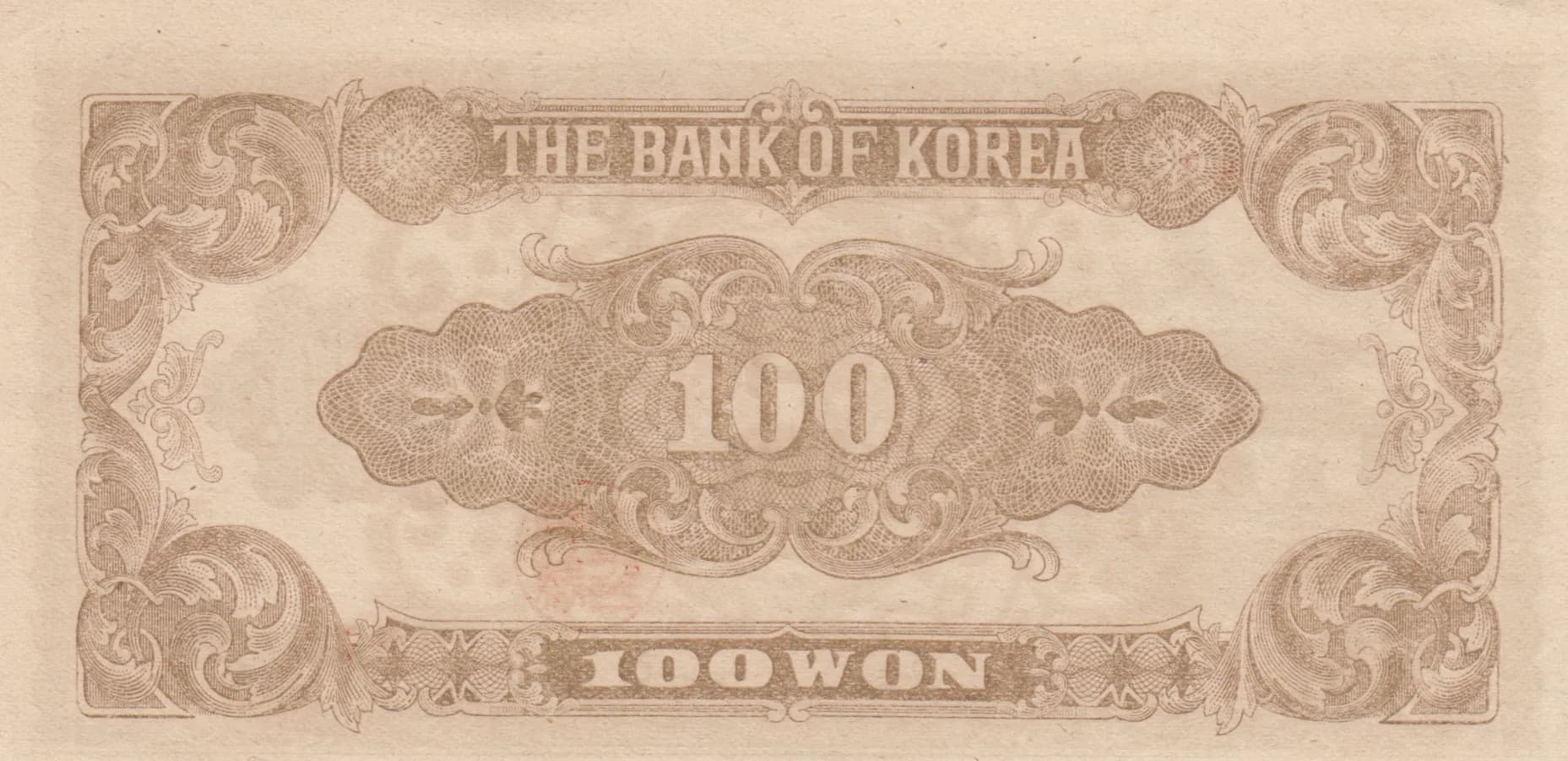
The obverse features a traditional Korean architectural landmark—a multi-tiered pagoda or temple building with ornamental curved roof characteristic of East Asian design—positioned prominently on the left side. The reverse displays a large decorative cartouche containing the denomination '100'. Both sides are framed by elaborate ornamental borders with floral scrollwork and corner embellishments executed in fine engraving technique. The note employs a sepia/brown color palette on aged cream paper stock, with a distinctive red circular seal stamp centrally positioned on the obverse, typical of early Bank of Korea emissions. The bilingual presentation reflects the transitional nature of Korean currency design in this early post-colonial period.
FRONT SIDE: '朝鮮國銀行' (Joseon Bank / Bank of Korea) in Hanja; '百圓' (Baek Won / 100 Won) in Hanja; Series or batch number '(87)' in Arabic numerals. BACK SIDE: 'THE BANK OF KOREA' in English; '100' in Arabic numerals; '100WON' in English/numerals mixed format.
Intaglio engraving (line engraving), the standard security printing method for banknotes of this era. The fine detailed border work, decorative cartouches, and overall design demonstrate the high-quality engraved plates typical of currency production by international or advanced domestic security printers. The characteristic crisp lines and intricate ornamental patterns visible throughout are consistent with professional intaglio printing technology employed by the Bank of Korea's authorized printer for this 1950 series.
The observed series number '(87)' may indicate batch or printing plate variations; however, without specialized Korean numismatic references or additional comparative examples, specific variety identification is limited. Standard varieties for this Pick number would include potential differences in series numbers, seal placements, or minor engraving variations across production batches. The 1950 issue date itself is singular—no subsequent year variants are known for this pick number, as the 100 Won design was updated in subsequent years.