10 hwan 1956
About This Note
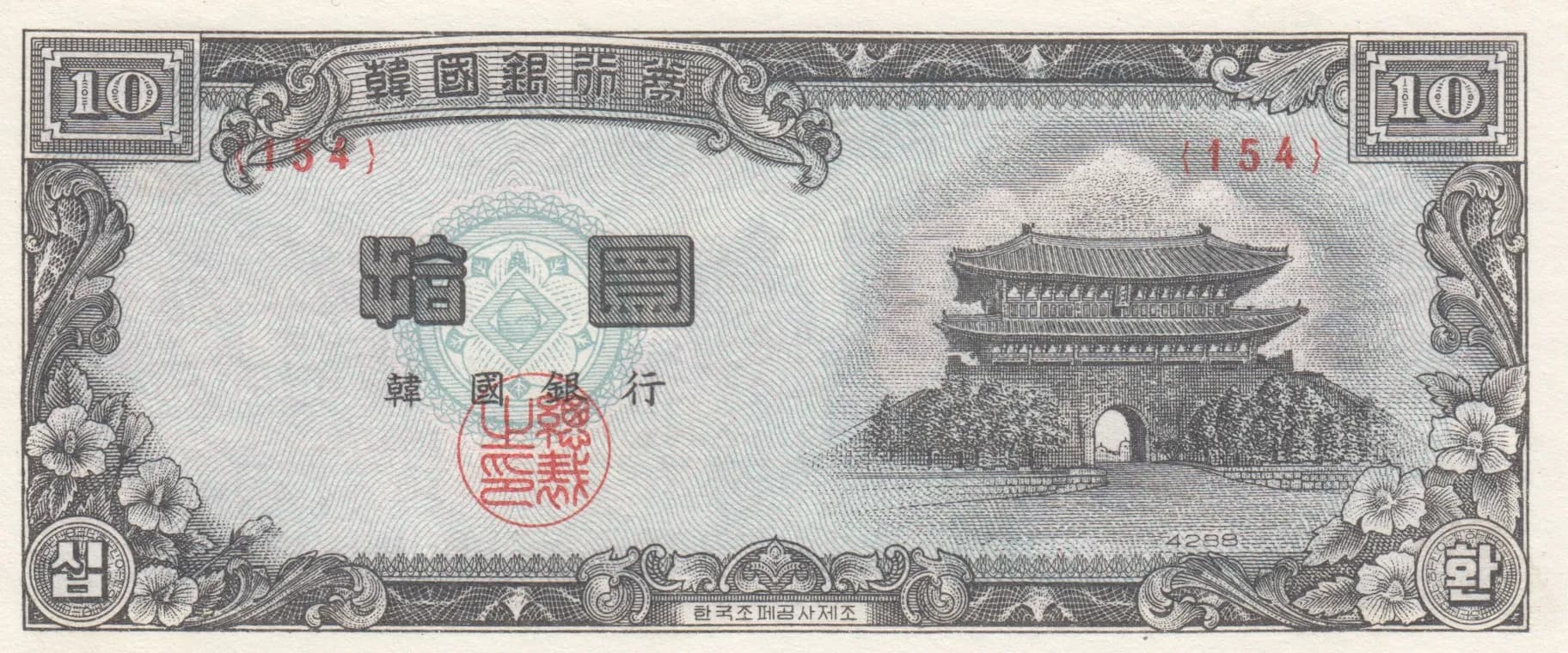
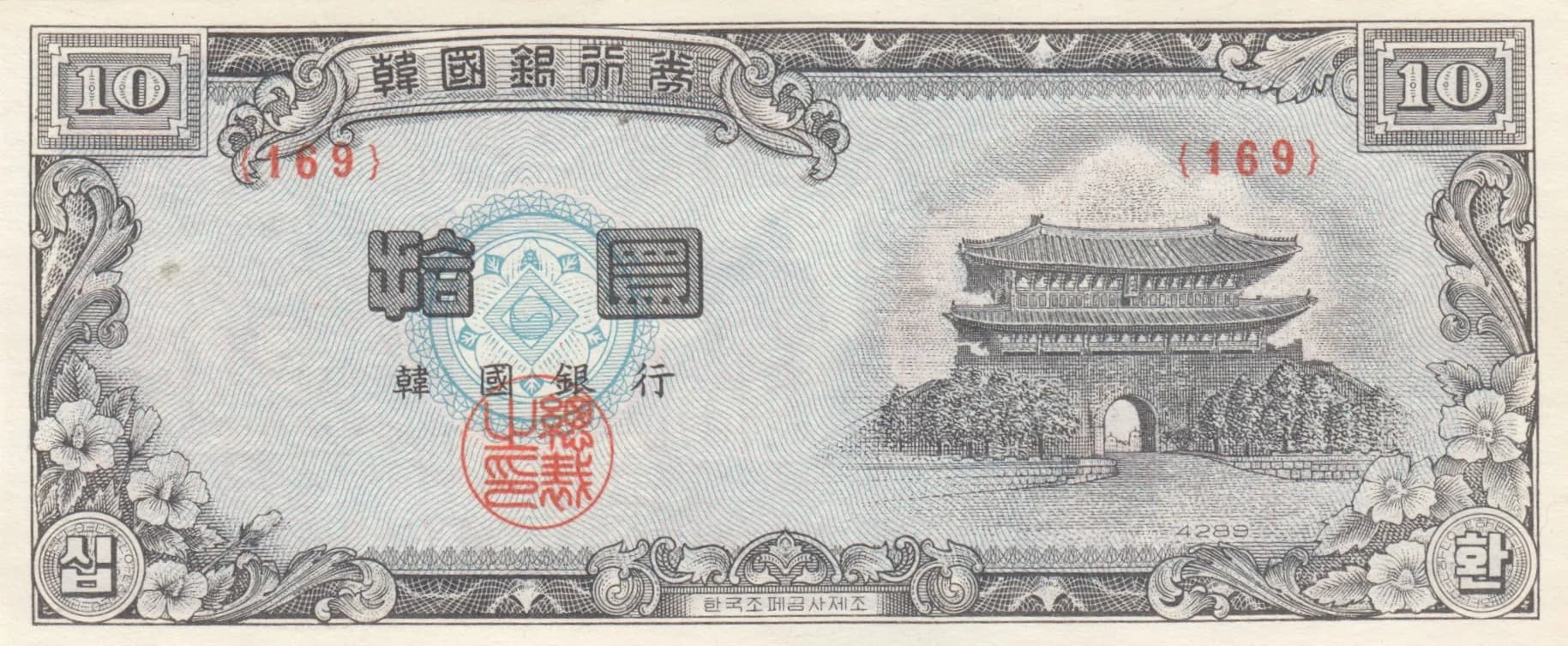
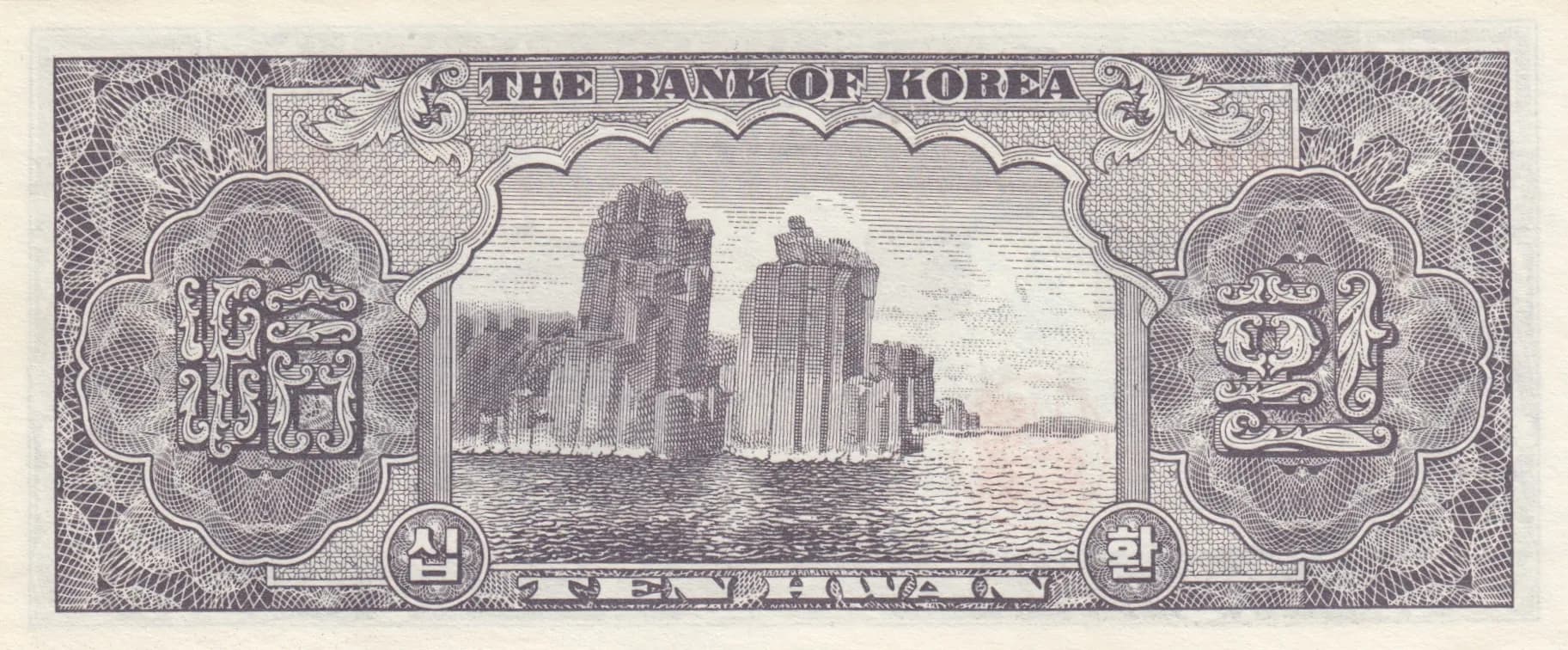
This is a visually striking 1956 South Korean 10 hwan banknote in uncirculated condition, featuring exceptional intaglio engraving work characteristic of early postwar Korean currency. The front showcases a traditional multi-tiered Korean architectural structure with curved roofs and fortress elements, while the reverse displays a dramatic natural landscape of tall columnar rock formations rising from water. The note's excellent preservation, sharp engraving detail, and bilingual design (Korean/English and Hanja) make it an attractive example of Korea's early monetary independence.
Common. The 10 hwan denomination from 1956 was widely circulated during its period of use, and substantial quantities have survived. Pick P-17d represents a standard production run for this denomination during the early years of the hwan currency period (1953-1962). No evidence of short print runs, recalls, or scarcity factors would elevate this to a rare classification.
This 10 hwan note was issued in 1956, during the period of South Korea's post-Korean War reconstruction and monetary stabilization under the Bank of Korea's newly established authority. The deliberate selection of traditional Korean architectural imagery (the multi-tiered building with curved roofs) and distinctive natural landscape features reflects the nation's effort to establish cultural and national identity through its currency design. The inclusion of both Korean Hangul/Hanja and English inscriptions demonstrates the transitional period when South Korea was establishing itself as a sovereign nation with international presence.
The front features an ornamental border with floral motifs in the corners and baroque-style scrollwork, centering on a circular emblem with geometric and symbolic designs in blue. The primary image is an engraved traditional Korean fortress or palace structure with multiple tiers, curved roofs characteristic of Korean architecture, and an arched gateway, depicted against a landscape setting. Red overprint seals and identification marks appear in the upper corners. The reverse presents a landscape of tall columnar basalt formations or rock pillars rising from water—likely representing a natural Korean geographic feature—rendered with meticulous cross-hatching engraving. Ornamental cartouches with geometric and cloud-like decorative motifs frame the central landscape on both sides, maintaining the formal heraldic styling of the obverse.
Front side: '韓國銀行券' (Bank of Korea Note in Hanja), '한국은행' (Bank of Korea in Hangul), '10' (denomination numeral), '(169)' (plate or series identifier). Back side: 'THE BANK OF KOREA' (English institutional identifier), '십' (Ten in Hangul), '환' (Hwan, the currency denomination in Hangul).
Intaglio engraving (line engraving and cross-hatching) with hand-applied color elements, characteristic of mid-20th century Korean banknote production by the Bank of Korea's printing facilities. The fine line detail, complex background patterns, and ornamental security elements demonstrate high-quality engraving work typical of notes produced under international security printing standards of the era.
This note is catalogued as Pick P-17d, indicating it is a recognized variety within the 1956 10 hwan series. The red overprint markings and the '(169)' plate identifier visible on the front may indicate specific printing sessions or plate varieties, though these details require cross-reference with detailed Korean banknote catalogs to determine if multiple varieties exist for this pick number. The serial number format and any additional security markings would further clarify the specific sub-variety.