100 hwan 1954
About This Note
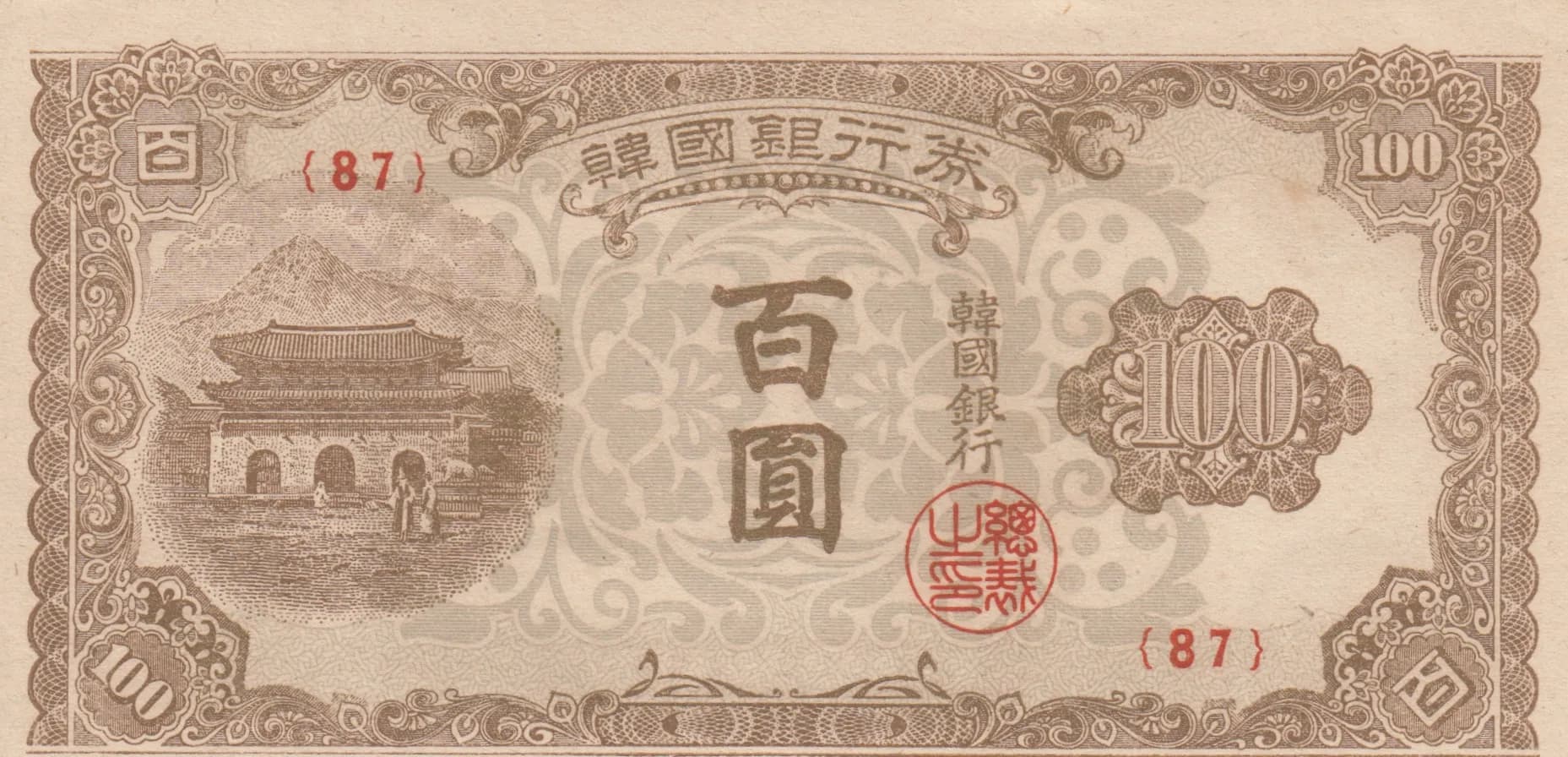
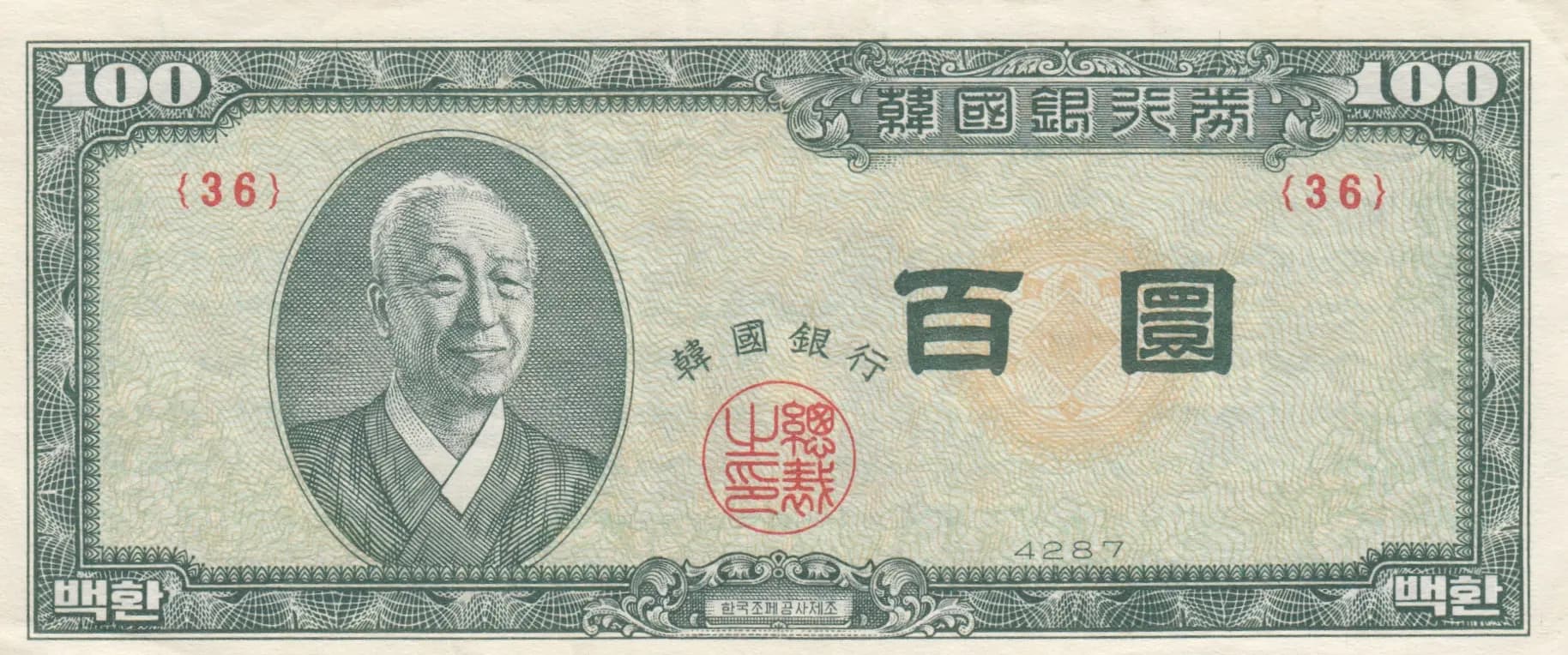
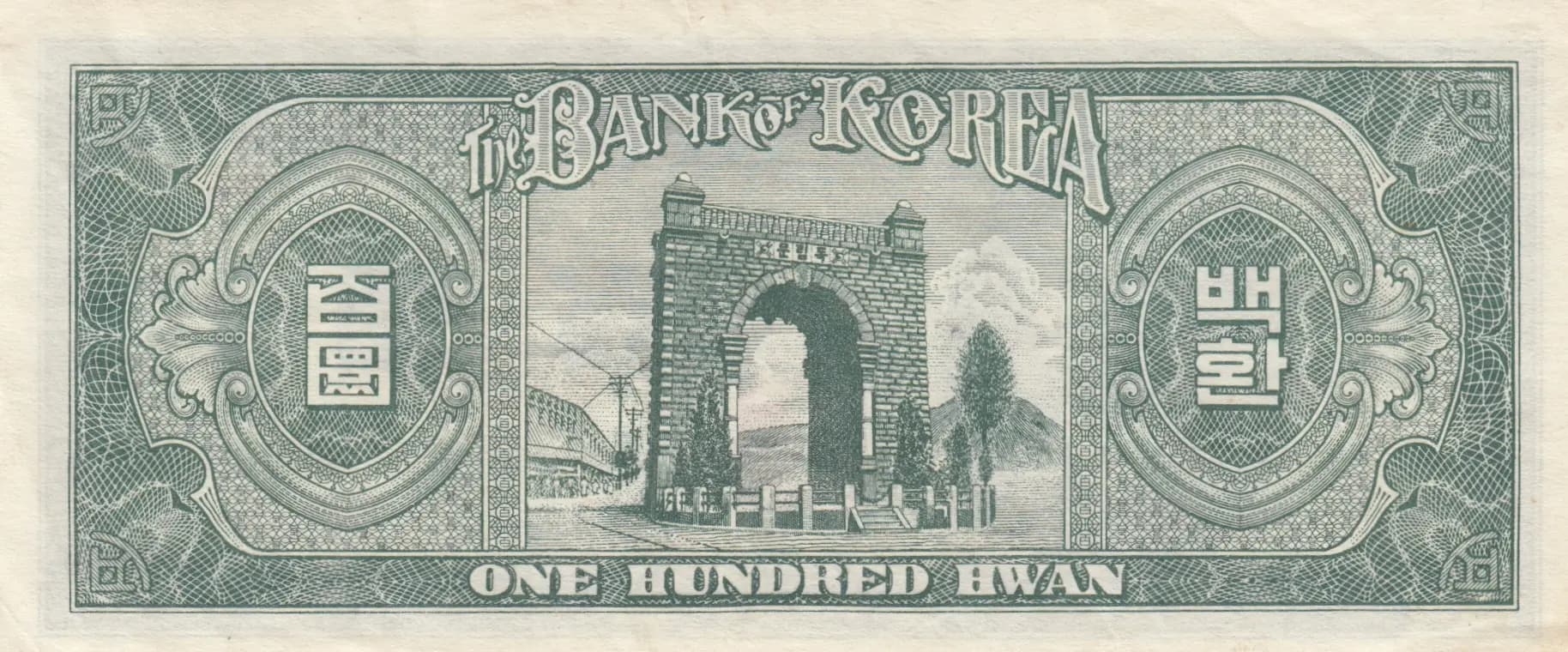
This is a Bank of Korea 100 Hwan note from 1954 (Pick-19a), presented in VF condition with well-preserved printing and vibrant color. The note features a contemplative portrait of an elderly Asian man in traditional dress on the obverse, complemented by an ornate decorative border, while the reverse displays a striking architectural landmark—likely a traditional Korean gateway or monument—set against mountainous terrain. The crisp engraving, intact security features, and balanced color palette of greens and creams make this an excellent representative example of early post-liberation Korean currency.
Common. The 100 Hwan denomination from 1954 (Pick-19a) was issued in substantial quantities during a period of currency stabilization and is readily available in the numismatic market. Notes from this series appear regularly in dealer inventory and auction listings. The VF condition grade, while desirable, does not significantly enhance scarcity—these notes remain a foundational and frequently encountered item in Korean currency collections. No evidence of limited print runs, recalls, or short-lived circulation supports a rarity classification.
Issued in 1954, just one year after the end of the Korean War, this note represents the Bank of Korea's effort to establish a stable national currency during the period of post-conflict reconstruction. The use of traditional Korean architectural imagery on the reverse—depicting what appears to be a significant historical gate or monument—reflects the nation's emphasis on cultural identity and continuity during this formative period of the Republic of Korea. The bilingual inscriptions in Korean and English underscore the country's Western-aligned international position during the early Cold War era.
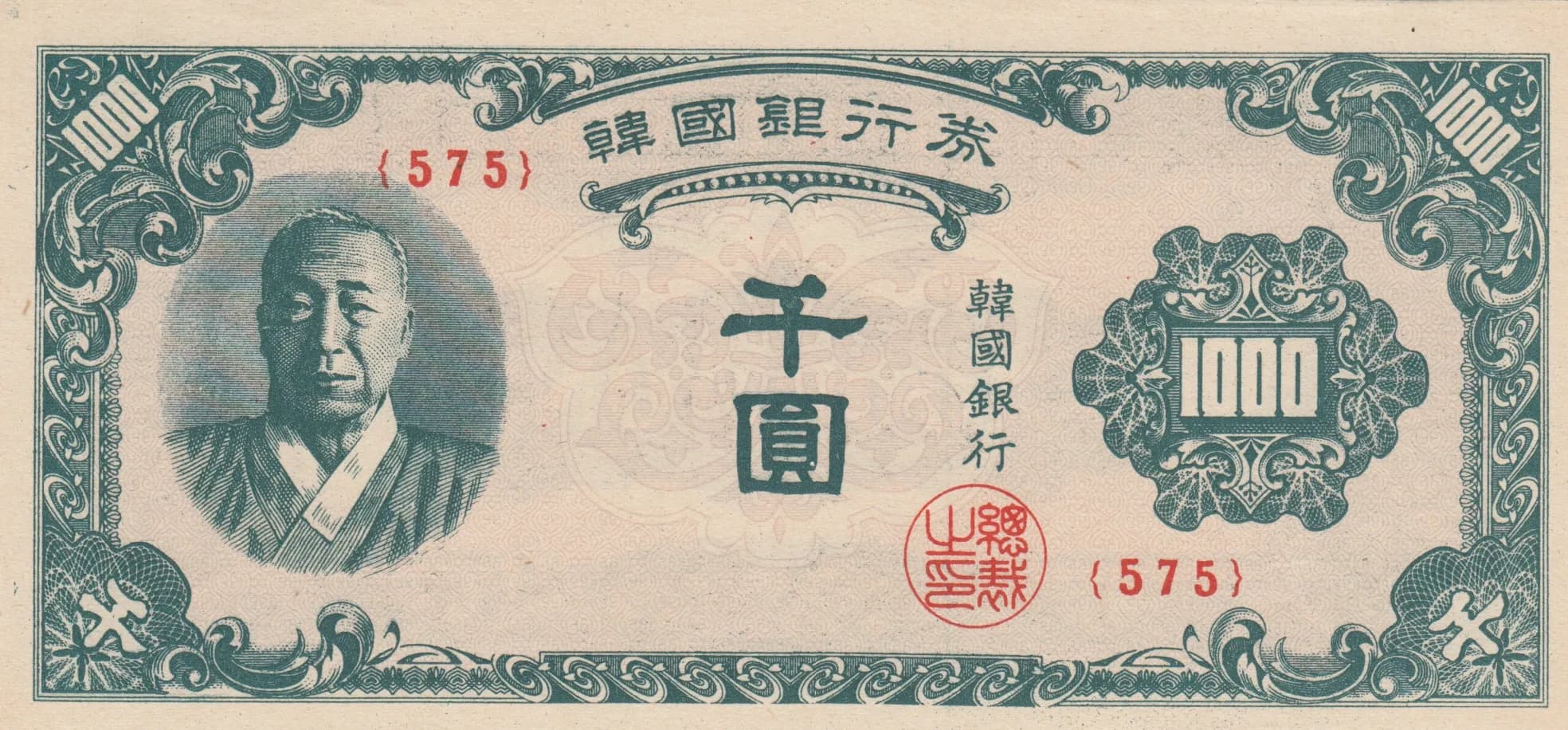
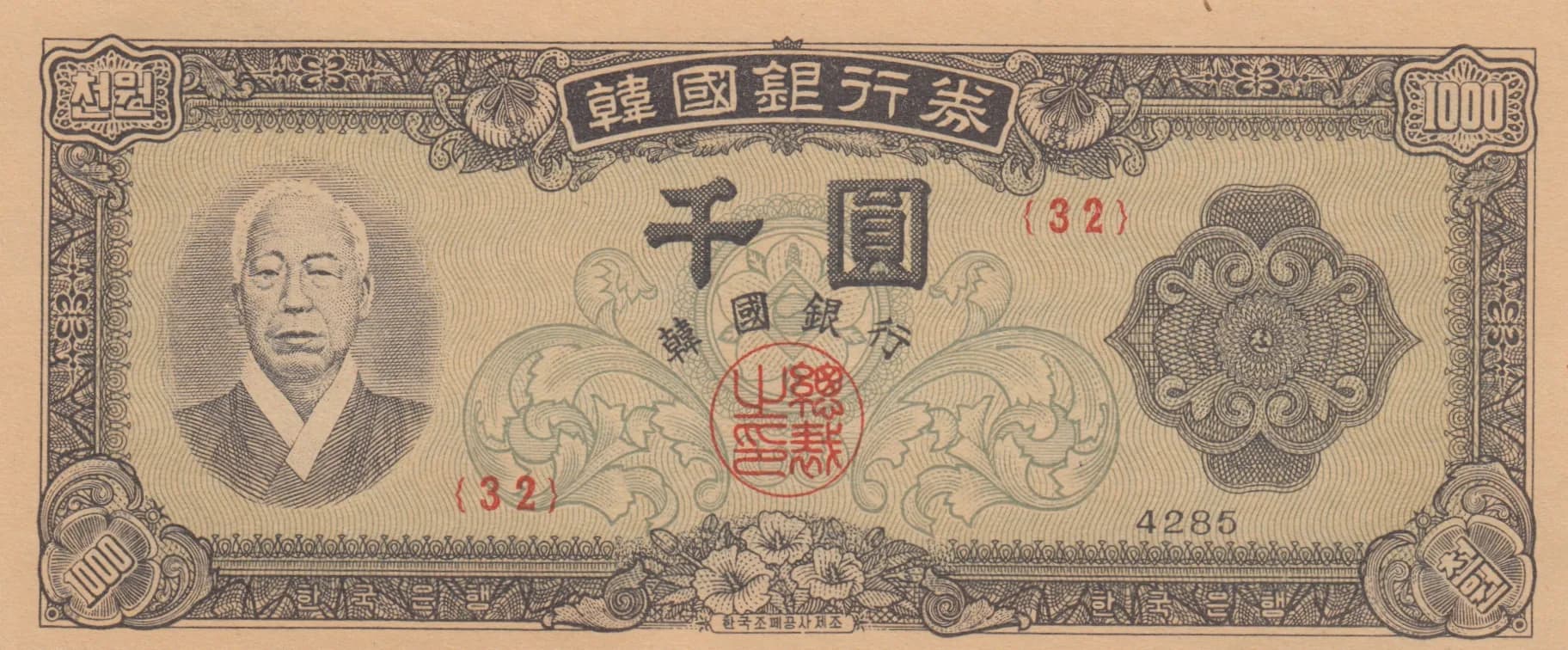
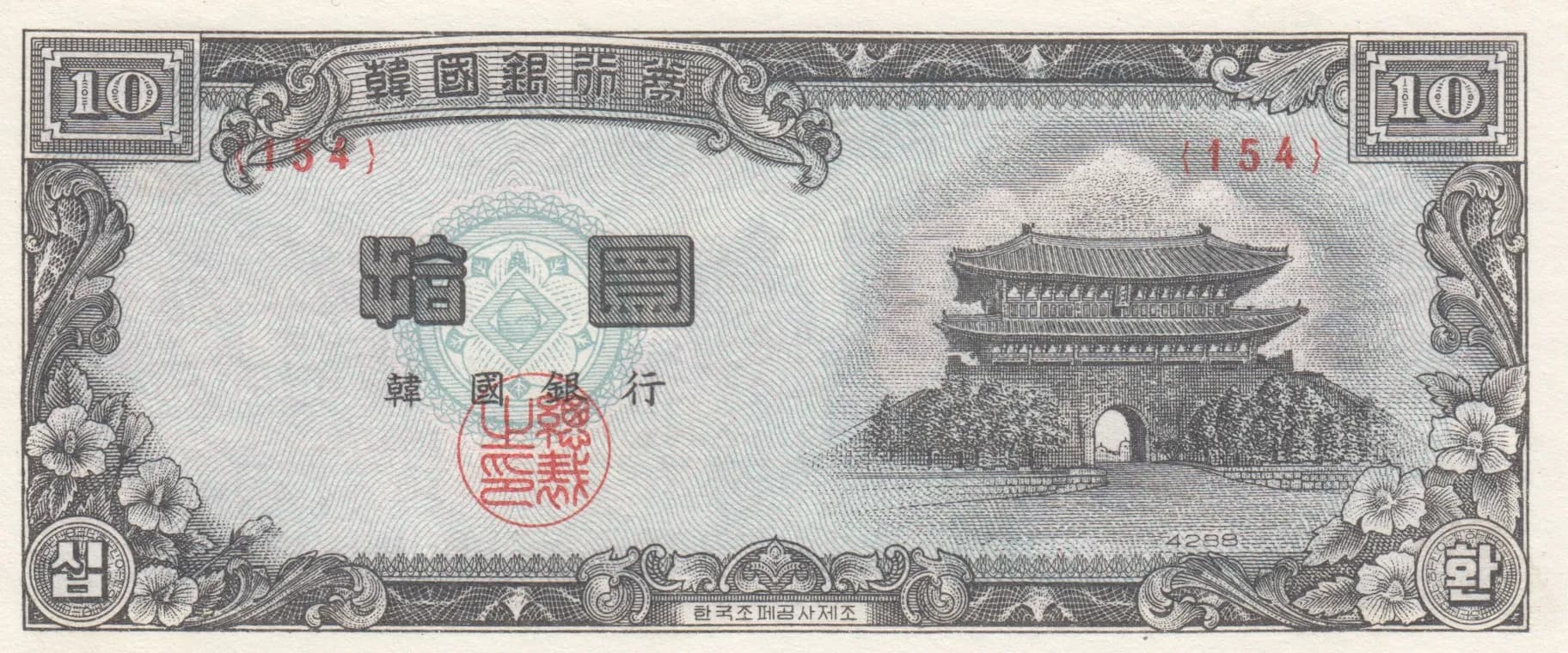
The obverse features a portrait of an elderly statesman or revered historical figure in traditional Korean dress, depicted with a serene, downward gaze that conveys dignity and contemplation. The subject is positioned on the left side of the note and rendered with fine-line engraving technique. An elaborate decorative border of geometric scrollwork and ornamental flourishes frames the composition, with the denomination '100' prominently displayed in white numerals at the top corners. A red circular seal or official stamp is centrally positioned. The reverse depicts a major architectural monument—likely a traditional Korean gateway structure with detailed masonry—set within a mountainous landscape complete with cypress or evergreen trees. The landmark is centered and framed by decorative ornamental boxes on the left and right sides containing Korean characters. The overall design employs a teal-green and cream color scheme with black printing and white accents, creating a professional and formal appearance consistent with mid-20th century central bank note design standards.
Front side: '100' (denomination in numerals, top left and right); '백원' (Baek won—'one hundred hwan' in Korean); '朝鮮銀行券' (Chosen/Korea Bank Note in Japanese/Chinese characters); '(36)' (series or plate marking); '4287' (serial number segment); '韓國銀行' (Bank of Korea in Chinese characters). Back side: 'The BANK OF KOREA' (English text, top); 'ONE HUNDRED HWAN' (English denomination, bottom); '백' (baek—'hundred' in Korean, left side); '원' (won/hwan—currency unit in Korean, right side).
The note employs intaglio (engraved) printing, evidenced by the fine-line detail visible in the portrait rendering, the intricate background tint patterns, and the complex geometric border designs. The crisp, sharp impressions of the architectural rendering on the reverse and the detailed portraiture are characteristic of rotogravure or steel engraving methods used by the Bank of Korea during this period. The precise registration and color separation between the teal-green and cream elements suggest multi-plate printing with careful alignment. The printer is likely the Bank of Korea's own printing facility or a contracted security printer active in South Korea during the 1950s.
This note is identified as Pick-19a, indicating it is the 'a' variety of the 100 Hwan 1954 issue. Varieties within this issue typically relate to serial number prefixes, signature combinations, or subtle design elements. The observed serial number segment '4287' and series marking '(36)' are noted but would require comparison with the Pick catalog or IBNS databases to definitively establish the specific variety designation. Collectors should cross-reference serial number patterns and signature variations when cataloging examples of this denomination to distinguish between Pick-19a, 19b, and any other recognized sub-varieties.